Understanding Rhymes Reading Worksheets for Ages 5-8
3 filtered results
-
From - To
Unlock the joy of reading with our "Understanding Rhymes" worksheets, designed specifically for children aged 5-8. These engaging activities help young learners develop phonemic awareness, enhance vocabulary, and build reading fluency through the fun of rhyming. Each worksheet features colorful illustrations and interactive exercises, making it easy for kids to grasp key concepts while enjoying the rhythm of language. Whether at home or in the classroom, these playful resources foster a love for reading and learning. Dive into the world of rhymes and watch your child's reading skills flourish! Perfect for teachers and parents alike.
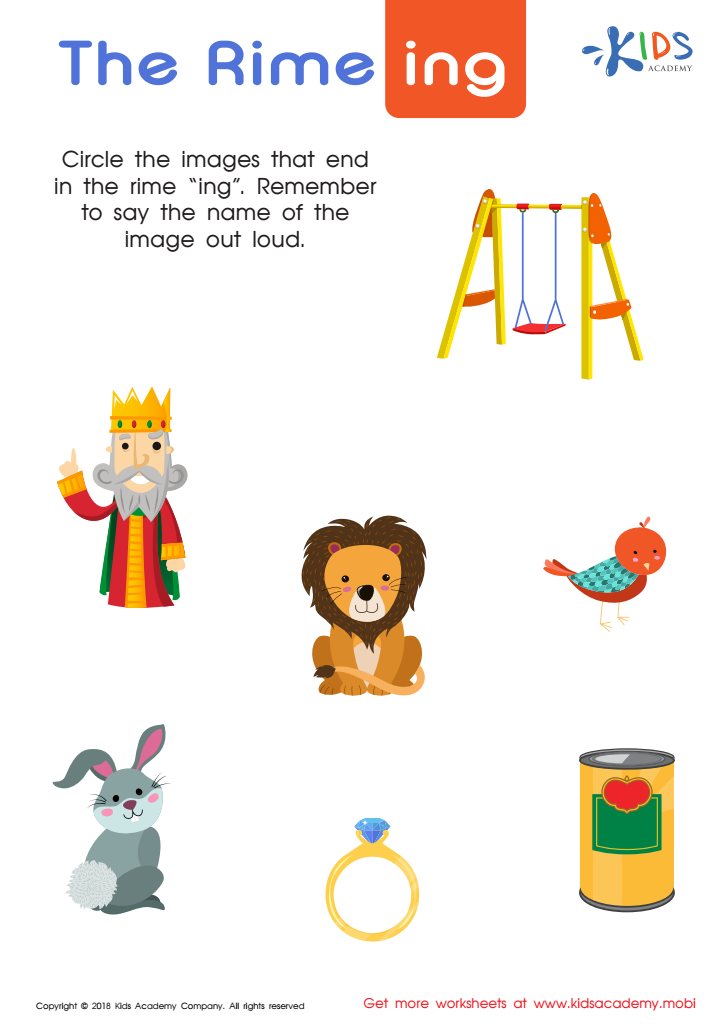
The Rime "ing" Worksheet
 Assign to My Students
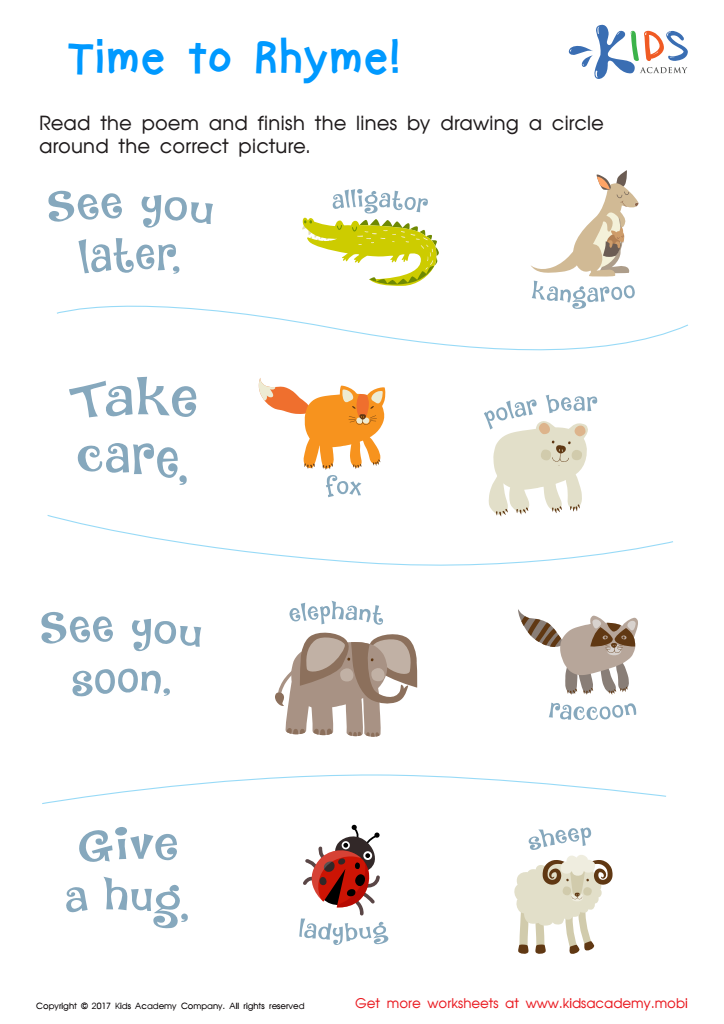
Time to Rhyme Rhyming Worksheet
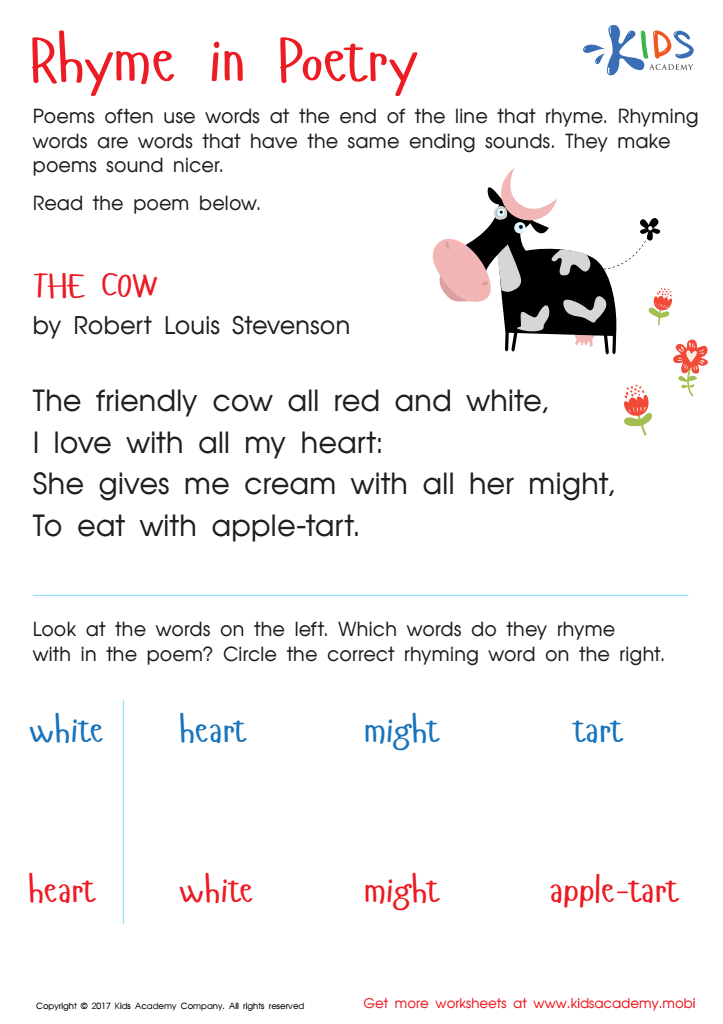
Rhyme In Poetry Worksheet


.jpg)




Understanding rhymes is crucial for children aged 5-8 as it plays a significant role in their literacy development and overall language skills. At this age, children are developing their phonemic awareness, which is the ability to recognize and manipulate sounds in words. Rhyming helps them notice the similarities in sounds, boosting their ability to decode letters and sounds when they encounter new words. This skill lays the foundation for reading fluency and comprehension.
Moreover, engaging with rhymes fosters creativity and imagination, making learning enjoyable. Children are often drawn to playful language and rhythmic patterns, which enhances their engagement with books and stories. This enjoyment promotes a lifelong love of reading, essential for academic success.
Additionally, understanding rhymes supports vocabulary growth. When children explore rhyming words, they are naturally exposed to new terms and language structures, enhancing their verbal skills.
Finally, setting a culture of rhyming can strengthen the bond between parents/teachers and children. Sharing rhymes and engaging in playful language activities can boost confidence and inspire children to express themselves linguistically. In summary, focusing on rhymes for young children cultivates essential reading skills, enriches language, and fosters a passion for learning.








