
Analytical thinking Reading Fiction Worksheets for Ages 5-8
4 filtered results
Difficulty Level
Grade
Age
-
From - To
Subject
Activity
Standards
Enhance your child's analytical thinking skills with our engaging Analytical Thinking Reading Fiction Worksheets, specifically designed for ages 5-8. These worksheets encourage young readers to dive deeper into fiction, promoting critical thinking and comprehension through fun and relevant activities. Kids will explore themes, characters, and plot elements, fostering a love for reading while developing essential analytical skills. Ideal for homeschoolers or as supplementary learning resources, these worksheets include vibrant illustrations and interactive questions to maintain your child’s interest. Empower your child’s learning journey today with our thoughtfully crafted worksheets that make reading both educational and enjoyable!
Favorites
With answer key
Interactive
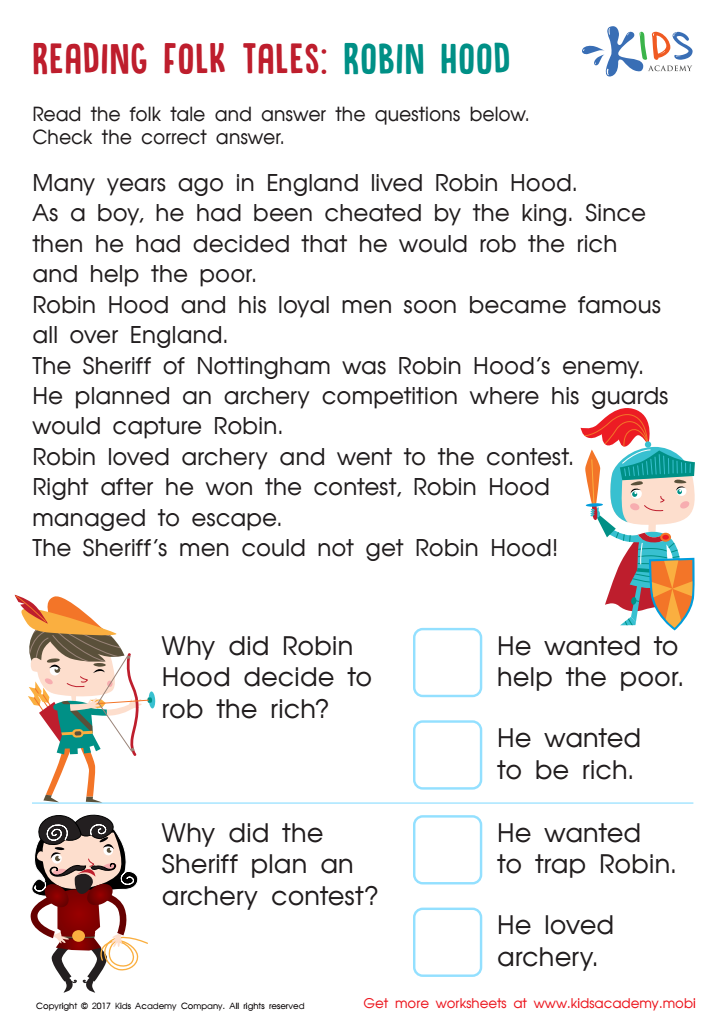
Robin Hood Folktale Worksheet
Have your child practice reading comprehension and inferencing with this Robin Hood folktale worksheet! Get them to read between the lines to find character motivation and answer important questions about the passage. It's a fun way to test their reading skills!
 Assign to My Students
Robin Hood Folktale Worksheet
Worksheet
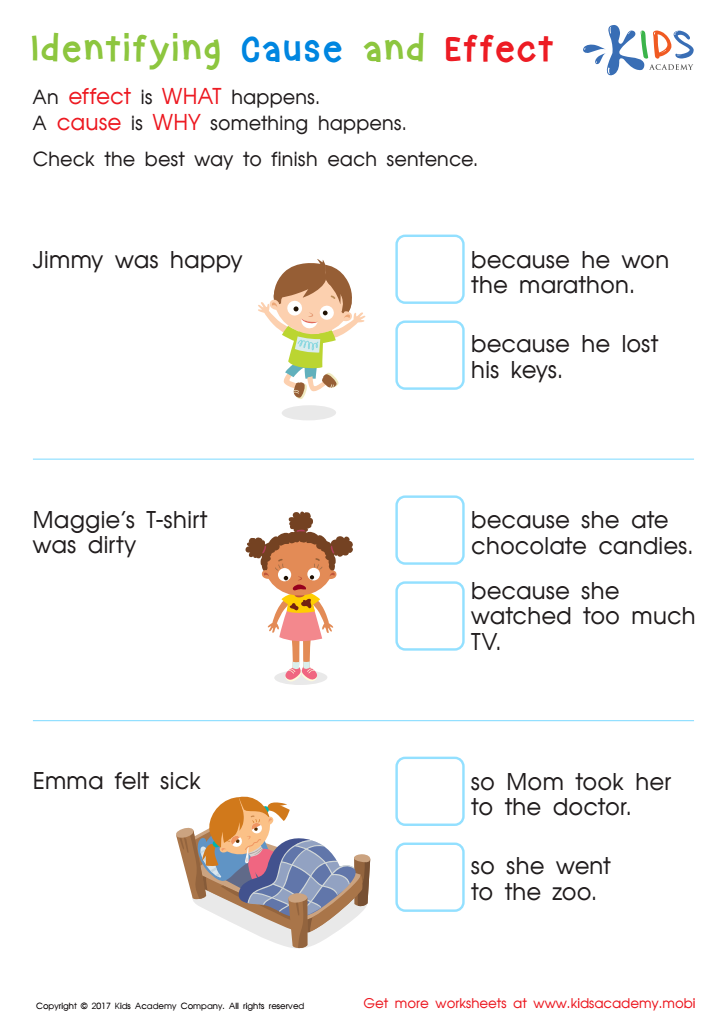
Indentifying Cause and Effect Worksheet
2nd grade cause & effect worksheets give your child practice making connections between events and their results. Fun activities help develop reading and critical thinking skills.
Indentifying Cause and Effect Worksheet
Worksheet
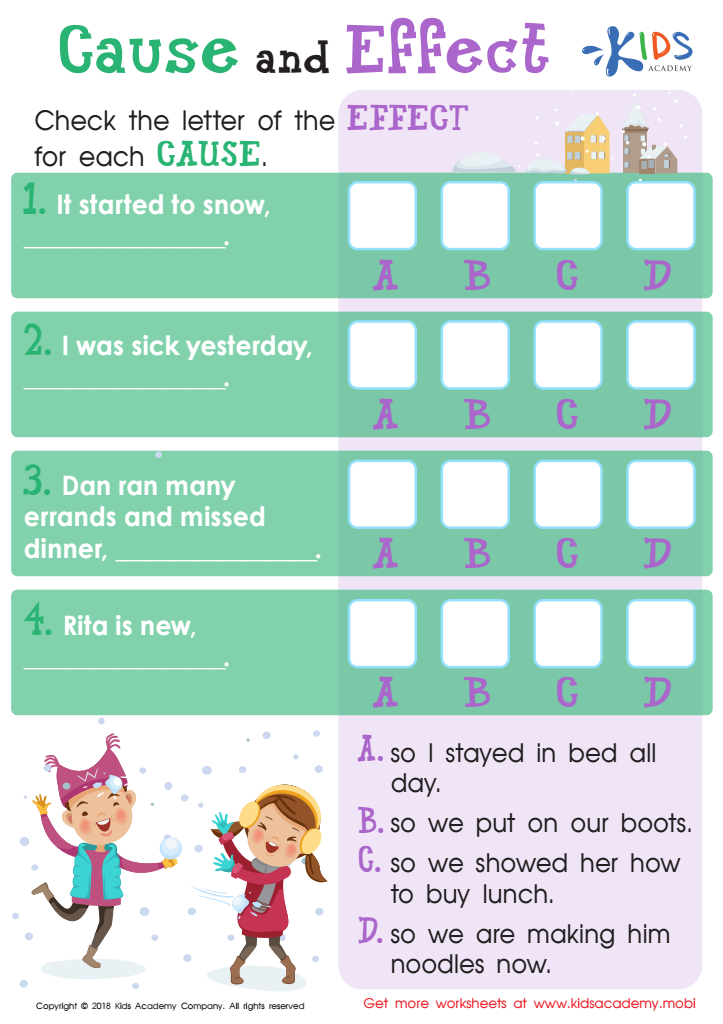
Cause and Effect Worksheet
Help your kids understand the cause-effect relationship of sentences by having them complete this worksheet. There are four incomplete sentences at the top and four options at the bottom. Have them select the appropriate letter for the effect of each cause. This will be the first step to their future of composing grammatically correct and meaningful sentences.
Cause and Effect Worksheet
Worksheet
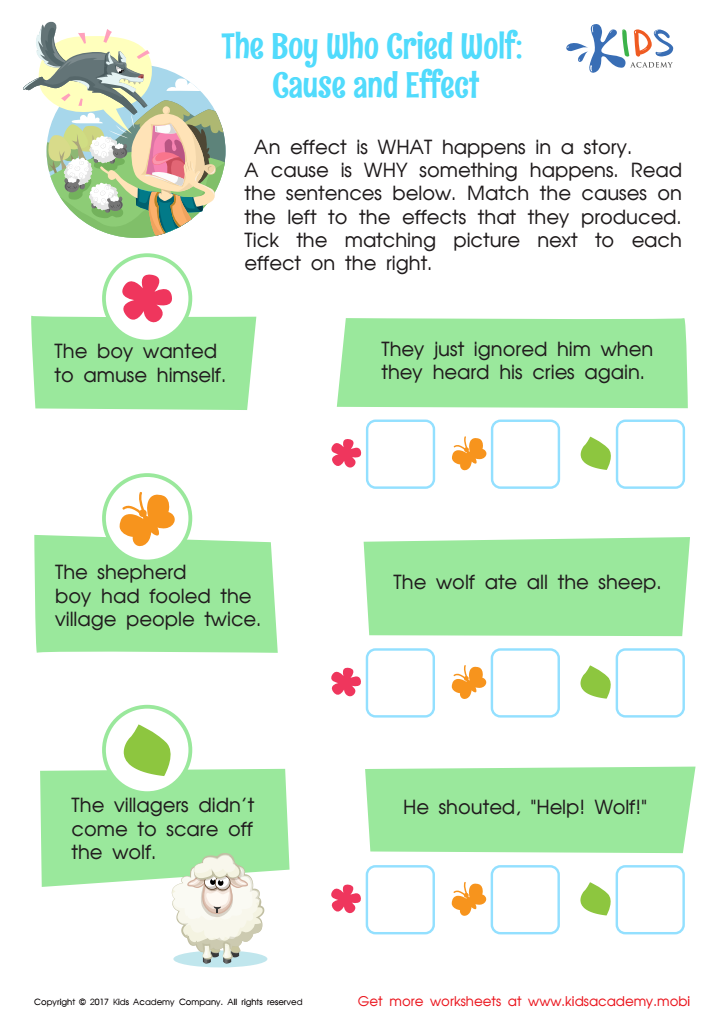
The Boy Who Cried Wolf: Cause and Effect Worksheet
With classic stories and fables, learning reading comprehension is easy - and fun!
The Boy Who Cried Wolf: Cause and Effect Worksheet
Worksheet
Join Kids Academy for Free
Who is primarily going to use this learning content?




.jpg)



Parents and teachers should prioritize analytical thinking through fiction for children aged 5-8 because it promotes critical cognitive skills, emotional intelligence, and a love for reading. Analyzing stories helps young readers discern themes, understand character motivations, and predict outcomes. This skill not only enhances comprehension but also encourages curiosity and the ability to question and reflect, which are crucial in developing a thoughtful and inquisitive mindset.
Furthermore, engaging with fiction allows children to explore diverse perspectives and cultures, fostering empathy and emotional understanding. As they analyze characters’ decisions and challenges, children learn to identify and express their own feelings. This kind of emotional literacy is foundational for building healthy relationships and effective communication skills.
Additionally, fiction often presents complex scenarios and moral dilemmas that require children to think critically and weigh different outcomes. By nurturing these analytical skills during early reading sessions, parents and teachers lay the groundwork for children's problem-solving abilities in later life.
Ultimately, fostering analytical thinking through reading fiction equips young learners with essential cognitive tools and an empathetic worldview, setting them up for success in both academic and social settings as they grow.








