Answering questions Reading Fiction Worksheets for Ages 5-8
3 filtered results
-
From - To
Unlock the magic of reading with our "Answering Questions Reading Fiction Worksheets" designed for ages 5-8. These engaging worksheets help young readers develop critical thinking and comprehension skills as they dive into enchanting stories. Each worksheet is crafted to encourage kids to explore characters, plot, and settings, while sharpening their ability to answer questions and think deeply about the text. By fostering a love of reading and enhancing understanding, our worksheets make learning fun and interactive. Perfect for classrooms and homeschooling, watch your child's confidence grow as they master the art of reading fiction.
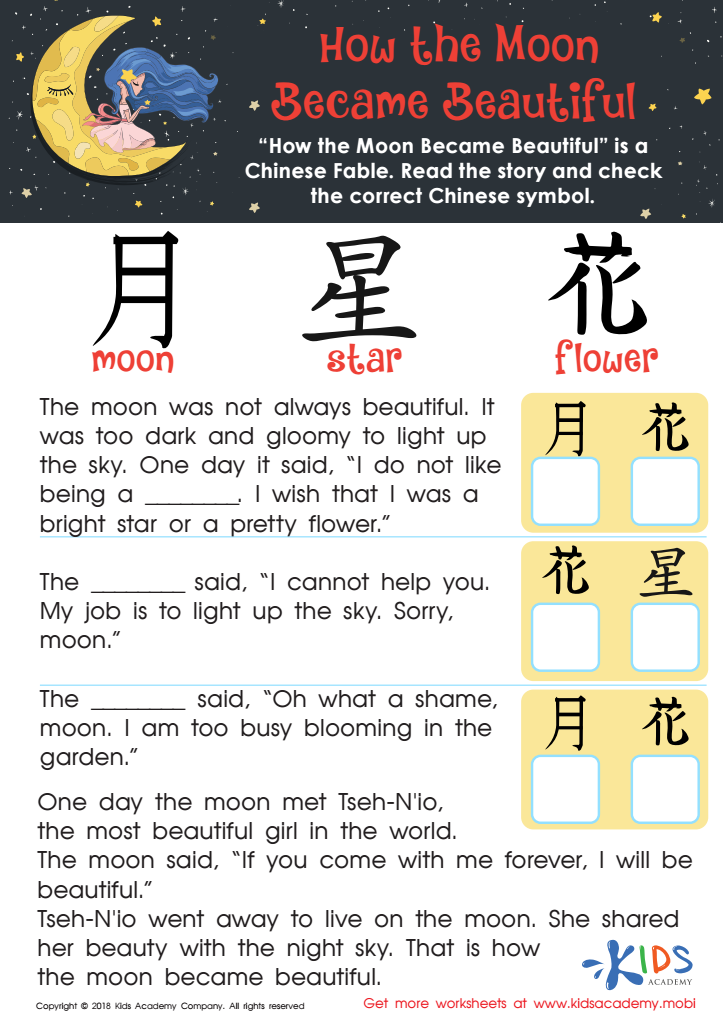
How the Moon Became Beautiful Worksheet
 Assign to My Students
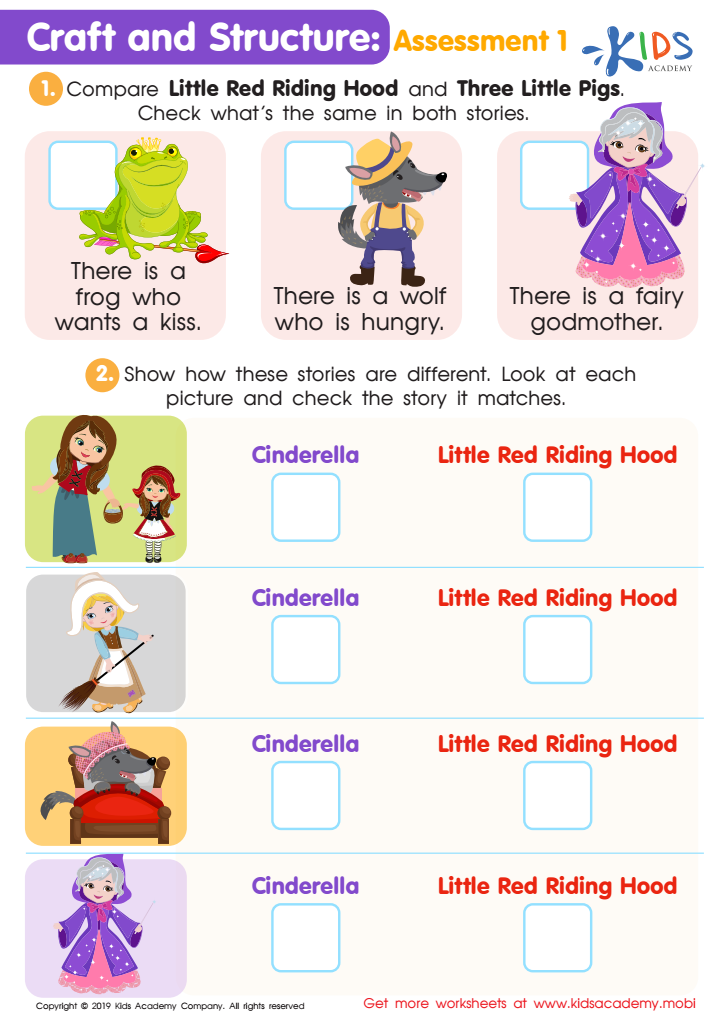
Craft and Structure: Assessment 1 Worksheet
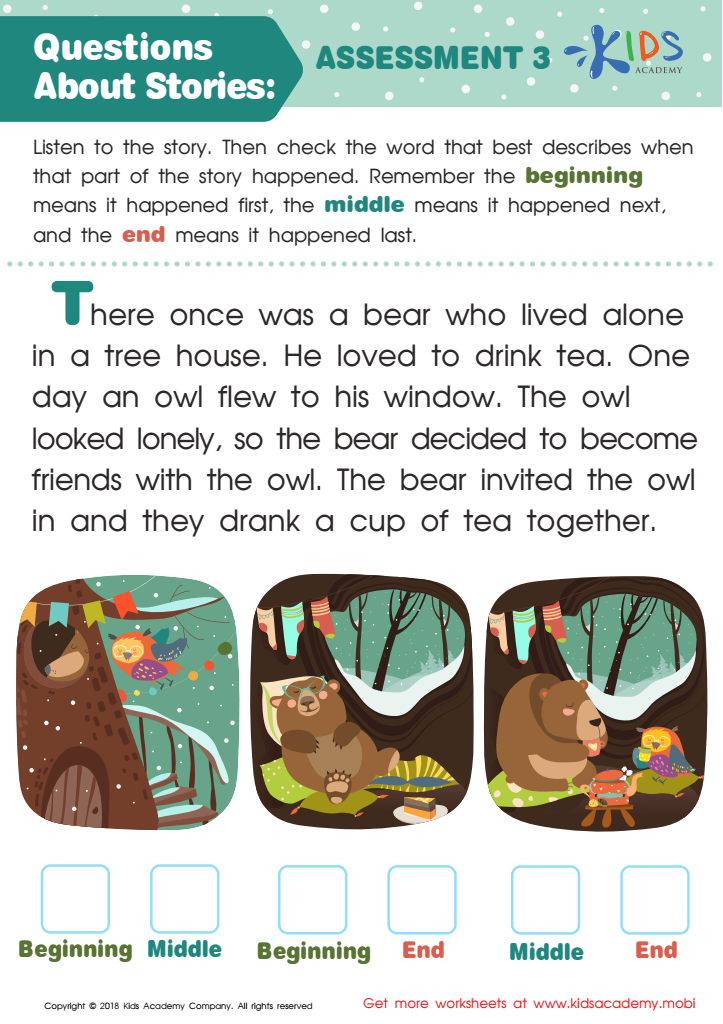
Questions About Stories: Assessment 3 Worksheet





.jpg)


Answering questions and reading fiction for ages 5-8 are crucial for children's cognitive, emotional, and social development. Firstly, this age is pivotal for language acquisition. Engaging with fiction enhances vocabulary, comprehension, and expressive skills as children encounter new words and complex sentence structures. When children ask and answer questions about the stories they read, it further solidifies their understanding and stimulates critical thinking.
Fictional tales offer a rich tapestry of scenarios and characters, which helps nurture empathy and emotional intelligence. Kids learn to understand different perspectives, recognize emotions, and develop problem-solving skills by identifying with characters' experiences. This is invaluable in their social interactions both at home and in school.
Teachers or parents addressing these questions also build stronger communication skills. This dialogic process helps children express their thoughts coherently and boosts their confidence in verbal articulation.
Moreover, cultivating a love for reading early on paves the way for lifelong learning. Fiction imposes a sense of excitement and adventure, triggering a child's imagination, creativity, and curiosity about the world around them.
Therefore, taking the time to engage with children in answering questions about fiction isn't just about improving literacy— it's about fostering well-rounded, emotionally intelligent, and intellectually curious individuals.








