Character recognition Reading Fiction Worksheets for Ages 5-8
4 filtered results
-
From - To
Enhance your child's reading skills with our engaging Character Recognition Reading Fiction Worksheets designed specifically for ages 5-8. These worksheets help young learners to identify and understand various characters in storybooks, improving comprehension and boosting their confidence in reading. Featuring fun illustrations and interactive activities, our materials make character exploration exciting and enjoyable. Students will develop critical thinking and comprehension abilities while strengthening their narrative skills through guided questions and thematic tasks. Perfect for home or classroom use, our worksheets provide a supportive environment for early readers to thrive while building a lifelong love for stories and literature. Start your literary adventure today!
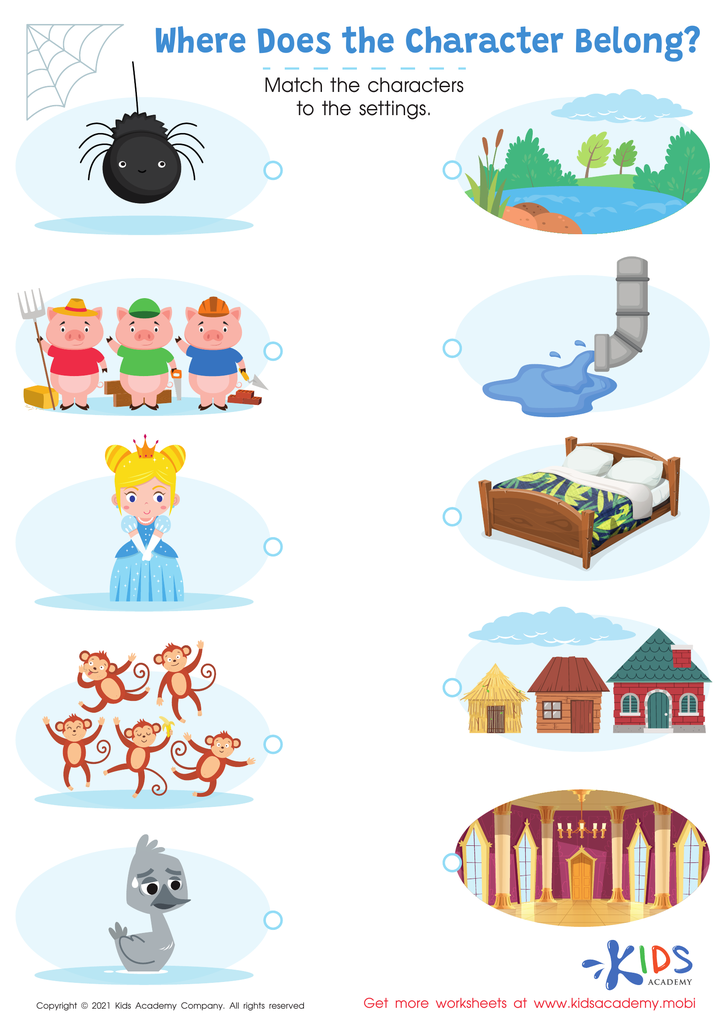
Where Does the Character Belong? Worksheet
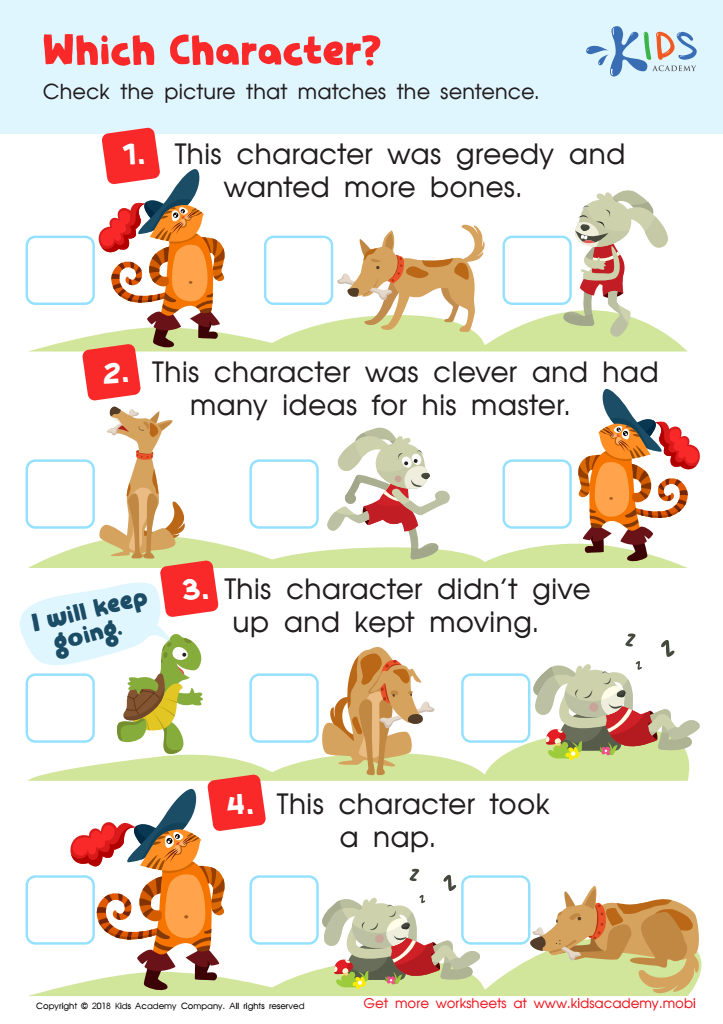
Which Character Worksheet
 Assign to My Students
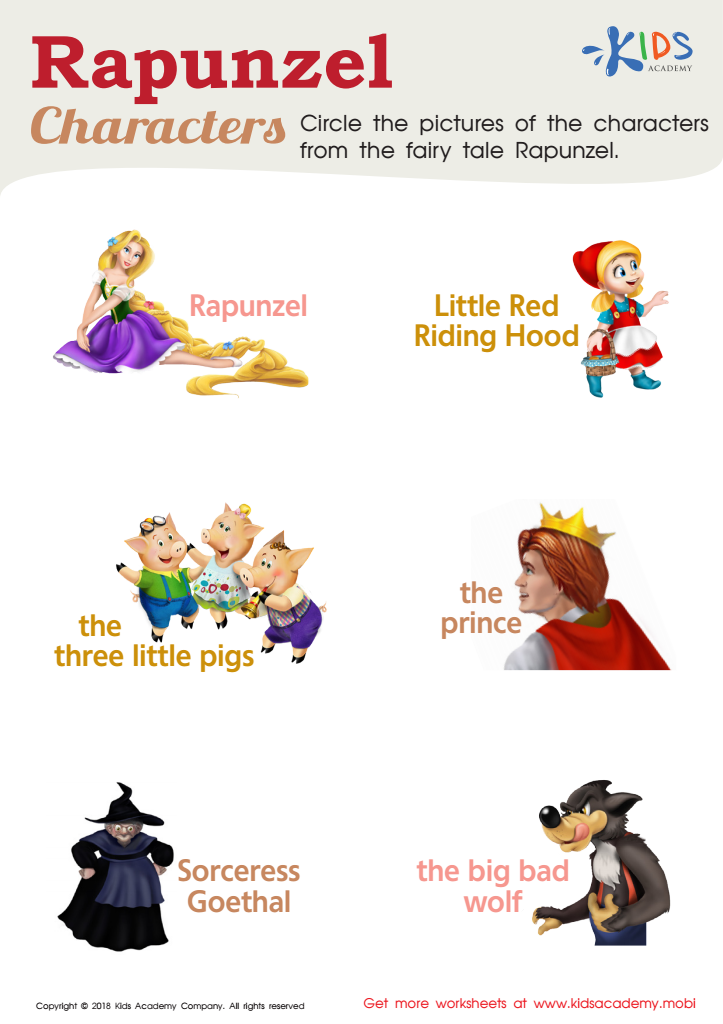
Rapunzel Characters Worksheet
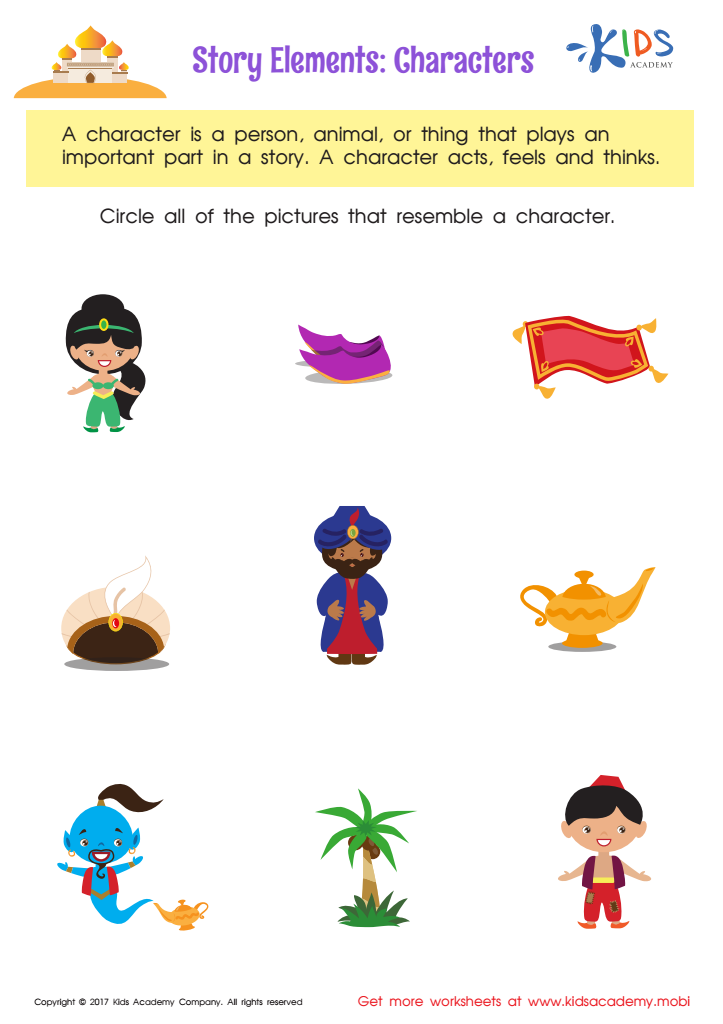
Story Elements Printable







Character recognition in reading fiction for children aged 5-8 is crucial for several reasons. First, it lays the foundation for literacy development. Recognizing characters helps young readers engage with texts, fostering comprehension and fluency. Understanding character traits and motivations allows children to make connections between the story and their own lives, enhancing their ability to relate to others.
Moreover, by exploring fictional characters, children develop empathy and social awareness. As they encounter diverse characters, they learn to appreciate different perspectives and experiences, building emotional intelligence that is essential for their social interactions.
Additionally, discussion around characters in fiction can stimulate critical thinking. Children analyze characters’ actions and decisions, leading to deeper discussions about moral choices and consequences, thereby encouraging them to reflect on their own values and actions.
Finally, reading stories with strong character development sparks creative imagination. Engaging with vibrant characters can inspire children to create their own stories, promoting not just literacy but also creativity and self-expression.
In sum, fostering character recognition in reading fiction is essential for cognitive, emotional, and social development, making it a top priority for both parents and teachers in a child’s early educational journey.








