Understanding perspectives Reading Fiction Worksheets for Ages 5-8
3 filtered results
-
From - To
Explore our "Understanding Perspectives in Reading Fiction Worksheets" designed specifically for children aged 5-8. These engaging and interactive resources help young readers grasp different viewpoints in stories, enhancing their comprehension skills and empathy. Each worksheet provides fun activities that encourage critical thinking and discussion about characters' feelings and motivations. With age-appropriate texts and prompts, your child will develop a richer understanding of narratives while enjoying the process. Perfect for classroom use or at-home learning, these worksheets promote literacy and social-emotional skills in a playful, supportive environment. Begin fostering a love for reading and deeper understanding today!
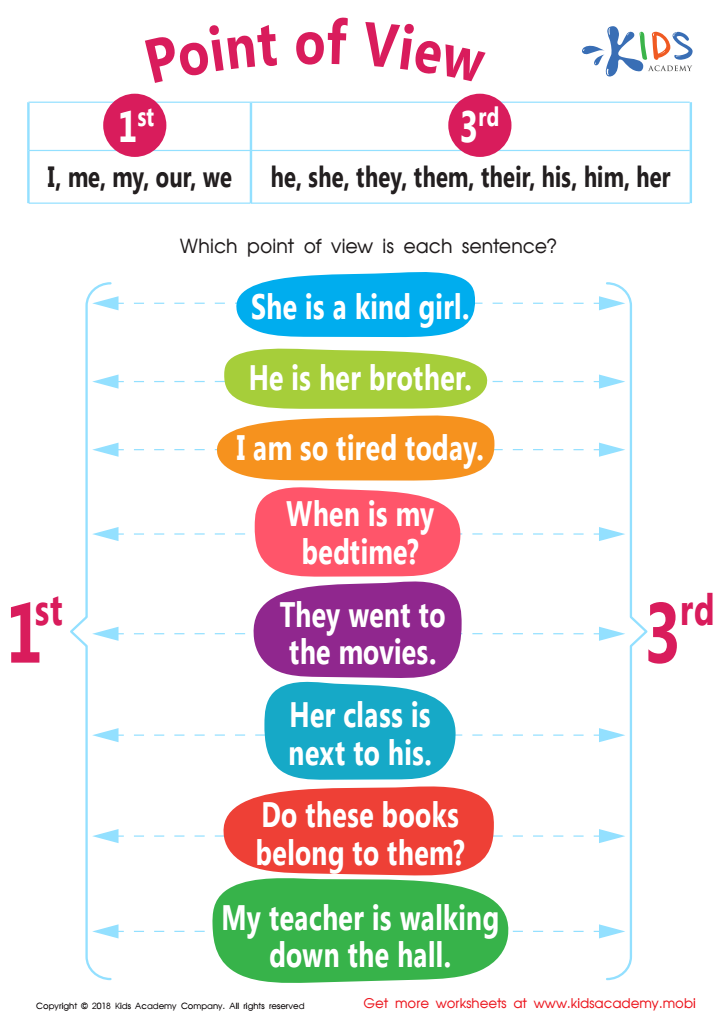
Point of View Worksheet
 Assign to My Students
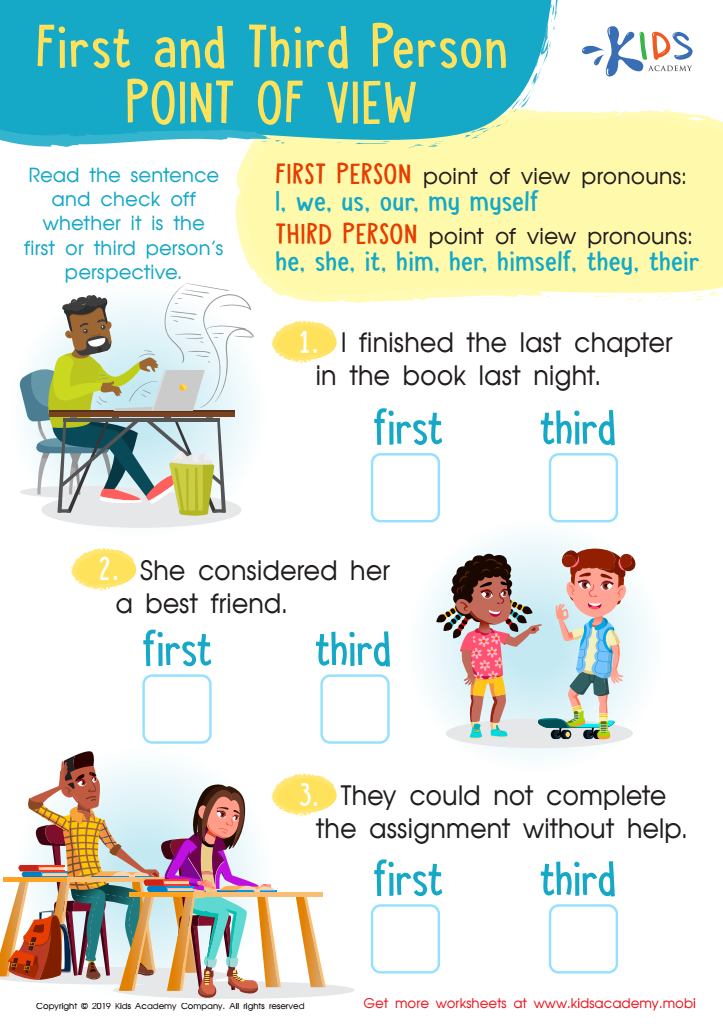
First and Third Person Point of View Worksheet
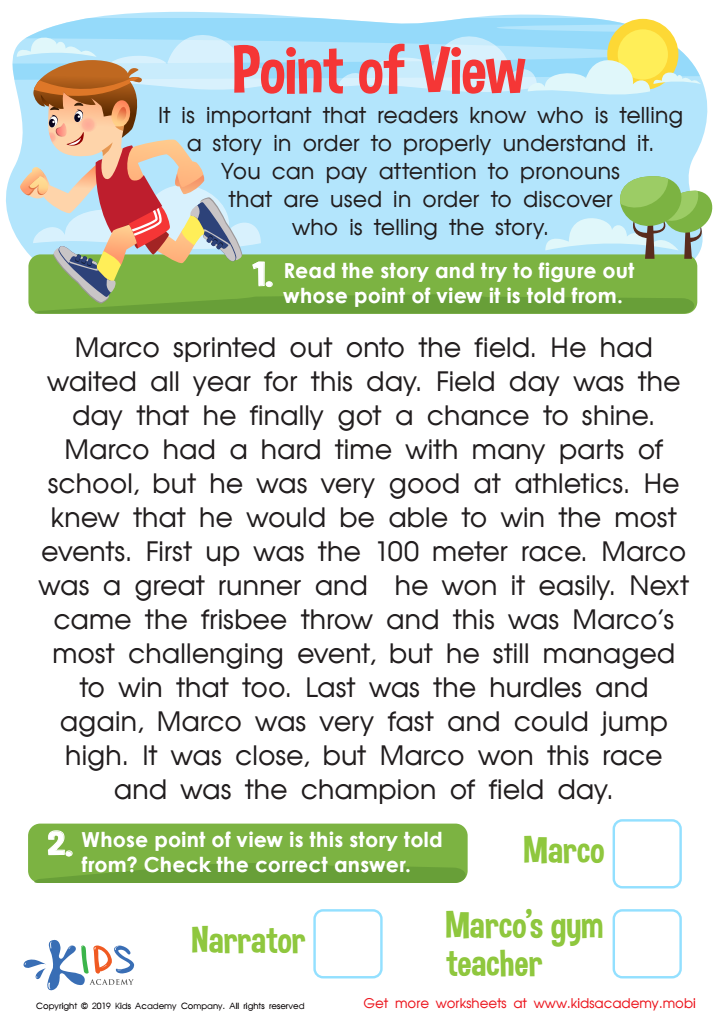
Point of View Worksheet


.jpg)





Understanding perspectives in reading fiction is crucial for children aged 5-8 as it shapes their emotional and social development. At this age, children are beginning to grasp the concept of empathy, and engaging with diverse characters and stories allows them to see the world through different lenses. When parents and teachers encourage children to consider various perspectives while reading, they help foster critical thinking skills and moral reasoning.
Fiction often presents complex social scenarios that require children to navigate relationships and emotions. By discussing characters' motivations and feelings, children learn to articulate their own emotions and understand the feelings of others, building stronger interpersonal skills. This understanding can translate into better conflict resolution in real life, as they become more adept at seeing situations from multiple viewpoints.
Moreover, reading fiction enhances vocabulary and cognitive skills by exposing children to varied language and narrative structures. Parents and teachers can leverage discussions about perspective to promote literacy while also nurturing a child's ability to connect with others in their community. Ultimately, fostering an understanding of perspectives through reading helps create compassionate, thoughtful individuals who can appreciate diversity and navigate the complexities of human relationships.








