
Analytical thinking History Worksheets for Ages 5-8
3 filtered results
Difficulty Level
Grade
Age
-
From - To
Subject
Activity
Standards
Introducing our "Analytical Thinking History Worksheets for Ages 5-8," expertly designed to nurture young minds as they explore the wonders of history. These interactive worksheets focus on developing crucial analytical thinking skills, integrating captivating historical themes with engaging activities that spark curiosity and enhance comprehension. Ideal for young learners, our resources help kids make connections, identify patterns, and think critically about past events. Each worksheet is meticulously crafted to offer age-appropriate challenges, fostering a foundational understanding of history while promoting essential learning skills. Ignite a lifelong passion for learning with our dynamic history worksheets, and watch your child's analytical abilities flourish.
Favorites
With answer key
Interactive
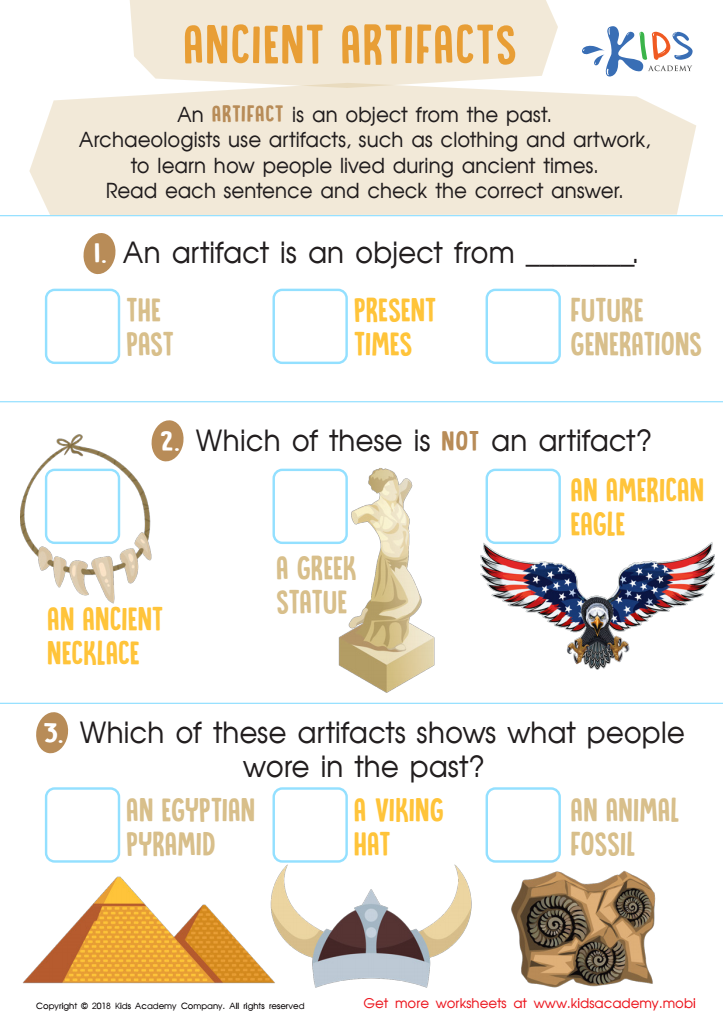
Ancient Artifacts Worksheet
This free worksheet helps kids understand ancient artifacts, from statues to necklaces to fossils. They'll read comprehension questions and select answers from multiple choice options, with pictures to help them grasp the concept. It's a great way for children to learn about artifacts and what they may look like.
 Assign to My Students
Ancient Artifacts Worksheet
Worksheet
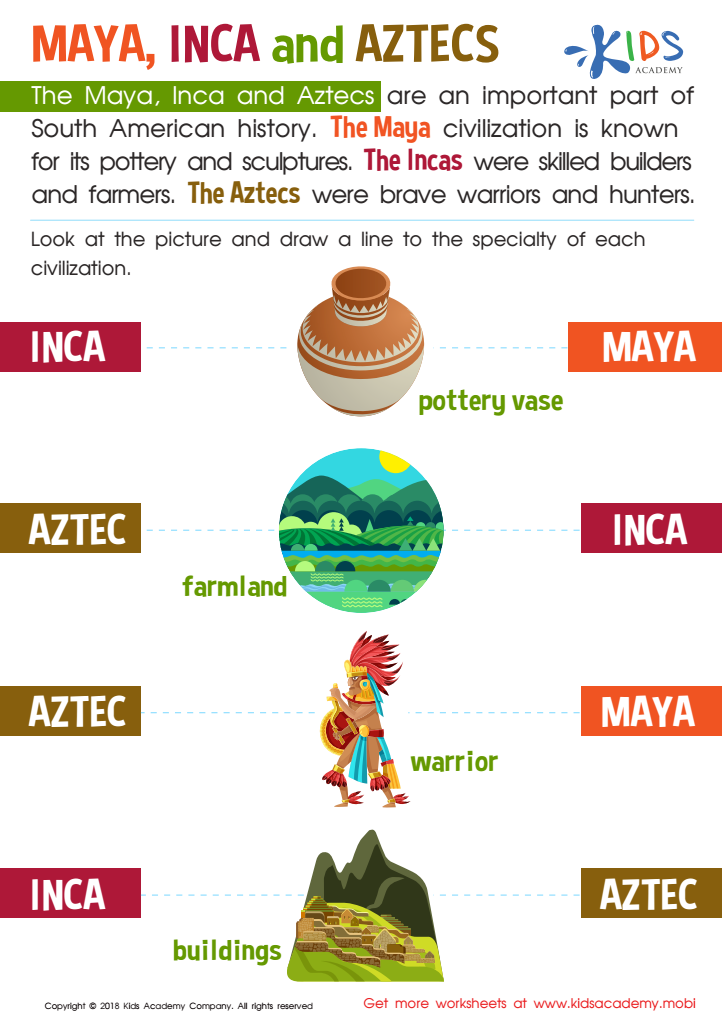
Maya, Inca and Aztecs Worksheet
This worksheet introduces your child to the thrilling histories of the Mayan, Incan and Aztec cultures, teaching them about their warriors, sculptors and farmers. With traceable lines and colorful imagery, they'll connect each culture with its correct associated picture - great for cementing concepts!
Maya, Inca and Aztecs Worksheet
Worksheet
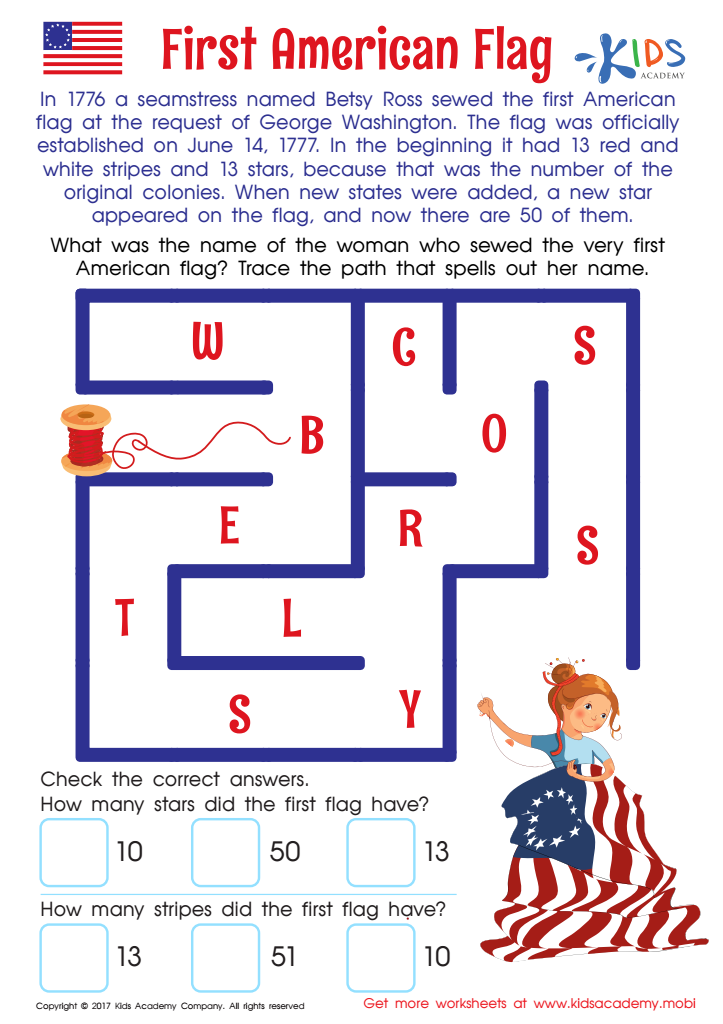
First American Flag Worksheet
Betsy Ross sewed the first American flag at the request of George Washington. This worksheet helps kids learn about this milestone in U.S. history, plus the design and origins of the flag.
First American Flag Worksheet
Worksheet
Join Kids Academy for Free
Who is primarily going to use this learning content?








Fostering analytical thinking in children aged 5-8 is crucial for their cognitive and academic development. Parents and teachers should value this because it lays the foundation for problem-solving, critical thinking, and decision-making skills that are vital for future success. Encouraging analytical thinking at a young age helps children learn how to break down complex tasks into manageable parts, synthesize information, and draw conclusions.
Incorporating history into this process enriches learning by providing context and concrete examples through stories of the past, helping children understand cause-and-effect relationships. For instance, by examining simple historical events or figures, young learners can start to comprehend the relevance of actions and consequences, fostering empathy and ethical reasoning.
Moreover, early exposure to analytical thinking enhances academic performance across subjects. In math, it helps with patterns and logical sequencing, while in science, it encourages curiosity and hypothesizing. Furthermore, it strengthens reading comprehension as children learn to infer and predict plot developments.
Finally, nurturing these skills early on promotes lifelong learning habits, making children more adaptable and open-minded. By prioritizing analytical thinking through historical context, parents and teachers can equip children with the tools they need to navigate an increasingly complex world.








