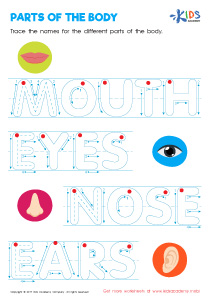
Weather Vocabulary World Around Us Worksheets for Ages 5-8
3 filtered results
-
From - To
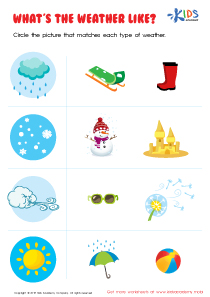
Introduce young learners to the fascinating world of weather with our engaging "Weather Vocabulary World Around Us Worksheets" for ages 5-8! These interactive worksheets are designed to enhance vocabulary related to weather phenomena, helping children identify and describe conditions like sunny, rainy, cloudy, and snowy. Through fun activities like matching games, fill-in-the-blanks, and colorful illustrations, kids will develop their language skills while exploring the natural world. Perfect for home or classroom use, our worksheets are aligned with early learning standards, ensuring a comprehensive educational experience. Empower your child with knowledge about the ever-changing weather with these fun and educational resources!
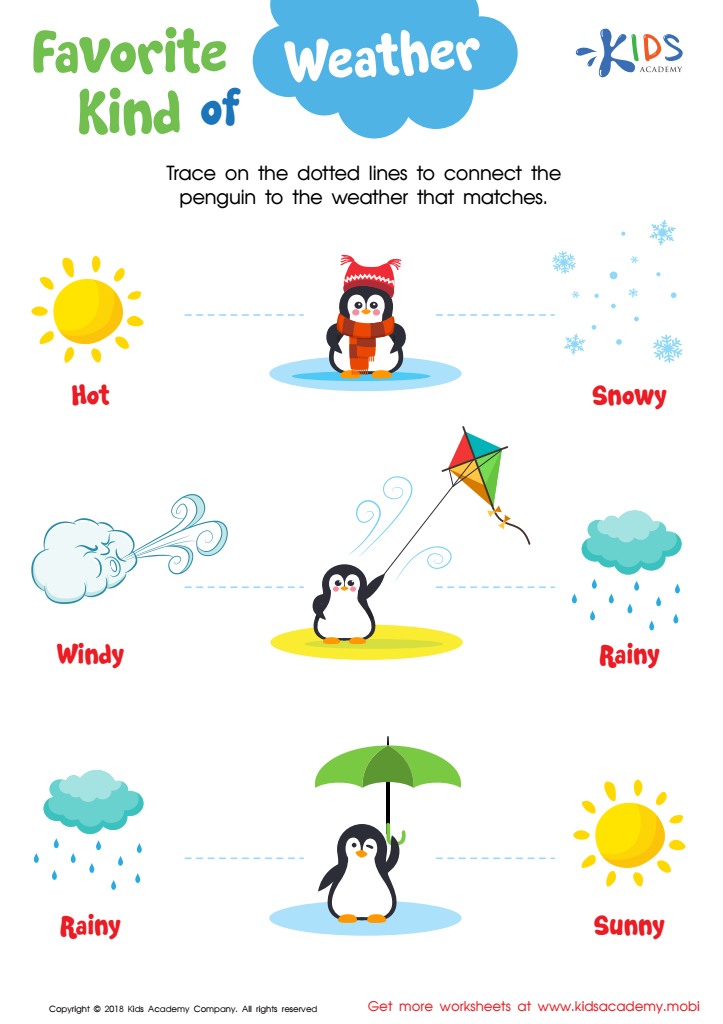
Favorite Kind of Weather Worksheet
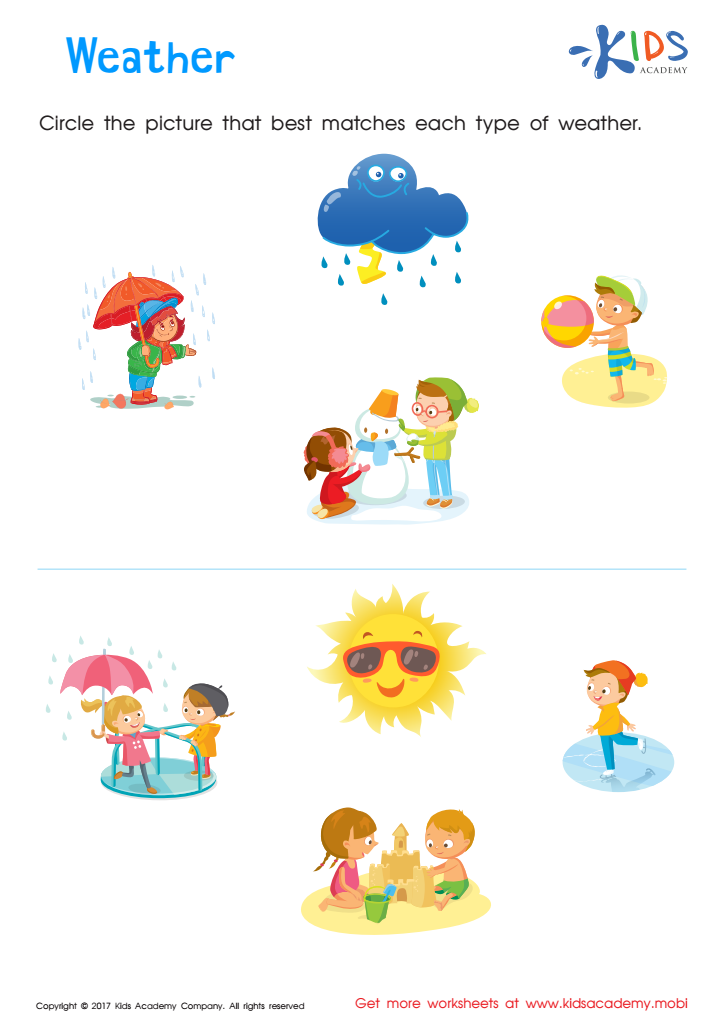
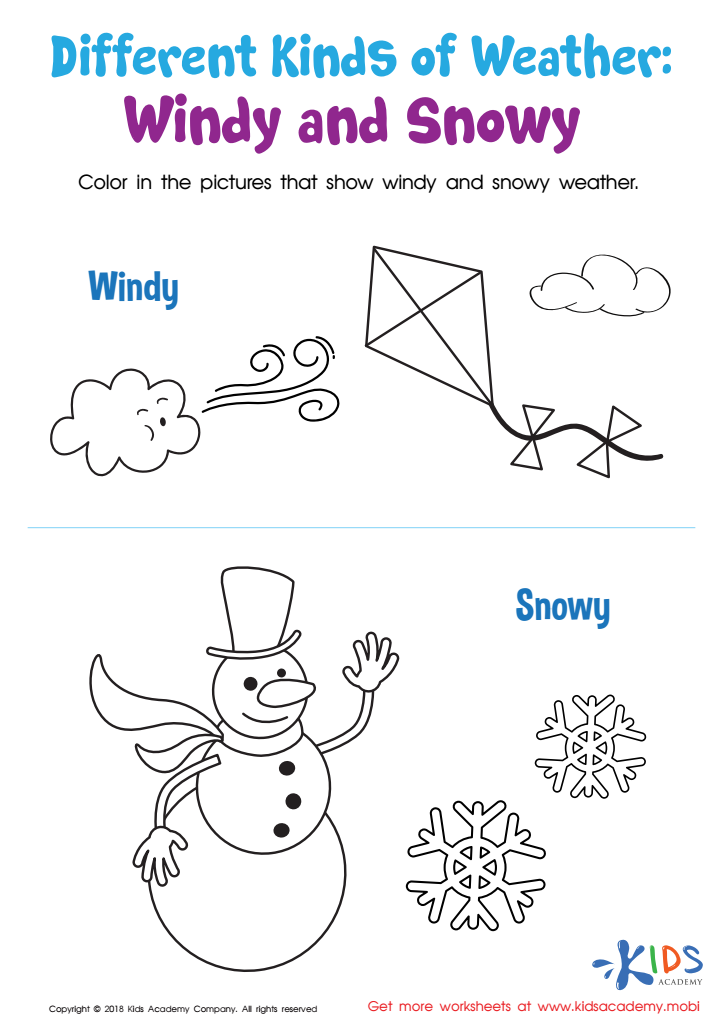
Different Kinds of Weather: Windy and Snowy Worksheet
 Assign to My Students








Teaching weather vocabulary to children ages 5-8 is essential for several reasons. Firstly, it enhances their literacy skills. By learning vocabulary specific to weather, children expand their language development, improving communication and comprehension. These skills are foundational for their academic journey.
Secondly, understanding weather vocabulary helps children connect with the world around them. As they learn terms like "rain," "sunny," "cloudy," and "storm," they develop an awareness of their environment, fostering curiosity and engagement with nature. This connection encourages outdoor play and observation, crucial for their physical and emotional development.
Additionally, familiarizing children with weather terms can promote safety awareness. By understanding concepts like thunderstorms or extreme heat, they learn how to prepare for different weather conditions, which is essential for their well-being.
Moreover, weather discussions can lead to cross-curricular learning. It can integrate science, geography, and art, allowing children to engage in diverse activities such as weather experiments, storytelling, or creating weather charts.
Ultimately, teaching weather vocabulary enriches children’s cognitive and emotional skills, equipping them with the knowledge necessary to navigate and appreciate their world, creating informed and resilient individuals. For parents and teachers, investing in this vocabulary is nurturing a child's lifelong learning and adaptation skills.