
Enhancing reading skills Grammar Worksheets for Ages 5-8
3 filtered results
Difficulty Level
Grade
Age
-
From - To
Subject
Activity
Standards
Unlock your child's potential with our "Enhancing Reading Skills Grammar Worksheets for Ages 5-8". Carefully designed by early education experts, these worksheets blend fun and learning, focusing on essential grammar rules while improving reading fluency. Incorporating colorful illustrations and engaging activities, our resources make grammar lessons appealing and interactive. Perfect for young learners, these printable worksheets cover a variety of topics like nouns, verbs, sentence structure, and punctuation. Ideal for both classroom and home use, they offer a solid foundation for reading comprehension and writing skills. Empower your child to excel in language arts with Kids Academy’s comprehensive tools.
Favorites
With answer key
Interactive
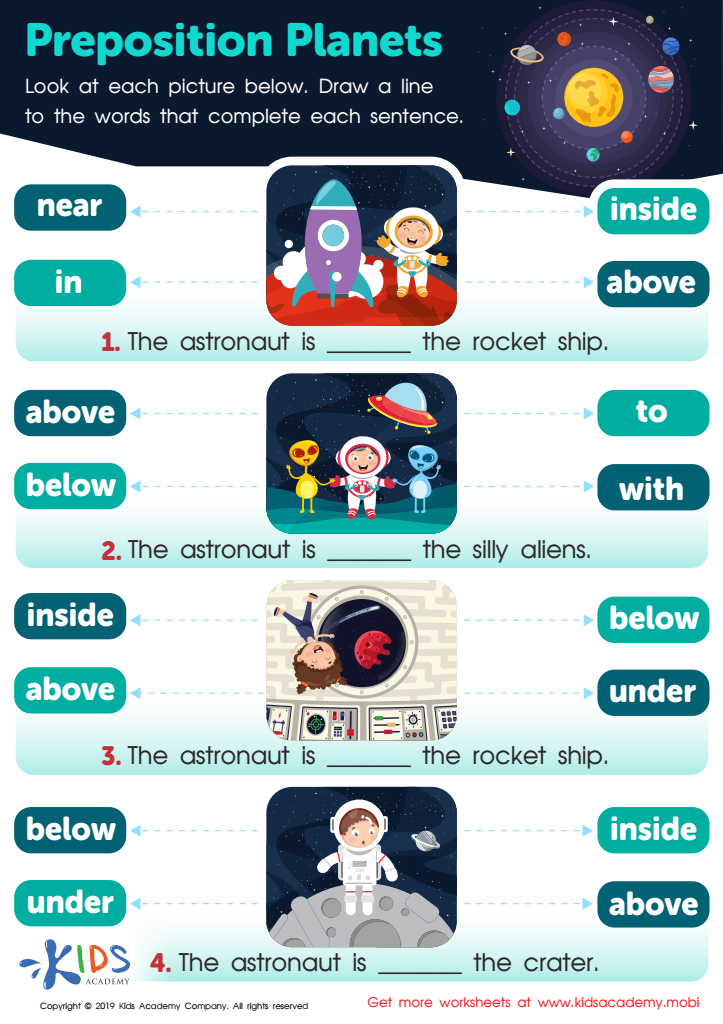
Preposition Planets Worksheet
Remind your child about outer space: which planet do we live on, and who travels there for research? Explain that prepositions show location, direction, and time. Look at the worksheet with colorful pictures of astronauts. Help your kids draw lines to the words that complete each sentence.
 Assign to My Students
Preposition Planets Worksheet
Worksheet
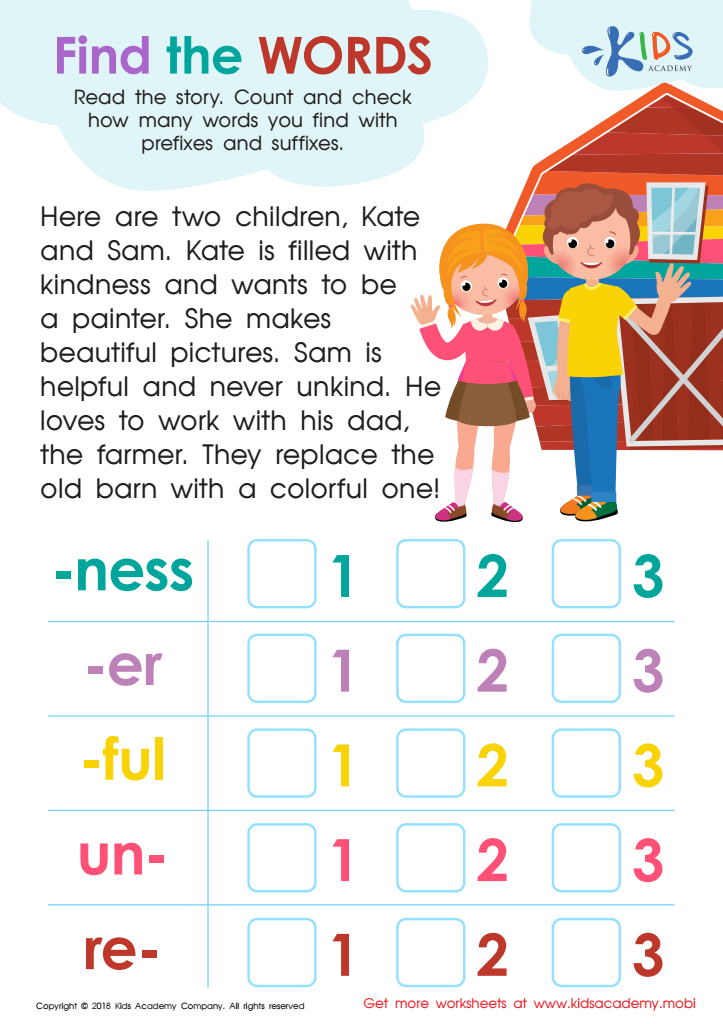
Prefix and Suffix Worksheet For Grade 3
Read the story about Sam and Kate and help your grade 3 child tally all the words with prefixes and suffixes. Check their work by counting the words and ticking the appropriate boxes. This entertaining worksheet will help develop their reading and counting skills! (80 words)
Prefix and Suffix Worksheet For Grade 3
Worksheet
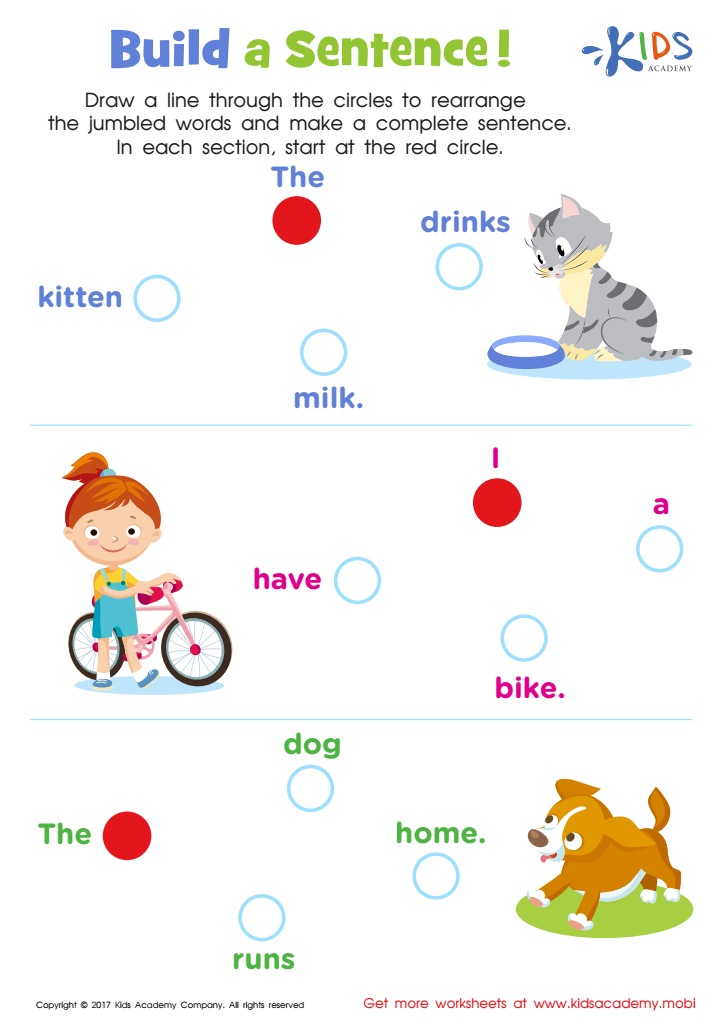
Sentence Structure Printable
Let your child enjoy learning sentences with this fun PDF. It'll help build confidence in writing, plus foster a sense of accomplishment when sentences are correctly formed!
Sentence Structure Printable
Worksheet
Join Kids Academy for Free
Who is primarily going to use this learning content?





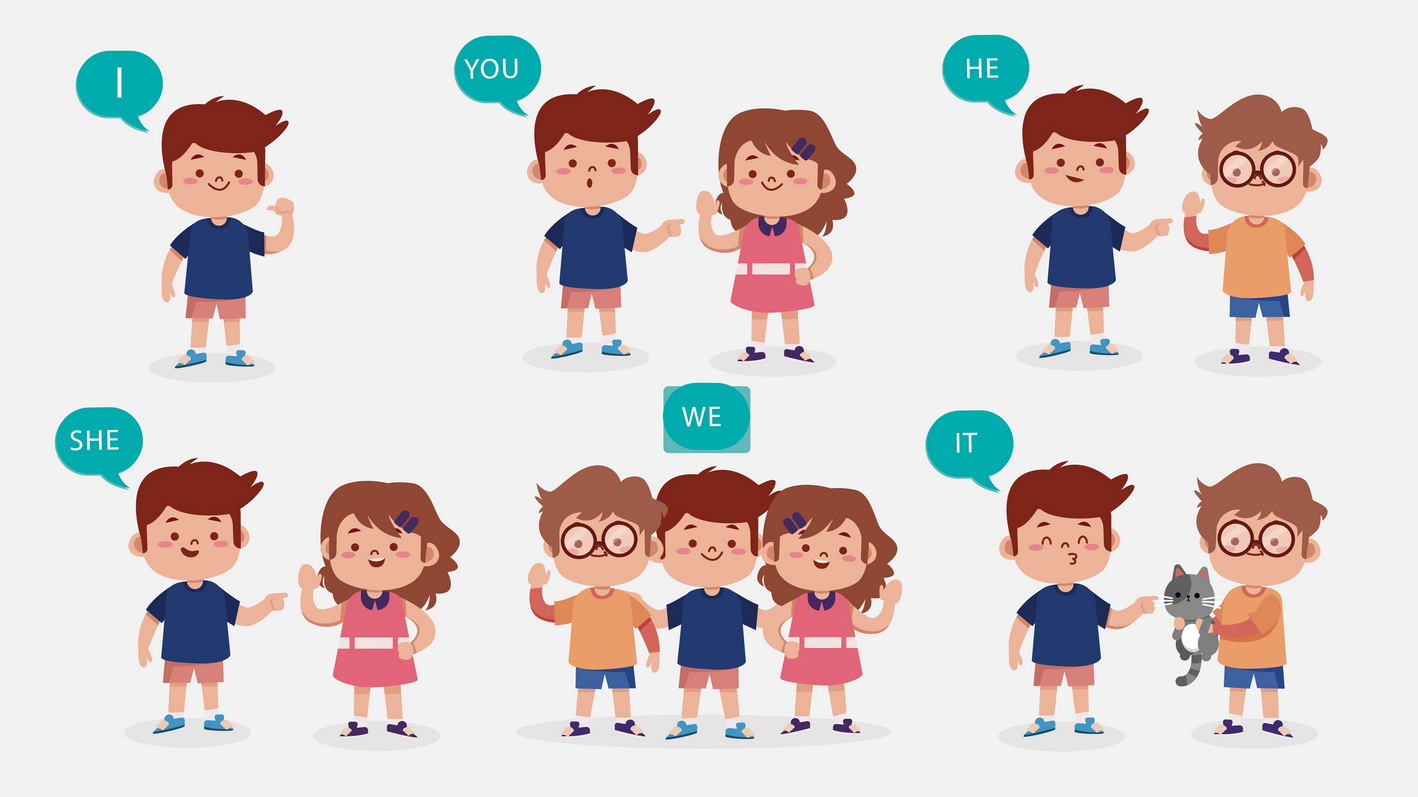

Parents and teachers should prioritize enhancing reading skills and grammar for children aged 5 to 8 because these formative years lay the foundation for future academic success. At this age, young minds are highly receptive and building essential literacy skills early can significantly influence a child's lifelong learning journey. Strong reading abilities help children understand and engage with the world around them, fostering curiosity and a love for learning. A solid grasp of grammar supports clear communication, essential for both social interactions and academic achievements.
Moreover, proficient reading and grammar skills are interconnected; understanding sentence structure and vocabulary helps children decode texts more efficiently, which enhances comprehension. This, in turn, builds confidence, enabling children to tackle more complex texts and broader subject matter with ease.
Early proficiency in reading and grammar also supports cognitive development. It enhances critical thinking, problem-solving, and the ability to analyze and synthesize information. These skills are not only crucial for school but also for life beyond the classroom, influencing future career opportunities and social interactions.
Investing time in developing these skills in early childhood helps close achievement gaps and sets up children for a future of educational and personal success. Parents and teachers thus play a vital role in nurturing these foundational skills through engaging, supportive, and consistent practices.








