Discover exciting "Alphabet Recognition Writing Worksheets for Ages 5-8" to make learning letters fun and interactive! Designed to enhance reading and writing skills, our printable worksheets offer engaging activities that help kids recognize and write every letter of the alphabet. These worksheets integrate vibrant illustrations, traceable letters, and matching games to reinforce alphabet knowledge. Perfect for early learners, they build a strong foundation in literacy while encouraging creativity and fine motor skills. Ideal for home or classroom use, Kids Academy resources make alphabet learning an enjoyable experience for young children. Boost your child's letter recognition today!

Check out this FREE Trial Lesson on Writing for age 5-8!

Tracing Lowercase Letters a-i

Favorites
With answer key
Interactive
  • 5-8
  • Alphabet Recognition
  • Writing
Letter Spacing Practice Worksheet

Letter Spacing Practice Worksheet

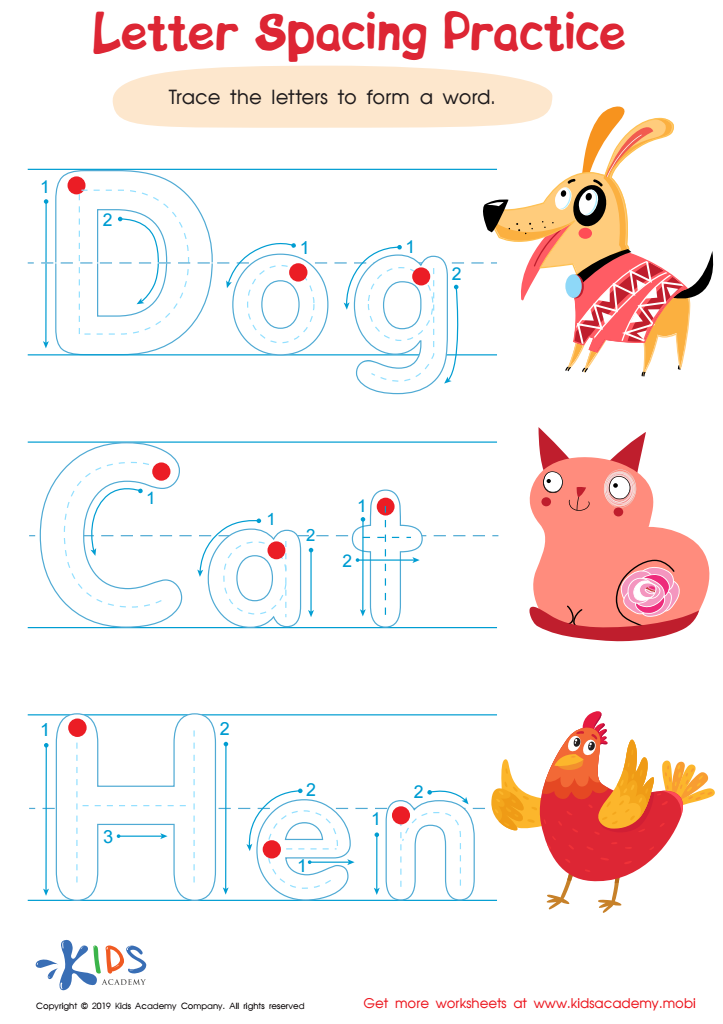
Encourage your preschoolers to practice writing with this worksheet. Ask them to identify the animals in the picture and help them trace the letters to form the words. It'll help develop their writing skills and even if they make mistakes, you can guide them with a helping hand.
Letter Spacing Practice Worksheet
Worksheet
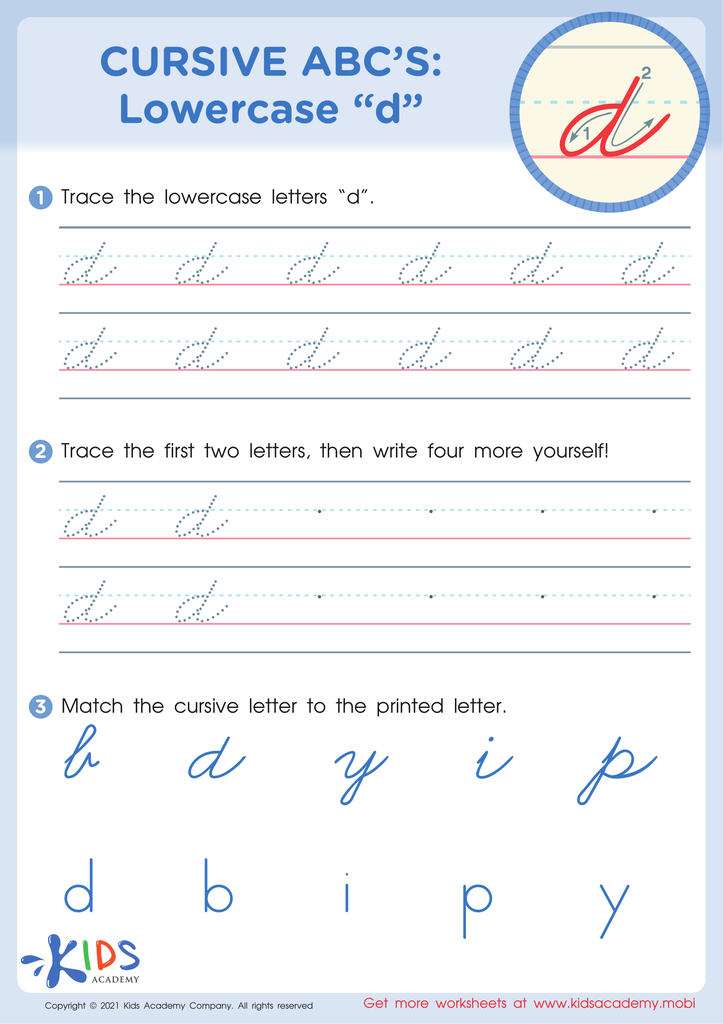
Cursive ABCs: Lowercase d

Cursive ABCs: Lowercase d

To make learning fun, introduce colorful worksheets! These help young learners perfect their cursive lowercase 'd'. By the end, they'll be better at writing and identifying the letter. It's an easy and enjoyable exercise for kids!
Cursive ABCs: Lowercase d
Worksheet
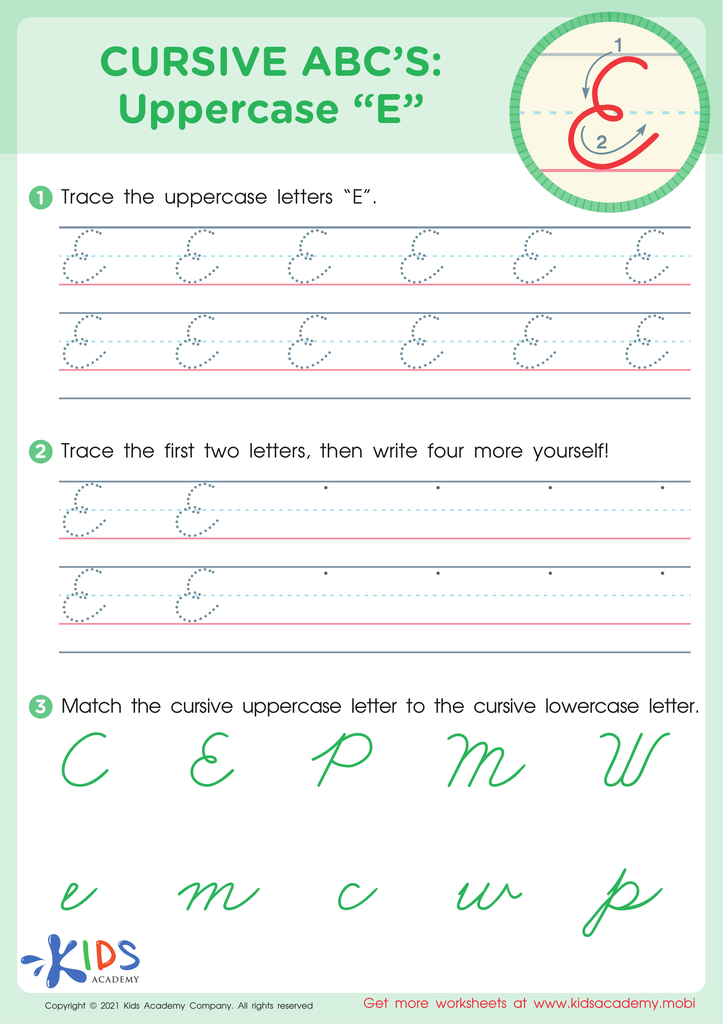
Cursive ABCs: Uppercase E

Cursive ABCs: Uppercase E

Ask your child if they can identify the letter 'E' and give examples. Each letter is unique, so provide coaching. Have them trace cursive 'E' to become familiar and boost confidence. Then, ask them to write it on their own.
Cursive ABCs: Uppercase E
Worksheet
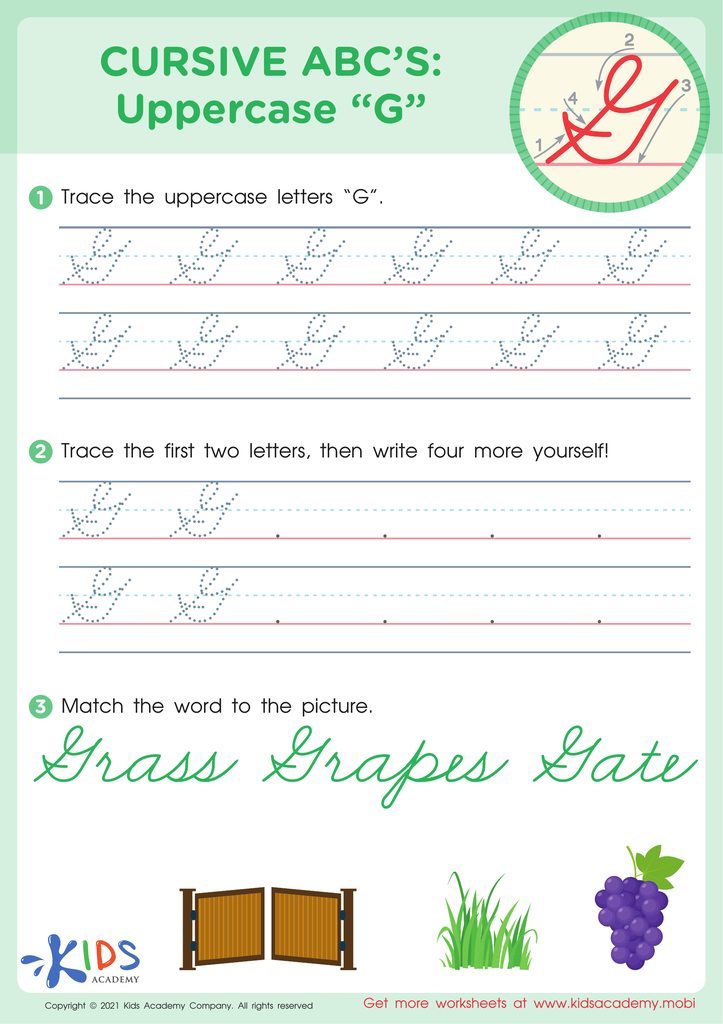
Cursive ABCs: Uppercase G

Cursive ABCs: Uppercase G

Remind your kids of words beginning with 'G' like 'girl' and 'goat'. Ask them to give examples too. Use this tracing worksheet to help your kids practice writing the cursive uppercase 'G'. It'll help them perfect their motor skills and get better at cursive letters.
Cursive ABCs: Uppercase G
Worksheet
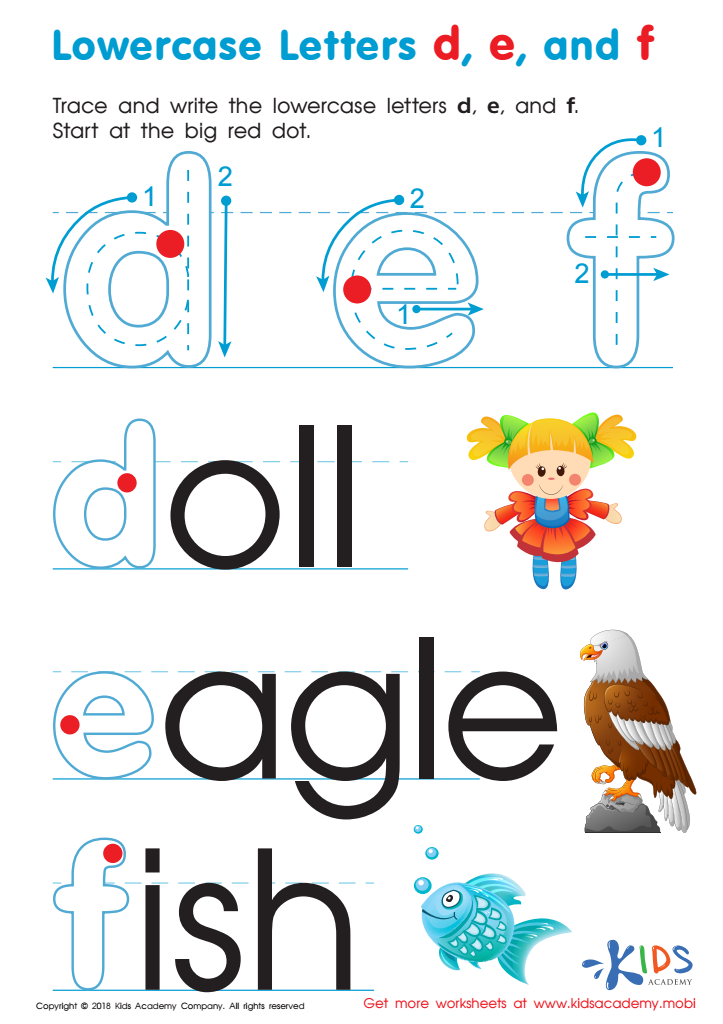
Lowercase Letters d e f Worksheet

Lowercase Letters d e f Worksheet

Help your child learn the alphabet letters by tracing and writing the lowercase letters d, e, and f. Begin at the big red dot and follow the dots. This worksheet will help your little one gain a better understanding of the letters.
Lowercase Letters d e f Worksheet
Worksheet
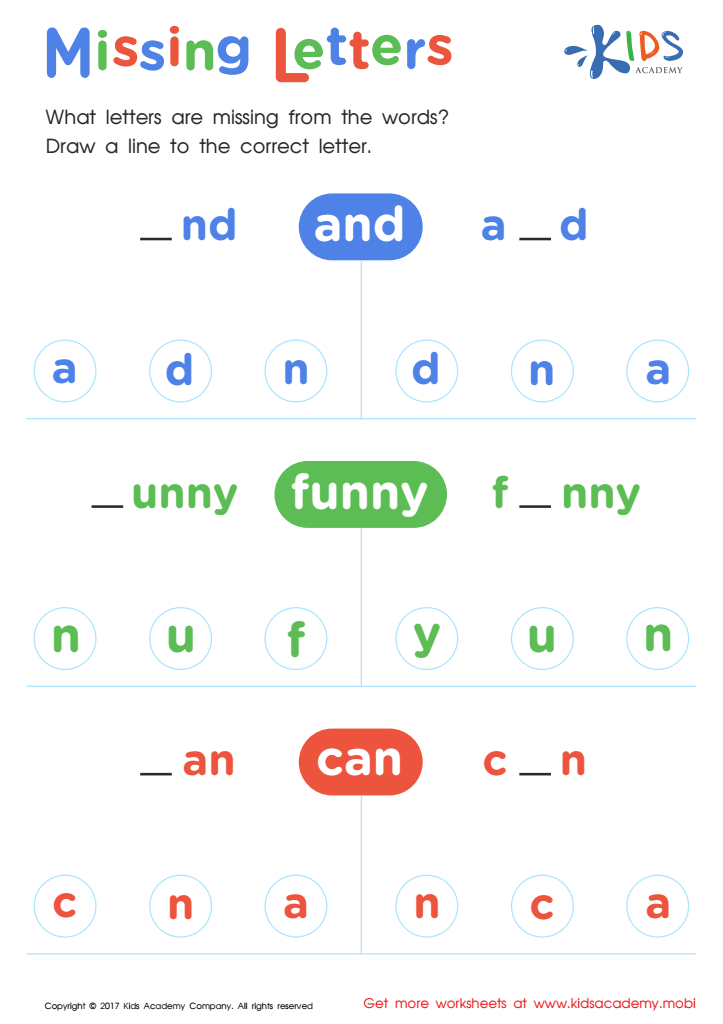
Missing Letters Worksheet

Missing Letters Worksheet

Review sight words with this fun matching worksheet from Kids Academy! Look at the sight words in the middle, read them aloud and find the missing letter on each side for each word. Draw a line to the correct letter to complete the sheet!
Missing Letters Worksheet
Worksheet
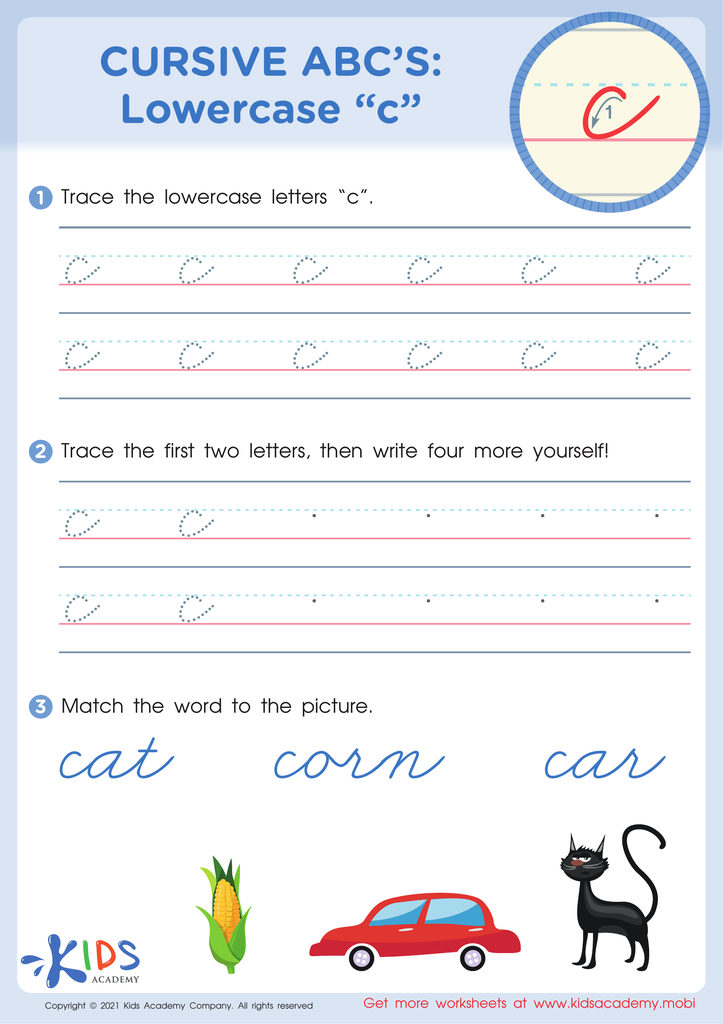
Cursive ABCs: Lowercase c

Cursive ABCs: Lowercase c

Once your child has successfully printed their letters, help them learn to recognize and write the alphabet in cursive. Struggling? This worksheet is perfect to assist them. Writing is an essential skill for kids to learn, so do all you can to help them. Use these tracing worksheets and guide them as they write the lowercase letter 'c' in cursive.
Cursive ABCs: Lowercase c
Worksheet
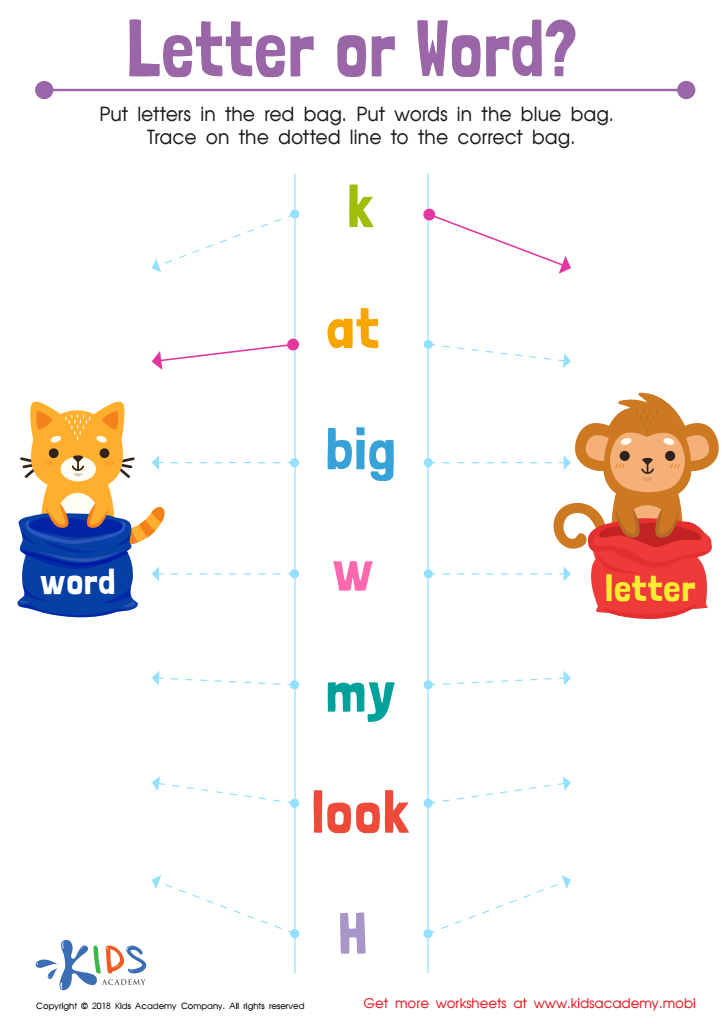
Letter or Word? Worksheet

Letter or Word? Worksheet

Help your kids differentiate between words and letters. If they can recite their alphabets and identify common words, this tracing sheet will be a breeze. Have them trace on the dotted lines to place the letters in the red bag with the kitten, and the words in the blue bag with the monkey.
Letter or Word? Worksheet
Worksheet
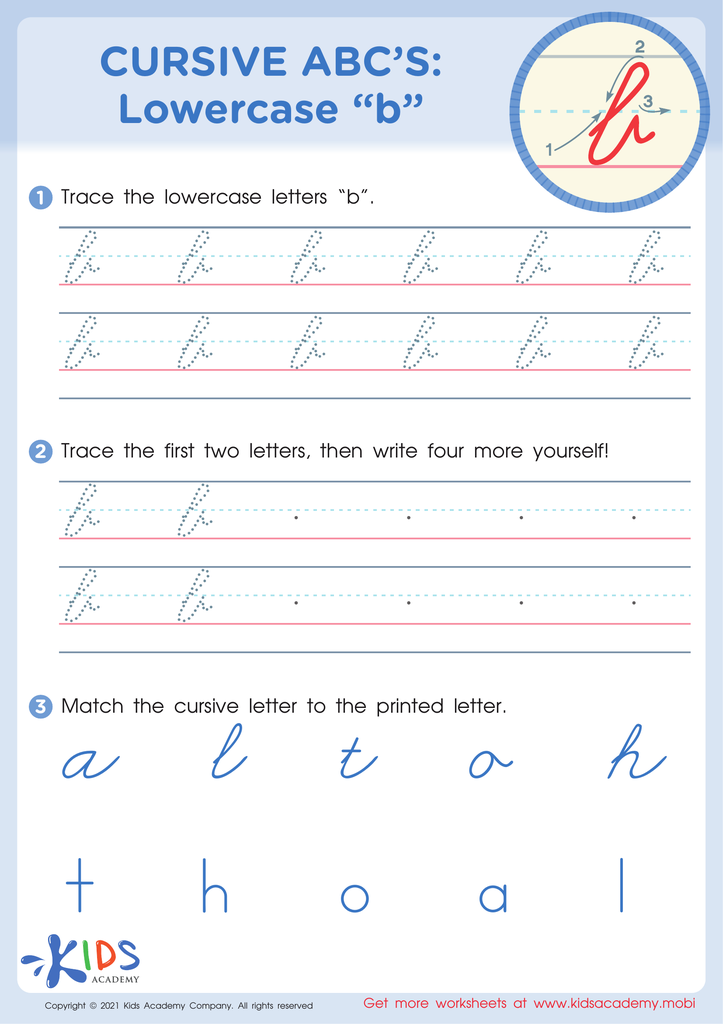
Cursive ABCs: Lowercase b

Cursive ABCs: Lowercase b

Trace two lines of lowercase b's with your kids. Guide them through the loops and swirls to help them learn cursive handwriting. Then let them practice writing the letter b themselves in the last two lines. With this exercise, your kids should become better at writing and recognizing the lowercase cursive b.
Cursive ABCs: Lowercase b
Worksheet
Cursive ABCs: Uppercase A

Cursive ABCs: Uppercase A

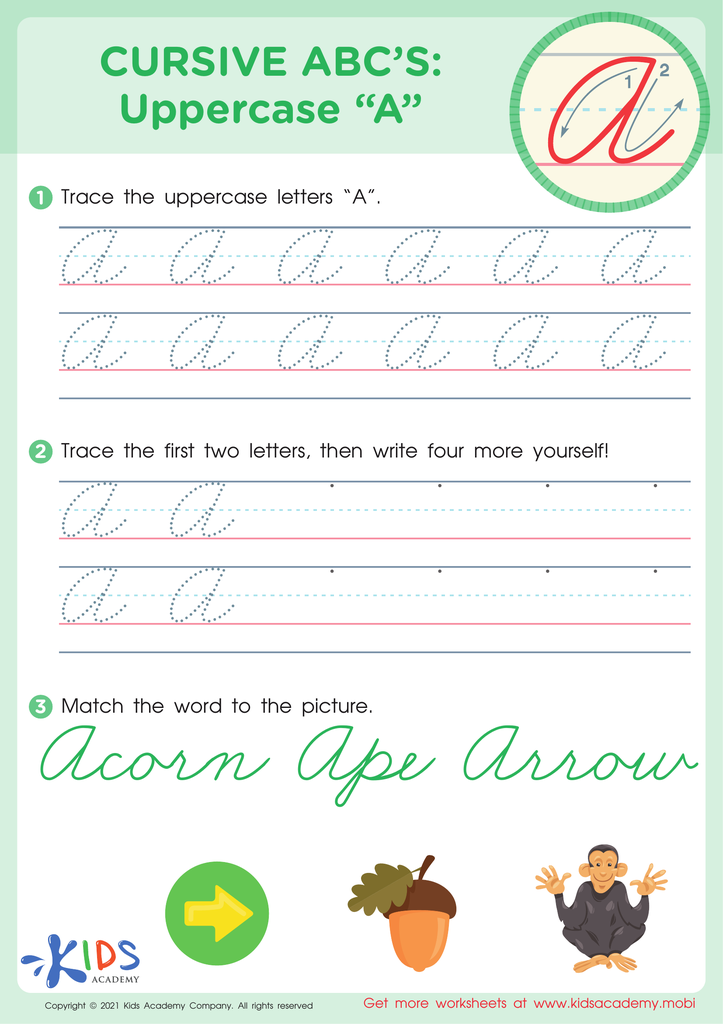
Help your kids develop their writing skills with our great tracing sheets. Improve their motor skills, as well as their vocabulary, by guiding them through tracing the dotted lines for the uppercase letters of the alphabet. When they are ready, let them practice writing the letters on their own for improved confidence.
Cursive ABCs: Uppercase A
Worksheet
Cursive ABCs: Uppercase H

Cursive ABCs: Uppercase H

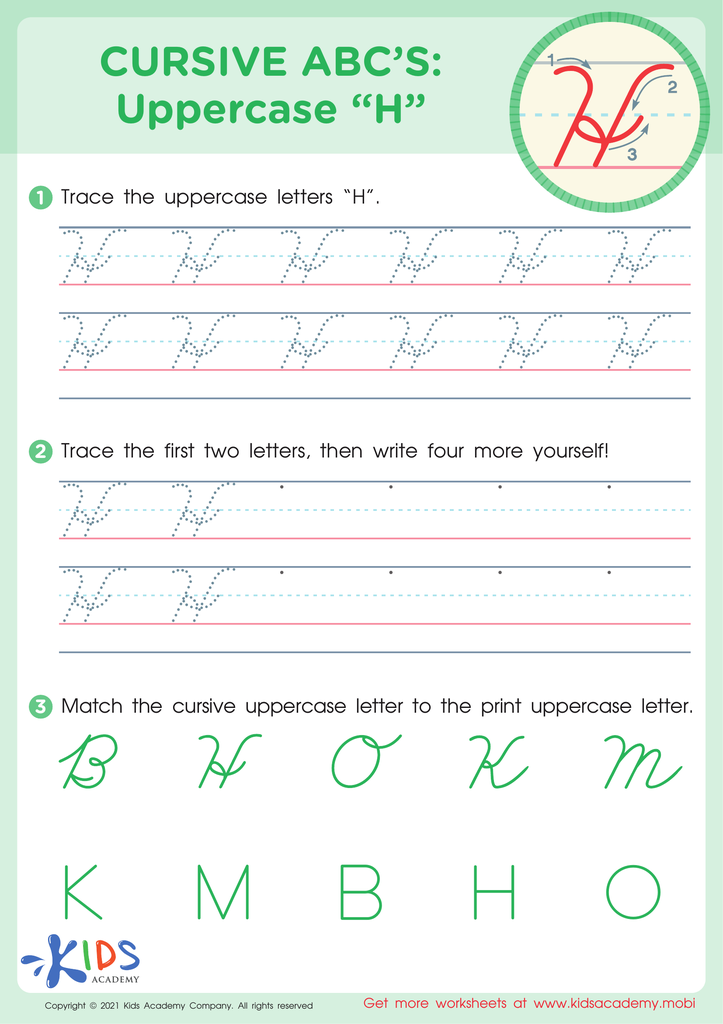
Have your child recite the alphabet and give you words beginning with H. This tracing sheet is perfect to help them improve their handwriting. Guide their hands as they trace the uppercase H, then have them practise writing it alone. At the bottom is an exercise to check their letter recognition.
Cursive ABCs: Uppercase H
Worksheet


Alphabet recognition and writing are foundational skills that set the stage for early literacy and overall academic success. For children aged 5-8, learning the alphabet isn't just about memorizing letters; it forms the basis for reading, writing, and communication. When children recognize and write alphabet letters proficiently, they are well-prepared to understand phonics, which is the next step in learning how to decode words and read fluently.

At this critical age, the brain is exceptionally receptive to learning and forming new connections. Mastering alphabet recognition helps children with letter-sound correspondence, enabling them to sound out words and engage more effectively with texts. This early engagement directly correlates with improved vocabulary, comprehension, and cognitive development in general.

Moreover, writing the alphabet boosts fine motor skills and hand-eye coordination. Proficient writing skills lead to better spelling and a more substantial ability to express ideas, which are critical for building self-esteem and fostering creativity in young learners.

Therefore, parents and teachers should prioritize alphabet recognition and writing to help ensure that children are on a pathway to becoming confident, capable readers and writers. This foundation creates a ripple effect, positively affecting all academic areas and setting the stage for a love of lifelong learning.