
Sentence completion Writing Worksheets for Ages 5-8
5 filtered results
Difficulty Level
Grade
Age
-
From - To
Subject
Activity
Standards
Enhance your child's writing skills with our engaging Sentence Completion Writing Worksheets, designed for ages 5-8. These worksheets offer a fun and interactive way to develop vocabulary, creativity, and comprehension. As children complete sentences with their own imaginative responses, they boost their confidence in writing while improving their language abilities. Ideal for home or classroom use, our worksheets facilitate independent learning and encourage young minds to express themselves. Whether practicing simple sentences or exploring more complex structures, your child will enjoy the journey to becoming a proficient writer. Discover the joy of writing today with our captivating resources!
Favorites
With answer key
Interactive
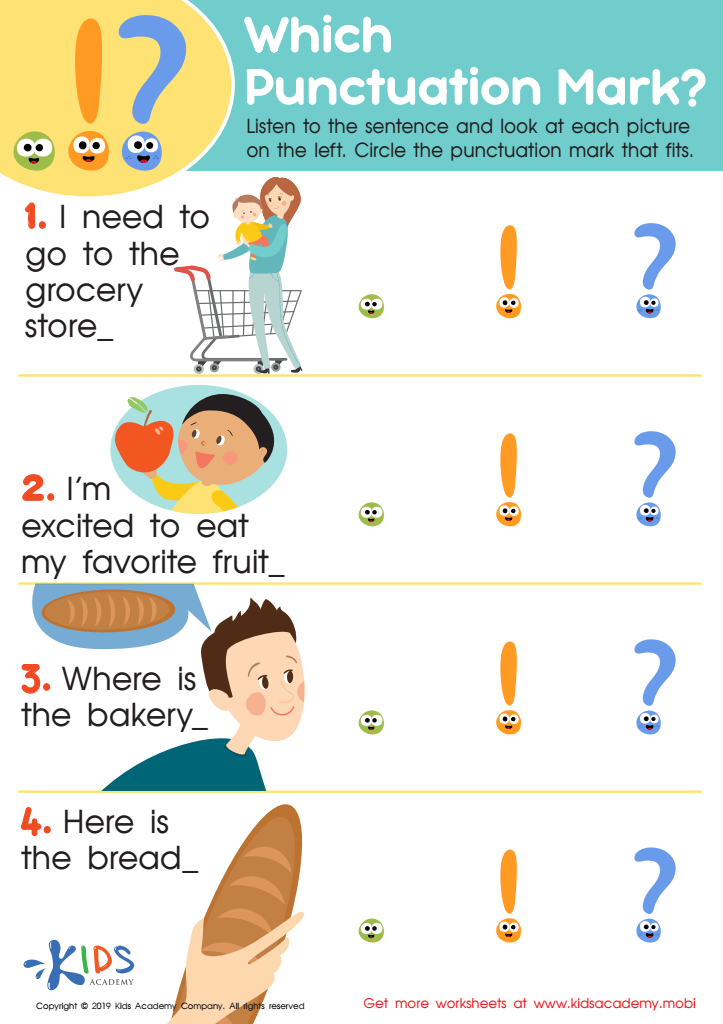
Which Punctuation Mark Worksheet
Punctuation marks are essential for expressing what we say. This worksheet asks your kindergarten student to circle the correct punctuation mark for each sentence. Read each sentence aloud and help them identify the expression needed. A picture accompanies each sentence. Enjoy! (79 words)
 Assign to My Students
Which Punctuation Mark Worksheet
Worksheet
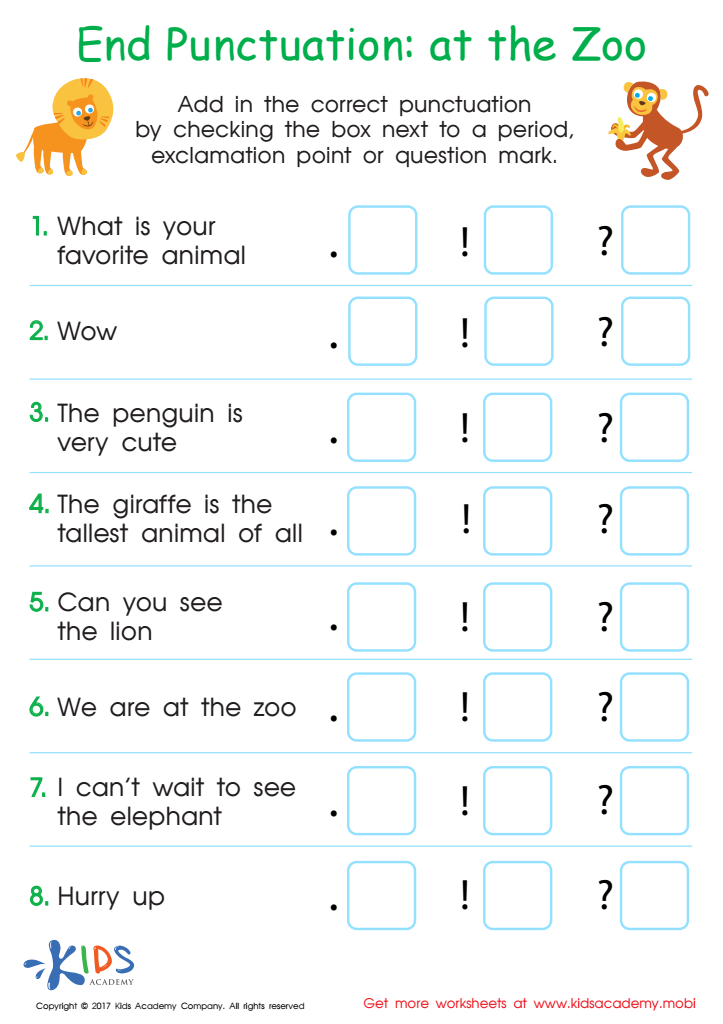
End Punctuation: At the Zoo Worksheet
Let your kid hone their sentence and punctuation skills with this cute At the Zoo worksheet. Read it out loud to provide guidance if needed, and help your child find the right punctuation mark for each sentence.
End Punctuation: At the Zoo Worksheet
Worksheet
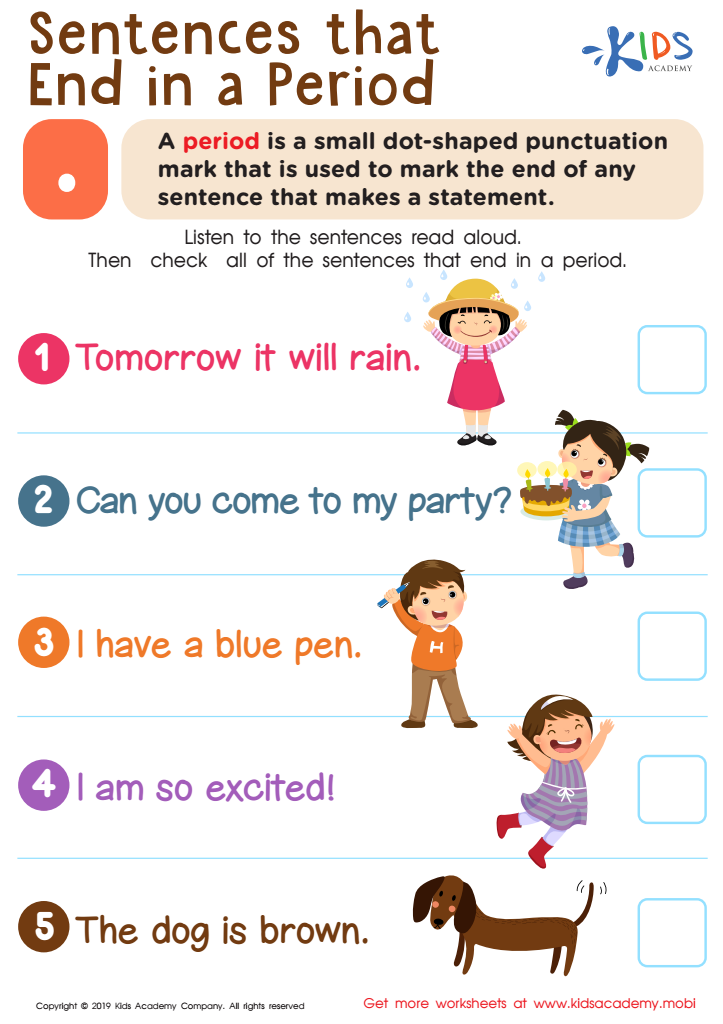
Sentences That End in a Period Worksheet
Before beginning, ask your kids if they know what punctuation marks are and can name a few. Common examples are the period (a small dot-shaped mark at the end of sentences), comma, question mark, and exclamation mark. Help practice their use with questions in the worksheet.
Sentences That End in a Period Worksheet
Worksheet
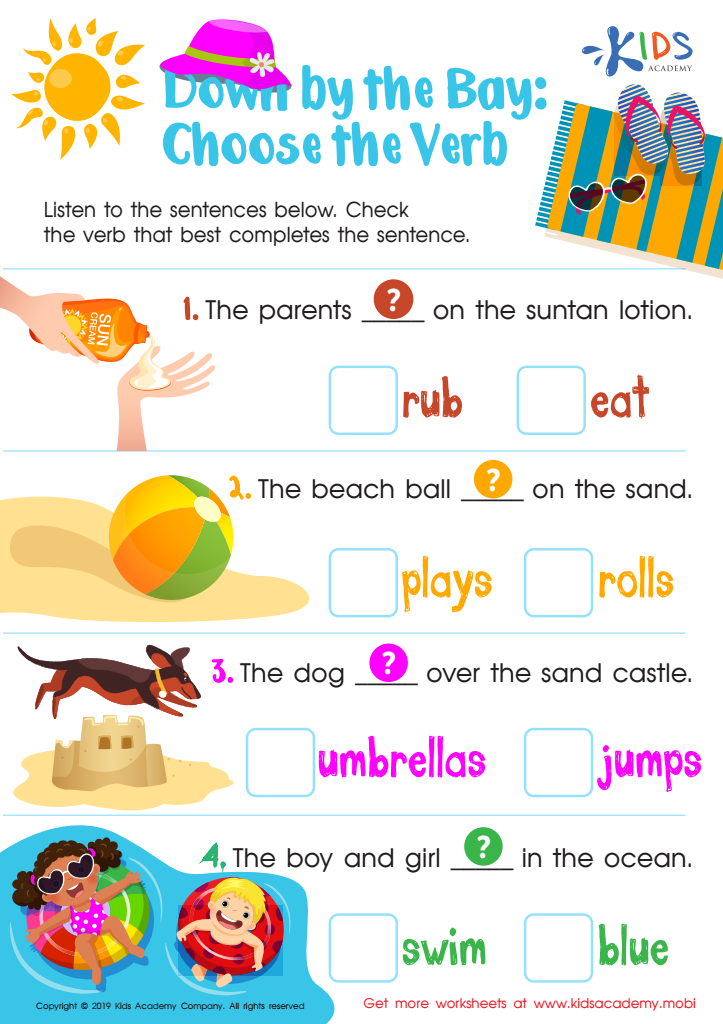
Down by the Bay: Choose the Verb Worksheet
Teach your kids about verbs: words that describe actions, like 'playing', 'eating', 'talking'. Ask your child to give their own verbs, then read the sentences in a worksheet and help them pick the best one for each question.
Down by the Bay: Choose the Verb Worksheet
Worksheet
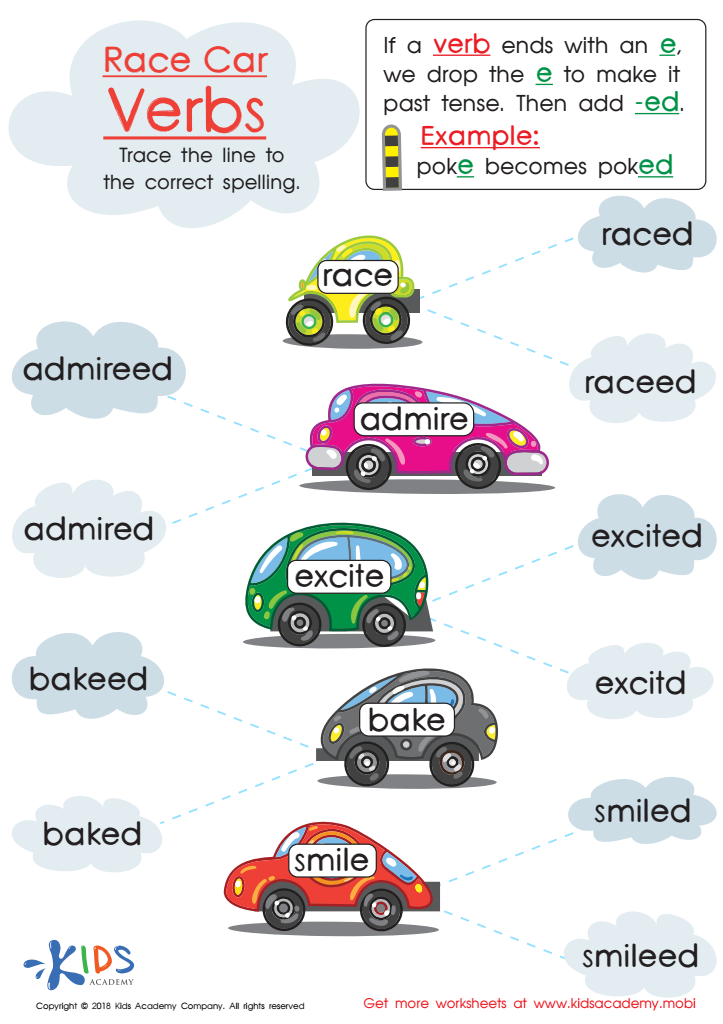
Race Car Verbs Worksheet
Help your child learn to spell and write with this fun car-themed worksheet! Read the words in the center of each car and review their past tense versions in the smoke. Have your learner trace the line from each car to the correctly spelled word – and don't forget to drop the 'e' before adding an -ed ending!
Race Car Verbs Worksheet
Worksheet
Join Kids Academy for Free
Who is primarily going to use this learning content?








Sentence completion writing is a vital skill for children ages 5 to 8, and parents or teachers should prioritize its development for several reasons. First, it encourages creativity and critical thinking. By providing a partial sentence, children can use their imagination to create their own endings, allowing them to express personal thoughts and ideas.
Second, sentence completion helps enhance vocabulary and language skills. As children experiment with different words and phrases, they expand their lexicon and gain a better understanding of sentence structure, which is essential for effective communication.
Furthermore, this activity builds confidence in writing. As children master completing sentences, they receive positive reinforcement that fosters a love for writing and learning. Additionally, it lays the groundwork for academic success in reading and writing, as it encourages early literacy skills.
Finally, sentence completion writing can be used as a fun, interactive activity for parents and teachers, strengthening the bond between them and the children as they engage in collaborative storytelling or themed exercises. Overall, nurturing this skill supports the holistic development of children, preparing them for future academic challenges and instilling a lifelong appreciation for writing.








