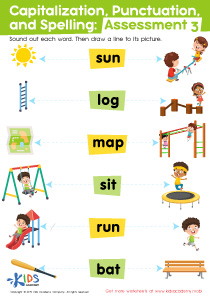
Understanding adjectives Writing Worksheets for Ages 5-8
5 filtered results
-
From - To
Unlock the world of descriptive language with our "Understanding Adjectives" writing worksheets, designed specifically for children ages 5-8. These engaging activities promote vocabulary building and enhance writing skills by highlighting the importance of adjectives in sentence structure. Kids will explore their creativity as they describe colorful characters, exciting settings, and everyday objects. Our worksheets featurefun exercises that encourage students to identify, use, and understand adjectives, making learning enjoyable and effective. With vibrant illustrations and clear instructions, these resources are perfect for classrooms and at-home learning. Help young learners become confident writers while they discover the power of adjectives in their storytelling!
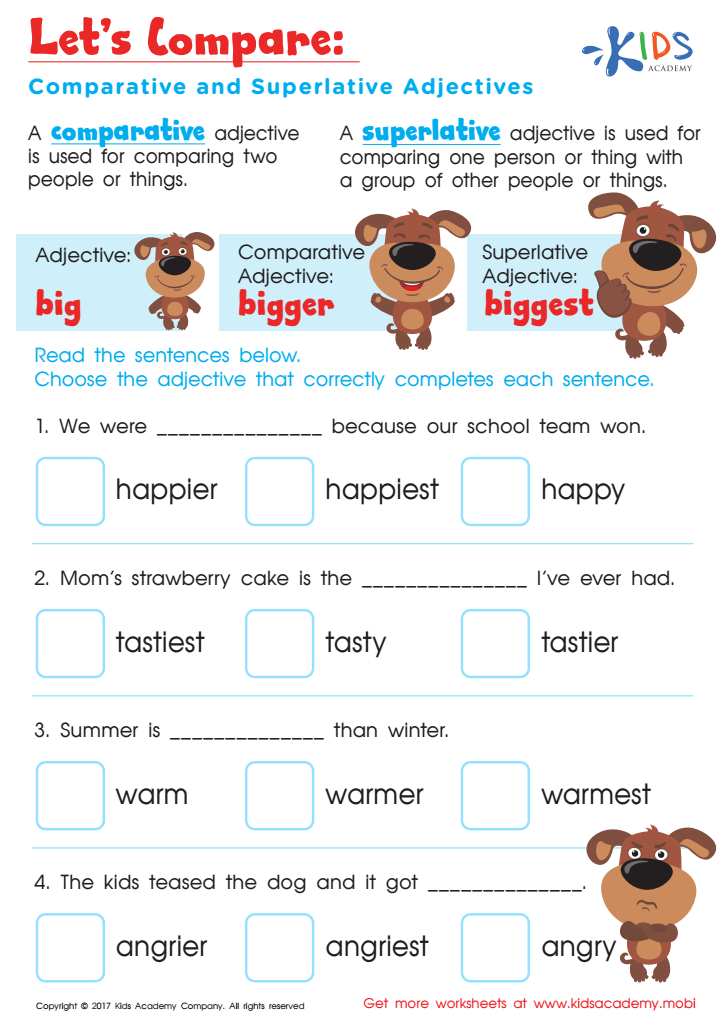
Comparative and Superlative Worksheet
 Assign to My Students
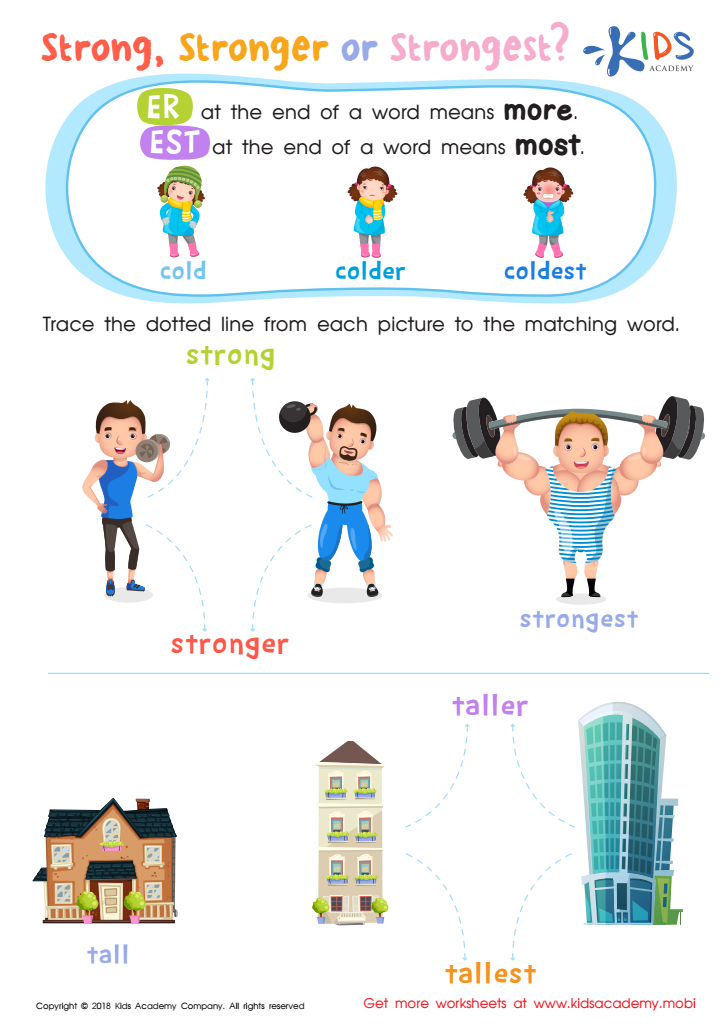
Strong or Stronger? Worksheet
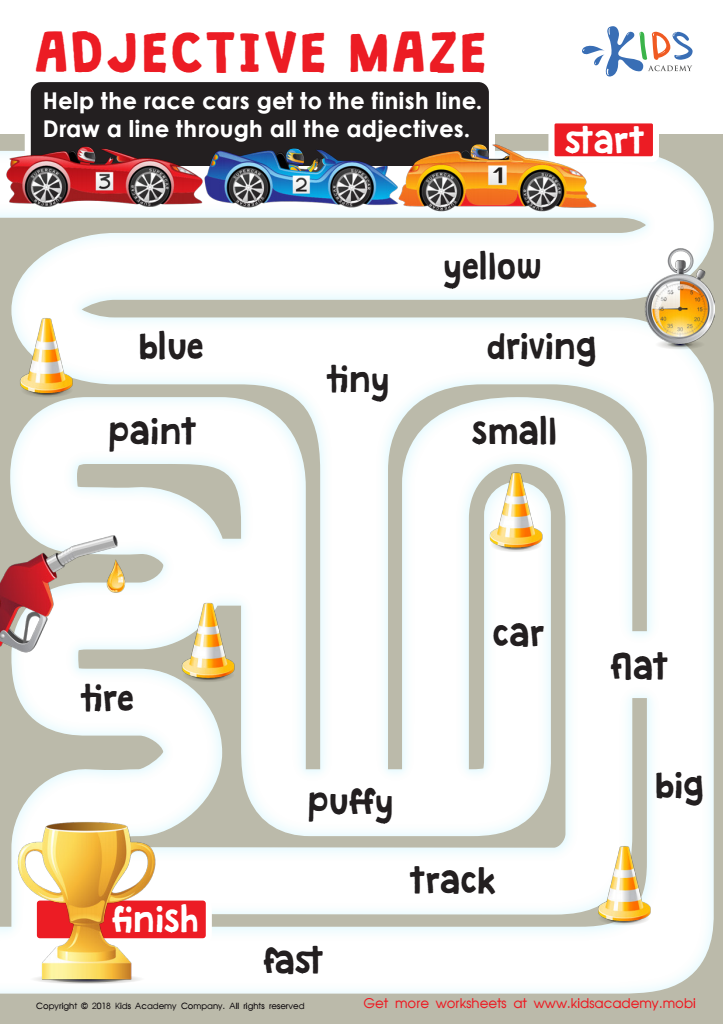
Adjective Maze Worksheet
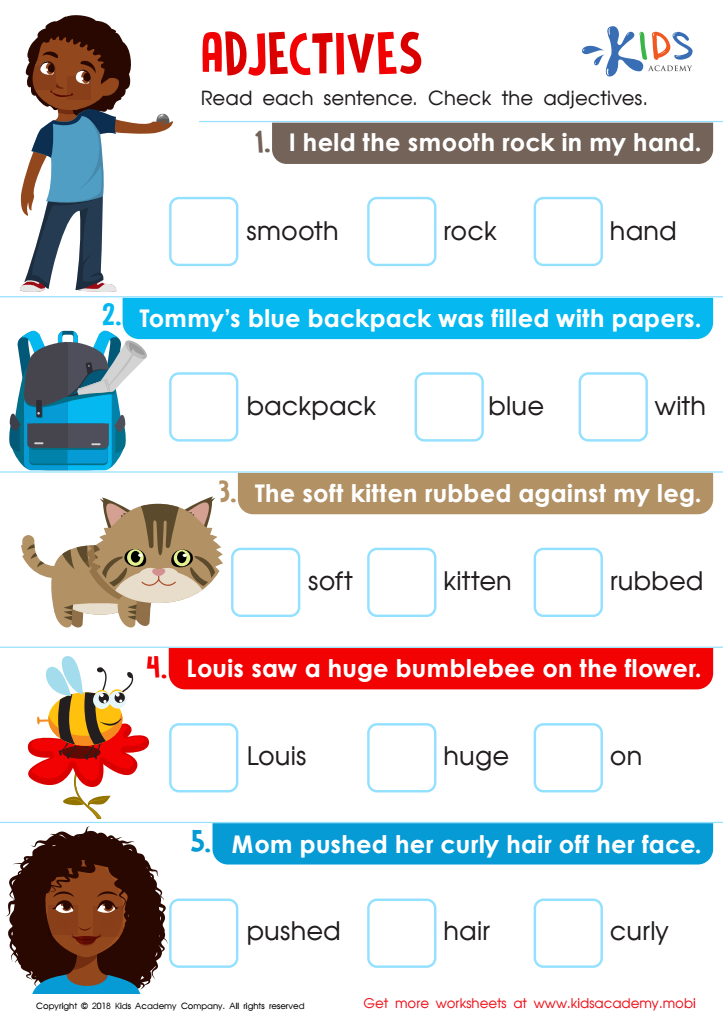
Adjectives Worksheet
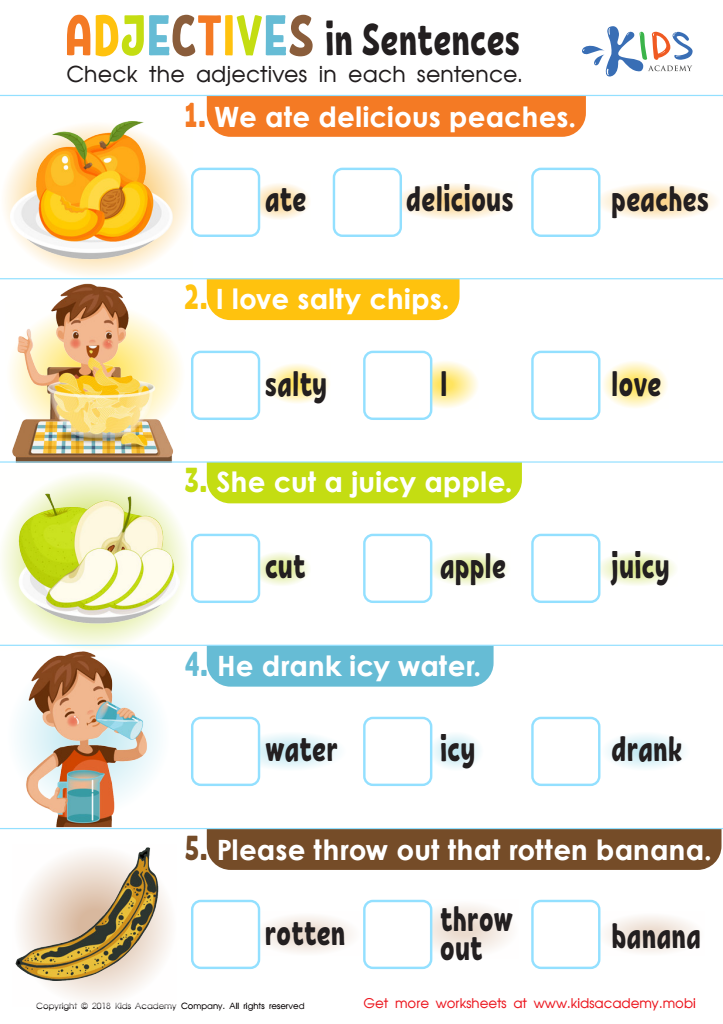
Adjectives in Sentences Worksheet







Understanding adjectives is crucial for children aged 5-8 as it significantly enhances their language development and communication skills. Adjectives are descriptive words that provide more information about nouns, allowing children to articulate their thoughts and experiences with clarity and detail. Teaching adjectives empowers young learners to describe their world – from their favorite toys and animals to their emotions – fostering creativity and imagination.
In addition to enriching vocabulary, comprehension of adjectives aids in improving reading skills. When children can identify adjectives in texts, they become better equipped to visualize stories, enhancing their overall comprehension and engagement. Moreover, using adjectives in writing contributes to more dynamic and vivid storytelling, paving the way for stronger writing skills as children progress academically.
Furthermore, incorporating adjectives into conversations encourages critical thinking. Children learn to observe and analyze the characteristics of objects, people, and places, nurturing their descriptive capabilities and boosting their confidence in self-expression. For parents and teachers, focusing on adjectives lays a foundation for literacy development that will serve children well in future academic endeavors and social interactions, highlighting the importance of this essential aspect of language learning.