
Phonological awareness Elementary Phonics Worksheets for Ages 5-9
9 filtered results
Difficulty Level
Grade
Age
-
From - To
Subject
Activity
Standards
Enhance your child's reading journey with our "Phonological Awareness Elementary Phonics Worksheets" designed for ages 5-9. Our engaging worksheets focus on the essential skill of phonological awareness, which is critical for early reading success. These activities help children recognize and manipulate sounds in words, improving their ability to decode new words and enhancing their reading fluency. With a variety of fun and interactive exercises, kids build a strong foundation in phonics, preparing them for more complex reading skills. Visit our webpage and explore how our expertly designed materials can support your child's literacy development today!
Favorites
With answer key
Interactive
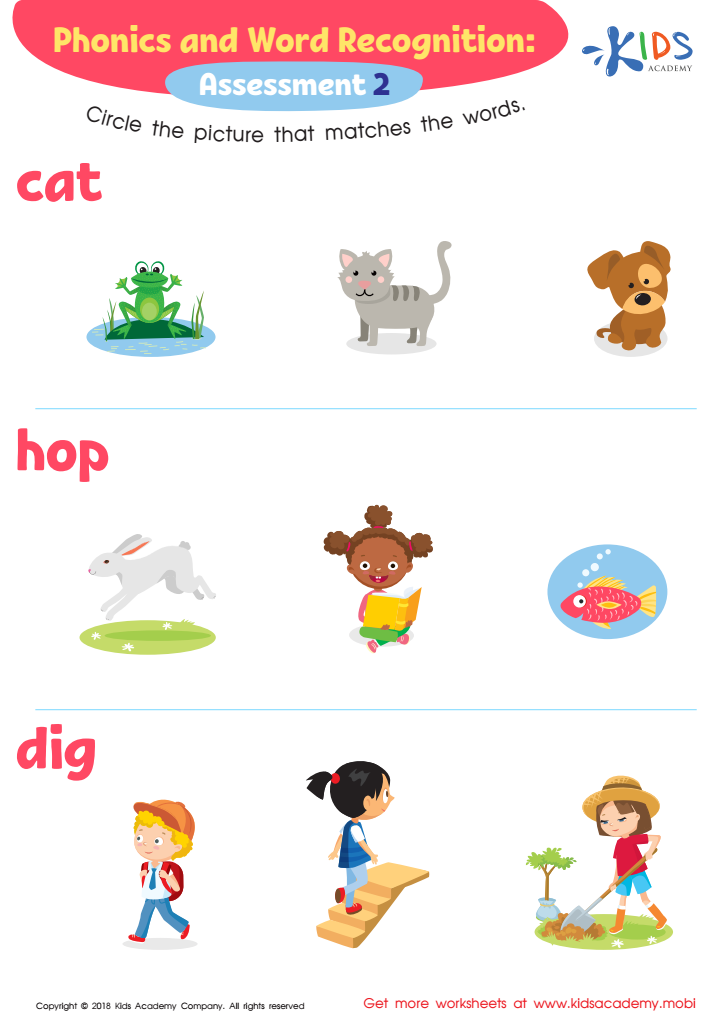
Phonological Awareness: Assessment 2 ELA Worksheet
This free worksheet assesses your emerging reader's ability to decode and match closed-syllable high-frequency words to the appropriate picture. The pictures are cheery and easy to identify, so your child will have fun and find success with decoding and matching.
 Assign to My Students
Phonological Awareness: Assessment 2 ELA Worksheet
Worksheet
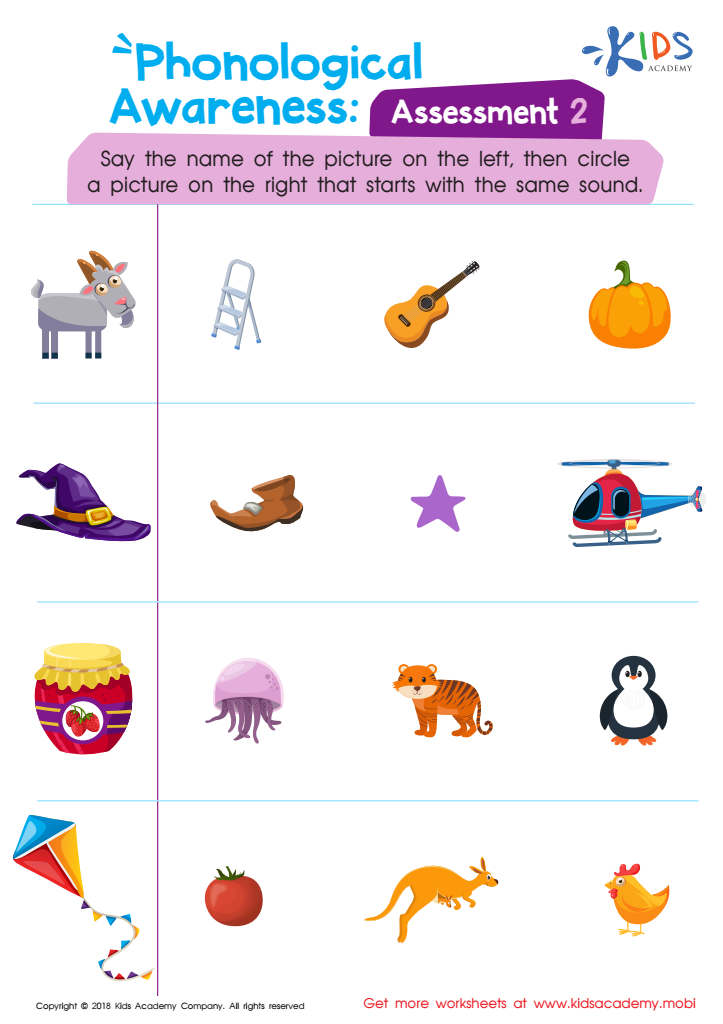
Phonological Awareness: Assessment 2 Worksheet
Test your child’s phonological awareness and reading readiness with this charming worksheet! Perfect for K-1, it assesses if they can name a picture aloud, listening for the starting sound and matching it to another word. Watch as they think deeply and listen to the sounds as they name each picture. Determine if your child is ready to sound out words or needs more phonics practice.
Phonological Awareness: Assessment 2 Worksheet
Worksheet
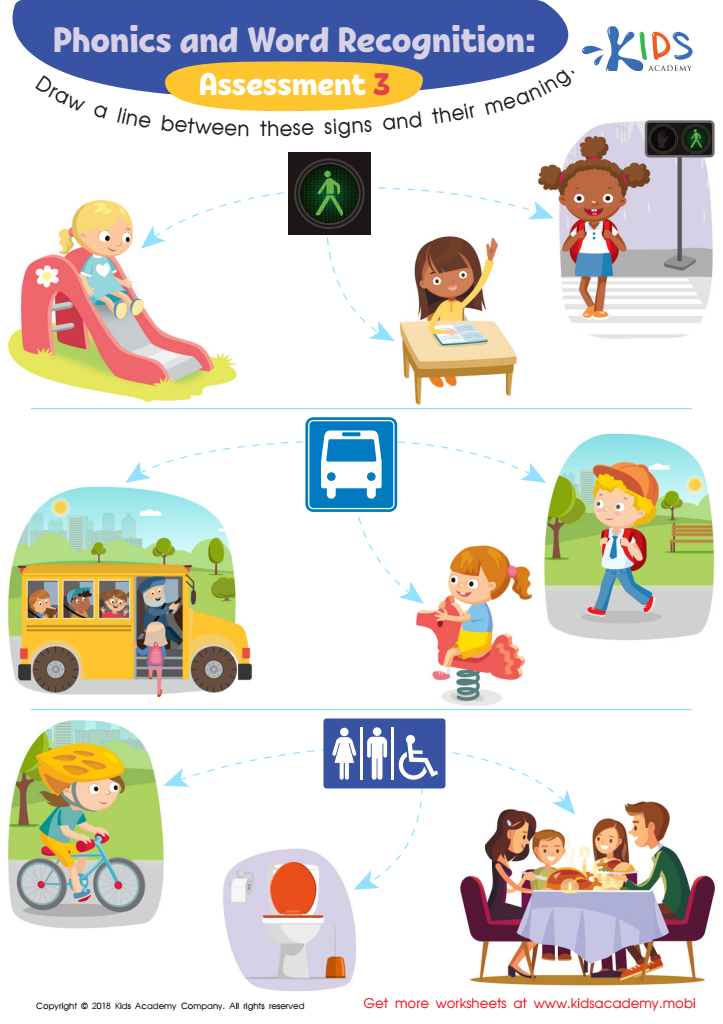
Phonological Awareness: Assessment 3 ELA Worksheet
Want to test your preschooler's language skills, phonetic decoding and word recognition? This worksheet uses their knowledge of community helpers to match signs with depictions. It also works on fine motor skills, a key pre-reading skill.
Phonological Awareness: Assessment 3 ELA Worksheet
Worksheet
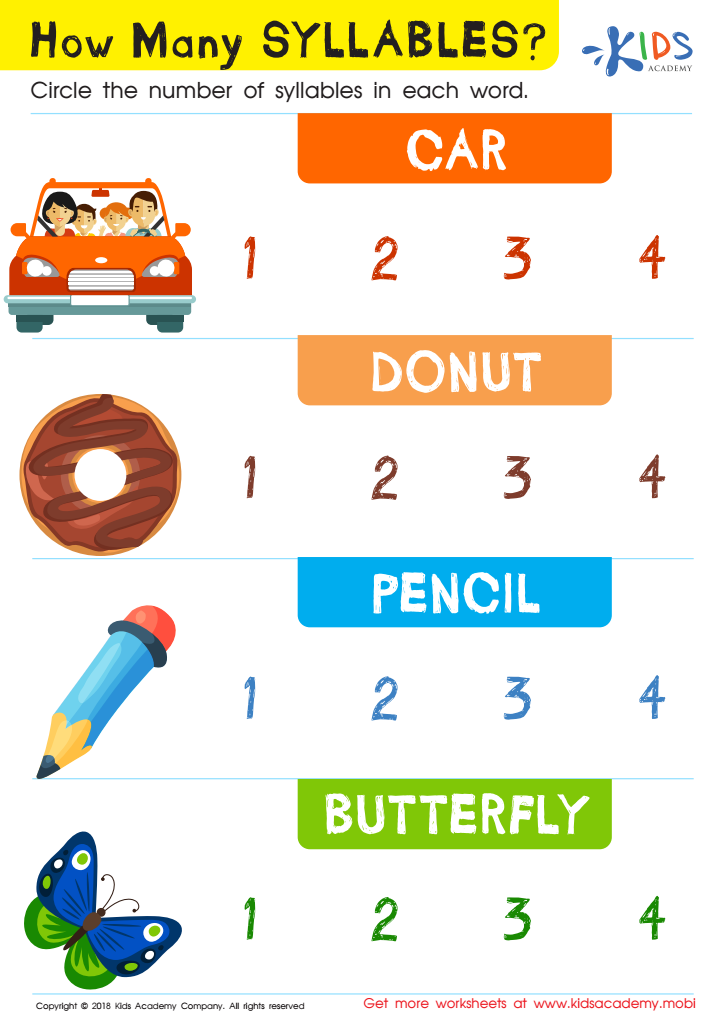
How Many Syllables? Worksheet
Syllabication or 'chunking' helps students decode words more quickly and increase fluency. This traceable worksheet is great for emerging readers, combining fun and fine motor practice with chunking words and counting syllables.
How Many Syllables? Worksheet
Worksheet
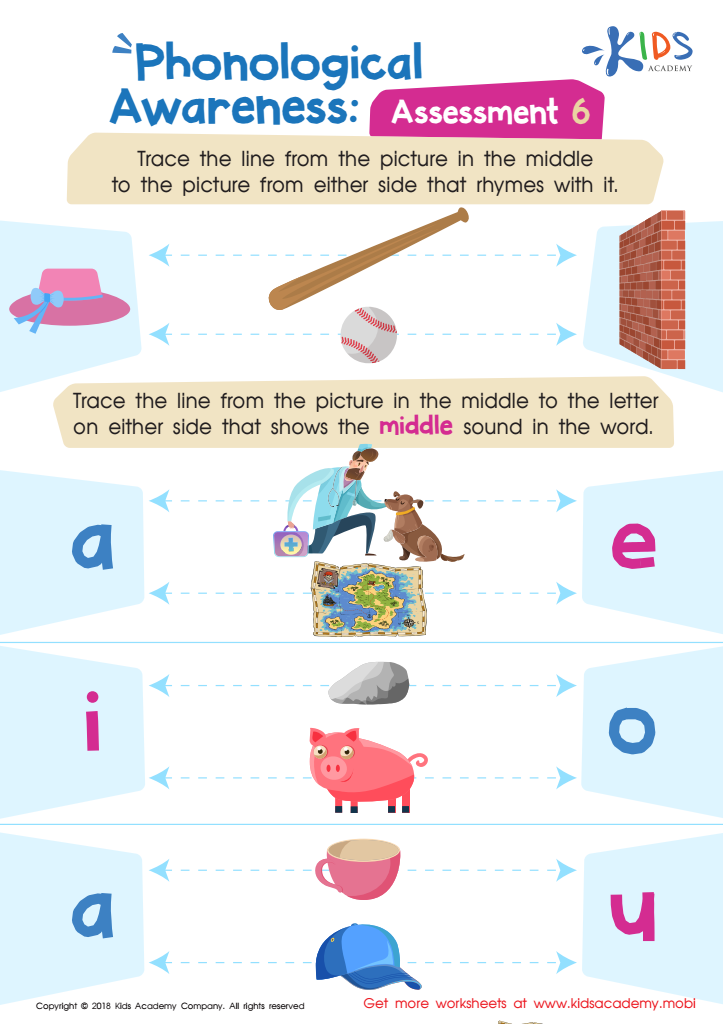
Phonological Awareness: Assessment 6 Worksheet
Check your child's ability to recognize middle word sounds using this free worksheet. Help them learn phonics by practicing with rhyming. Trace the line from the image to its rhyming match then encourage them to name each image aloud to identify which letter matches the sound. It's a great way to assess letter and sound recognition.
Phonological Awareness: Assessment 6 Worksheet
Worksheet
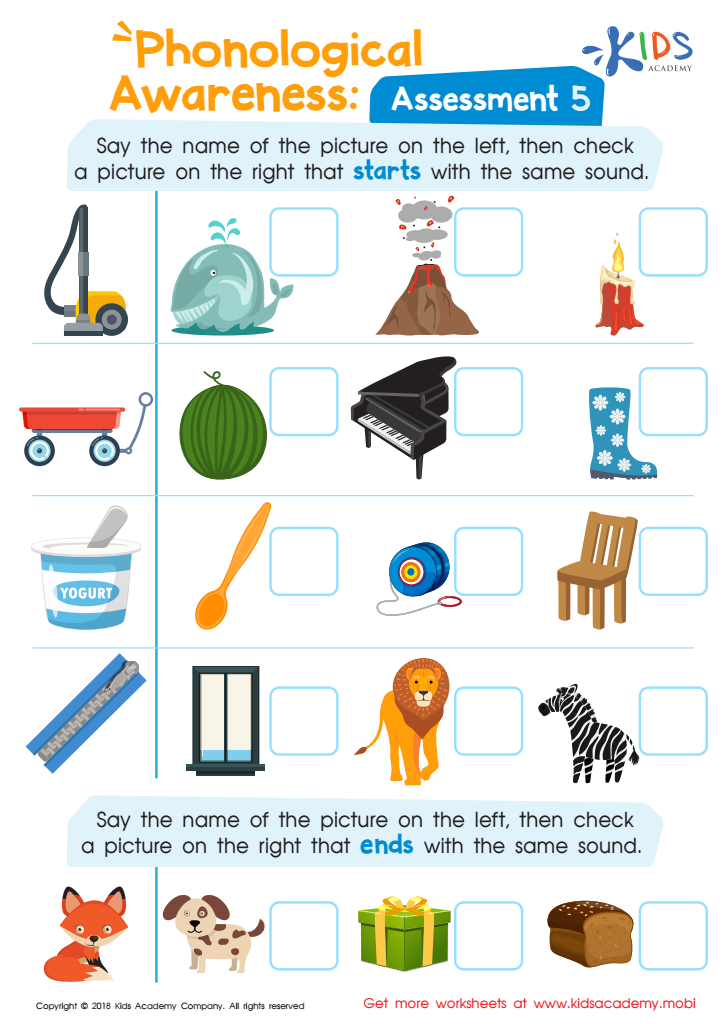
Phonological Awareness: Assessment 5 Worksheet
Repetition is key to success! This worksheet tests kids' ability to match beginning and ending sounds in words. Instruct them to say each word and listen closely to the sounds they make. Focus on the starting sounds for the first four pics, then the last one to hear ending sounds and find the right match!
Phonological Awareness: Assessment 5 Worksheet
Worksheet
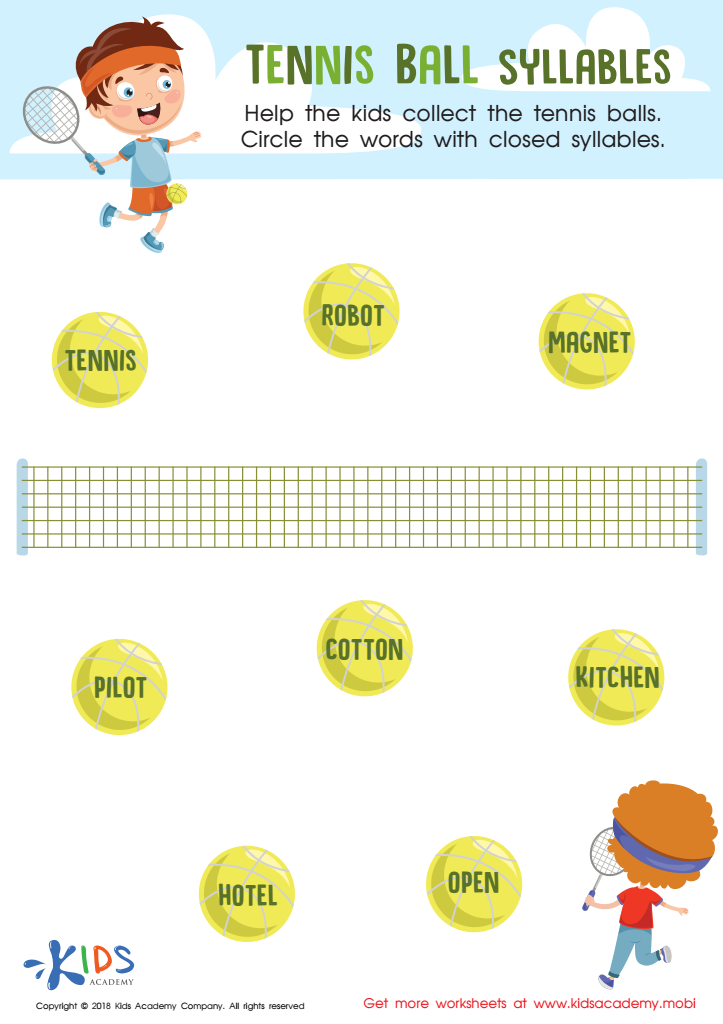
Tennis Ball Syllables Worksheet
To help your kids become fluent speakers, they need to learn syllables. A word can have one to seven syllables, with longer words having more. For this level, they will be working with one or two syllables. Assist them as they circle the words with closed syllables in this worksheet.
Tennis Ball Syllables Worksheet
Worksheet
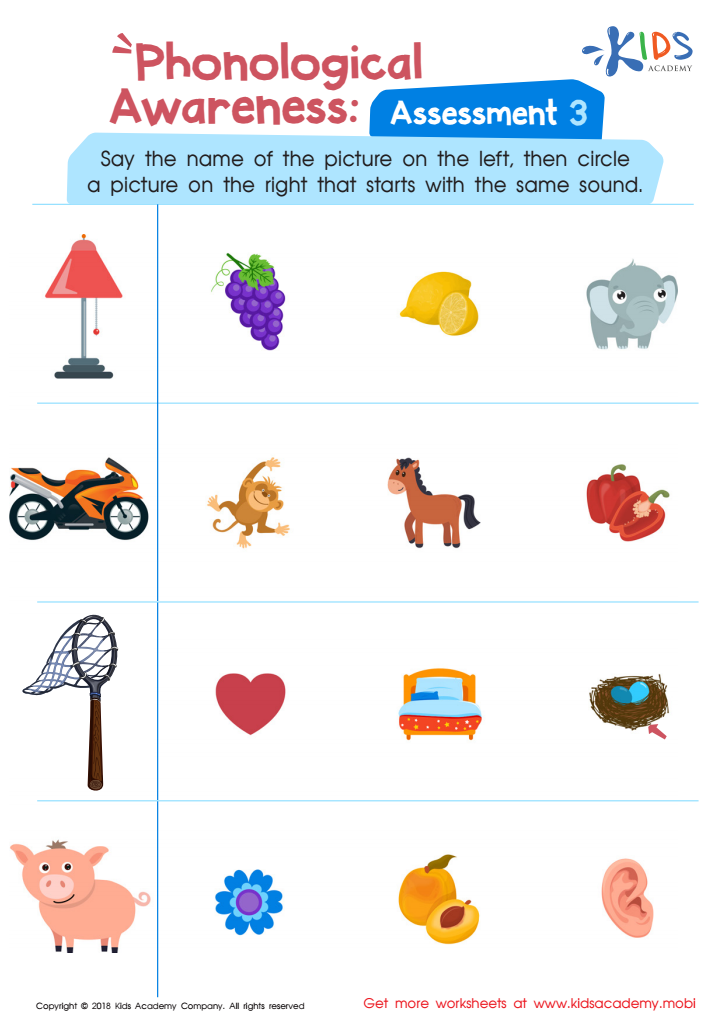
Phonological Awareness: Assessment 3 Worksheet
Test kids' reading readiness with a phonological awareness worksheet! With this PDF exercise, encourage children to name each picture aloud and match left to right. Help them learn to recognize word sounds at the start, middle and end of words. They'll be sure to remember that lamp doesn't sound like elephant!
Phonological Awareness: Assessment 3 Worksheet
Worksheet
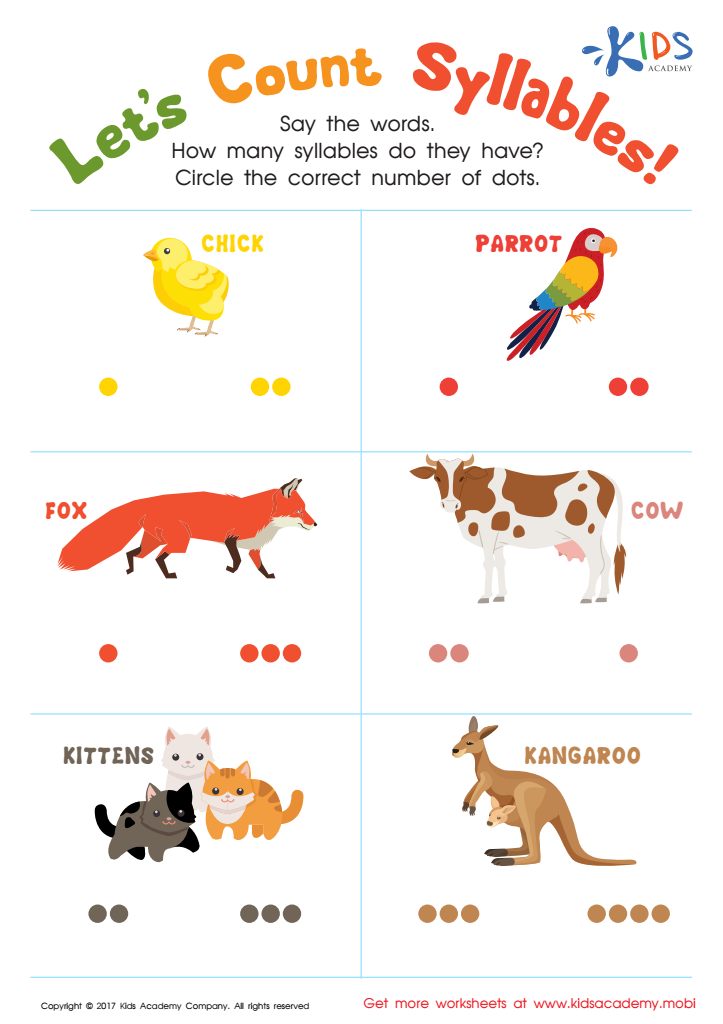
Lets Count Syllables Worksheet
This fun animal worksheet makes learning to read easier by breaking words into syllables. Bright, cheery pictures give context and help kids choose the right syllable count. Count together and enjoy as your child learns and gains success!
Lets Count Syllables Worksheet
Worksheet
Join Kids Academy for Free
Who is primarily going to use this learning content?




Phonological awareness and elementary phonics are foundational skills critical to a child's reading and language development, especially in the early ages of 5-9. Phonological awareness is the ability to recognize and manipulate sounds within spoken words, including skills like rhyming, alliteration, and segmenting words into individual sounds (phonemes). This skill set serves as the theoretical underpinning for phonics, which involves mapping these sounds (phonemes) onto corresponding letters or groups of letters (graphemes).
For parents and teachers, fostering strong phonological awareness provides children with a critical head start in reading proficiency. Children who develop these skills tend to grasp the alphabetic principle more effectively, which aids in decoding new words while reading and encoding words for writing. Reading expands vocabulary, comprehension, and overall communication skills, all of which are crucial for academic success across all subjects.
Moreover, early intervention in developing these skills can help identify and support students who may be at risk for reading disorders, such as dyslexia, ensuring they receive the necessary help. Engaging children in fun, phonics-based activities not only makes learning enjoyable but also encourages a lifelong love for reading. In sum, dedicating time to developing phonological awareness and phonics is an investment in a child's educational foundation and overall cognitive development.







