
Alphabet tracing Alphabet Worksheets for Ages 5-9
8 filtered results
Difficulty Level
Grade
Age
-
From - To
Subject
Activity
Standards
Discover the perfect Alphabet Tracing Worksheets designed for ages 5-9! These engaging, educational printables from Kids Academy help hone your child's writing skills through fun and interactive letter formations. Perfect for young learners, these worksheets promote fine motor skill development, letter recognition, and literacy foundations. Each sheet incorporates playful and colorful designs to keep children captivated. Ideal for classroom settings or at-home practice, our expertly crafted tracing exercises transform learning the alphabet into an enjoyable adventure. Empower your child's educational journey with our expertly designed Alphabet Tracing Worksheets available exclusively at Kids Academy. Start tracing today!
Favorites
With answer key
Interactive
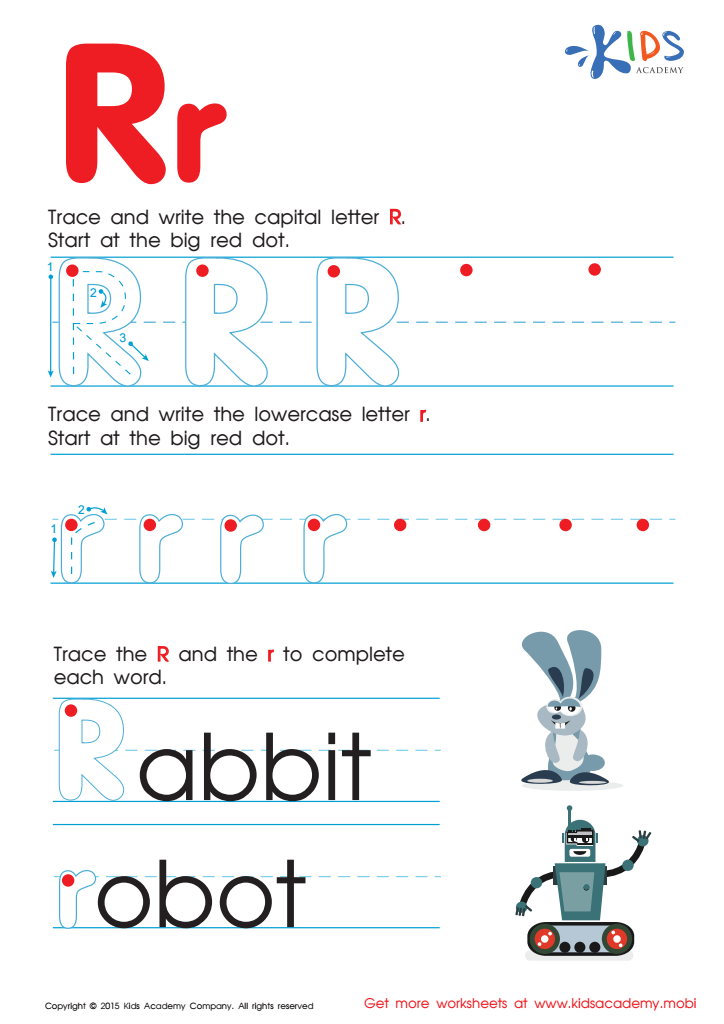
Letter R Tracing Page
Trace and write the letter "R" with this worksheet for kindergarten. Start with the uppercase, then move on to the lowercase. Write the letters several times for practice. Then help complete the words for the rabbit and robot, spelling carefully. More ABC worksheets can be found at Kids Academy.
Letter R Tracing Page
Worksheet
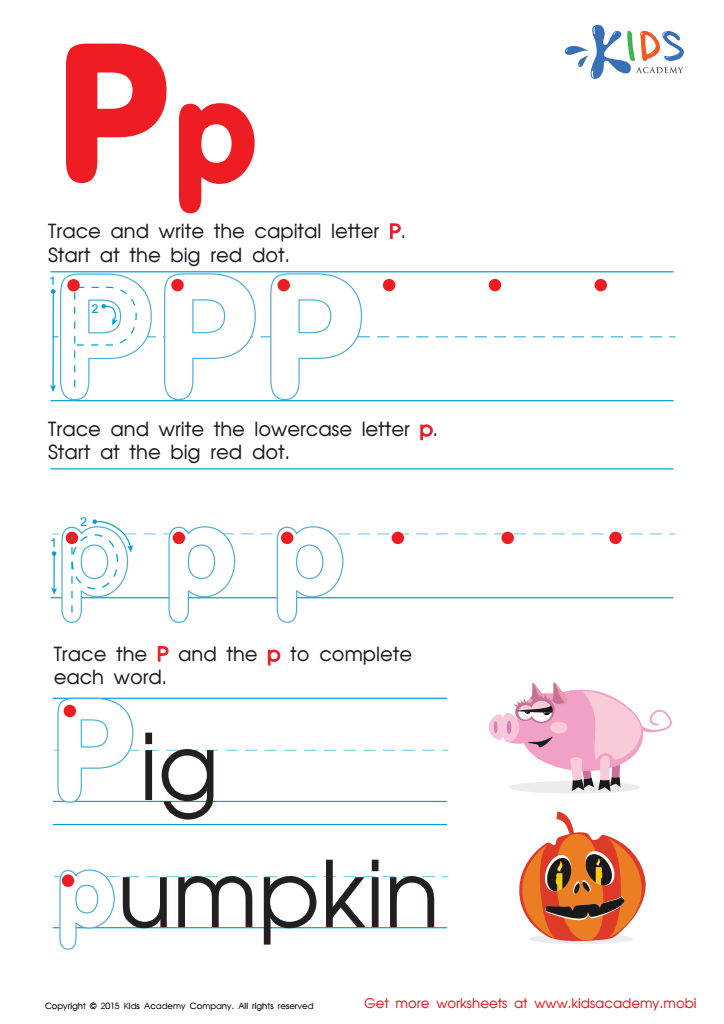
Letter P Tracing Page
Trace the lines from the red dot to learn to write "P"! Then practice this letter with the fun activities: complete the word "Pig" and "Pumpkin". Check out Kids Academy to get more free ABC worksheets.
Letter P Tracing Page
Worksheet
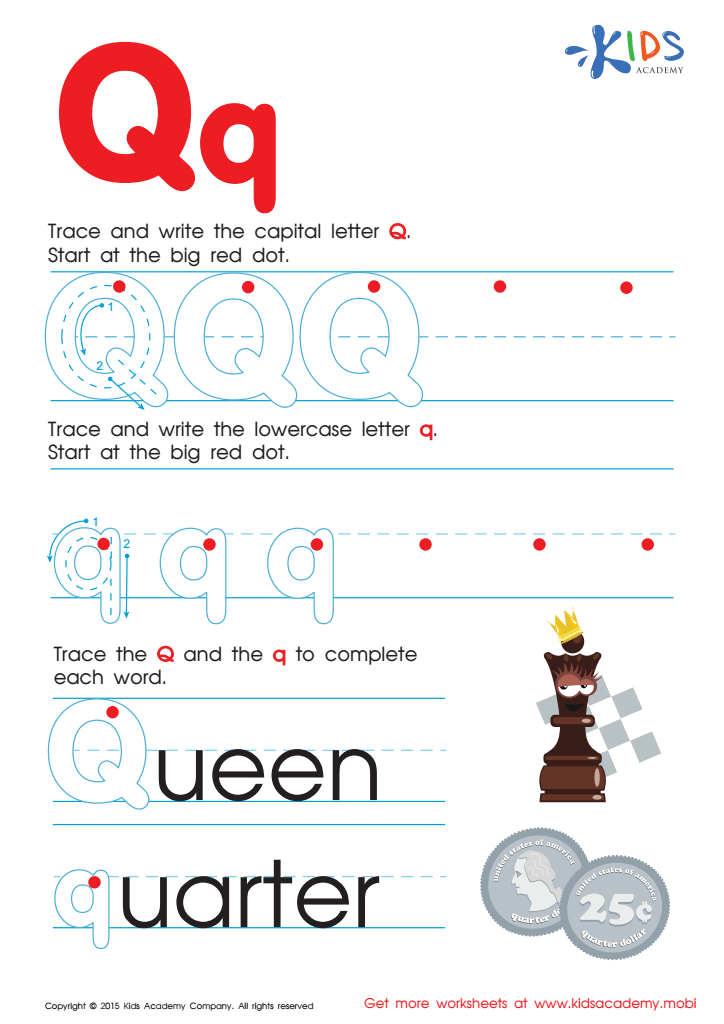
Letter Q Tracing Page
Learn the letter "Q"! Trace and write it a few times in upper and lowercase. Then help the Queen by writing her initial letter. Finally, write "quarters" and practice with more alphabet worksheets.
Letter Q Tracing Page
Worksheet

Letter H Tracing Page
Trace the letter "H", then practice writing its lowercase form. Finally, choose your favorite form of transport and ride away! Get our worksheets to make learning fun and easy.
Letter H Tracing Page
Worksheet

Letter A Tracing Worksheet
Learning the letter "A" is essential. This worksheet helps kids trace and write it, boosting their skill. They also circle pictures with the "A" sound, with both the word and picture provided. This helps them learn how to pronounce words like "apple" correctly.
Letter A Tracing Worksheet
Worksheet
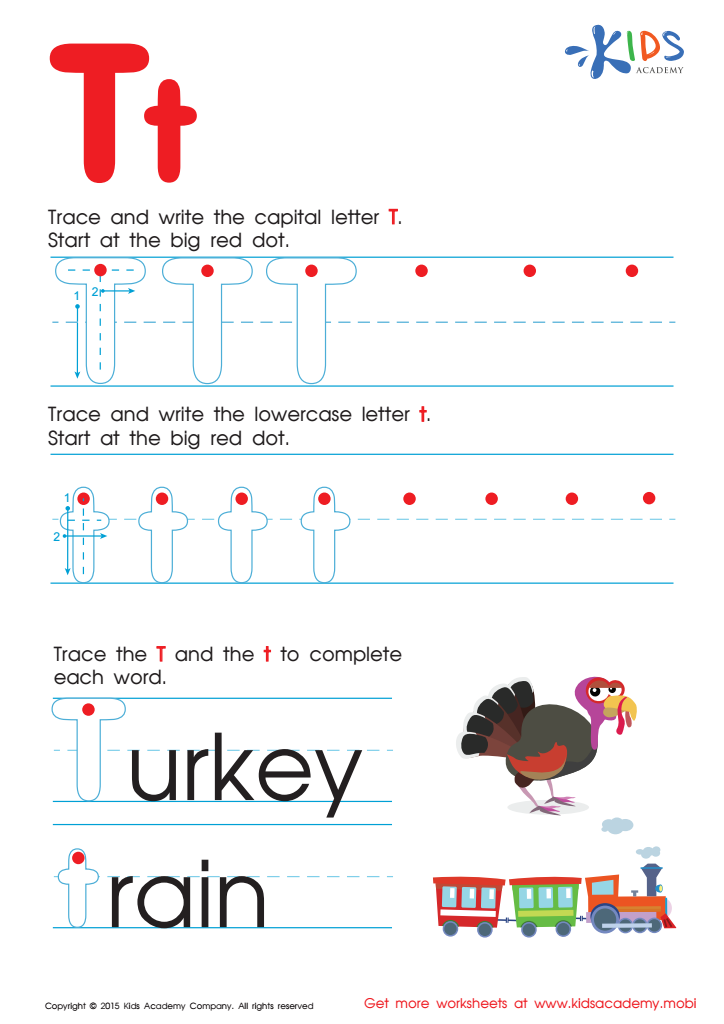
Letter T Tracing Page
Trace letters, complete words, draw pictures and see your kids having fun!
Kids Academy offers alphabet tracing worksheets to learn to write letters. Start with the big red dot, trace the letter, then write it. Practice uppercase and lowercase. Have fun completing words with a Turkey or a rain-train and draw pictures. Get more printable worksheets to make learning enjoyable.
Letter T Tracing Page
Worksheet
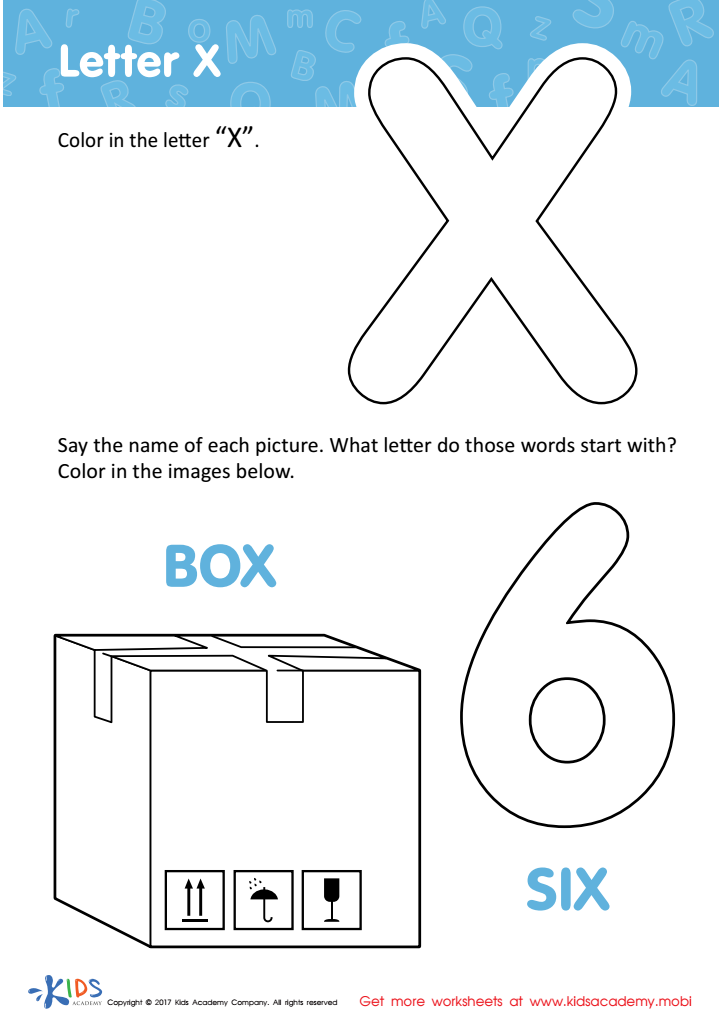
Letter X Coloring Sheet
Help your little learner find the letter "X" with this coloring page. Go over the sounds it makes and how to find it at the end of words. Unlock the mystery of this unique letter - it's one of the most challenging but rewarding letters to learn!
Download (PDF)
 Assign to My Students
Assign to My Students
Letter X Coloring Sheet
Worksheet

Letter D Tracing Page
Trace and write capital and lowercase letter "D" with our free printable alphabet worksheet! Be careful not to mix up "b" and "d" - just look at the ducks and write their first letter. The dolphin wants to join the fun too - do you like dolphins? Get more fun worksheets and activities at Kids Academy!
Letter D Tracing Page
Worksheet
Join Kids Academy for Free
Who is primarily going to use this learning content?







Ensuring children ages 5-9 practice alphabet tracing is essential for their early literacy development. Tracing letters helps young learners fine-tune their motor skills, crucial for purposes like handwriting beyond just reading and writing. At this developmental stage, children are honing their hand-eye coordination. Alphabet tracing activities engage this skill explicitly, leading to more refined control over writing instruments such as pencils and markers.
Additionally, tracing the alphabet reinforces letter recognition, an essential component in learning to read. As children repeatedly trace letters, they start to remember what each letter looks like, how it is formed, and the sound it makes. This fundamental knowledge forms the building blocks for understanding words and sentences later on.
Moreover, alphabet tracing can aid children in learning the sequence of the alphabet, further solidifying their grasp on this language foundation. Teachers and parents who prioritize this activity show children that learning, practice, and repetition are pathways to improvement and achievement. It also adds a sense of accomplishment, bolstering confidence as they see tangible progress in their skills.
Overall, incorporating alphabet tracing into the educational routine sets a solid groundwork for more complex literacy skills, making it a pivotal early learning investment.







