Phonological awareness Alphabet Worksheets for Ages 5-9
9 filtered results
-
From - To
Enhance your child’s reading skills with our Phonological Awareness Alphabet Worksheets, specifically designed for ages 5 to 9. These engaging printable activities develop crucial phonemic awareness, helping children recognize sounds, letters, and word patterns. Through fun exercises like sound sorting, letter matching, and rhyming games, children gain confidence in their literacy abilities. Our worksheets create a solid foundation for reading and writing, making learning enjoyable and interactive. Ideal for homeschooling or classroom use, these resources ensure your child excels in phonological skills while nurturing a love for language. Explore our collection and set the stage for your child's reading success today!
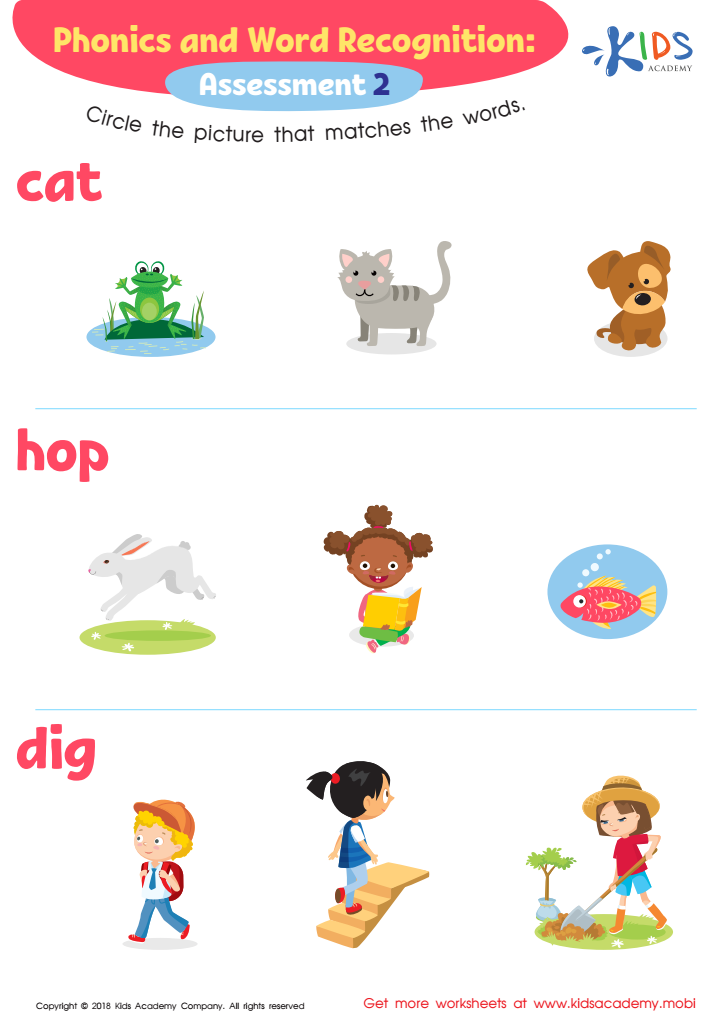
Phonological Awareness: Assessment 2 ELA Worksheet
 Assign to My Students
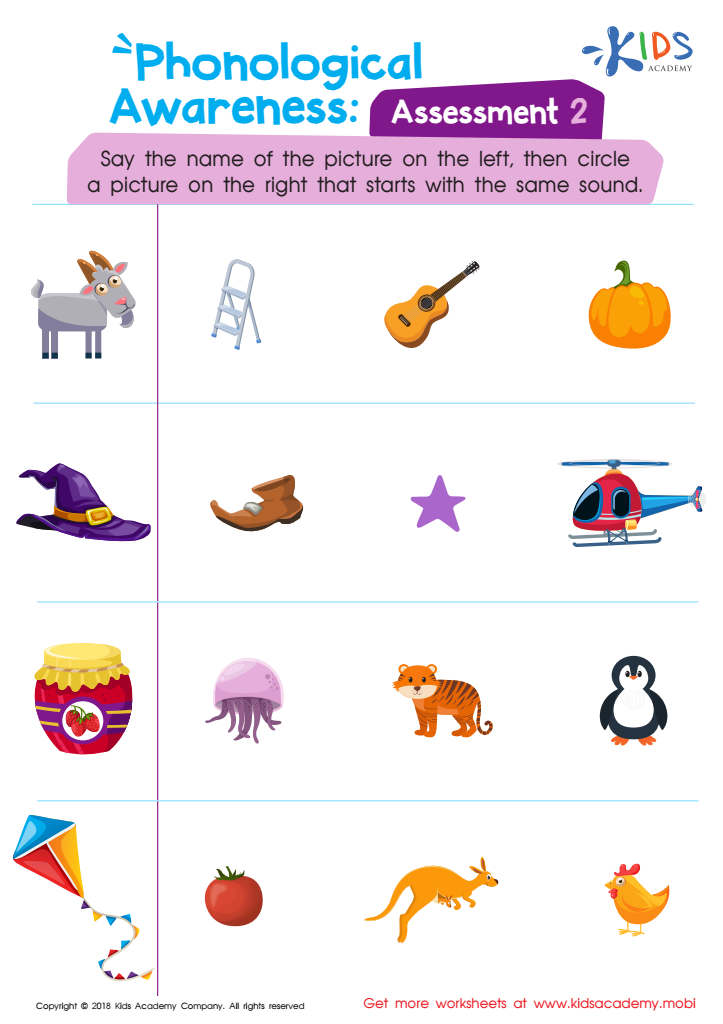
Phonological Awareness: Assessment 2 Worksheet
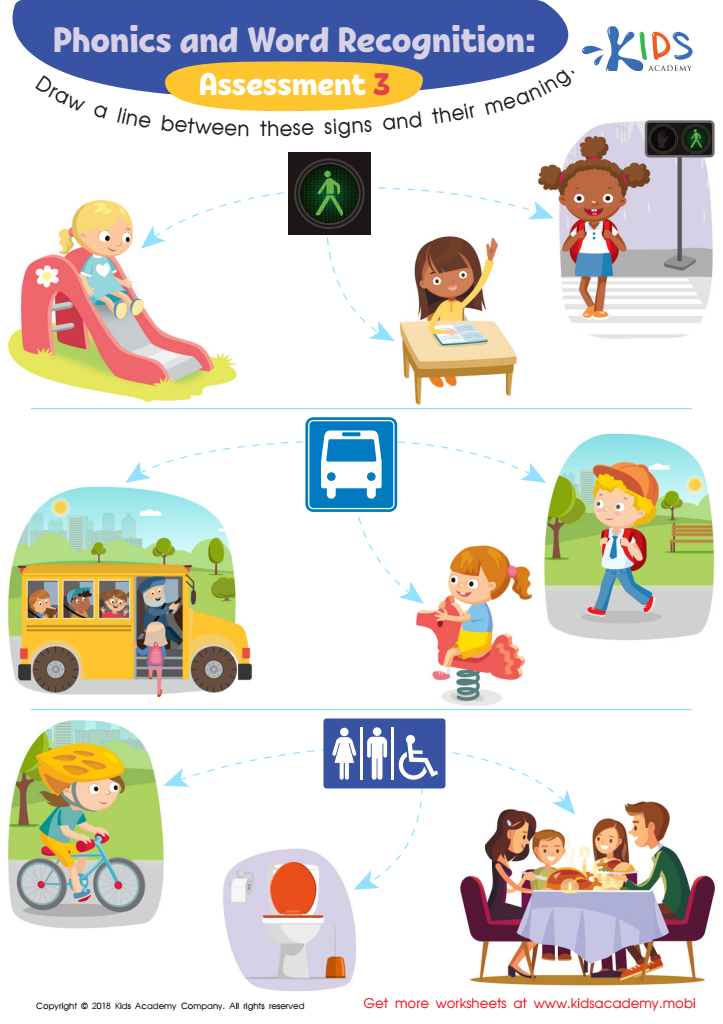
Phonological Awareness: Assessment 3 ELA Worksheet
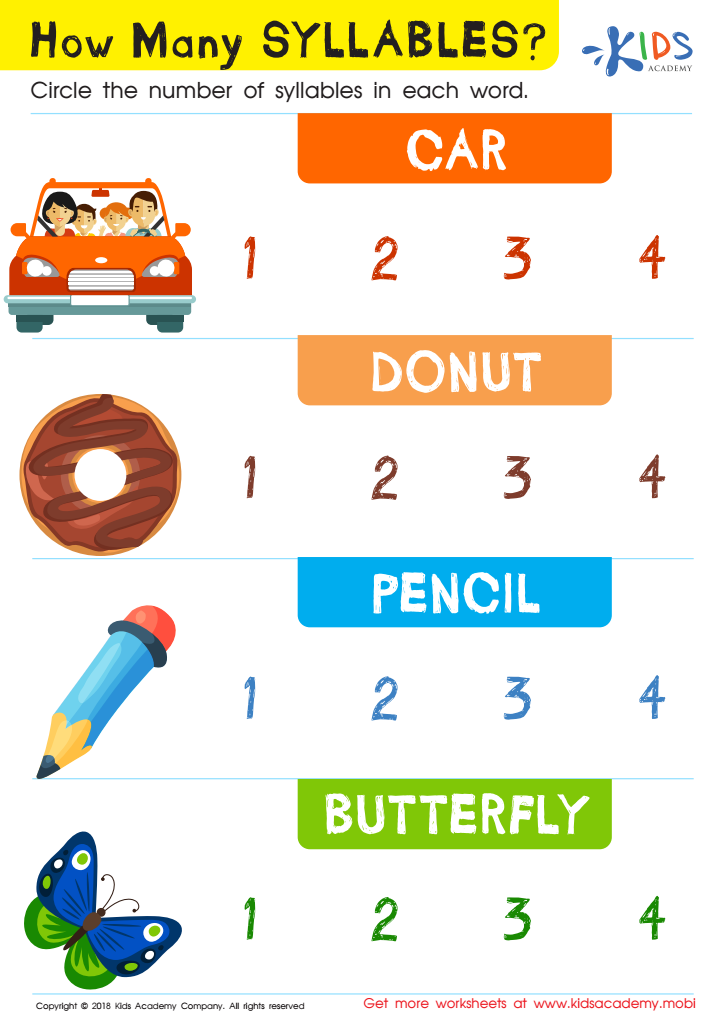
How Many Syllables? Worksheet
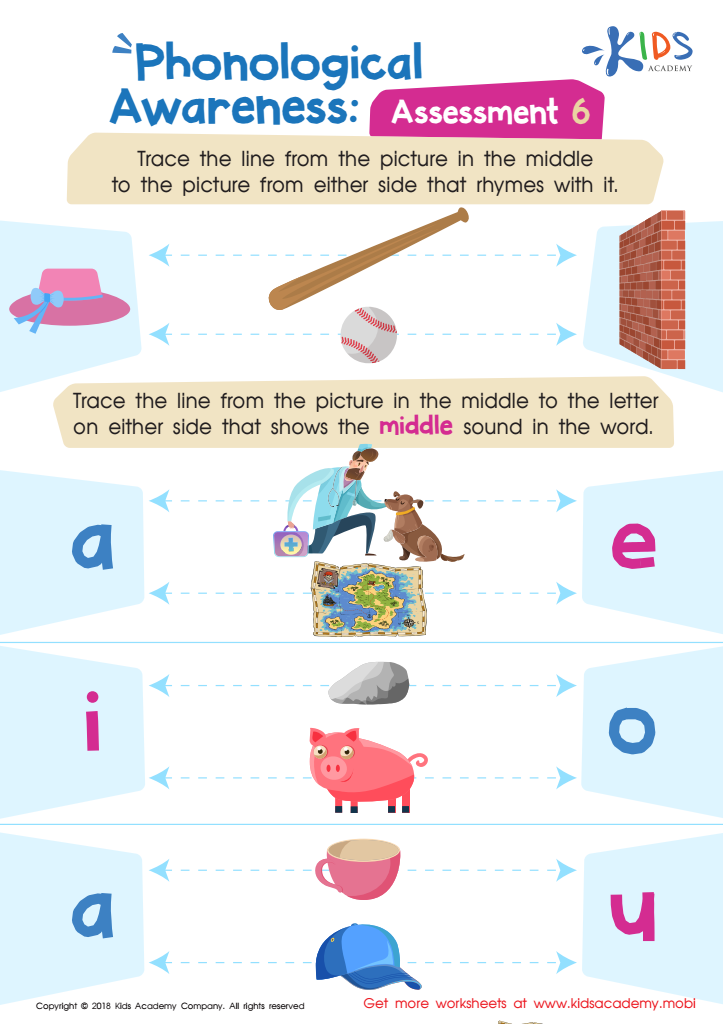
Phonological Awareness: Assessment 6 Worksheet
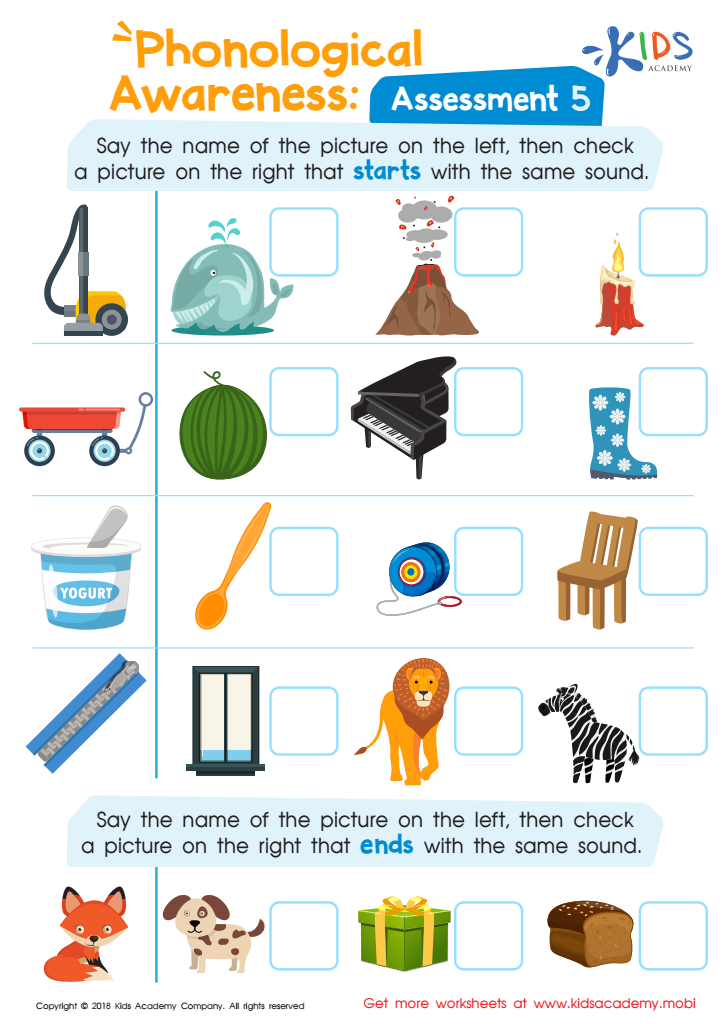
Phonological Awareness: Assessment 5 Worksheet
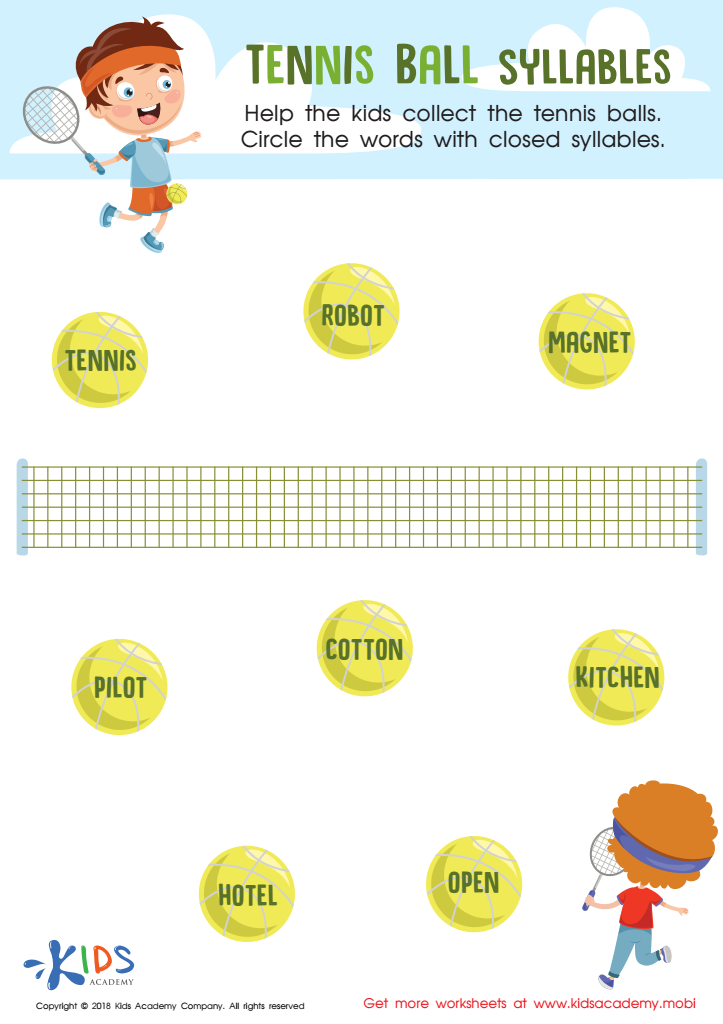
Tennis Ball Syllables Worksheet
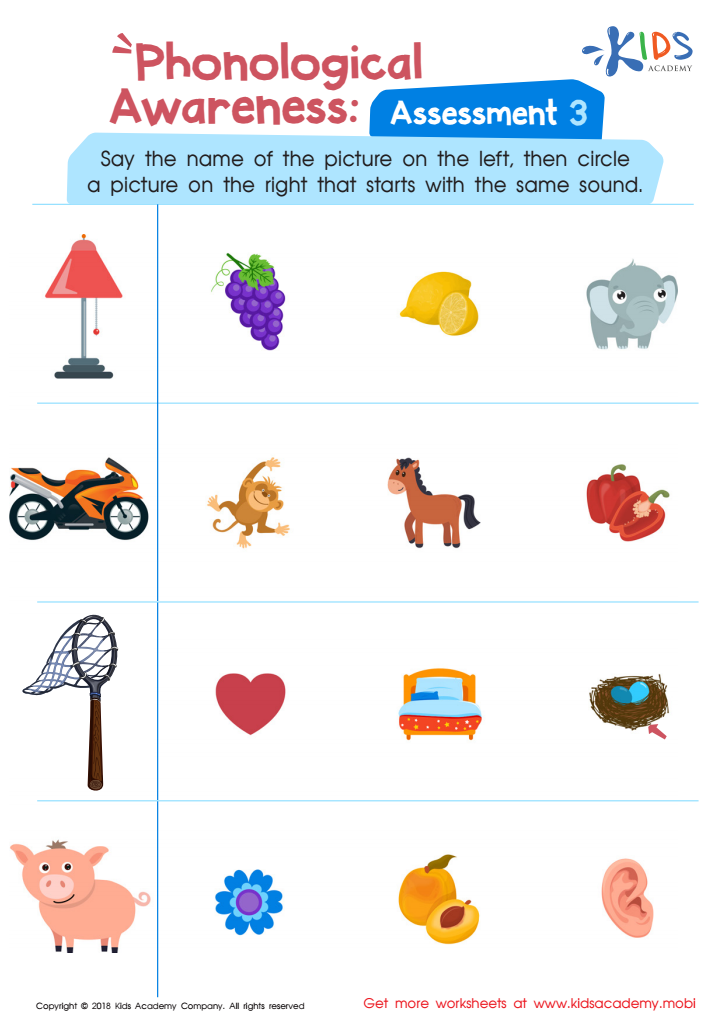
Phonological Awareness: Assessment 3 Worksheet
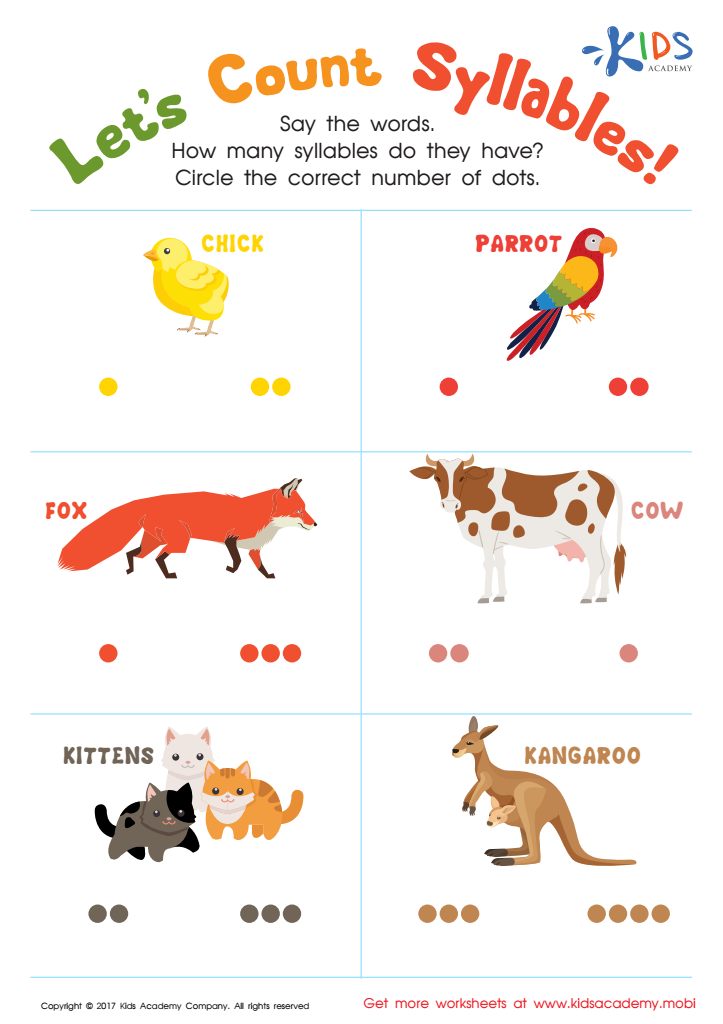
Lets Count Syllables Worksheet








Phonological awareness is a critical foundational skill for early readers, particularly for children aged 5 to 9. This ability encompasses recognizing and manipulating sounds in spoken language, including the ability to identify and work with rhymes, syllables, and individual phonemes.
Parents and teachers must care about phonological awareness because it significantly impacts a child's reading development and overall literacy skills. Children with strong phonological awareness are better equipped to decode words, which means they can read more fluently and understand what they read. This skill lays the groundwork for understanding the alphabetic principle, where letters correspond to individual sounds.
Furthermore, fostering phonological awareness helps build confidence in young learners. When children understand how sounds work, they can tackle new words with greater ease, reducing frustration and instilling a love for reading.
Moreover, early intervention in phonological skills can help identify children who may struggle with later reading difficulties, enabling supportive strategies to be put in place. By prioritizing phonological awareness, parents and teachers can nurture well-rounded, proficient readers and pave the way for lifelong learning. Cultivating these skills early ensures children are left with a strong literacy foundation for future academic success.







