Silent Vowels Worksheets for Ages 5-9
5 filtered results
-
From - To
Introduce your young learners to the often tricky concept of silent vowels with our engaging, expertly-designed worksheets for ages 5-9. Each colorful, age-appropriate page focuses on common silent vowels in simple words, helping kids to recognize and understand them quickly. By turning learning into a fun activity, our worksheets encourage children to practice reading and spelling with confidence, boosting their literacy skills effortlessly. Perfect for classroom or at-home learning, these resources make mastering silent vowels an enjoyable journey. Foster a love for learning and enhance reading skills with Kids Academy's silent vowels worksheets!
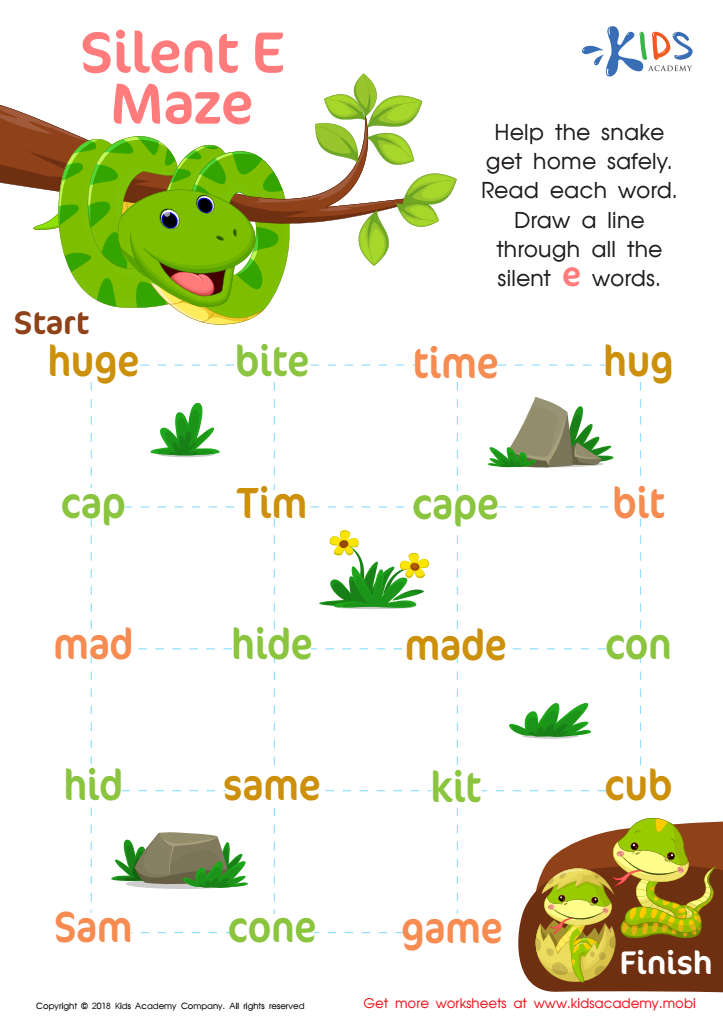
Silent E Maze Worksheet
 Assign to My Students
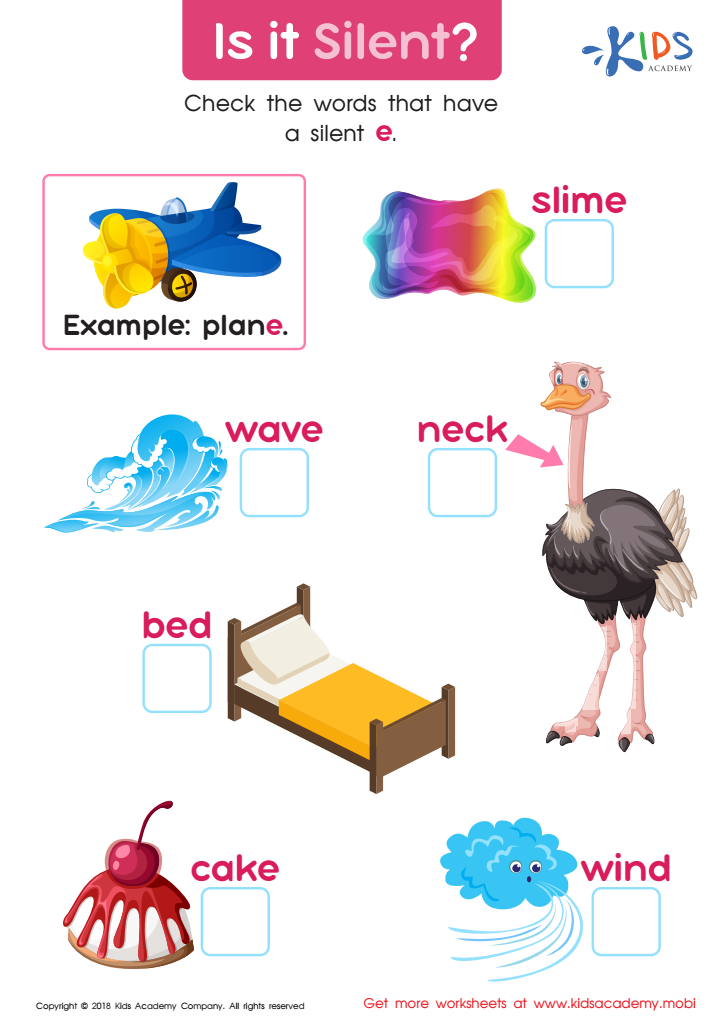
Is It Silent? Worksheet
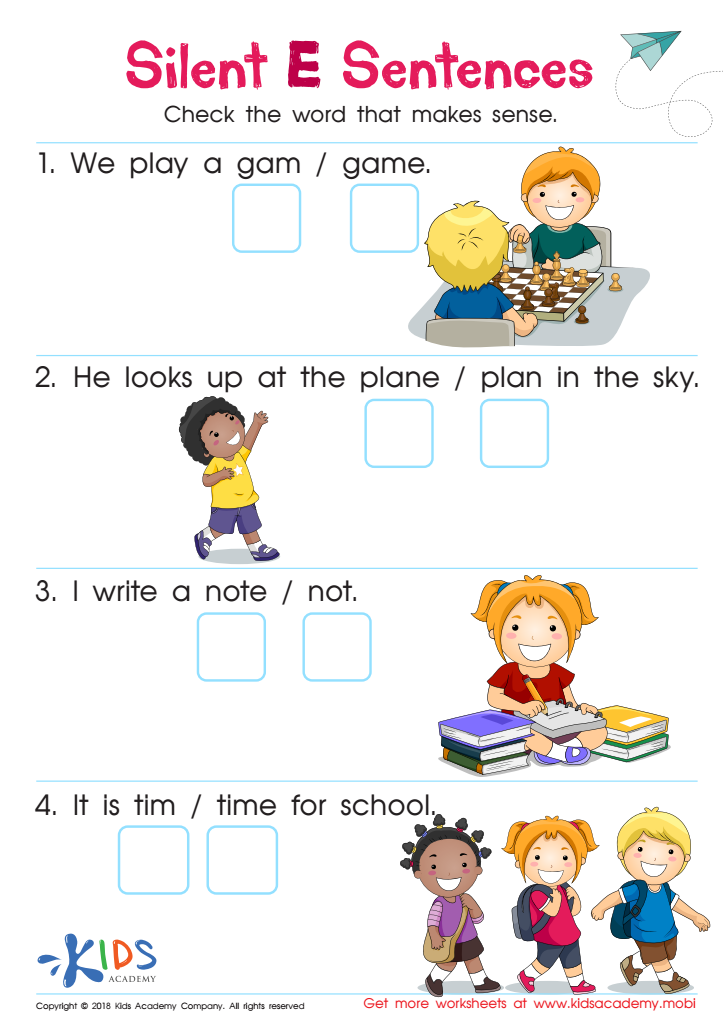
Silent E Sentences Worksheet
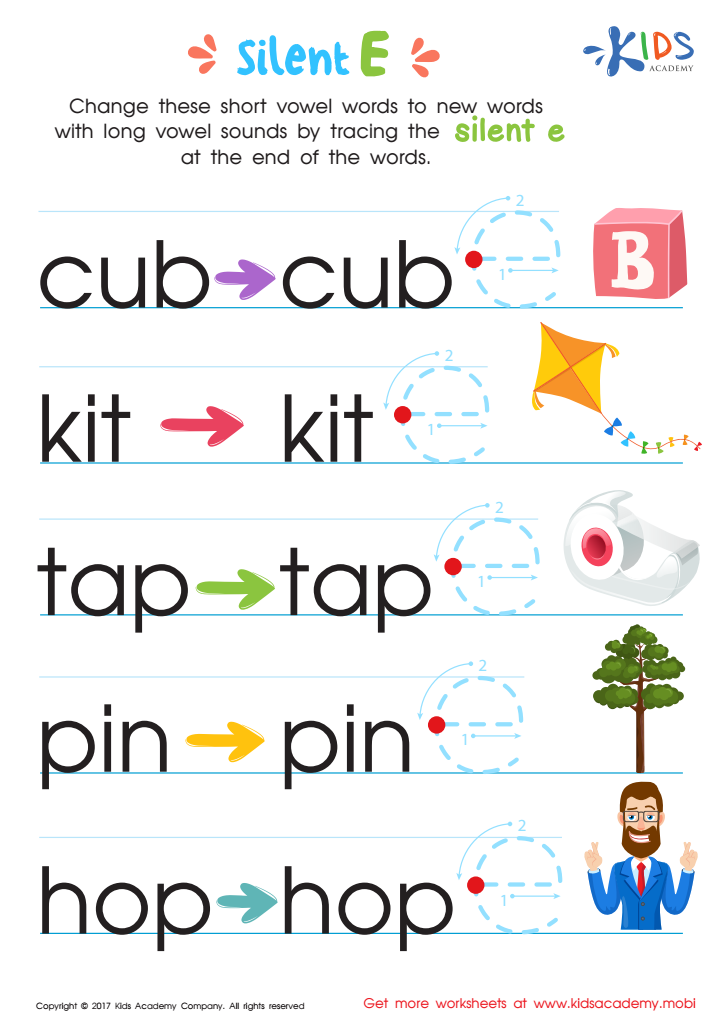
Silent E Words Worksheet
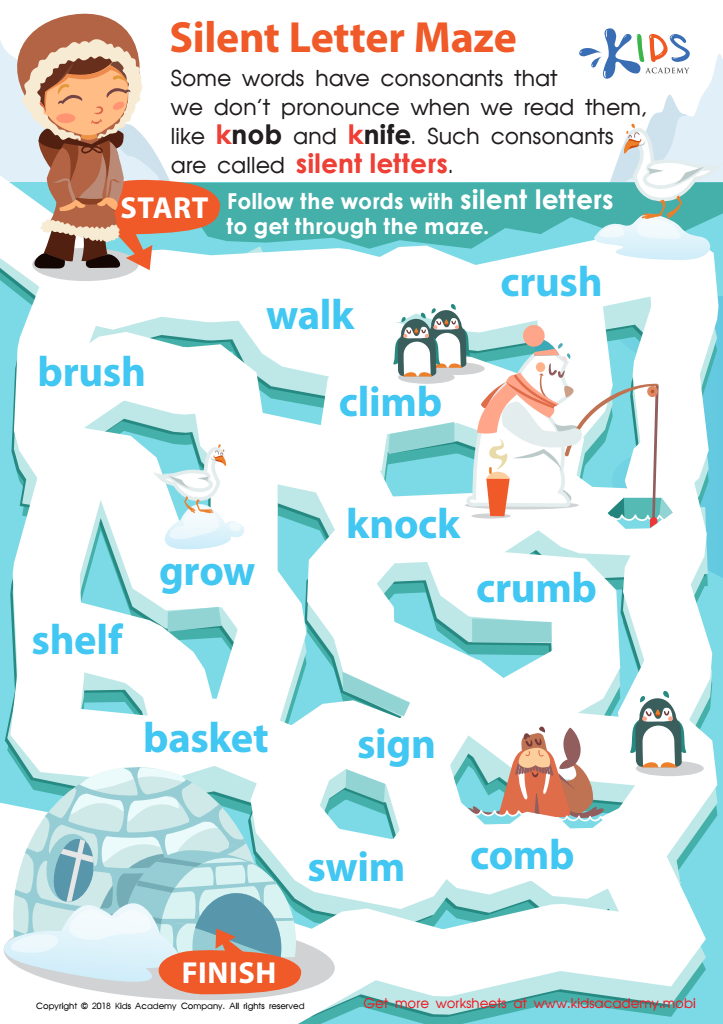
Silent Letter Maze Worksheet


Silent vowels are an essential aspect of the English language and play a crucial role in early literacy development for children aged 5-9. Understanding and recognizing silent vowels helps improve children's reading and spelling skills, which are foundational for their overall academic success.
Firstly, silent vowels appear in many common words (e.g., "plane," "bike," "make"), and knowing them allows children to read smoothly and with confidence. When children can accurately pronounce and read these words, they boost their reading fluency and comprehension, enabling them to enjoy and engage with a wide range of texts, which fosters a love for reading.
Secondly, understanding silent vowels aids in spelling accuracy. Children who can identify patterns in words, including where vowels might be silent, can spell more reliably. This skill reduces frustration and promotes their written communication ability, vital for expressing thoughts and ideas coherently.
Additionally, learning about silent vowels helps in grasping the complexities of English phonetics. By being aware of these nuances, children develop better listening and speaking skills, as they can discern subtle differences in word pronunciation.
In conclusion, paying attention to silent vowels for children aged 5-9 is paramount as it strengthens their reading, spelling, listening, and speaking skills—ultimately setting a solid foundation for future learning.