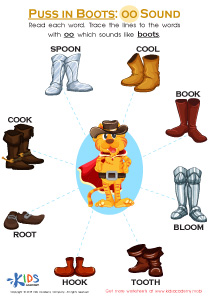
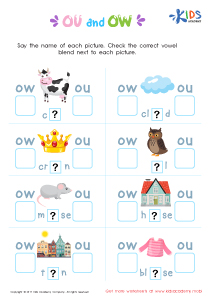
Phonics Skills Vowel Blends Worksheets for Ages 5-9
5 filtered results
-
From - To
Boost your child's reading journey with our "Phonics Skills Vowel Blends Worksheets for Ages 5-9." These engaging and interactive worksheets are specially designed to enhance phonics skills by focusing on vowel blends. Perfect for young learners, these activities make learning to read fun and effective. Each worksheet helps kids recognize, sound out, and blend vowels, laying a strong foundation for fluent reading. Aligned with educational standards, our colorful, easy-to-follow sheets are ideal for both classroom settings and at-home practice. Empower your child’s literacy skills today with our comprehensive and diverse vowel blends worksheets.
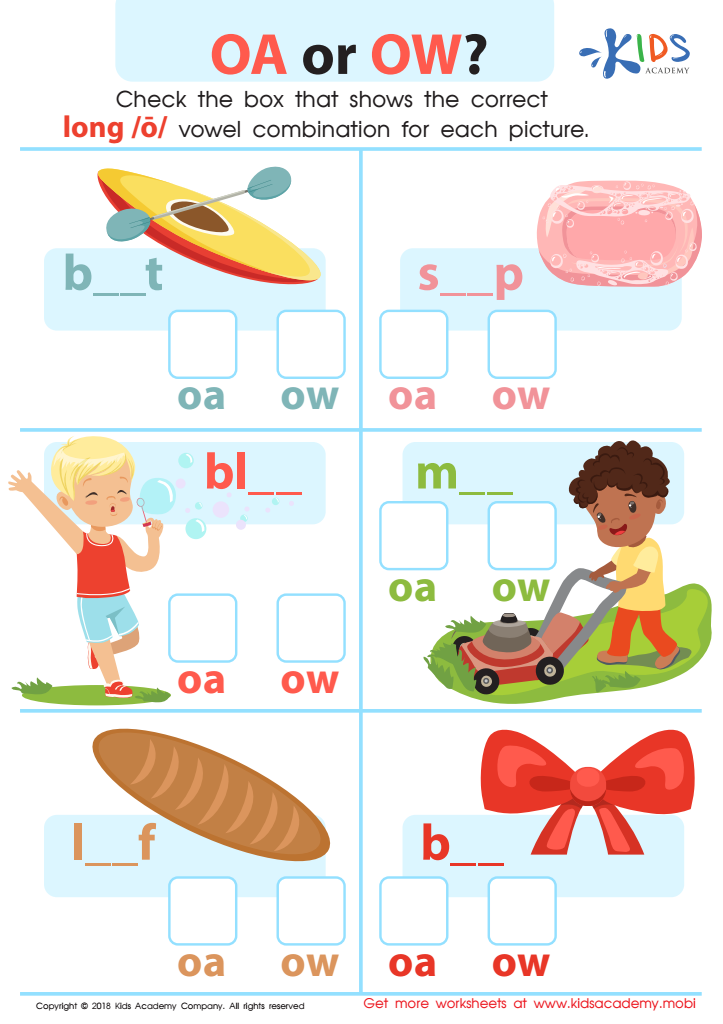
Reading: OA or OW Worksheet
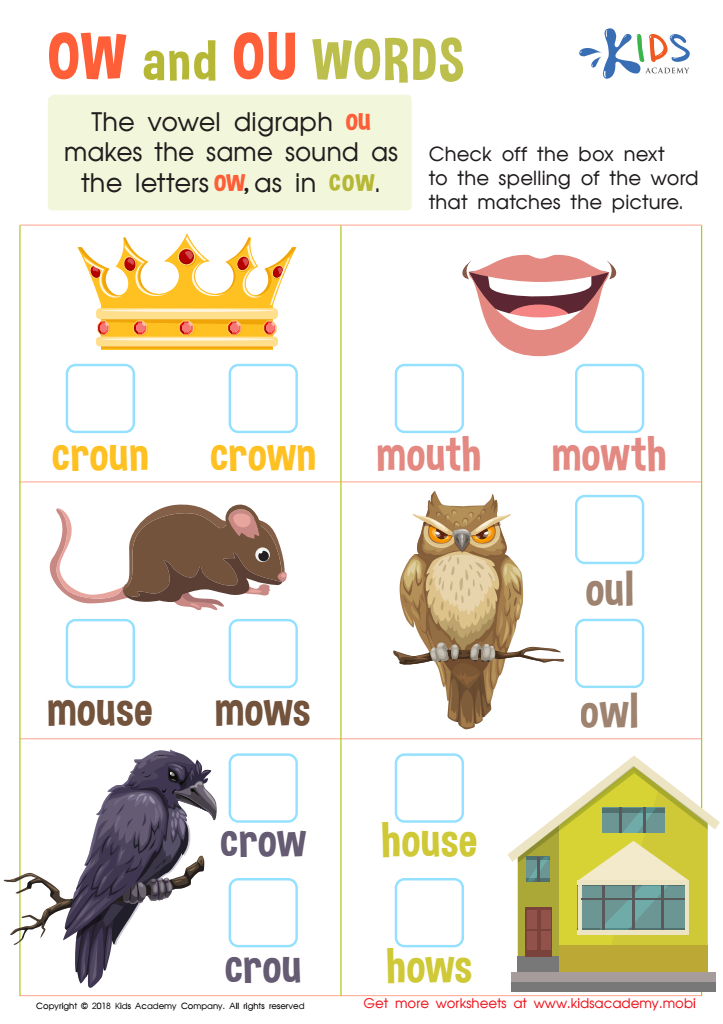
Reading: OW and OU Words Worksheet
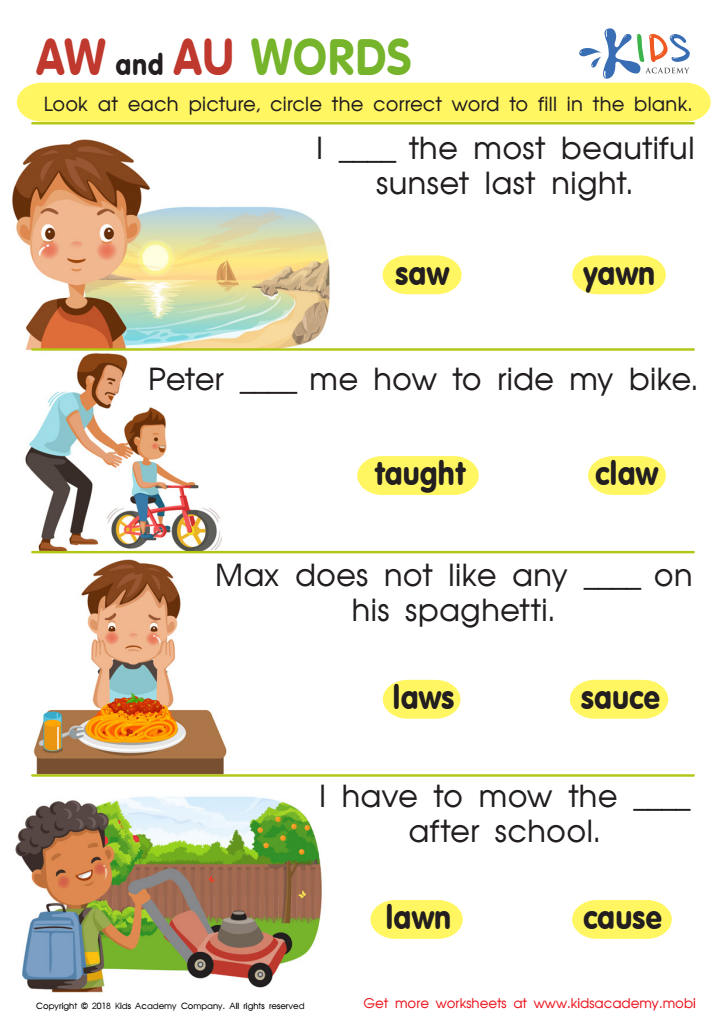
Reading: AW and AU Words Worksheet
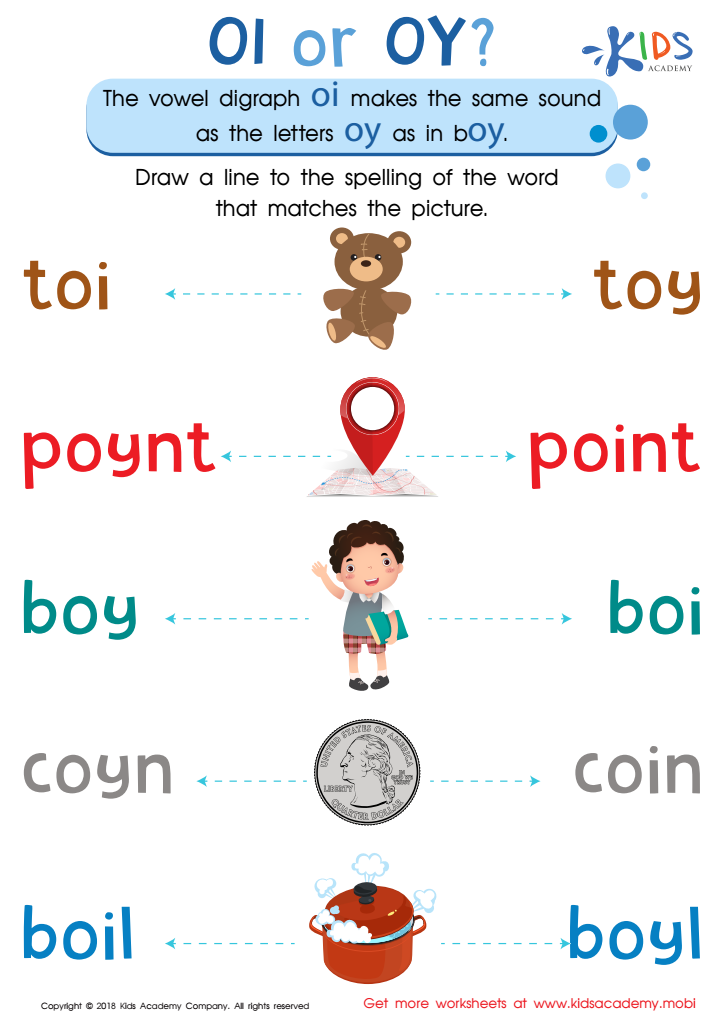
Reading: OI and OY Worksheet
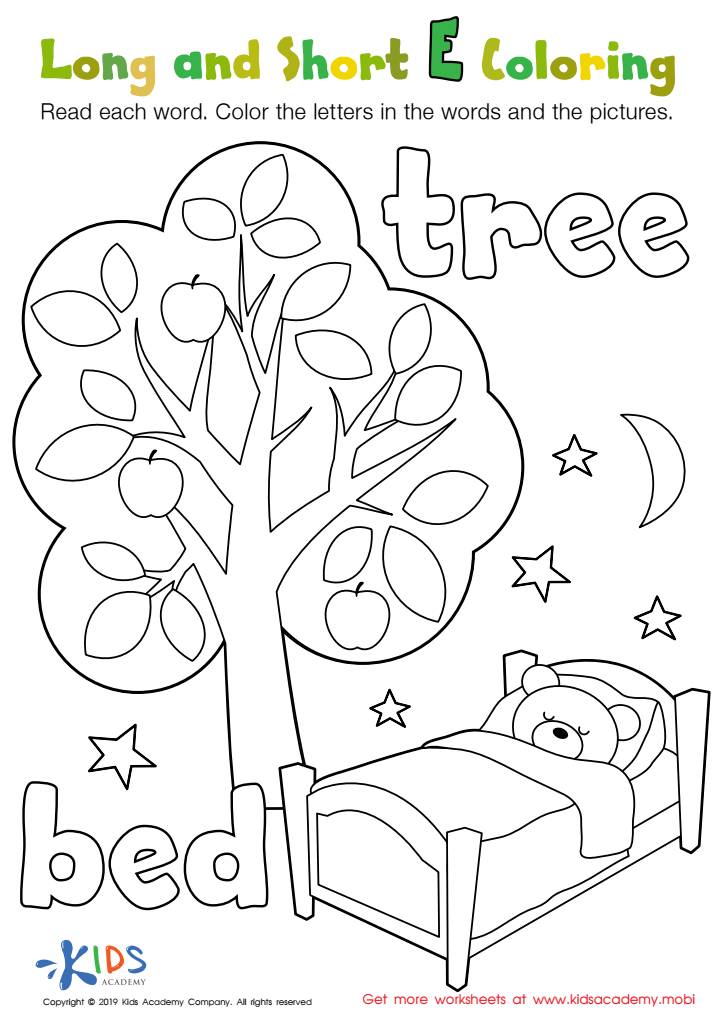
Long and Short E Worksheet
 Assign to My Students





Phonics skills, specifically vowel blends, are crucial for children aged 5-9 as they lay the foundation for reading proficiency and overall literacy development. Vowel blends involve combining vowel sounds to form new sounds, which are essential for decoding words. Mastery of these blends helps children understand the complexities of written language and enhances their ability to read more fluently and accurately.
Parents and teachers should prioritize phonics skills because they significantly influence a child's academic success and confidence in learning. Children who excel in phonics are better equipped to tackle new and challenging vocabulary, comprehend texts, and spell words correctly. Early proficiency in phonics, particularly vowel blends, correlates with improved reading comprehension and greater enjoyment of reading, fostering a lifelong love for books and learning.
Additionally, strong phonics skills support overall cognitive development by enhancing memory, attention to detail, and pattern recognition. Early intervention and consistent practice help prevent reading difficulties such as dyslexia. By focusing on phonics skills and vowel blends, parents and teachers provide children with the essential tools needed for academic achievement and empower them to become engaged, independent readers, which is crucial for their educational journey and future success.