Analog clock reading Worksheets for Ages 5-9
4 filtered results
-
From - To
Introducing our engaging Analog Clock Reading Worksheets tailored for ages 5-9! At Kids Academy, we've designed these worksheets to make learning to tell time both fun and educational. Each activity challenges young learners to understand hour and minute hands, offering a hands-on approach to time-telling skills. These printables cater to various skill levels, from beginners identifying o'clock times to more advanced exercises involving half-past and quarter-past. With colorful designs and clear instructions, children remain captivated while enhancing their time management abilities. Let your child become a confident time-teller with our comprehensive worksheets today!
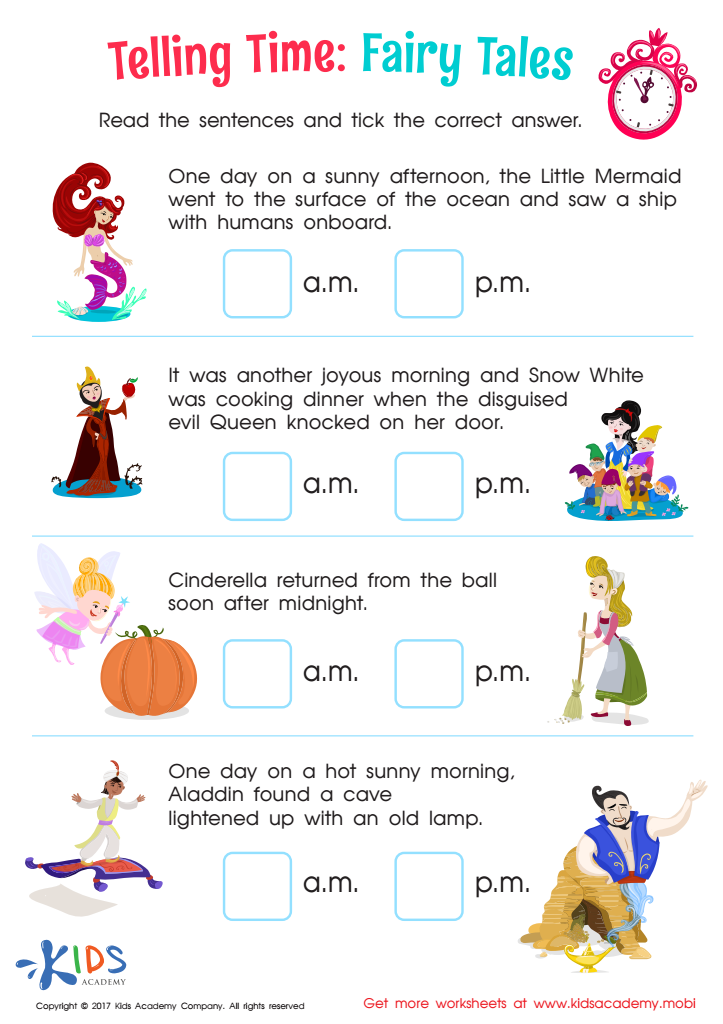
Telling Time: Fairy Tales Worksheet
 Assign to My Students
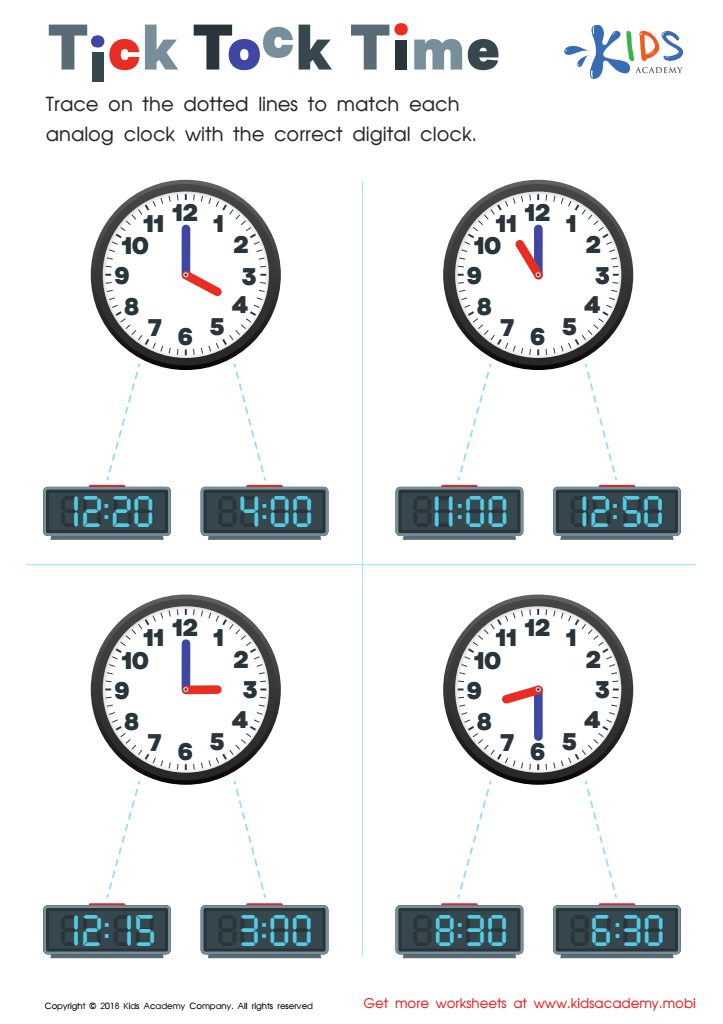
Tick Tock Time Worksheet
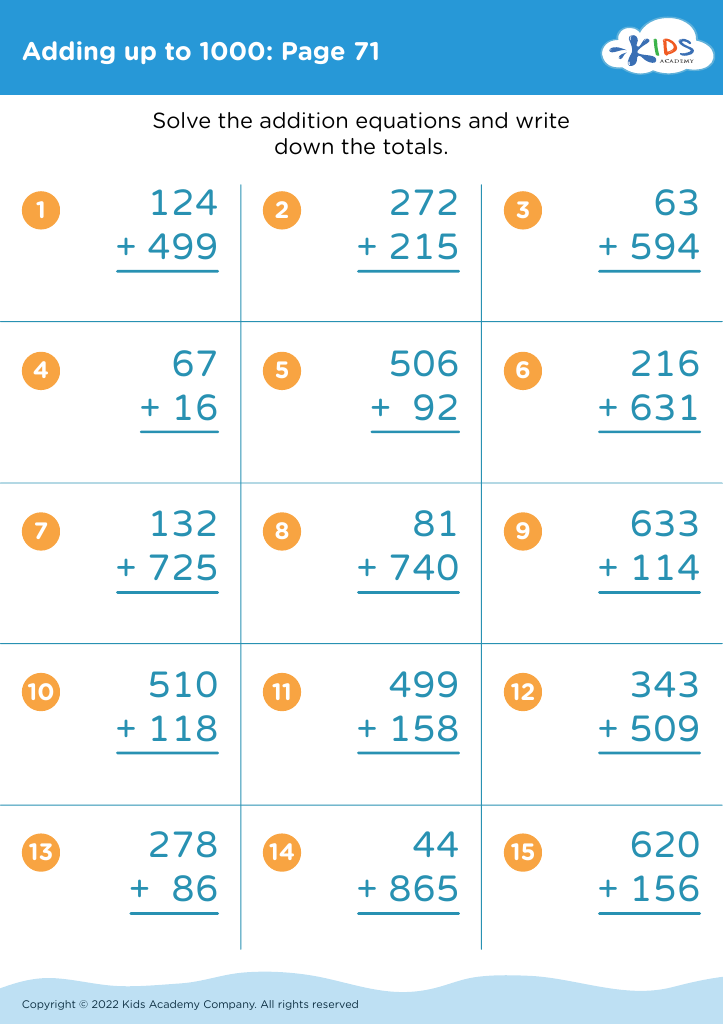
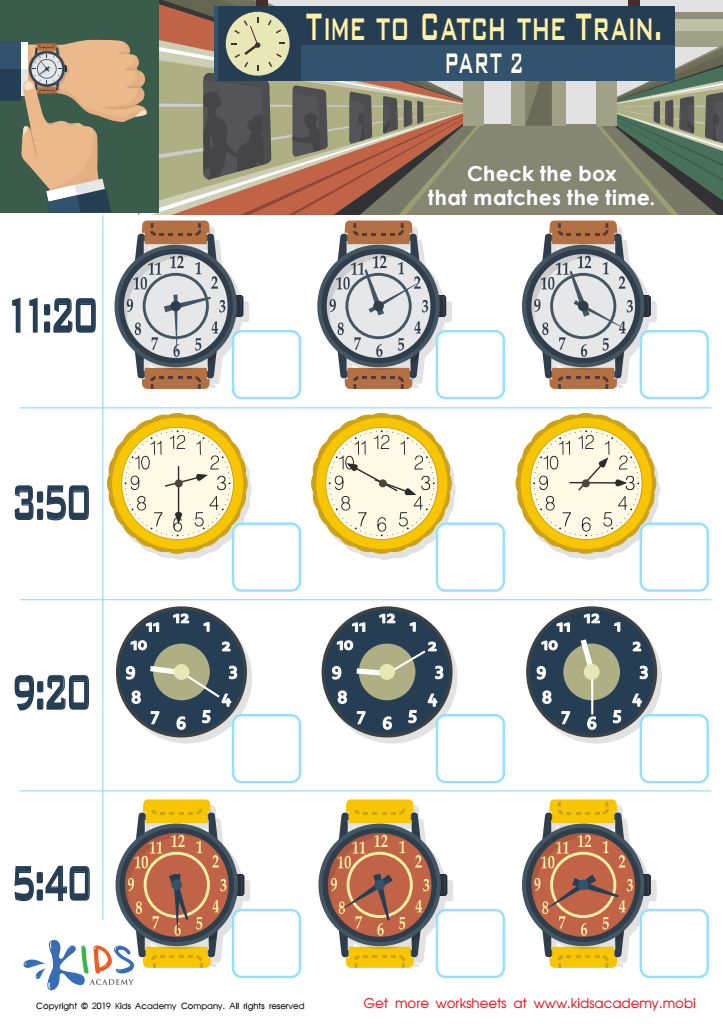
Time to Catch the Train Part 2 Worksheet




%20(1).jpg)

Teaching children aged 5-9 to read an analog clock is essential for several developmental and educational reasons. Firstly, reading analog clocks helps develop a child's cognitive skills. It requires understanding the relationship between numbers and the movement of the clock hands, enhancing problem-solving abilities and improving their grasp of mathematical concepts such as fractions and time intervals.
Secondly, learning to tell time on an analog clock fosters independence and responsibility. Children start to understand the concept of time management, which is crucial for daily routines, punctuality, and meeting deadlines. This skill helps them transition seamlessly from playtime to structured activities, promoting better organizational habits.
Thirdly, reading analog clocks improves fine motor skills and spatial intelligence. Interacting with the clock's hands allows children to practice precise movements, which translates into other tasks requiring fine motor control, like writing.
Lastly, analog clocks integrate a historical and cultural dimension into a child's education. Despite the digital age, analog clocks are everywhere—in schools, home décor, public spaces—which makes knowing how to read them a practical life skill. Moreover, learning to read an analog clock connects children to traditional ways of telling time, offering a broader perspective on how time has been measured historically.
Parents and teachers should prioritize this skill to bolster a child's overall development and practical life preparedness.








