Boost critical thinking Worksheets for Ages 5-9
5 filtered results
-
From - To
Unlock your child's potential with our "Boost Critical Thinking Worksheets" designed for ages 5-9. These engaging and interactive worksheets focus on developing essential critical thinking skills through fun activities that spark curiosity and creativity. Each sheet features age-appropriate challenges that encourage problem-solving, decision-making, and analytical thinking. From puzzles to real-world scenarios, children will learn to think independently and improve their reasoning skills in a supportive environment. Our easy-to-use format allows for seamless integration into your child's daily routine or classroom activities. Foster a lifetime love of learning and equip your child with the tools to succeed with our thoughtfully crafted worksheets!

 Assign to My Students

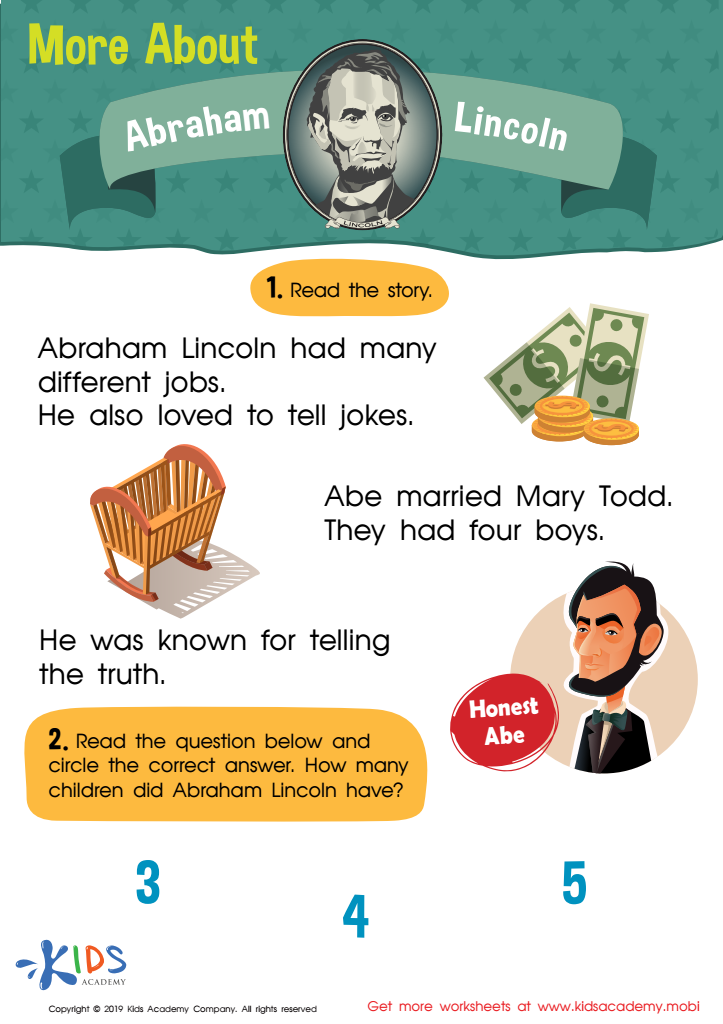
More About Abraham Lincoln Worksheet








Boosting critical thinking in children ages 5 to 9 is crucial for their cognitive and social development. At this young age, children are naturally curious and eager to explore the world around them. By nurturing their critical thinking skills, parents and teachers help cultivate their ability to analyze, question, and evaluate information rather than passively absorbing it.
Engaging in activities that encourage critical thinking fosters creativity and problem-solving skills. For example, asking children open-ended questions, conducting experiments, or involving them in discussions about various topics encourages them to think independently and evaluate different perspectives. This helps reinforce their decision-making abilities, resilience, and adaptability.
Moreover, in a rapidly changing world filled with information, children equipped with strong critical thinking skills can navigate challenges more effectively, making them better prepared for future academic and social situations. Critical thinkers are adept at identifying misleading information, a skill increasingly important in the era of digital communication.
Ultimately, nurturing critical thinking not only enhances a child’s educational experience but also builds a strong foundation for lifelong learning, ensuring they become thoughtful, informed citizens who can engage thoughtfully with the world. Thus, both parents and teachers should prioritize cultivating these essential skills early in a child's development.








