
Chess knowledge Worksheets for Ages 5-9
5 filtered results
Difficulty Level
Grade
Age
-
From - To
Subject
Activity
Standards
Unlock the world of strategic thinking with our Chess Knowledge Worksheets for Ages 5-9. Designed to be both educational and engaging, these printable worksheets introduce young learners to the fundamental concepts of chess. Children will explore key aspects of the game, including piece movements, basic strategies, and game etiquette, all tailored to their developmental level. Our carefully crafted exercises foster critical thinking, problem-solving skills, and concentration, making learning fun and interactive. Ideal for beginners, these worksheets provide a solid foundation in chess, preparing kids for more advanced play while cultivating a lifelong love for this timeless game.
Favorites
With answer key
Interactive
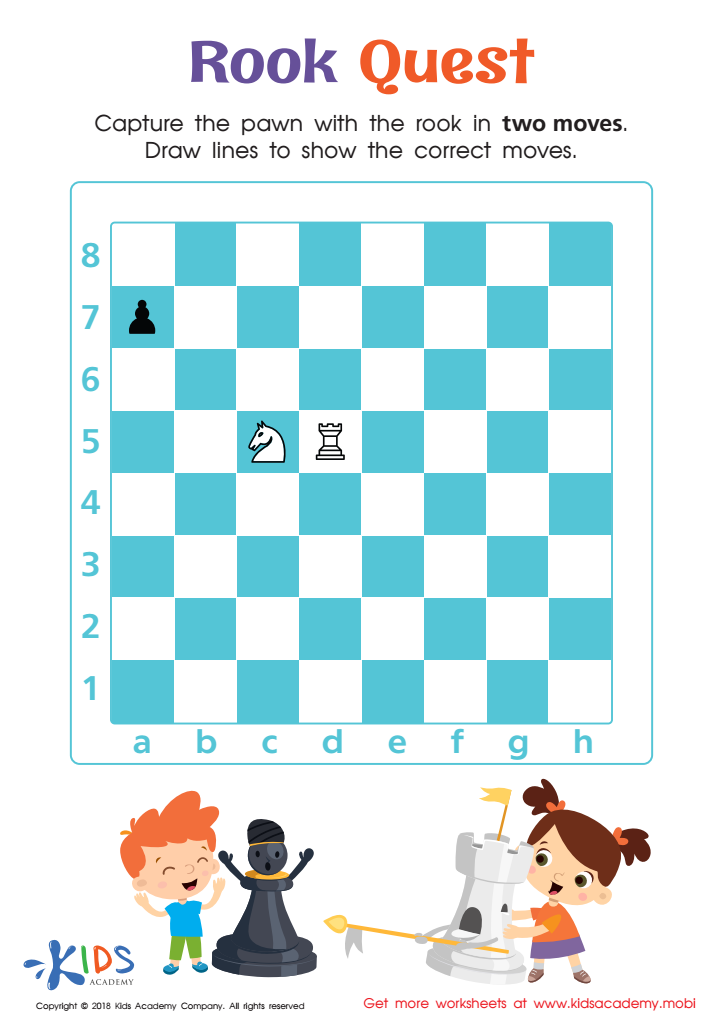
Rook Quest Worksheet
Is your child a chess whiz? Check their progress with this rook quest: get the enemy's pawn piece in just two moves. Have them draw the lines for the moves they'll make. See how quickly they master it!
 Assign to My Students
Rook Quest Worksheet
Worksheet
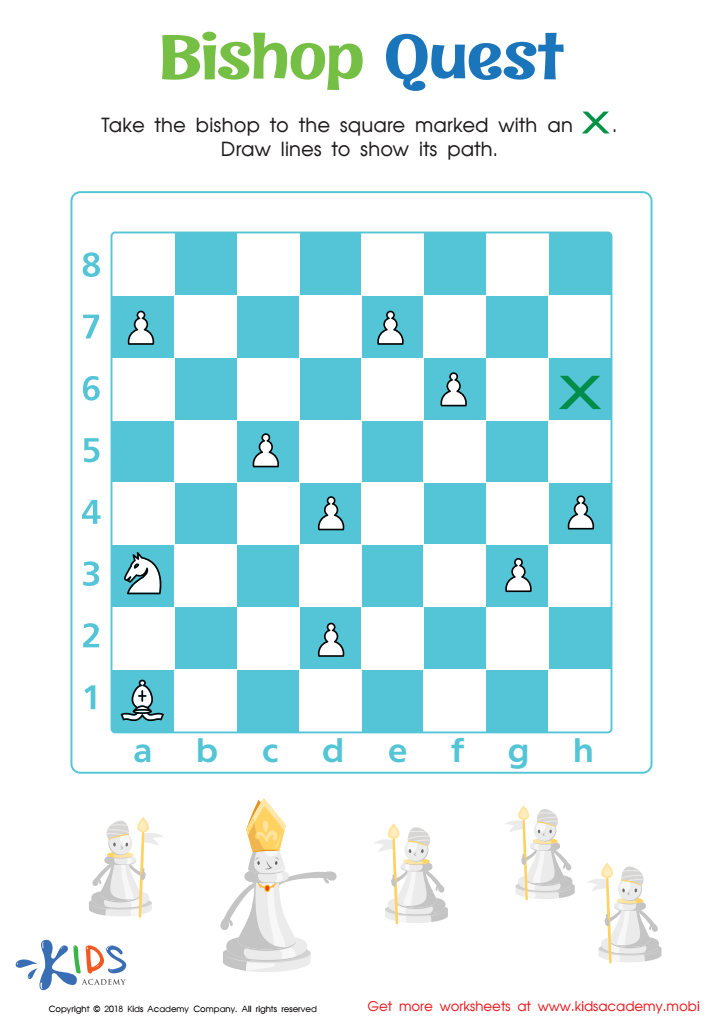
Bishop Quest Worksheet
Show kids the board and ask them to identify the bishop. Then ask them to move it to the square marked 'x', drawing lines to show its path. This worksheet helps teach kids how to move the bishop on a chessboard.
Bishop Quest Worksheet
Worksheet
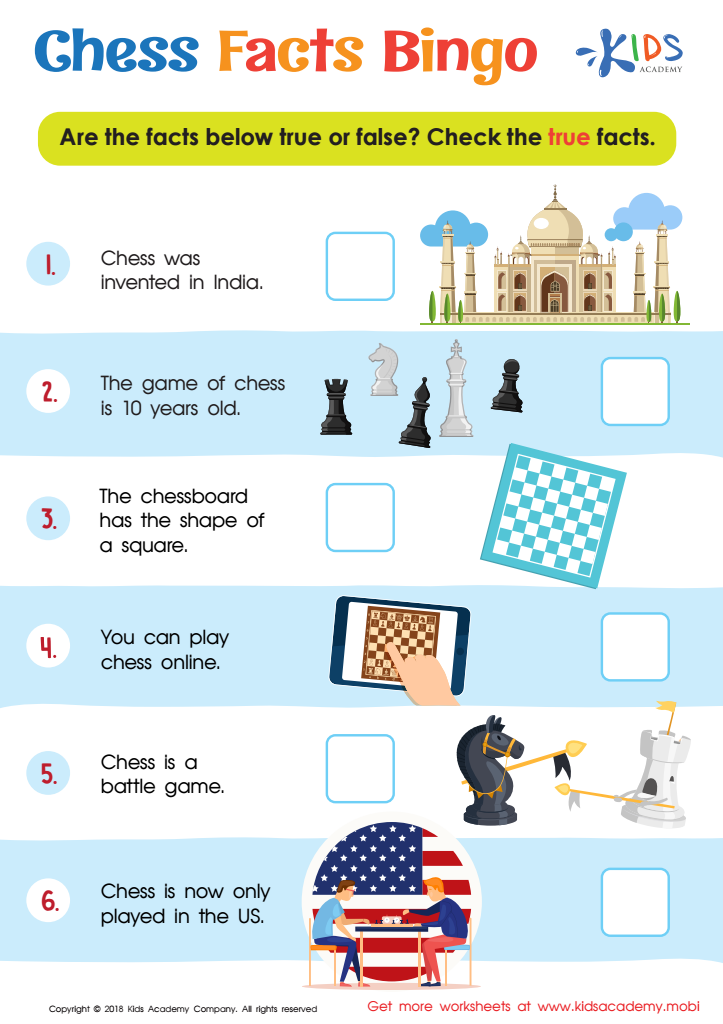
Chess Facts Bingo Worksheet
Help your child assess their knowledge of chess with our simple worksheet. It contains six questions; read them to your child and ask them if the statements are true or false. Once they check the boxes for the true statements, you'll have a better understanding of their understanding of the game.
Chess Facts Bingo Worksheet
Worksheet
Join Kids Academy for Free
Who is primarily going to use this learning content?








Chess is an excellent tool for cognitive and social development, vital for children aged 5-9. At this young age, children’s brains are like sponges, quickly absorbing new information and skills. Introducing them to chess can significantly enhance their problem-solving and critical-thinking abilities. The game requires players to consider their opponent's moves, which boosts anticipation and planning skills. It teaches patience, as playing chess requires thinking ahead and not rushing decisions.
Moreover, chess is a powerful medium for instilling discipline and focus. Children learn to sit still and concentrate for extended periods, which can positively influence their performance in school and other activities. The strategic nature of the game enhances memory since players have to remember various moves and strategies. Research also shows that children who play chess tend to improve their math and reading skills more quickly.
Apart from cognitive benefits, chess has valuable social aspects. It serves as a platform where children learn about healthy competition, the importance of hard work, and respect for opponents. This combination of cognitive and social benefits makes chess a holistic educational tool, encouraging children to think creatively, make decisions confidently, and understand the consequence of their choices. Hence, parents and teachers should highly consider incorporating chess into children’s routines.








