Comparing lengths Worksheets for Ages 5-9
18 filtered results
-
From - To
Our "Comparing Lengths Worksheets for Ages 5-9" provide a fun and educational way for young learners to develop essential math skills. These engaging worksheets help children understand the concepts of length, height, and width through playful activities and colorful illustrations. Perfect for both classroom and at-home learning, our worksheets inspire curiosity and critical thinking. By comparing and measuring various objects, kids hone their observational skills and build a strong foundation for future math success. Ideal for ages 5-9, these resources support differentiated learning and cater to various skill levels, ensuring every child can progress at their own pace.
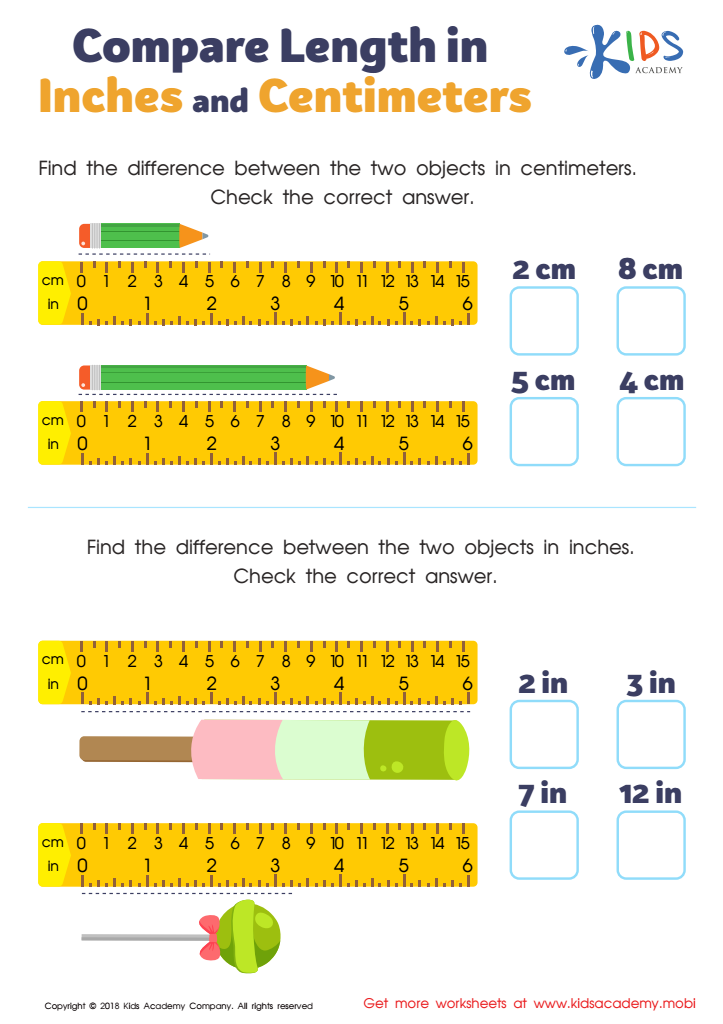
Compare Length in Inches and Centimeters Worksheet
 Assign to My Students
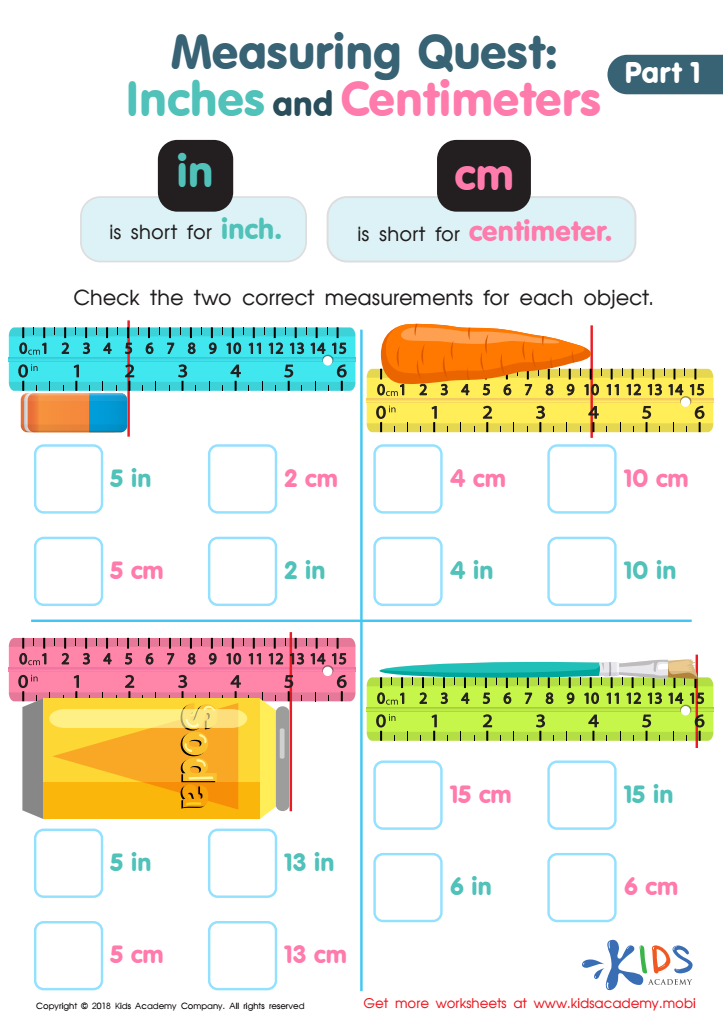
Measuring Quest: Inches and Centimeters Worksheet
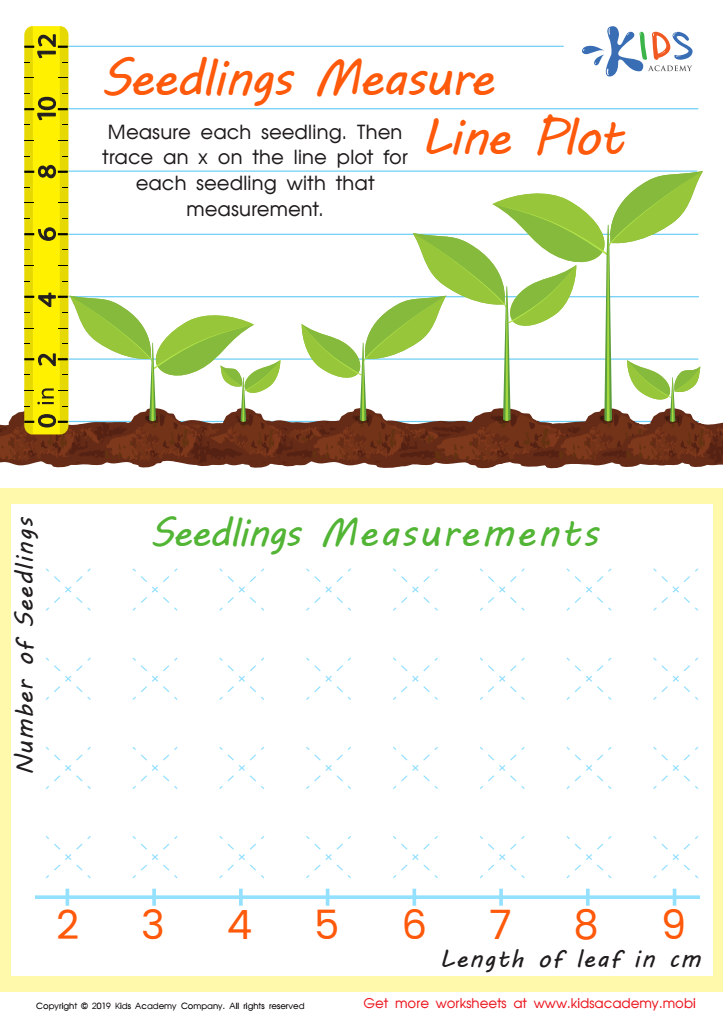
Seedling Measure Line Plot Worksheet
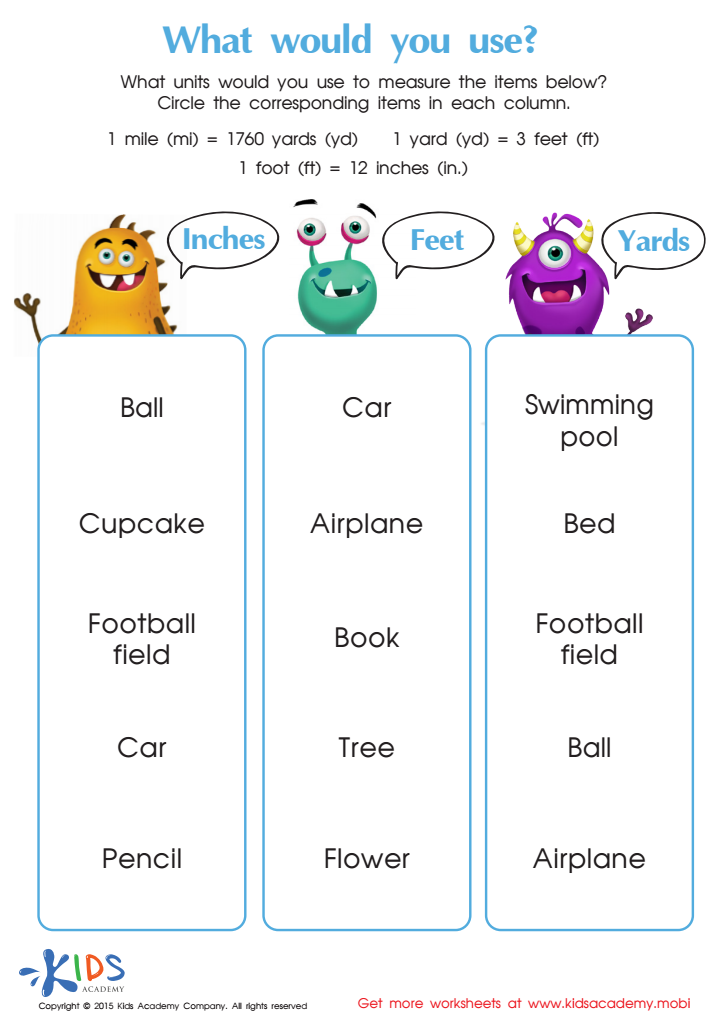
Learning about measuring objects in inches, feet and yards Worksheet
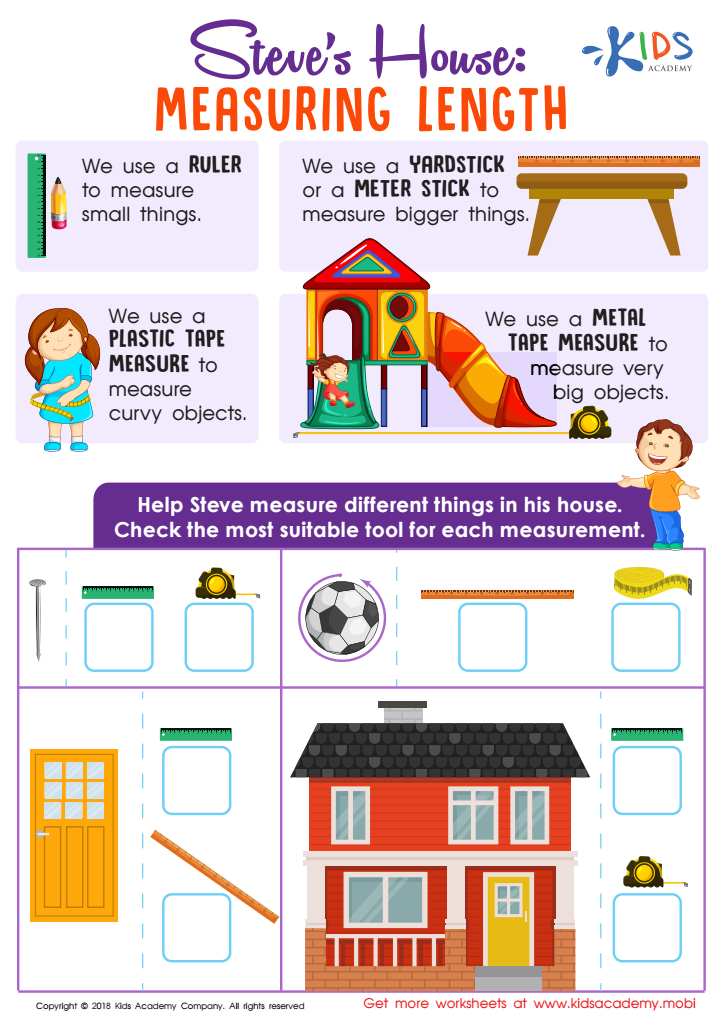
Steve's House: Measuring Length Worksheet
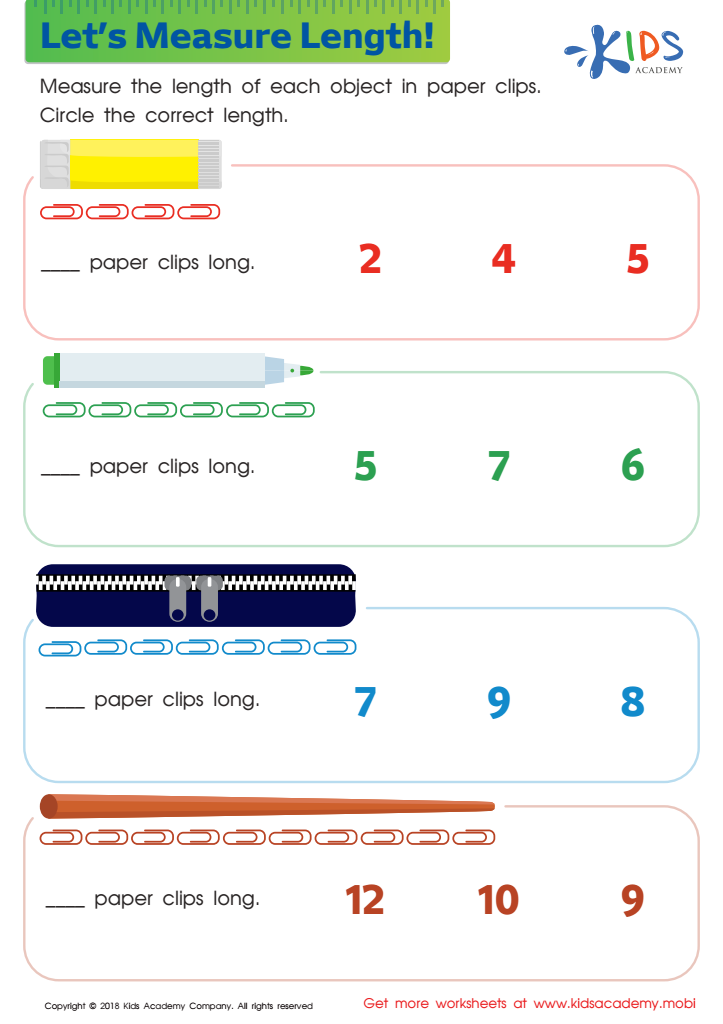
Lets Measure Length Worksheet
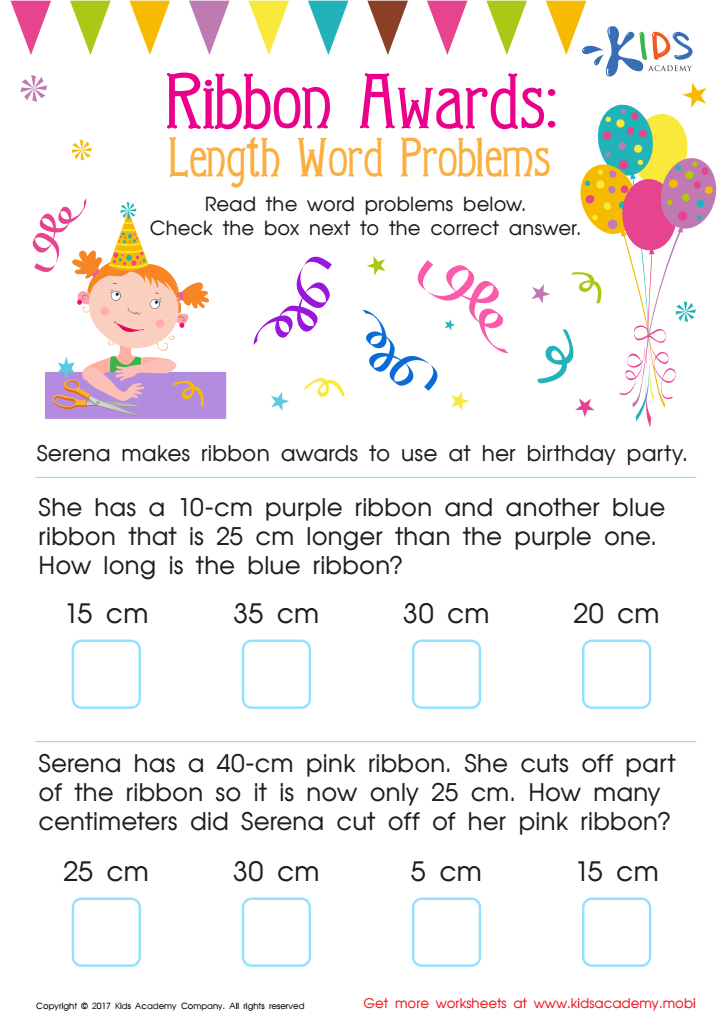
Length Word Problems Worksheet
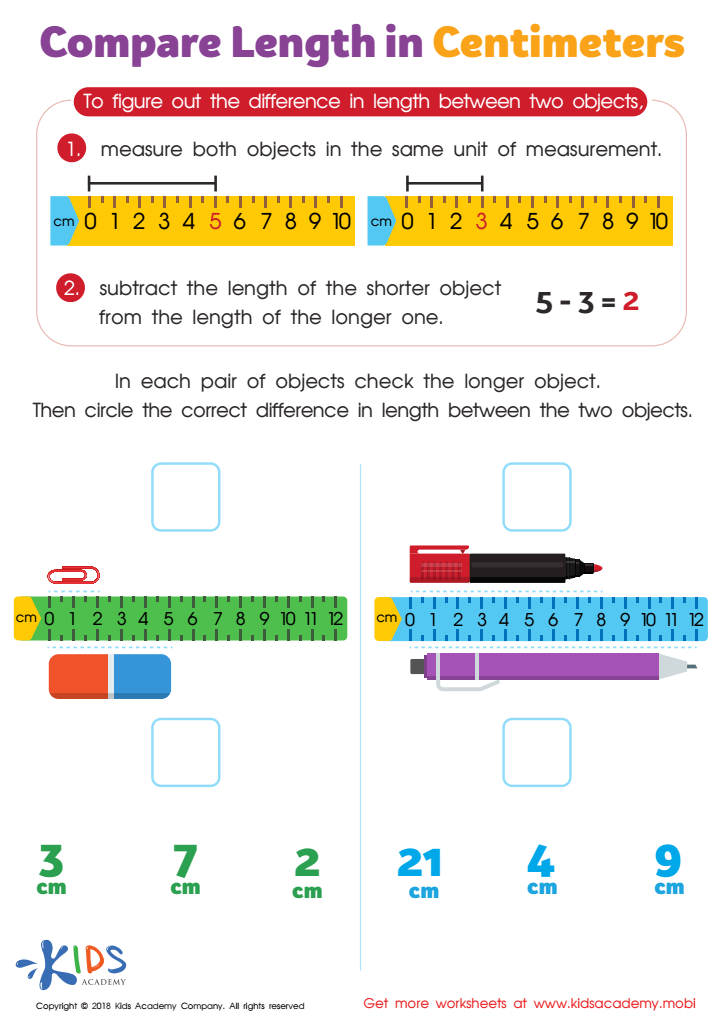
Compare Length in Centimeters Worksheet
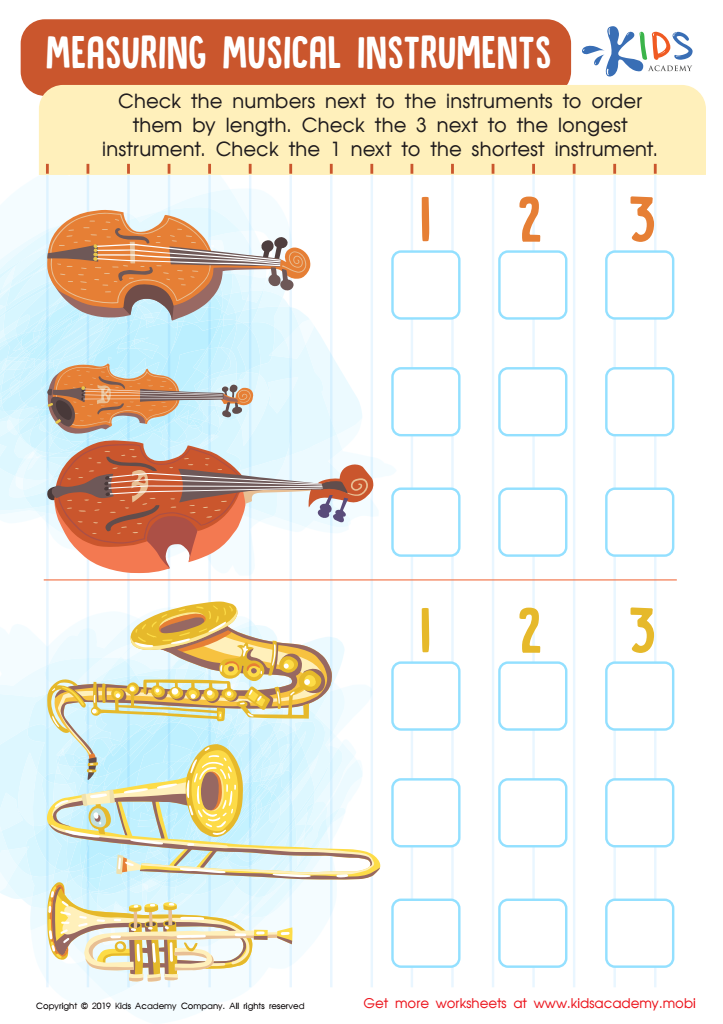
Measuring Musical Instruments Worksheet
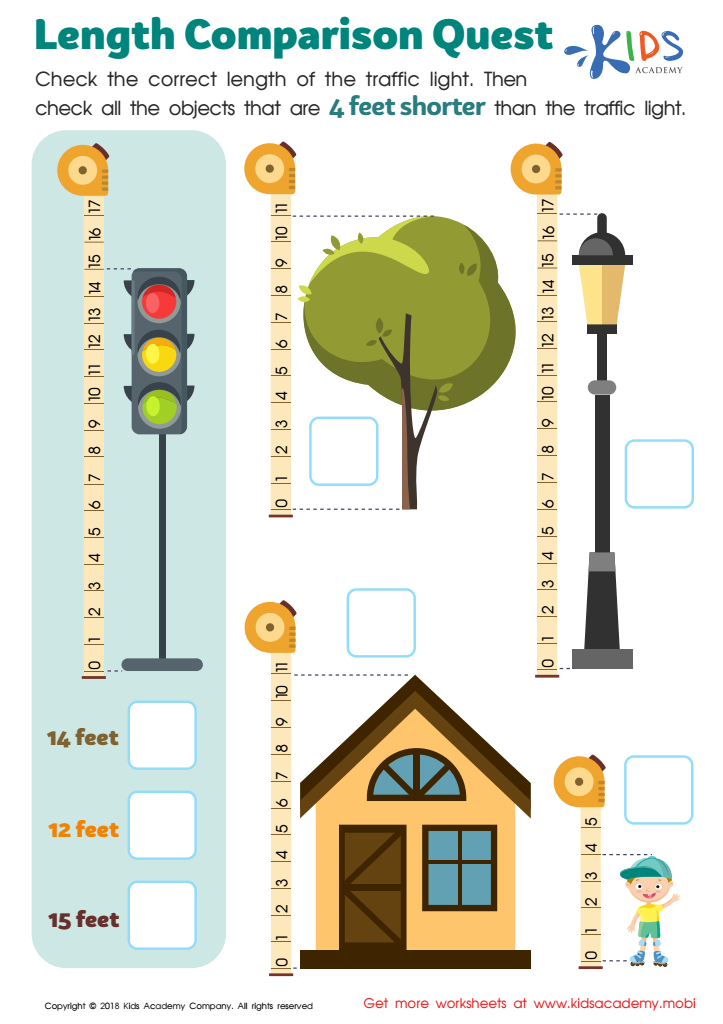
Length Comparison Quest Worksheet
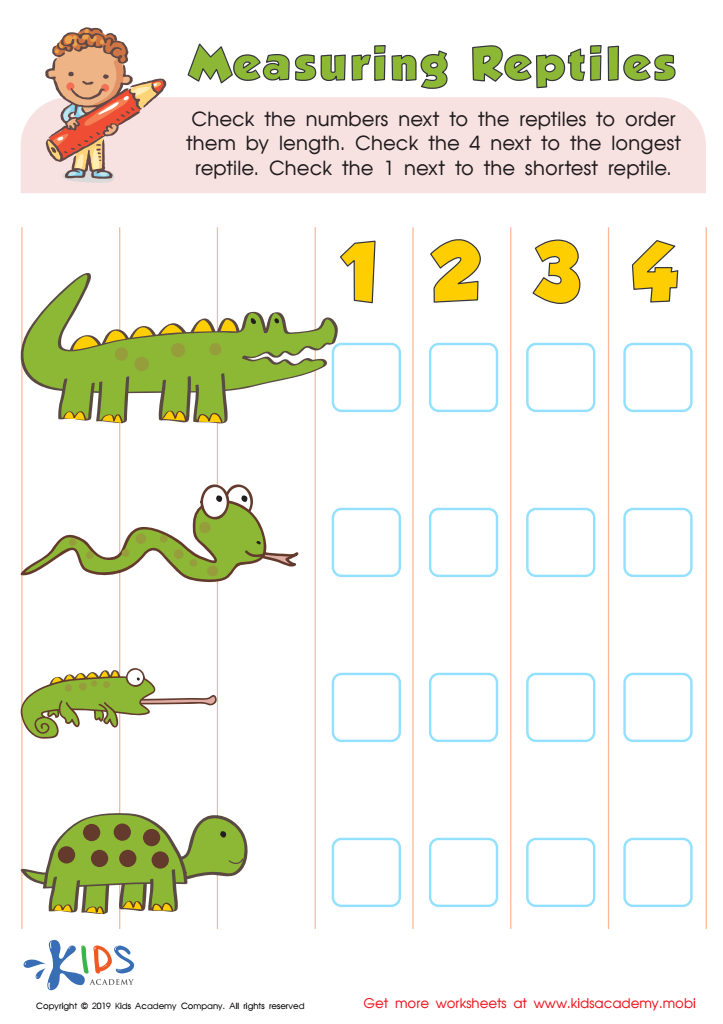
Measuring Reptiles Worksheet
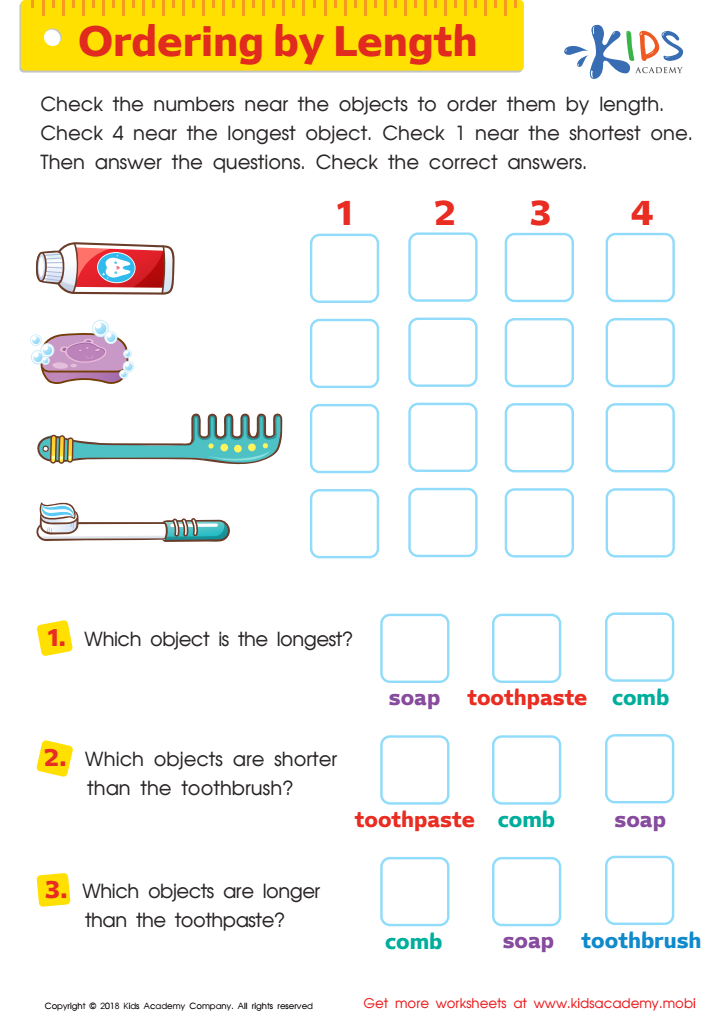
Ordering by Length Worksheet
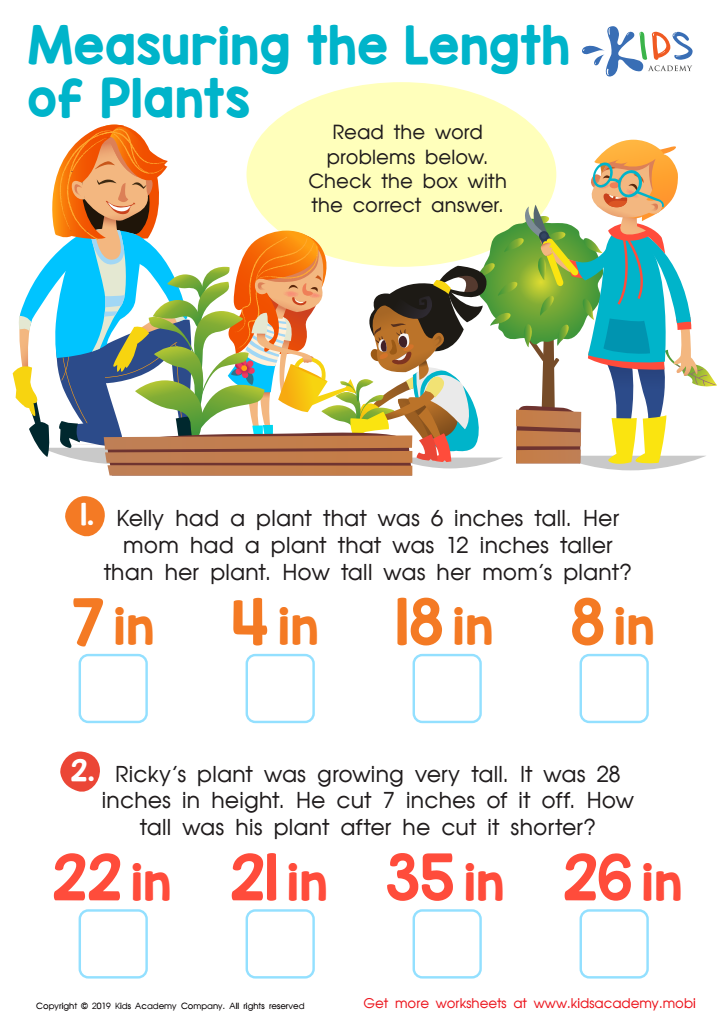
Measuring the Length of Plants Worksheet
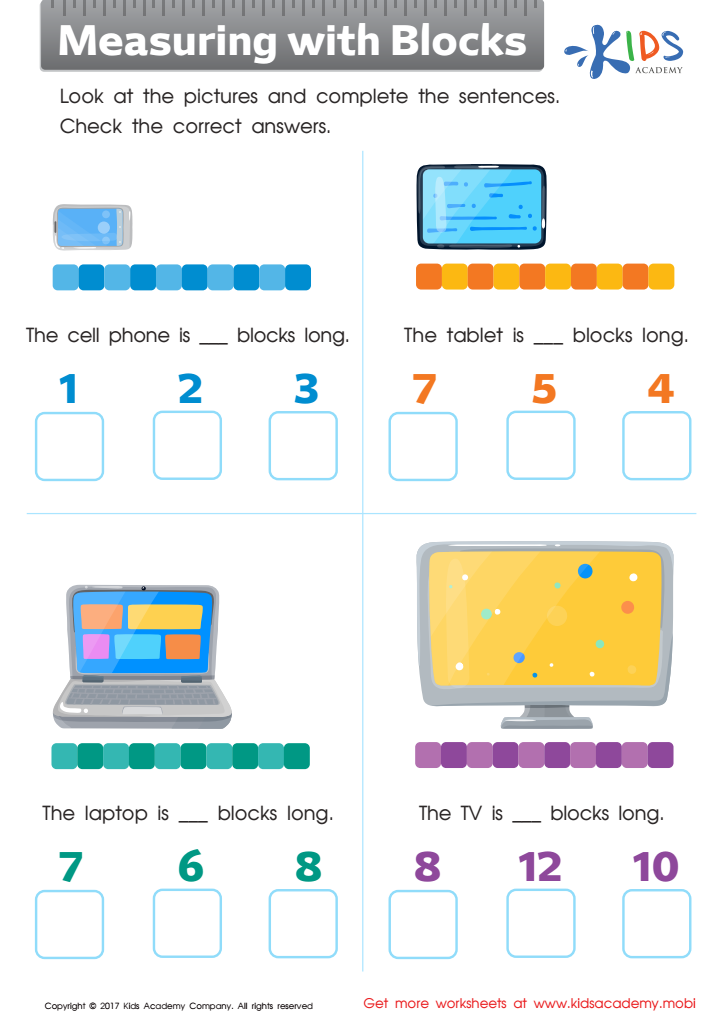
Measuring with Blocks Worksheet
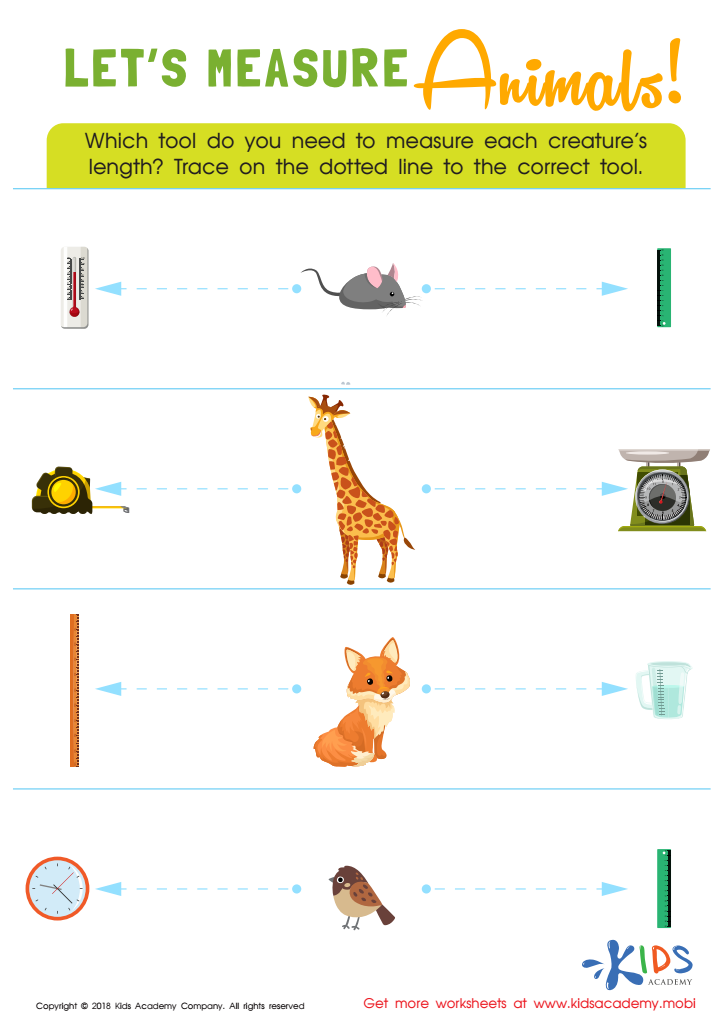
Let's Measure Animals! Worksheet
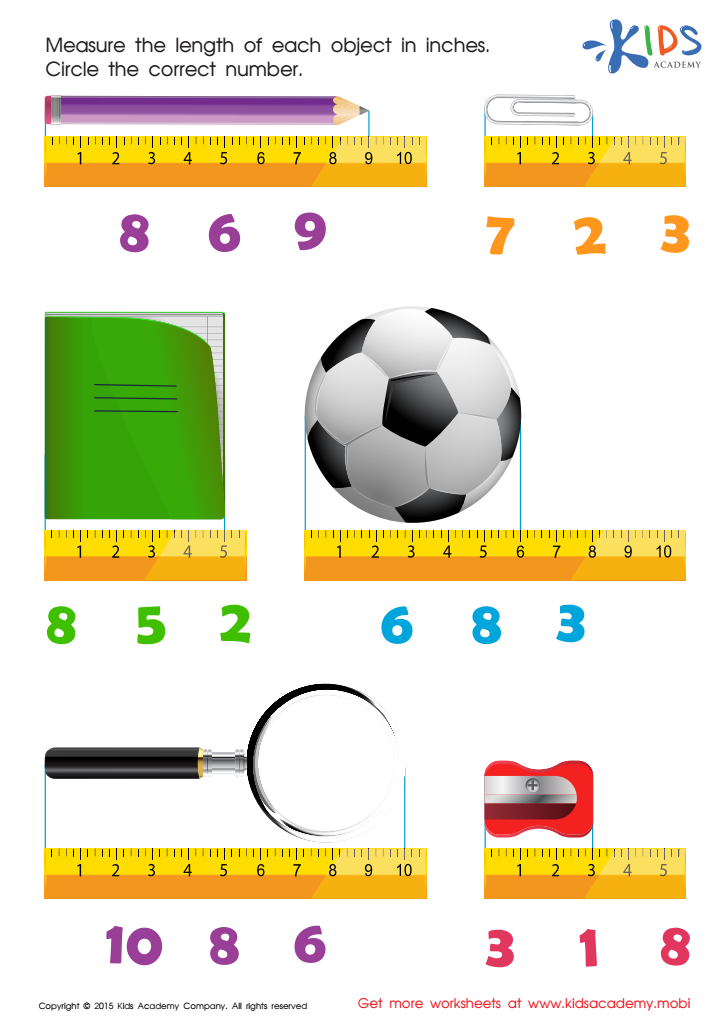
Learning measuring objects in inches Worksheet





Comparing lengths is a fundamental early math skill crucial for children aged 5-9, and it's essential for both parents and teachers to emphasize its importance. This concept doesn't merely fall within the purview of mathematics but fosters a broad spectrum of cognitive and practical life skills.
First, understanding and comparing lengths enhances a child's spatial awareness and visual discrimination, which are critical for various activities, from reading and writing directionality to solving puzzles. These skills help children distinguish between shapes, sizes, patterns, and eventually algebraic concepts.
Secondly, learning to compare lengths strengthens analytical thinking and problem-solving abilities. Children learn to observe, question, measure, and draw conclusions based on their observations. This exploratory learning is intrinsic to scientific inquiry and technological applications, encouraging curiosity and a methodical approach to tackling real-world issues.
Additionally, mastering length comparison lays a foundation for future math topics like estimation, geometry, and data organization. Practical applications include tasks like distributing objects equally, understanding distances, and even participating in everyday activities like cooking or building.
For these reasons, parents and teachers should actively engage children in comparing lengths through interactive, hands-on experiences. Whether by measuring objects during play, estimating distances, or through structured activities, these pursuits build a child's confidence and competence in navigating their world. This nurtures a lifelong appreciation and aptitude for STEM fields.








