
Develop analytical thinking Worksheets for Ages 5-9
5 filtered results
Difficulty Level
Grade
Age
-
From - To
Subject
Activity
Standards
Unlock your child's potential with our engaging analytical thinking worksheets designed for ages 5-9. These thoughtfully crafted resources promote critical thinking skills through fun, age-appropriate activities. Each worksheet encourages young learners to solve puzzles, identify patterns, and make logical connections, fostering cognitive abilities essential for future academic success. With colorful illustrations and interactive exercises, kids will enjoy exploring concepts while building a strong foundation in analytical reasoning. Perfect for both home and classroom use, our worksheets provide an excellent way to supplement learning and stimulate intellectual curiosity. Empower your child's thinking skills today with our dynamic analytical thinking worksheets!
Favorites
With answer key
Interactive
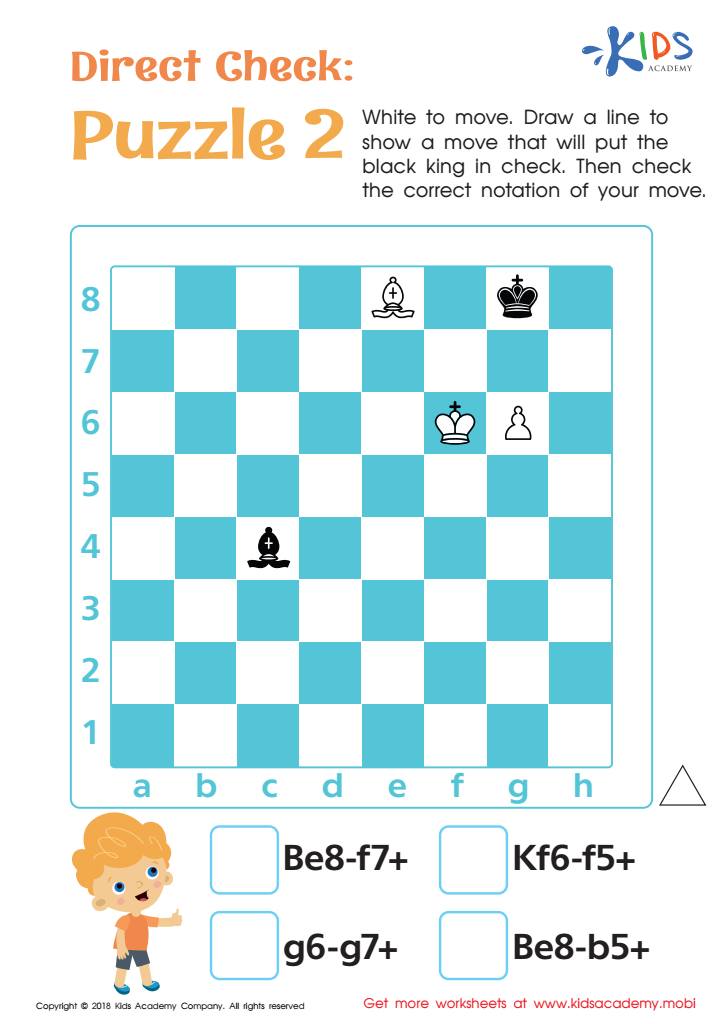
Direct Check: Puzzle 2 Worksheet
Test your kid's chess skills with this worksheet. Help them draw a line to put the black king in checkmate, then check the correct notation from the provided options. This will help them understand the correct notation of each move they make.
 Assign to My Students
Direct Check: Puzzle 2 Worksheet
Worksheet
Join Kids Academy for Free
Who is primarily going to use this learning content?








Developing analytical thinking in children aged 5-9 is crucial for several reasons. First, this cognitive skill empowers young learners to assess information critically, facilitating better decision-making. In a world inundated with information, the ability to differentiate between facts and opinions is vital. Children who hone analytical skills early on can methodically approach problems, fostering independence and resilience.
Moreover, analytical thinking nurtures creativity. By evaluating various scenarios or solutions, children learn to approach tasks innovatively and explore different perspectives. This not only enhances their academic performance but also prepares them for real-world situations that require adaptive thinking.
Parents and teachers are essential in modeling and encouraging analytical thought. Engaging children in discussions, puzzles, and hands-on activities stimulate inquiry, sustaining curiosity and a love for learning. Such engagements promote active participation rather than mere rote memorization, making education more impactful.
Finally, fostering analytical skills collaborates with other intellectual pursuits, enhancing literacy and numeracy. Ultimately, instilling these competencies provides a strong foundation for lifelong learning, making a significant difference in children’s futures, academic outcomes, and personal development. Prioritizing analytical thinking equips children with tools they can apply throughout their lives, making it a worthwhile endeavor for parents and educators alike.








