Develop problem-solving abilities Worksheets for Ages 5-9
6 filtered results
-
From - To
Welcome to our engaging collection of problem-solving abilities worksheets designed for children ages 5-9! These specially crafted resources encourage critical thinking, creativity, and analytical skills through fun and interactive activities. Tailored to meet developmental milestones, our worksheets provide a variety of challenges that empower young learners to explore different strategies for solving problems. From puzzles and riddles to scenario-based questions, children will enhance their cognitive skills while enjoying the learning process. Perfect for classroom or home use, these worksheets aim to foster independence and confidence in young minds as they embark on their problem-solving journeys. Start exploring today!

Dance Class Subtraction Worksheet
 Assign to My Students
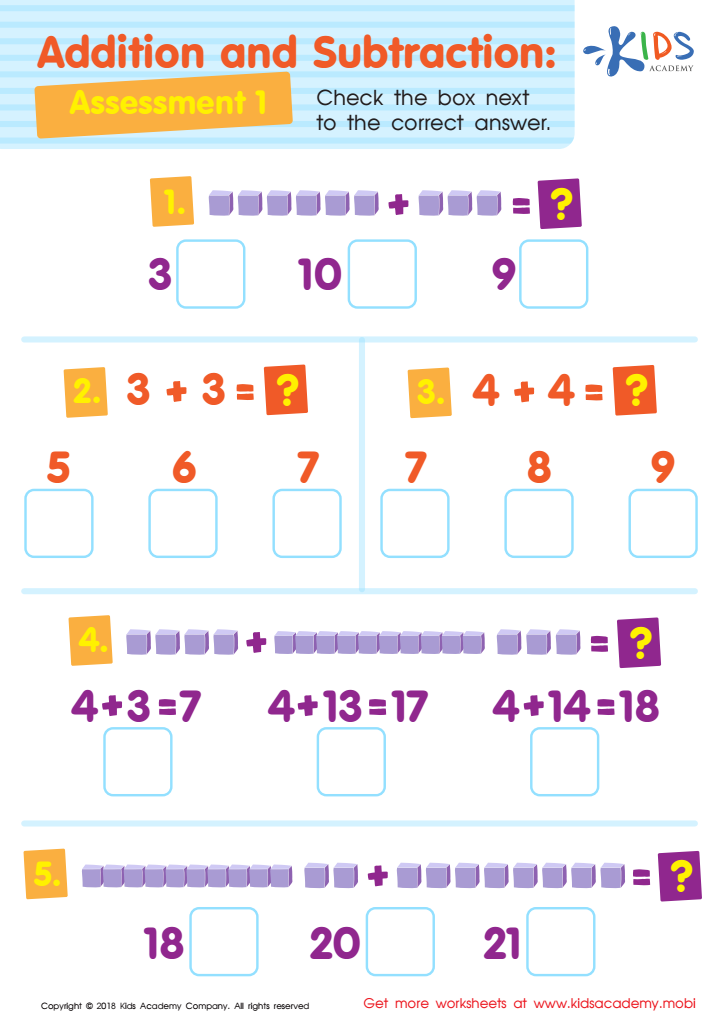
Addition and Subtraction Assessment 1 Worksheet
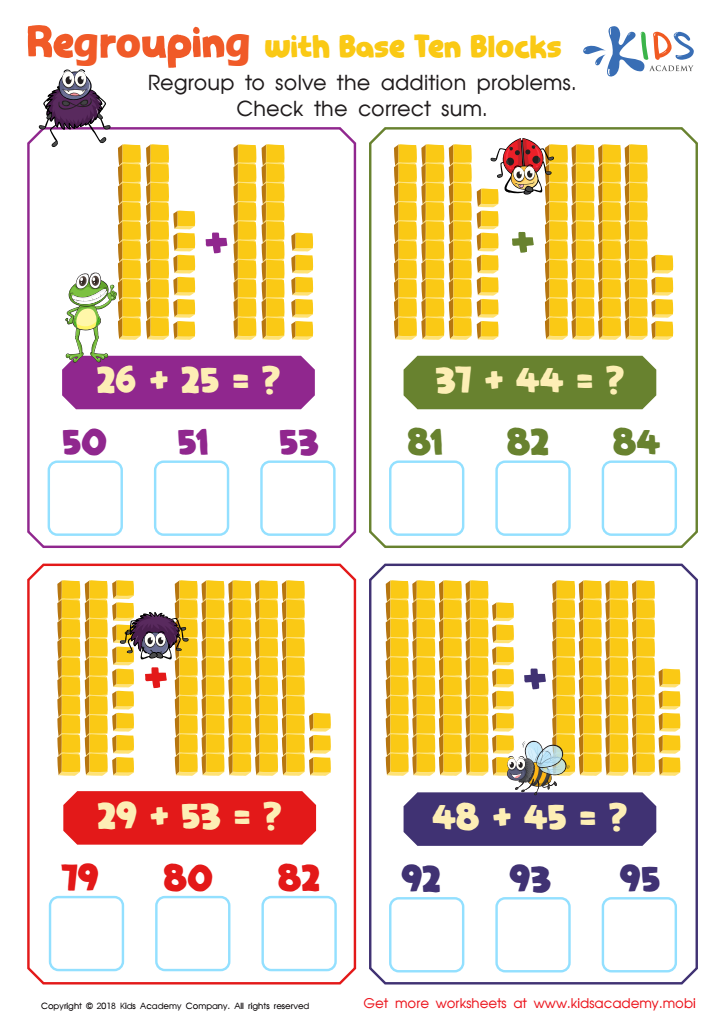
Regrouping With Base Ten Blocks Worksheet

Finding 2: In the Ocean Worksheet
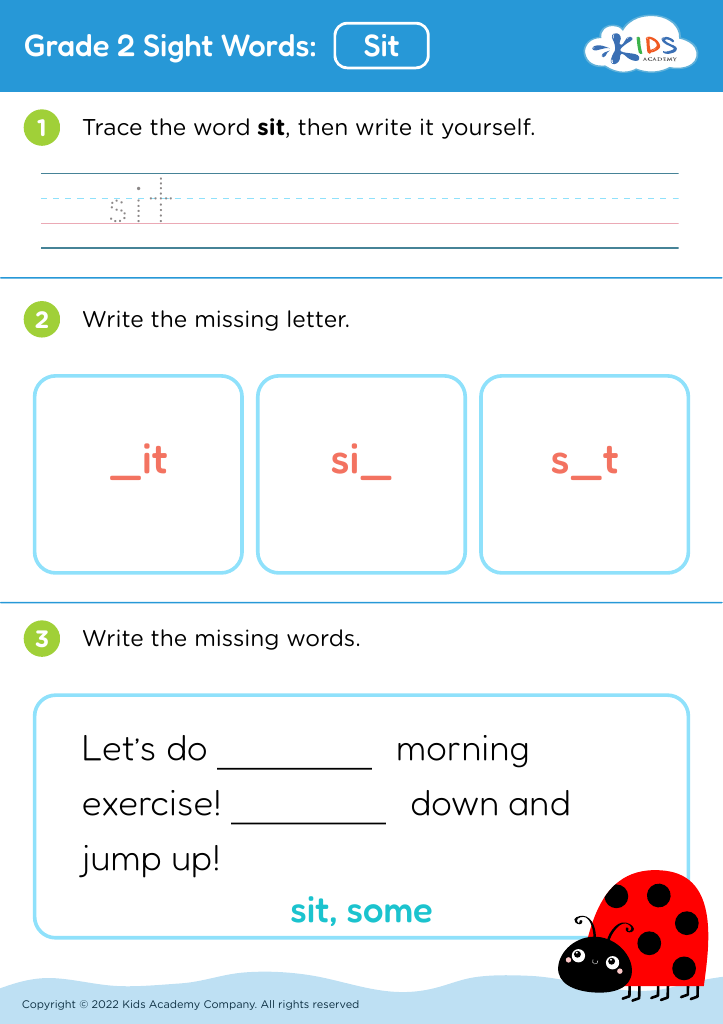
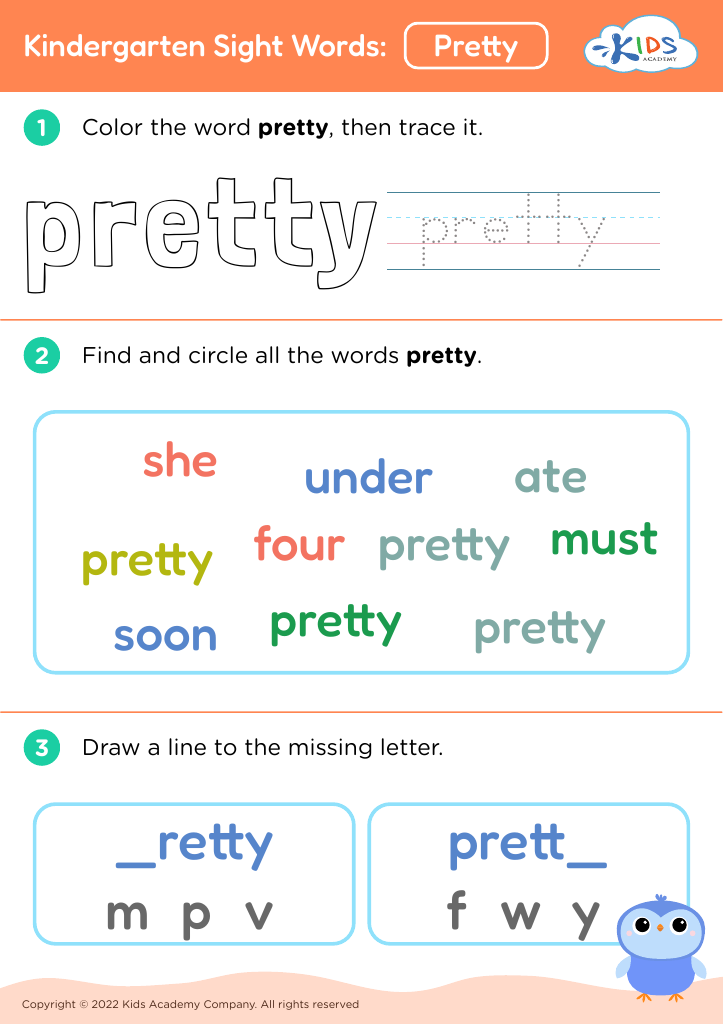







Developing problem-solving abilities in children ages 5-9 is crucial for their cognitive, emotional, and social growth. At this developmental stage, children are naturally curious and eager to learn, making it an ideal time to cultivate essential skills. Problem-solving encourages critical thinking, helping children to assess situations, evaluate options, and make decisions—a foundational life skill that extends beyond academics.
Moreover, fostering problem-solving skills enhances resilience. When children learn to navigate challenges and overcome obstacles independently, they build confidence and a growth mindset. This boosts their ability to handle setbacks, helping them realize that mistakes are opportunities for learning and improvement.
Socially, problem-solving reinforces collaboration and communication. Engaging in group activities where children work together to find solutions enhances their ability to negotiate, share ideas, and appreciate diverse perspectives.
For parents and teachers, supporting the development of problem-solving skills can lead to a more engaged and motivated child. It encourages initiative and responsibility, paving the way for lifelong learning. Ultimately, investing in these abilities prepares children to face future challenges with competence and creativity, equipping them for success in school and beyond. In shaping a generation of proactive thinkers, we nurture informed, capable citizens of tomorrow.








