
Drawing skills Worksheets for Ages 5-9
10 filtered results
Difficulty Level
Grade
Age
-
From - To
Subject
Activity
Standards
Unleash your child’s creativity with our Drawing Skills Worksheets designed for ages 5-9! These engaging worksheets from Kids Academy are expertly crafted to enhance young artists' fundamental drawing capabilities. Whether your child is just starting with simple shapes or progressing to more complex sketches, each worksheet is tailored to build confidence and inspire imagination. Our collection provides step-by-step guides, encourages fine motor skills development, and stimulates a love for artistic expression. Perfect for both classroom and home use, these resources promise to make learning enjoyable and enriching. Watch your child’s artistic side flourish here!
Favorites
With answer key
Interactive
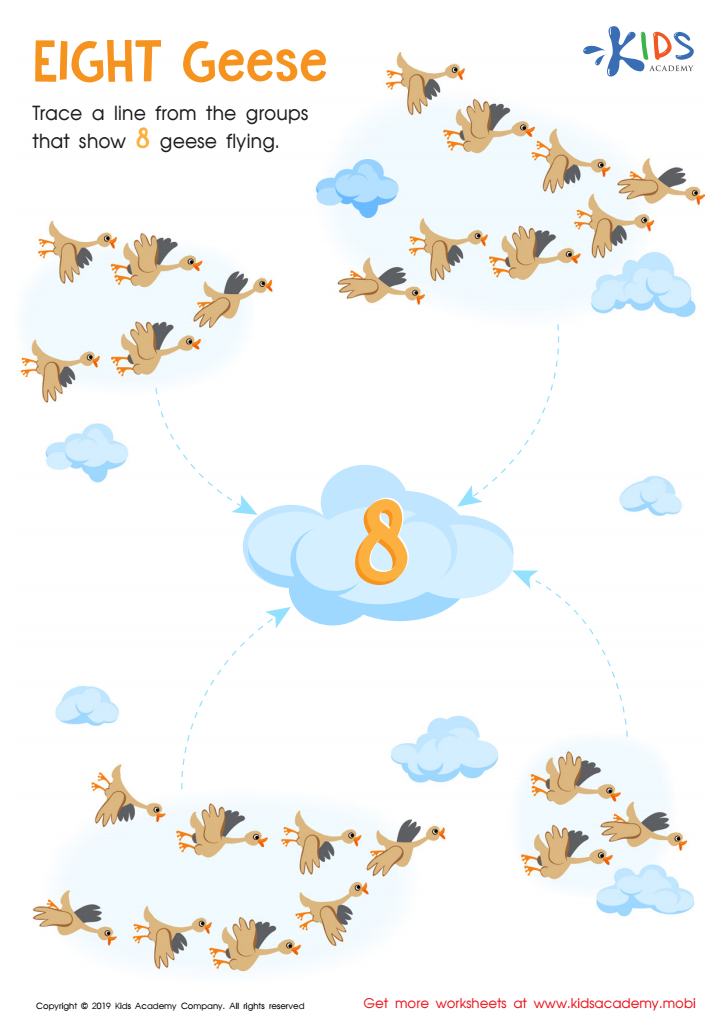
Eight Geese Worksheet
Assess your child's counting skills with this worksheet. Help them count the geese in each group, then trace a line from the groups showing 8. Give your kids a boost by providing lots of exercises and learning aids to help with counting. They likely count objects they come across, like spoons and stones. Use this opportunity to give them practice and help them learn.
 Assign to My Students
Eight Geese Worksheet
Worksheet
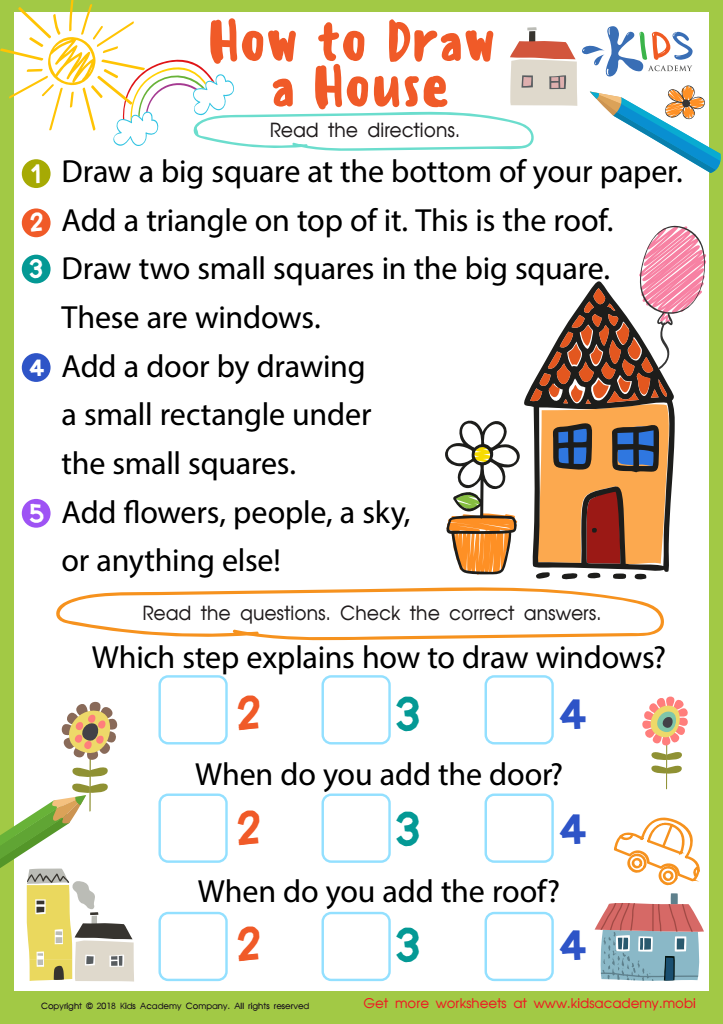
How to Draw House Worksheet
Does your child love to draw? Why not try teaching them some easy tricks? Get them to follow directions on this worksheet and learn how to draw a house. Read the questions at the end and ensure they get the answers right. Your kids will surely love it!
How to Draw House Worksheet
Worksheet
Join Kids Academy for Free
Who is primarily going to use this learning content?






.jpg)

Fostering drawing skills in children aged 5-9 is essential for several developmental reasons. Firstly, drawing enhances fine motor skills, helping children to build the muscle control and hand-eye coordination critical for writing and other tasks. The act of holding crayons or markers and manipulating them to create shapes and lines allows children to develop these small but important muscles.
Additionally, drawing serves as a fundamental tool for cognitive development. It encourages children to visualize and represent their thoughts, aiding in the development of spatial reasoning and creativity. When children draw, they often replicate scenes from their surroundings or stories from their imagination, enhancing their understanding of the world and how they communicate their ideas.
Emotionally, drawing offers a vital outlet for self-expression. Young children may lack the verbal skills to explain their feelings fully, and drawing provides a non-verbal means to express themselves. This can be particularly crucial for emotional development and tackling anxiety or frustration.
Lastly, drawing activities in social settings, such as classrooms or family gatherings, promote collaboration and sharing. Children learn to give and receive feedback, boosting their social skills and confidence.
Thus, nurturing drawing skills at an early age supports physical, cognitive, emotional, and social development, laying a strong foundation for each child’s overall growth.








