
Identifying differences Worksheets for Ages 5-9
3 filtered results
Difficulty Level
Grade
Age
-
From - To
Subject
Activity
Standards
Welcome to our “Identifying Differences Worksheets” page, designed specifically for children ages 5-9! These engaging worksheets help young learners enhance their observation skills and critical thinking by challenging them to spot the differences between two similar images. Each worksheet is crafted with colorful illustrations and age-appropriate themes, making learning both fun and effective. These activities promote visual discrimination, concentration, and attention to detail—key skills for early development. Perfect for classroom use or at-home practice, our worksheets offer a delightful way to strengthen cognitive abilities while encouraging creativity. Explore our collection and make learning a joyous adventure for your child!
Favorites
With answer key
Interactive
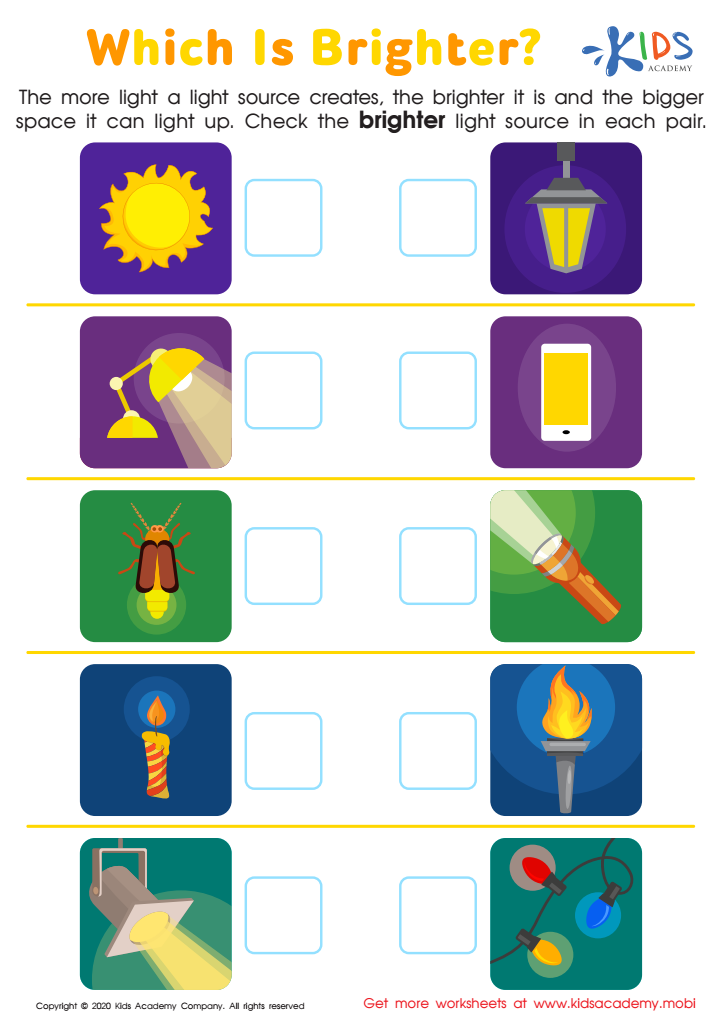
Which Is Brighter? Worksheet
Before the exercise, ask students to recall sources of light. Use this worksheet to explain that the brighter the light source, the more space it can light up. Identify the different light sources in the pictures, then check the brighter light source in each pair. The biggest natural source of light is the sun.
 Assign to My Students
Which Is Brighter? Worksheet
Worksheet
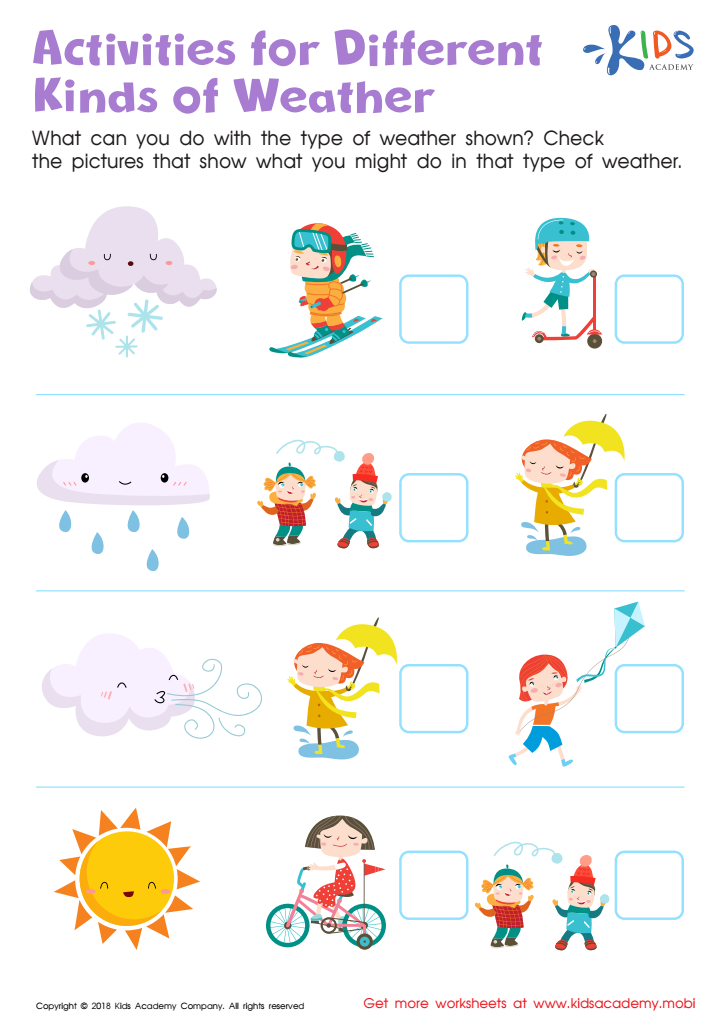
Activities for Different Kinds of Weather Worksheet
Help your child explore the changing seasons with this interactive worksheet. Ask them to name the different seasons and activities associated with each type of weather. Show the pictures and explain what they can do in that kind of weather. Have them check off the activities to help them learn and enjoy the changing seasons.
Activities for Different Kinds of Weather Worksheet
Worksheet
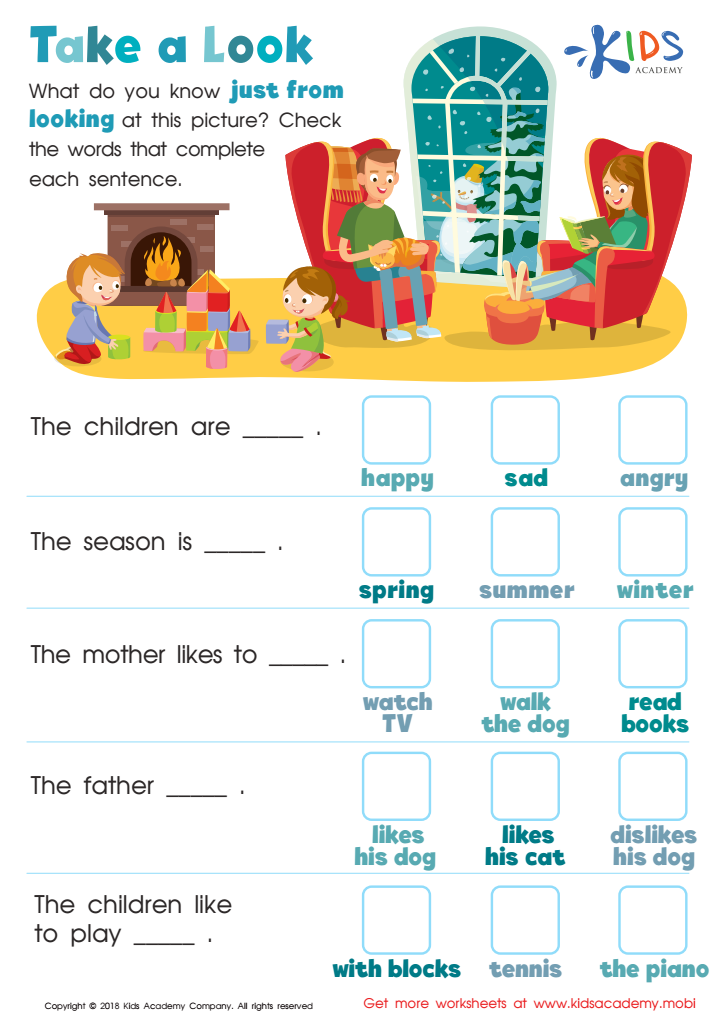
Take a Look - Part 1 Worksheet
Young learners gain understanding when using picture clues when reading. Looking at illustrations can help students learn the meaning of key vocabulary when reading fiction or informational text. Ask your students to look at the worksheet and observe what they can learn from the picture. It's a great comprehension strategy for early readers.
Take a Look - Part 1 Worksheet
Worksheet
Join Kids Academy for Free
Who is primarily going to use this learning content?








Understanding and identifying differences among children aged 5-9 is crucial for both parents and teachers because it allows for tailored educational experiences that meet each child's unique needs. At this developmental stage, children exhibit varying learning styles, interests, strengths, and challenges. Recognizing these differences helps educators provide appropriate support, ensuring that no child is left behind.
Furthermore, acknowledging differences fosters an inclusive classroom environment where diversity is celebrated and respected. This not only boosts the self-esteem of children who may otherwise feel marginalized but also teaches all students the value of empathy and cooperation. Social interactions and peer relationships flourish when children learn to appreciate one another’s unique qualities.
Parents can apply this understanding at home, reinforcing a positive self-image and promoting resilience in their children, which are vital traits for lifelong success. By actively recognizing and embracing differences, both parents and teachers lay the groundwork for a supportive community that nurtures individual growth, encourages curiosity, and supports collaboration. This approach ultimately contributes to a holistic educational experience that prepares children to adeptly navigate the complexities of the world as they grow.








