
Improving categorization skills Worksheets for Ages 5-9
4 filtered results
Difficulty Level
Grade
Age
-
From - To
Subject
Activity
Standards
Enhance your child's ability to organize and classify with our "Improving Categorization Skills Worksheets for Ages 5-9." Designed to foster critical thinking and cognitive development, these engaging activities help young learners understand how to group similar items, recognize patterns, and make logical connections. Perfect for home or classroom use, our worksheets provide a fun and interactive way for children to develop essential skills that are the foundation for academic success. Teach your child to think independently, improve problem-solving abilities, and boost their confidence with these expertly crafted exercises. Visit Kids Academy now to discover more!
Favorites
With answer key
Interactive
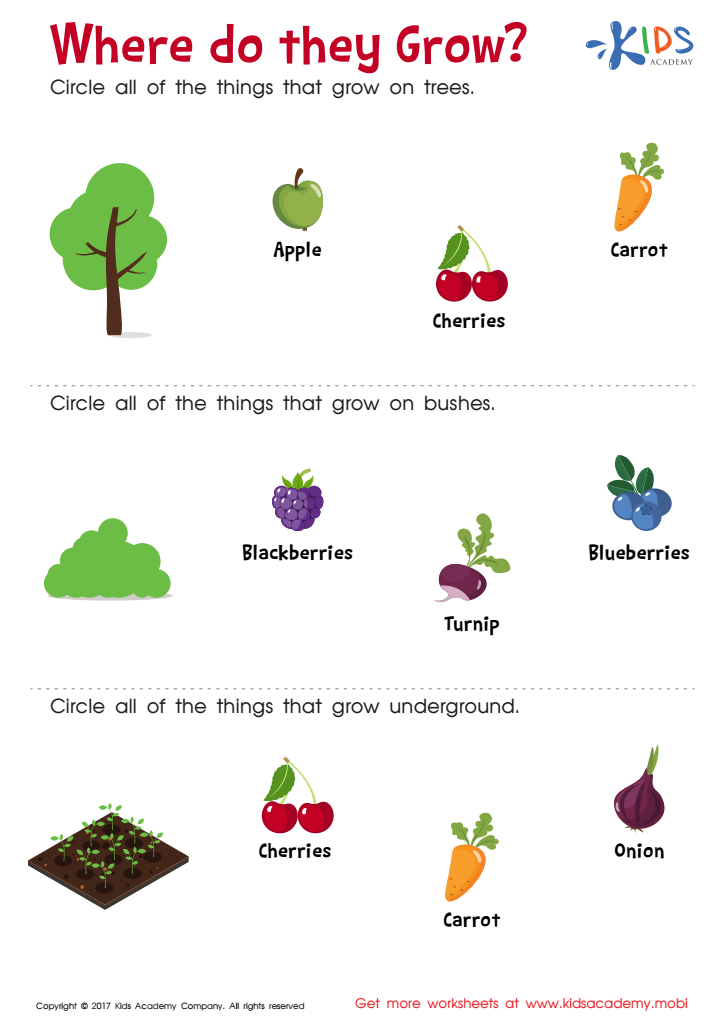
Where Do They Grow Worksheet
With this worksheet, your child can learn about apples, cherries, and blueberries and gain important science skills.
 Assign to My Students
Where Do They Grow Worksheet
Worksheet
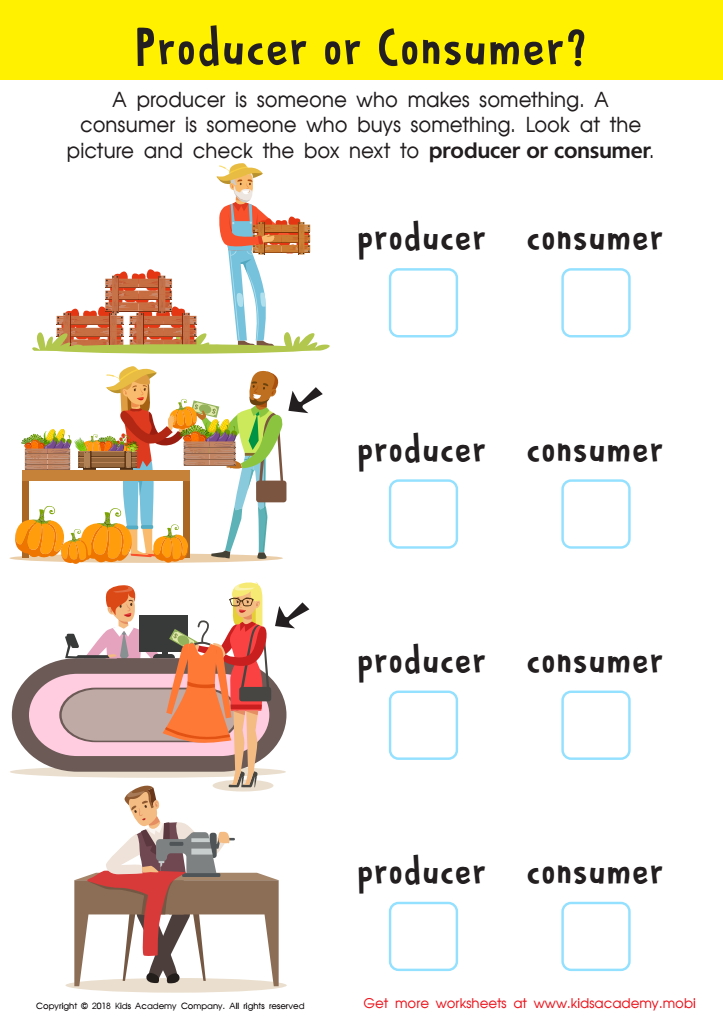
Producer or Consumer? Worksheet
Test your child's knowledge by asking who's a producer and consumer. Explain producer makes things and consumer buys them. Use a snack example. Look at the picture with your kids and help them check the box next to producer or consumer.
Producer or Consumer? Worksheet
Worksheet
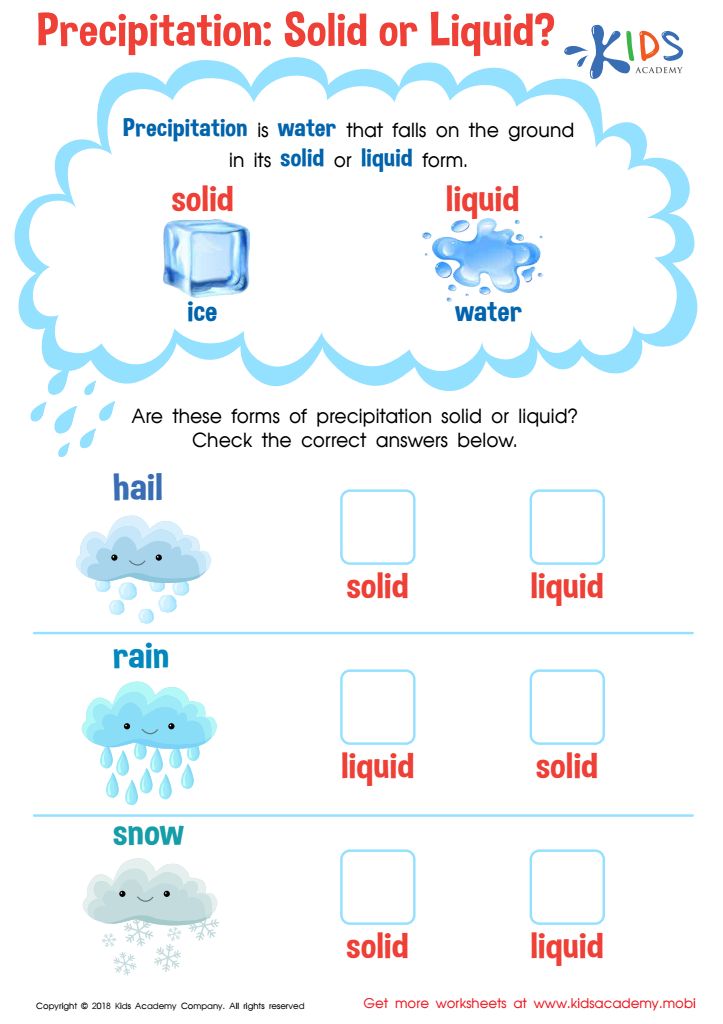
Precipitation: Solid or Liquid? Worksheet
Teach students that precipitation is water from the clouds/sky in either solid or liquid form, e.g. rain is liquid and snow is frozen. Use the worksheet with them to check if the forms of precipitation pictured are solid or liquid.
Precipitation: Solid or Liquid? Worksheet
Worksheet
Learning Skills
Join Kids Academy for Free
Who is primarily going to use this learning content?








Improving categorization skills for children aged 5-9 is crucial as it forms a foundation for more complex cognitive abilities and academic success. At this developmental stage, children's brains are rapidly growing, making it an ideal time to nurture their ability to organize information.
First, strong categorization skills enhance critical thinking. Children learn to classify and differentiate between entities, fostering analytical skills that are important for subjects like math and science. When children grasp categories such as shapes, colors, or numbers, they build frameworks to understand operations and problem-solving.
Second, vocabulary and language development benefit significantly. As kids group items, they also learn relevant vocabulary and strengthen communication skills. For example, discussing categories of animals enables children to use accurate terms and descriptors, enhancing both oral and written expression.
Socially, categorization skills promote better interaction. Understanding peer groups, family roles, and social norms helps children navigate social contexts with increased confidence and empathy. They learn to identify various social cues and respond appropriately.
Lastly, improved organizational abilities lead to better time management and school performance. Children adept at categorization can manage tasks, categorize schoolwork, and follow instructions more effectively, establishing habits for lifelong learning.
Overall, emphasizing categorization skills in early education equips children with essential tools for cognitive, language, social, and organizational development, setting them on a path toward well-rounded academic and personal success.








