Lowercase identification Worksheets for Ages 5-9
5 filtered results
-
From - To
Enhance your child's literacy skills with our engaging Lowercase Identification Worksheets designed for ages 5-9! These printable resources help young learners recognize and differentiate between lowercase letters in a fun, interactive way. Our worksheets feature a variety of exercises, including tracing, matching, and identification activities that cater to diverse learning styles. By practicing lowercase letter recognition, children will build a strong foundation for reading and writing. These worksheets are perfect for both classroom and home settings, promoting independent learning and boosting confidence in early learners. Explore our collection today to support your child's language development while making learning enjoyable!
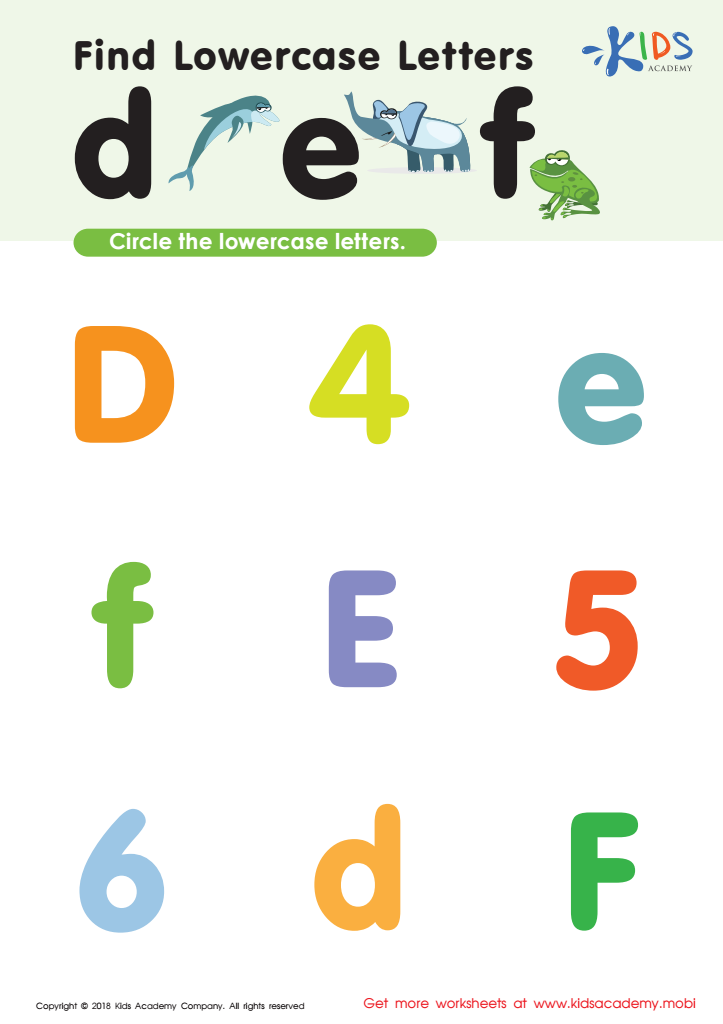
Find Lowercase Letters d e f Worksheet
 Assign to My Students
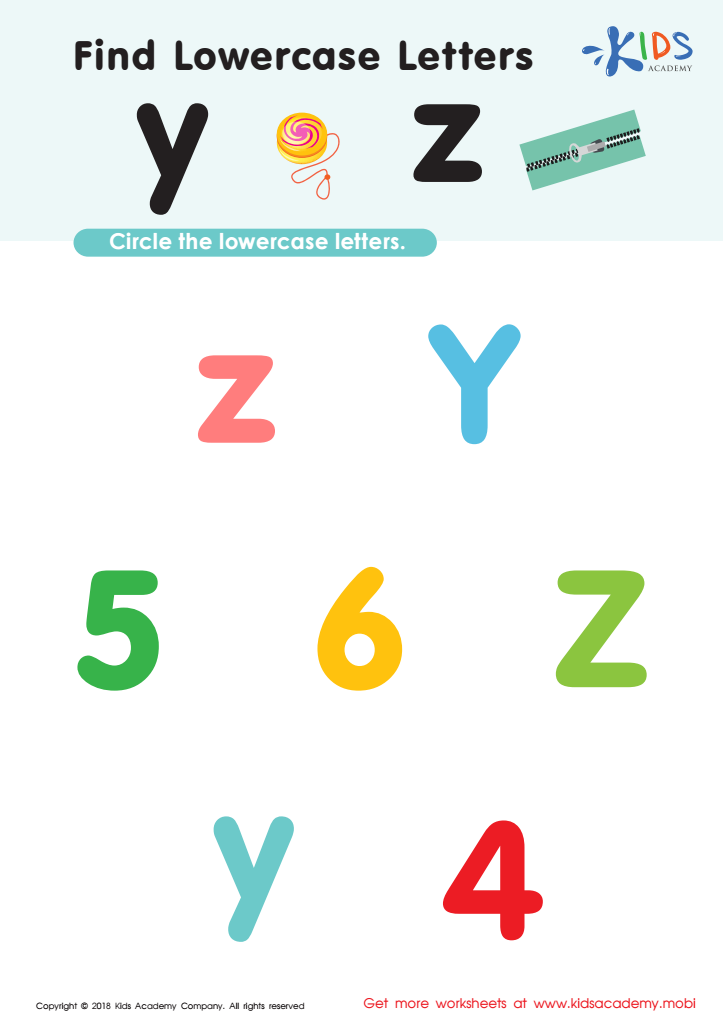
Find Lowercase Letters y z Worksheet
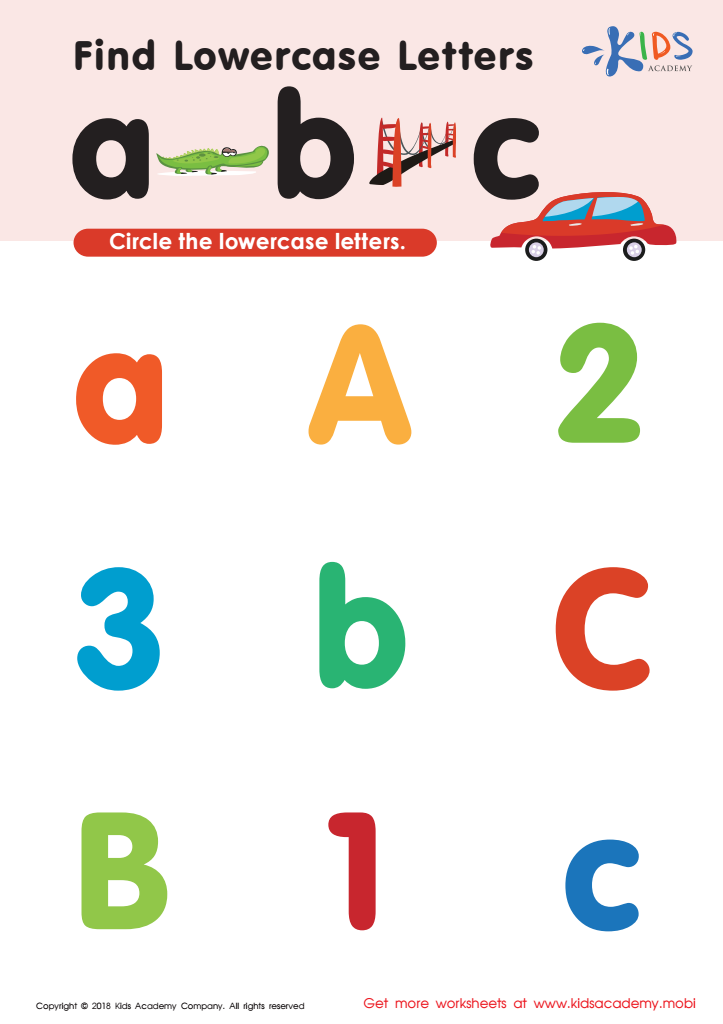
Find lowercase letters a b c Worksheet
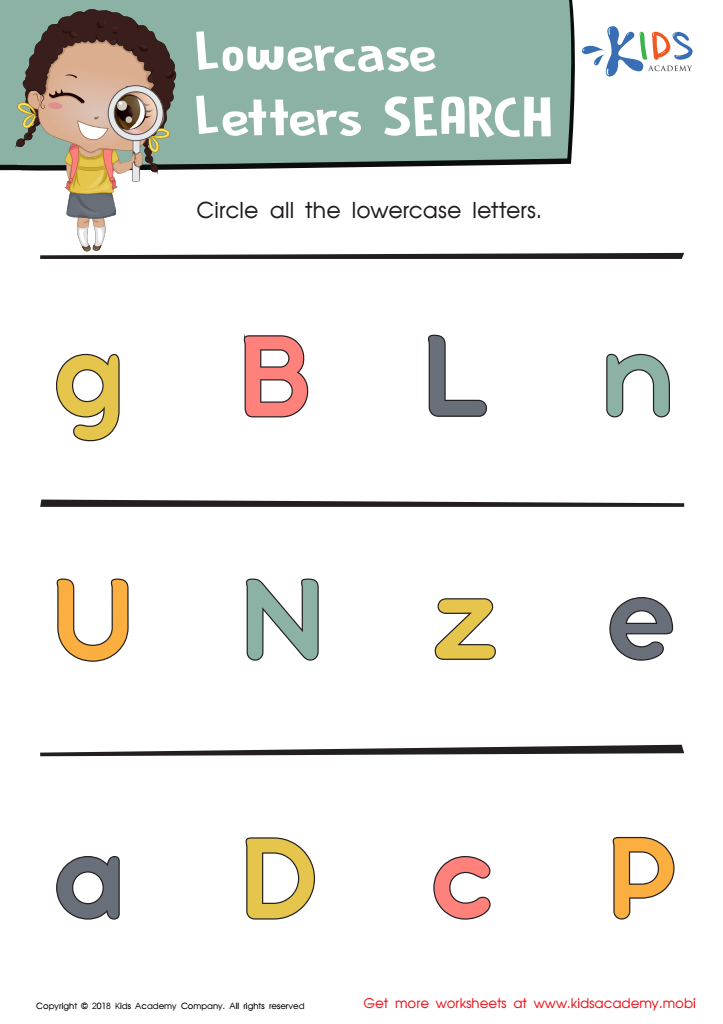
Lowercase Letters Search: Assessment Worksheet
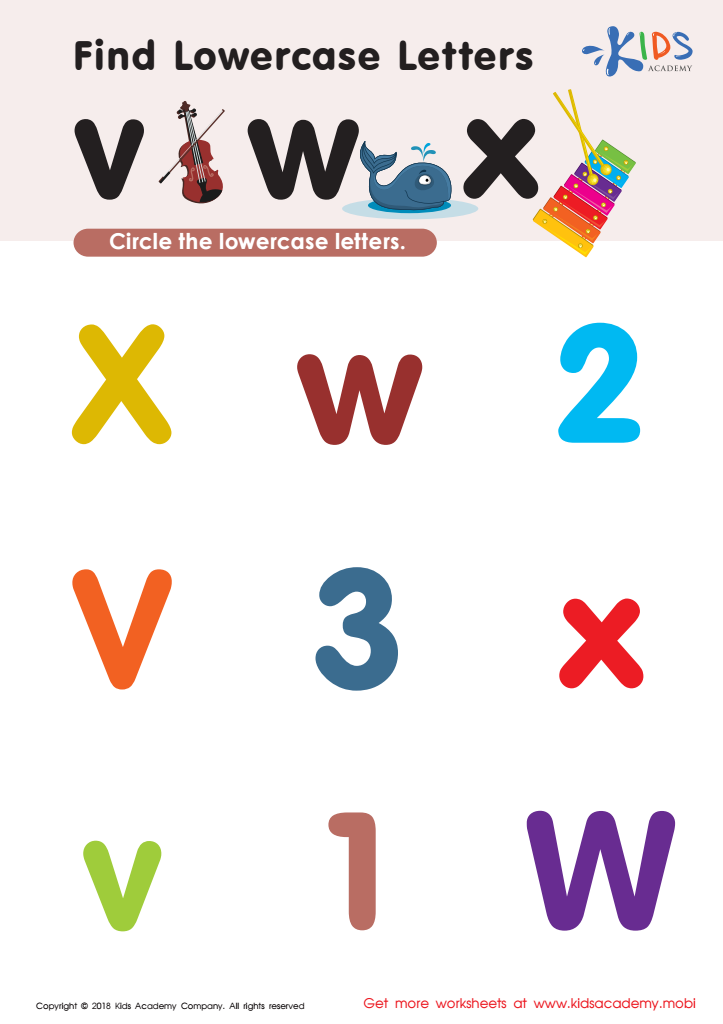
Find Lowercase Letters v w x Worksheet








Lowercase letter identification is a crucial aspect of early literacy development for children aged 5 to 9. It lays the foundational skills necessary for reading and writing, which are vital for academic success. At this age, children are beginning to decode words and recognize their sounds, making lowercase letter identification essential since most texts, including books and printed materials, predominantly feature lowercase letters.
When children can identify and differentiate lowercase letters, they become more confident readers and writers, leading to enhanced comprehension and expression. Additionally, this skill helps with spelling, as many words contain more lowercase letters than uppercase, and knowing these letters helps kids form words correctly.
Moreover, understanding lowercase letters fosters early print awareness, helping children recognize how text works, such as directional reading and the concept of words organized in sentences. This understanding builds their overall language skills, which are fundamental for effective communication.
For parents and teachers, supporting lowercase letter identification not only aids in academic achievement but also encourages a love for reading and writing. By providing engaging activities such as games, storytime, and craft projects that focus on lowercase letters, adults can nurture a child's literacy journey effectively.








