
Moral understanding Worksheets for Ages 5-9
6 filtered results
Difficulty Level
Grade
Age
-
From - To
Subject
Activity
Standards
Nurture empathy, honesty, and kindness in young hearts with our expertly designed Moral Understanding Worksheets for Ages 5-9. Encourage ethical growth through engaging activities, scenarios, and discussions that resonate with children. These printable worksheets offer a delightful blend of storytelling and problem-solving tasks, opening up pathways to critical thinking and moral reasoning. Tailored to spark curiosity and understanding, each worksheet aims to foster positive character development. Ideal for parents and educators, these resources make teaching core values enjoyable and effective. Transform learning into a journey of developing good character traits and making better life choices today!
Favorites
With answer key
Interactive
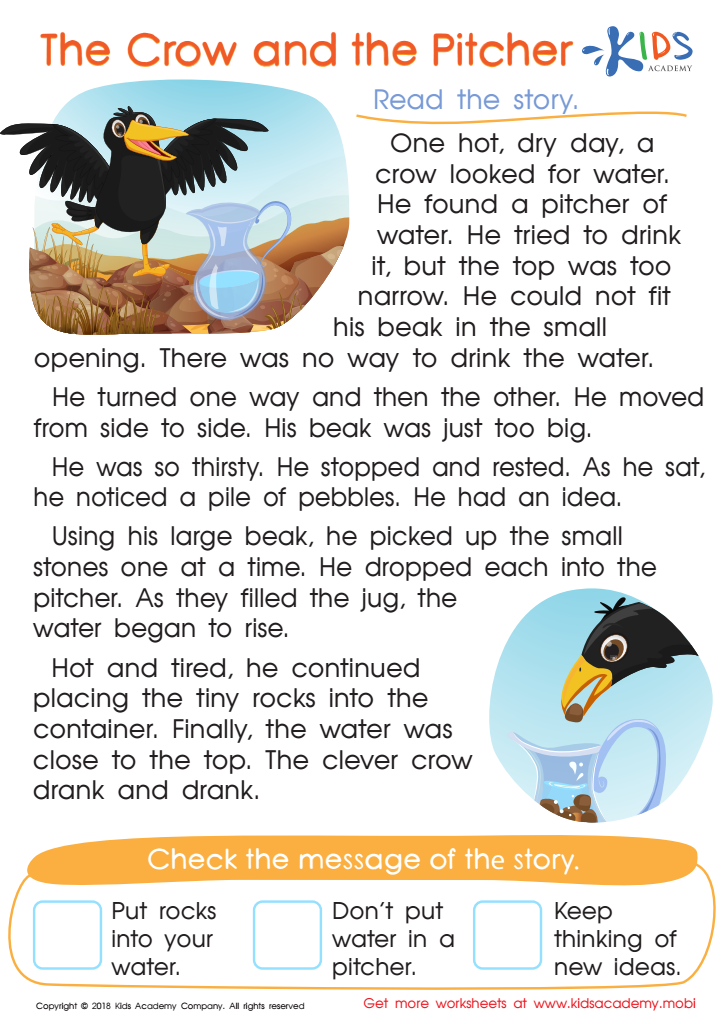
The Crow and the Pitcher Worksheet
Introduce your child to reading comprehension with this fascinating worksheet from Kids Academy! Featuring Aesop's fable of a thirsty crow, your child will enjoy reading and determining the central theme of the passage. This worksheet is a great way to give your child a purpose for reading while helping to build their comprehension skills.
 Assign to My Students
The Crow and the Pitcher Worksheet
Worksheet
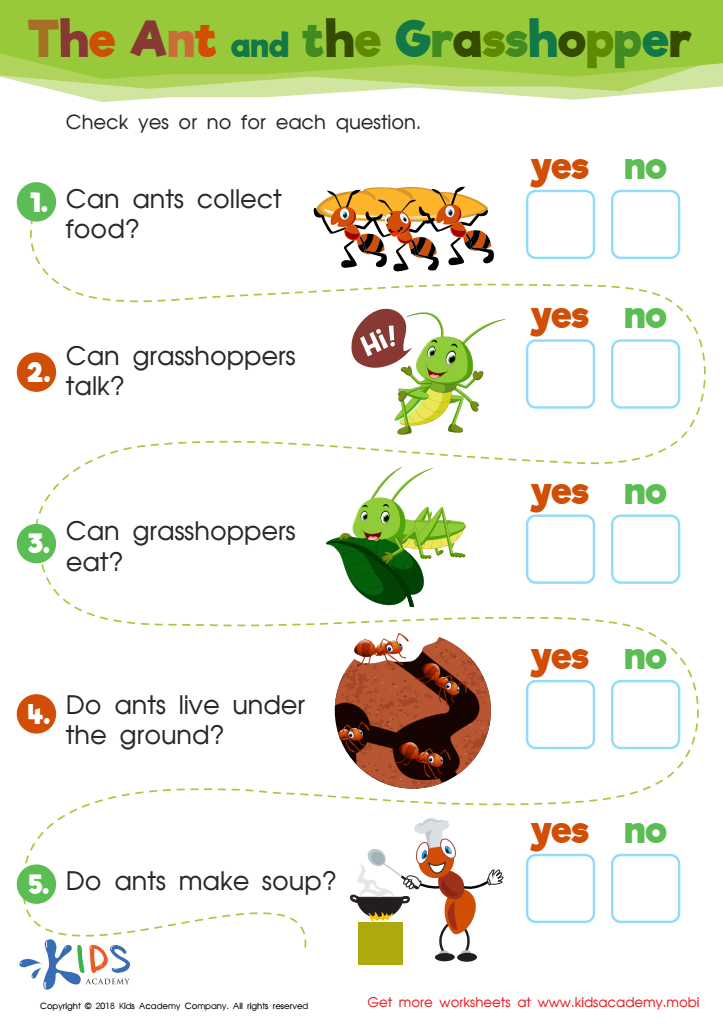
The Ant and The Grasshopper Worksheet
Does your child know about insects? If they're a nature lover or scared of them, use this worksheet to learn more. Read each of the questions and help them fill in the yes or no boxes. This may help them become less scared of insects.
The Ant and The Grasshopper Worksheet
Worksheet
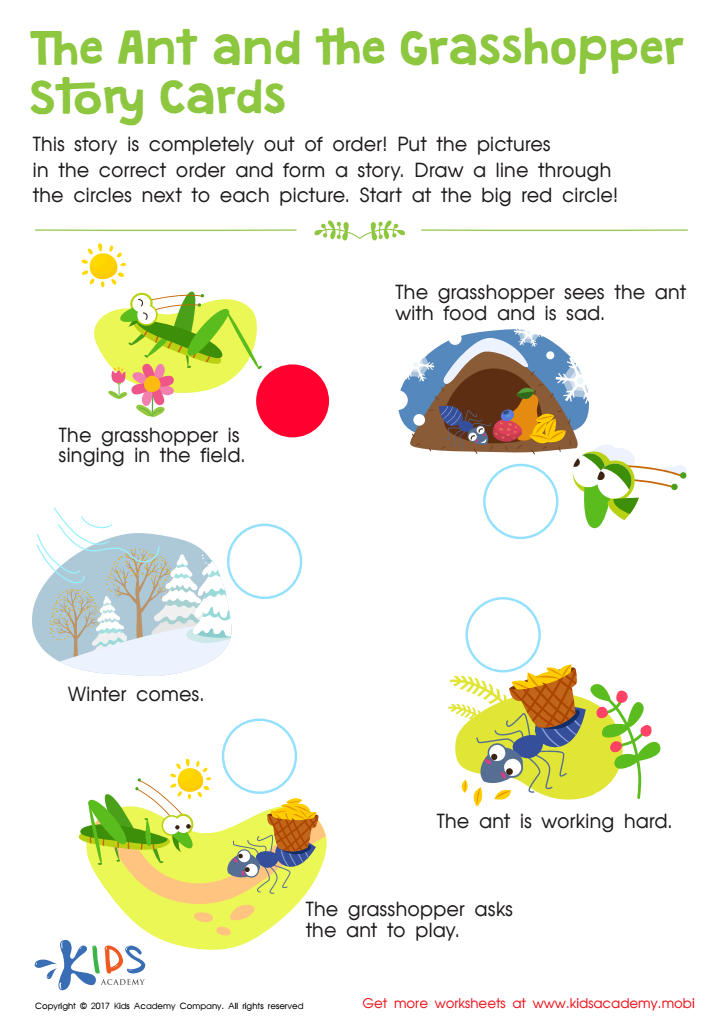
The Ant and The Grasshopper Worksheet
This worksheet uses the beloved childhood fable "The Ant and the Grasshopper" to teach your child about plot and order of events. Your child must read the events and put them in the right order. Once completed, review the story with your child to ensure its accuracy.
The Ant and The Grasshopper Worksheet
Worksheet
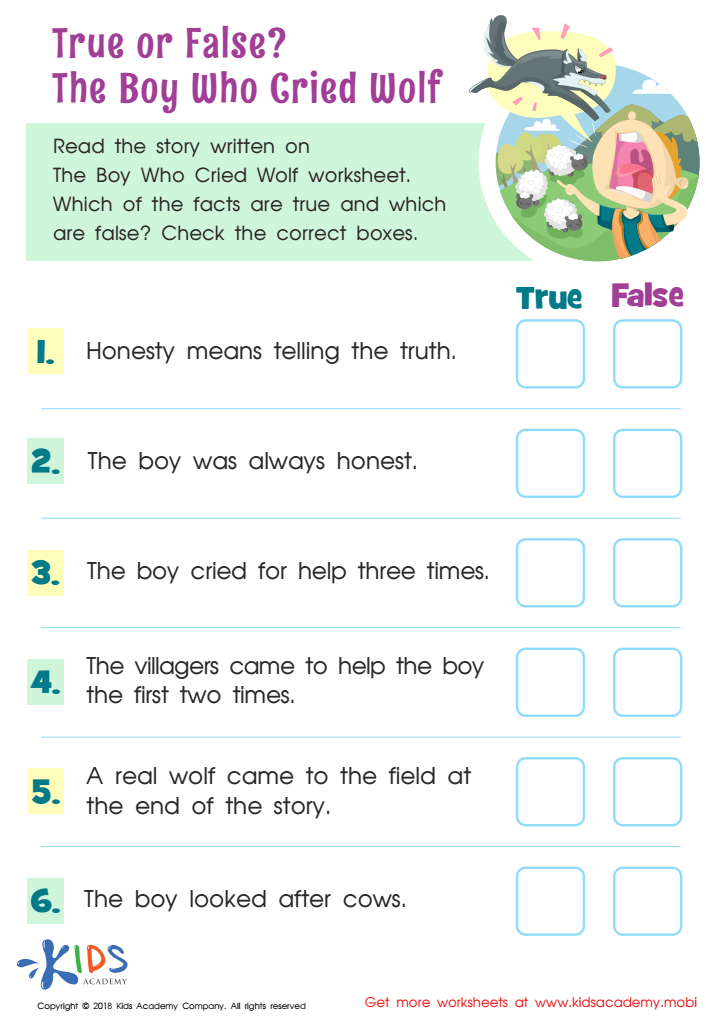
True or False? The Boy Who Cried Wolf Worksheet
Test students' understanding of The Boy Who Cried Wolf with this free downloadable worksheet. It contains true/false questions to assess comprehension of key events. Easy to complete, it checks students can recall facts from the story. Try it and see!
True or False? The Boy Who Cried Wolf Worksheet
Worksheet
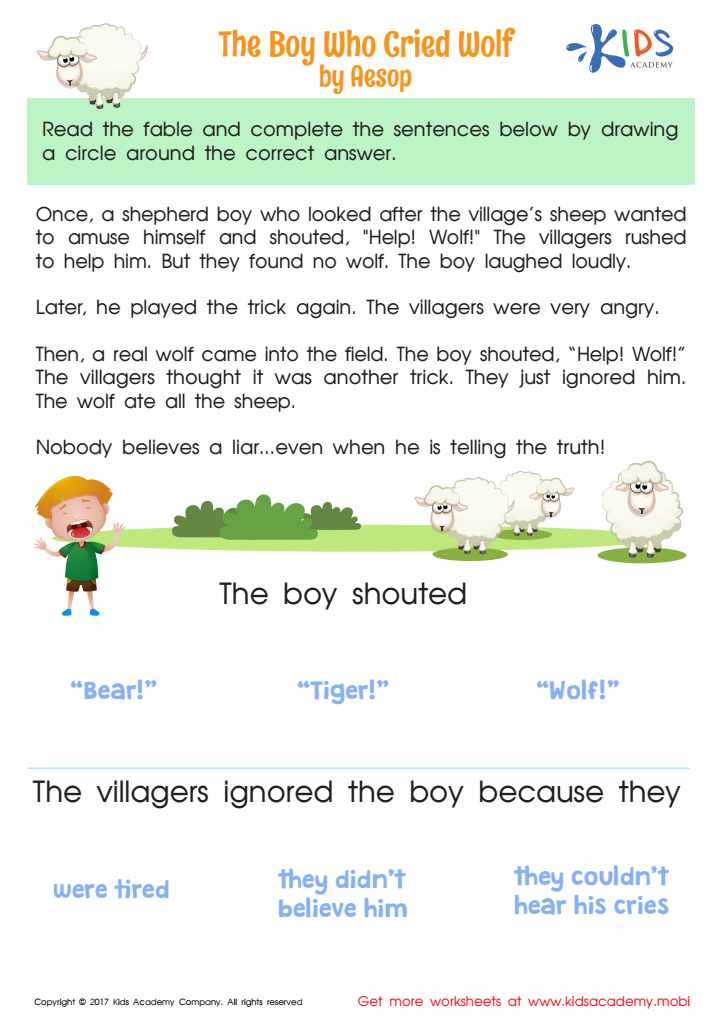
The Boy Who Cried Wolf Worksheet
Test your child's reading comprehension with The Boy Who Cried Wolf worksheet. Read the fable, then answer the questions. Use the text to help your child check their answers are correct. Boost reading skills in a fun, interactive way!
The Boy Who Cried Wolf Worksheet
Worksheet
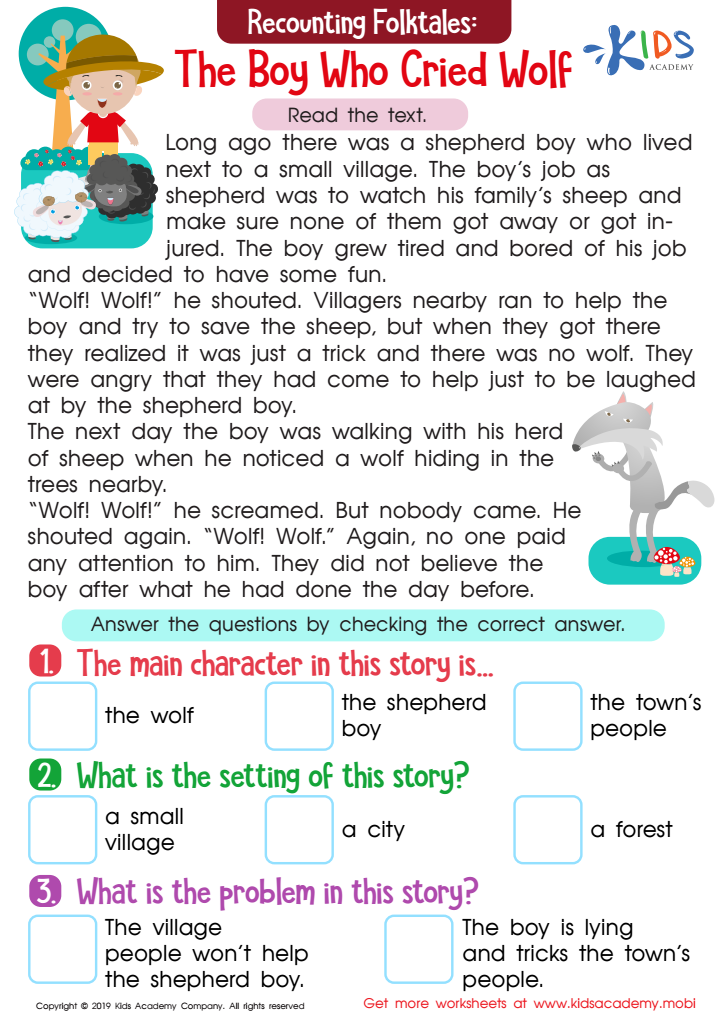
The Boy Who Cried Wolf Part 1 Worksheet
Storytime can be your kid's favorite part of the day. Ask them what their favorite stories are, then read the text in the printout. Read along with them, making sure they understand each word. At the end, go over the questions and have them check the correct answers.
The Boy Who Cried Wolf Part 1 Worksheet
Worksheet
Join Kids Academy for Free
Who is primarily going to use this learning content?








Parents and teachers should prioritize moral understanding for children aged 5-9 because these foundational years are critical for developing a strong sense of right and wrong. During this impressionable period, children begin to form their own identities and understand the social norms that will guide their behavior into adulthood. Moral values such as honesty, kindness, empathy, and fairness help children to build positive relationships with peers, family, and community members.
Understanding these values supports children in making ethical decisions and facing life’s challenges with integrity. Early moral education helps prevent negative behaviors such as bullying and dishonesty by fostering a sense of empathy and compassion. When children learn to understand and respect the feelings of others, they are more likely to act in kind and tolerant ways.
Furthermore, teaching morality builds a strong character and promotes emotional well-being. Children who understand moral values tend to have higher self-esteem and resilience. They become respectful and responsible citizens who can contribute positively to society.
Parents and teachers, by providing consistent guidance and modeling moral behavior, create a structured environment that naturally encourages children to internalize these values. Overall, fostering moral development for young children serves as an investment in creating a more humane and cooperative future society.








