Sequencing numbers Worksheets for Ages 5-9
3 filtered results
-
From - To
Help your child master essential math skills with our Sequencing Numbers Worksheets for ages 5-9 at Kids Academy! Our engaging, expertly designed resources allow young learners to easily grasp number sequencing concepts while having fun. Whether it’s ordering numbers, recognizing patterns, or counting practice, each worksheet builds a strong mathematical foundation. Tailored for various learning stages, these worksheets boost confidence and enhance problem-solving skills. Perfect for classroom use or homeschool curriculum, our interactive activities make learning an enjoyable journey. Start your child on the path to math mastery with Kids Academy’s Sequencing Numbers Worksheets today!
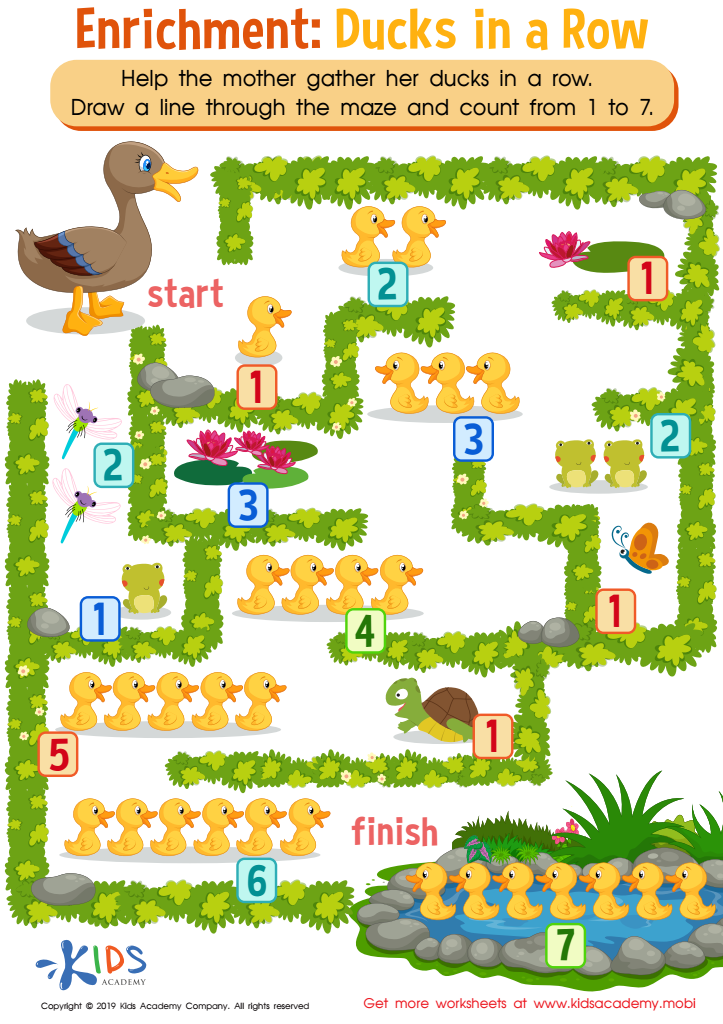
Ducks in a Row Worksheet
 Assign to My Students
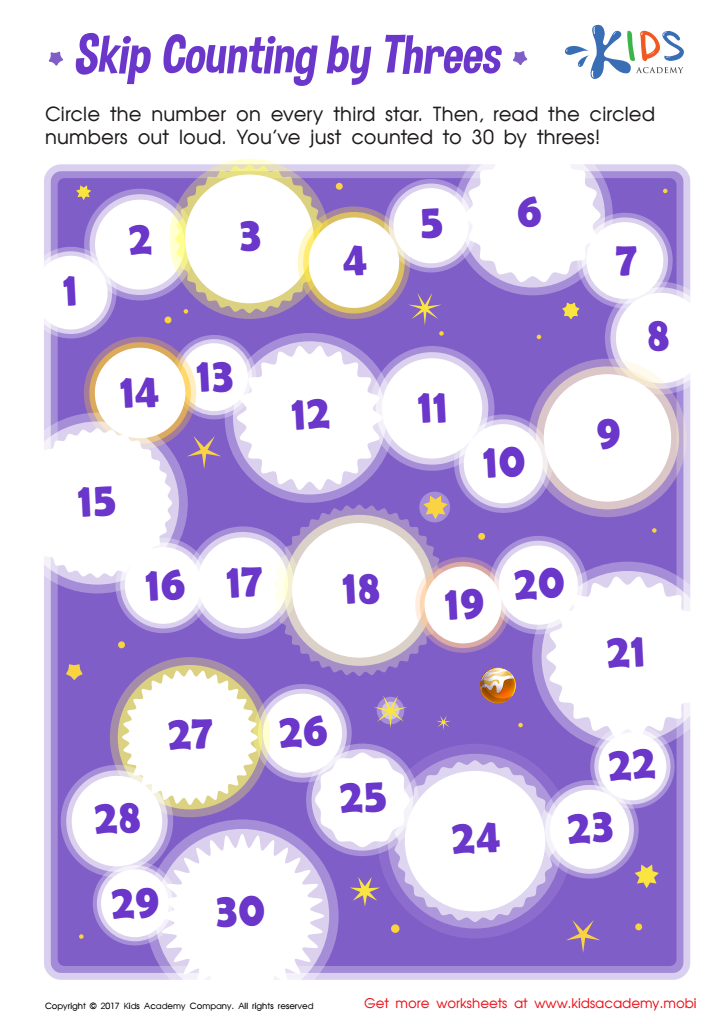
Skip Counting By Three Printable
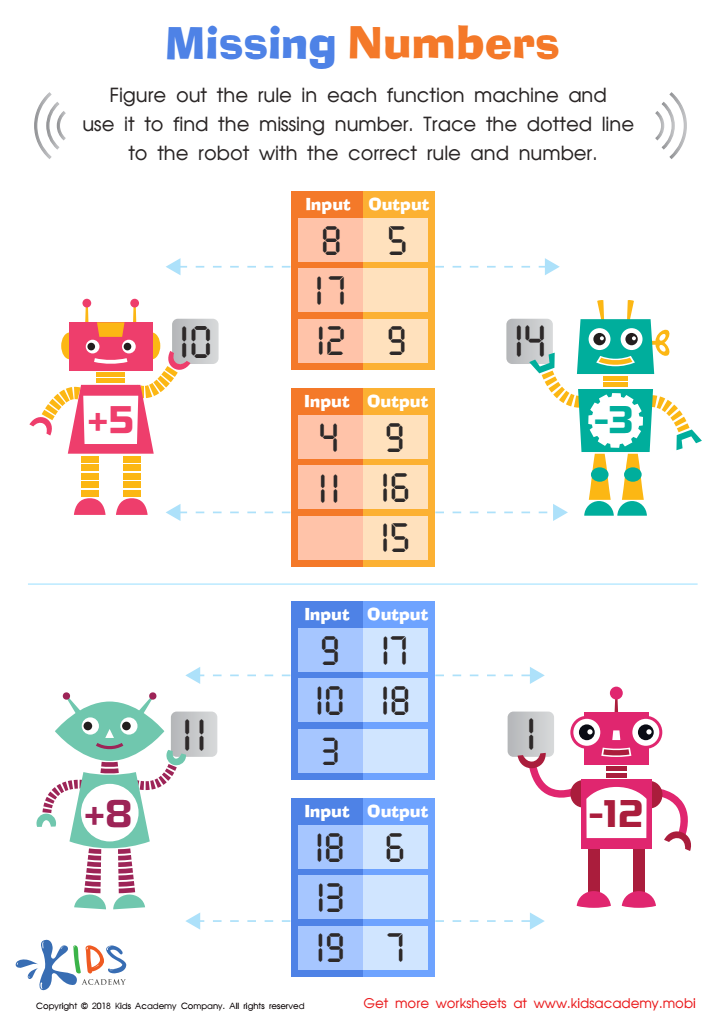
Missing Numbers Worksheet








Understanding and mastering the skill of sequencing numbers is crucial for children aged 5-9 as it forms the basis for many math concepts and everyday decision-making skills. When children learn to sequence numbers, they begin to grasp the concept of order, which is foundational for arithmetic operations like addition and subtraction. Without this foundational understanding, they may struggle with more advanced mathematical concepts in the future.
Moreover, number sequencing enhances cognitive development and logical thinking. It equips children with the skills needed to follow steps in problem-solving and understand cause-effect relationships. For instance, if children know the order of numbers, they can apply this understanding to recognize patterns, make predictions, and develop estimation skills, all of which are vital for both academic and life success.
Parents and teachers should also care about sequencing because it encourages attention to detail and enhances memory. Activities that involve number sequencing, such as puzzles or pattern games, can make learning fun and engaging, fostering a positive attitude toward math. Developing these skills early promotes confidence in children, making them more likely to approach future challenges with a can-do attitude.
Thus, investing time in teaching number sequencing yields long-term benefits, enabling children to build strong foundational skills essential for academic success and daily life.








