Understand number relationships Worksheets for Ages 5-9
5 filtered results
-
From - To
Discover our “Understand Number Relationships Worksheets for Ages 5-9,” designed to make learning math fun and engaging for young minds. Targeting key skills like counting, comparing, and sequencing, these printable activities help children develop a strong foundation in number sense. Each worksheet incorporates colorful visuals and interactive tasks to keep kids interested and excited about learning. Ideal for both classroom and home use, our expertly crafted materials align with educational standards, ensuring children gain the confidence and skills needed to excel in mathematics. Explore the joy of numbers with our comprehensive and enjoyable worksheets today!
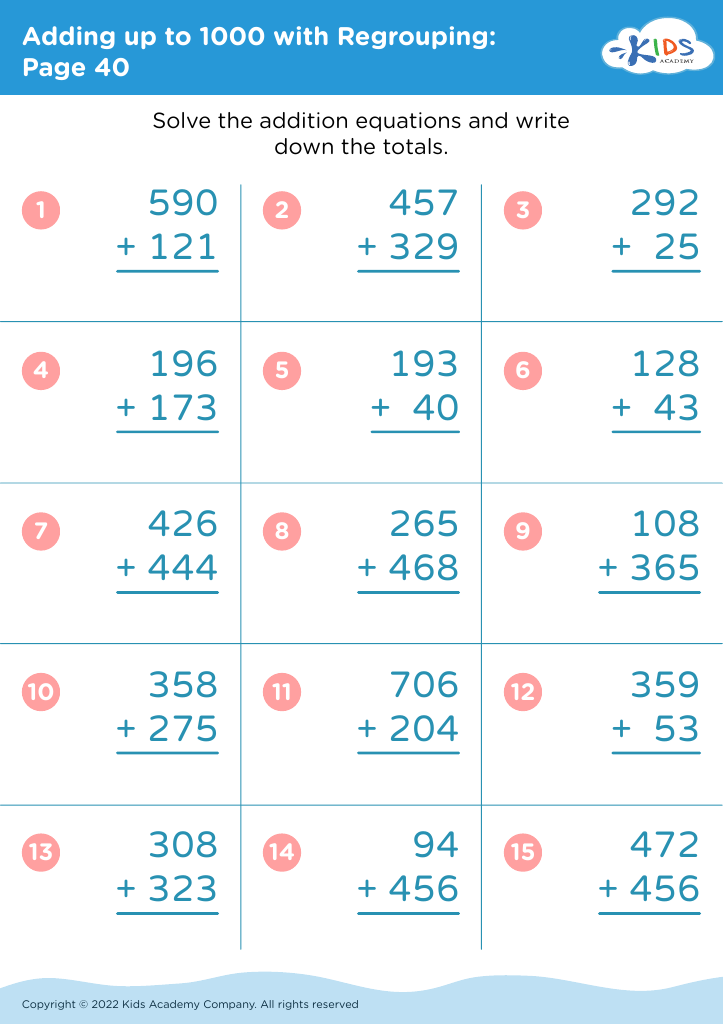
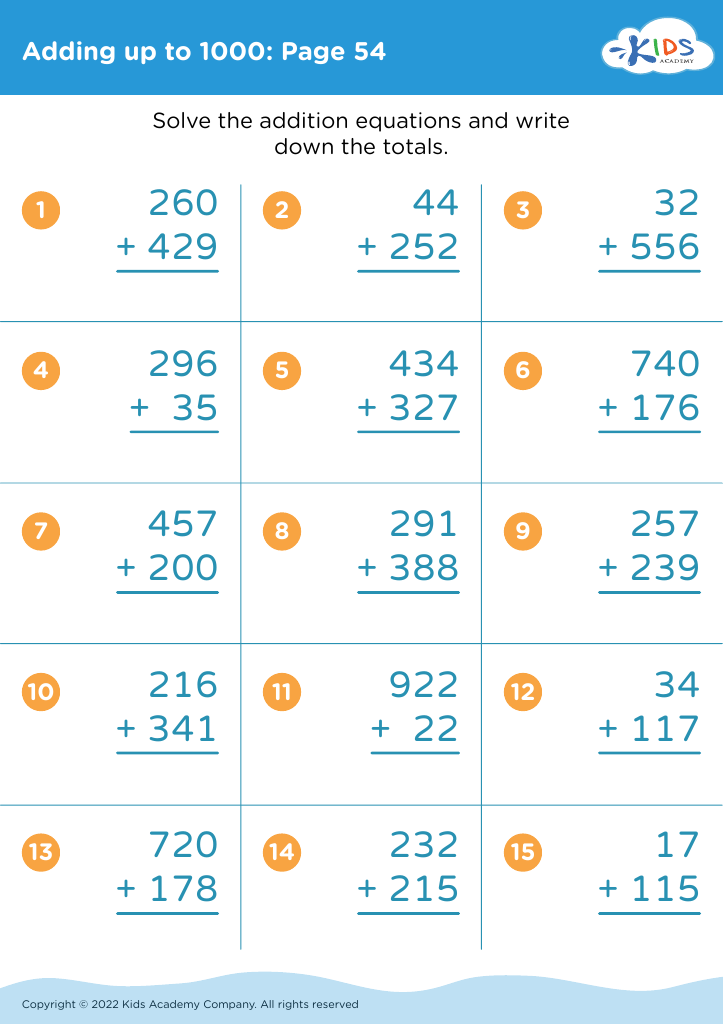
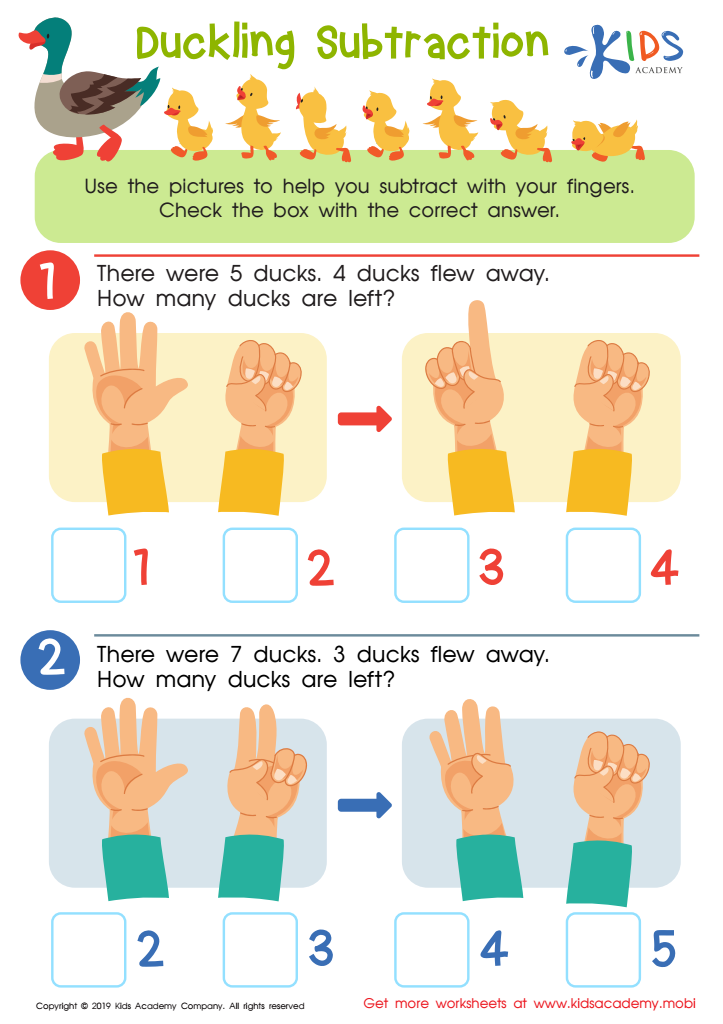
Duckling Subtraction Worksheet
 Assign to My Students
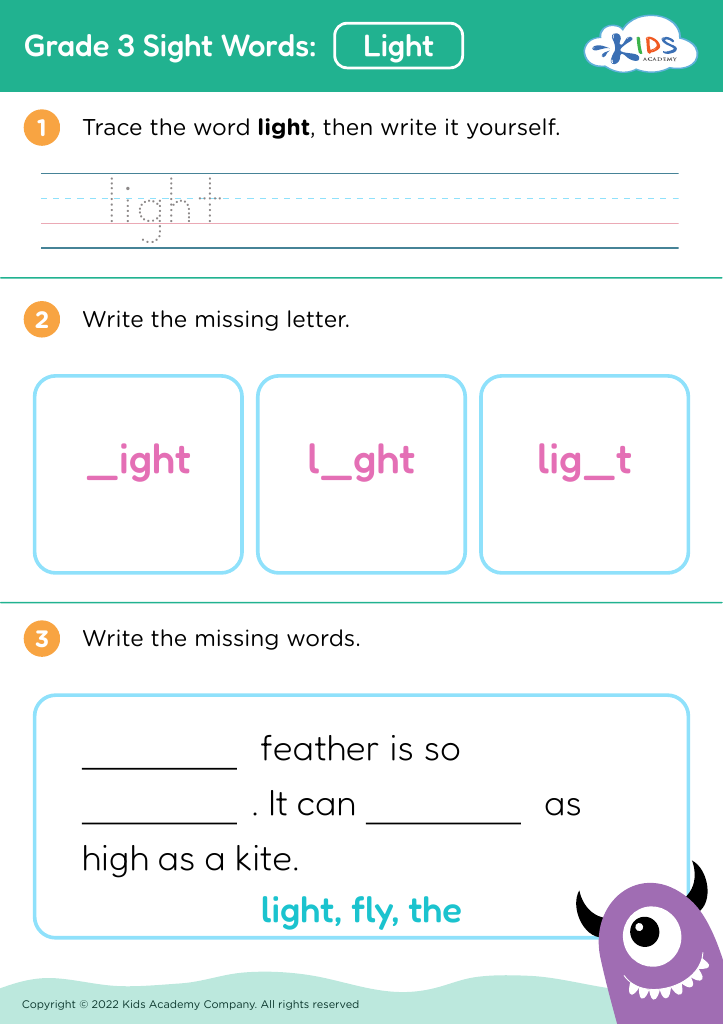








Understanding number relationships for ages 5-9 is fundamental to a child's overall mathematical development. At this early stage, children's brains are highly receptive to concepts that will form the building blocks for future learning. Number relationships, such as recognizing that 7 is more than 5, are key to developing strong numerical fluency.
Numerical fluency is critical because it enables children to progress smoothly in mathematics. When children grasp basic number relationships, they can more easily understand more advanced math concepts, such as addition, subtraction, multiplication, and division. This foundational knowledge also spilled over into other areas of learning, fostering problem-solving skills, logical thinking, and spatial reasoning.
Moreover, when children feel confident in their mathematical abilities, it positively affects their self-esteem and attitude towards learning. Early struggles with numbers can lead to math anxiety, a condition that can impair academic performance not just in math but across various subjects. Lastly, math skills are essential in everyday life, from managing finances to cooking and shopping.
By prioritizing an early understanding of number relationships, parents and teachers set the stage for academic success and a positive attitude towards lifelong learning. This investment in a child's numeracy can open the door to a brighter future in many fields.








