Understanding biodiversity Worksheets for Ages 5-9
4 filtered results
-
From - To
Explore the fascinating world of biodiversity with our engaging worksheets designed for children ages 5-9. These interactive activities introduce young learners to the rich variety of life on Earth, emphasizing the importance of ecosystems and the connections between plants, animals, and their habitats. Through colorful illustrations and fun exercises, kids will develop a deeper understanding of nature and the role each organism plays in maintaining balance in our environment. Perfect for home or classroom use, our understanding biodiversity worksheets make learning about the planet’s diversity both enjoyable and educational, inspiring the next generation to appreciate and protect our precious resources. Dive in today!
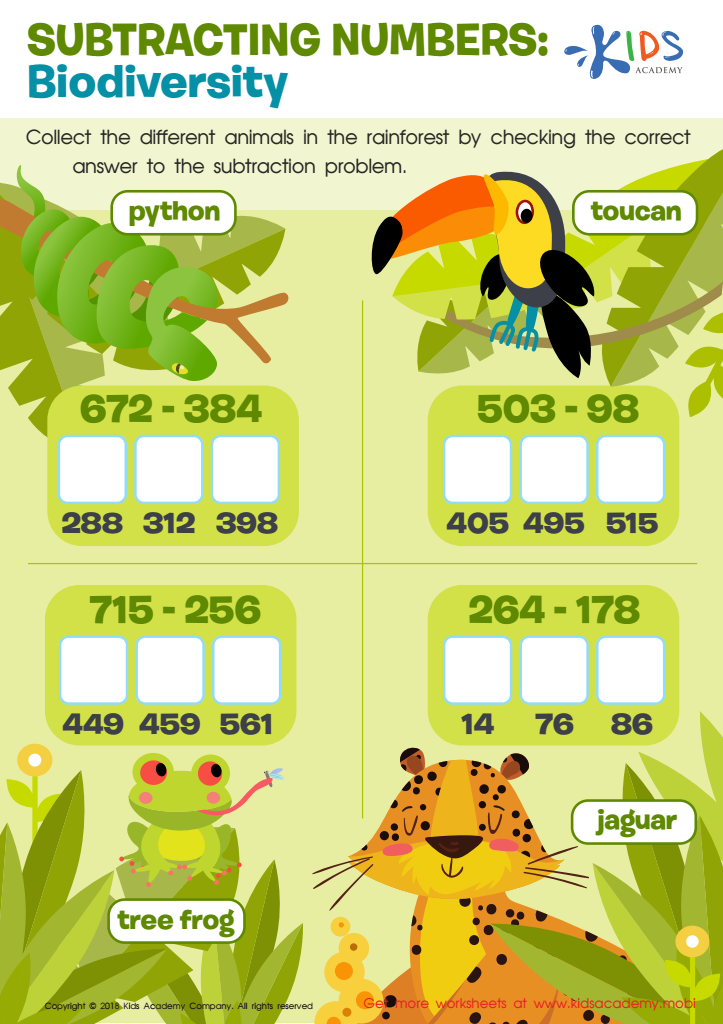
Subtracting Numbers: Biodiversity Worksheet
 Assign to My Students
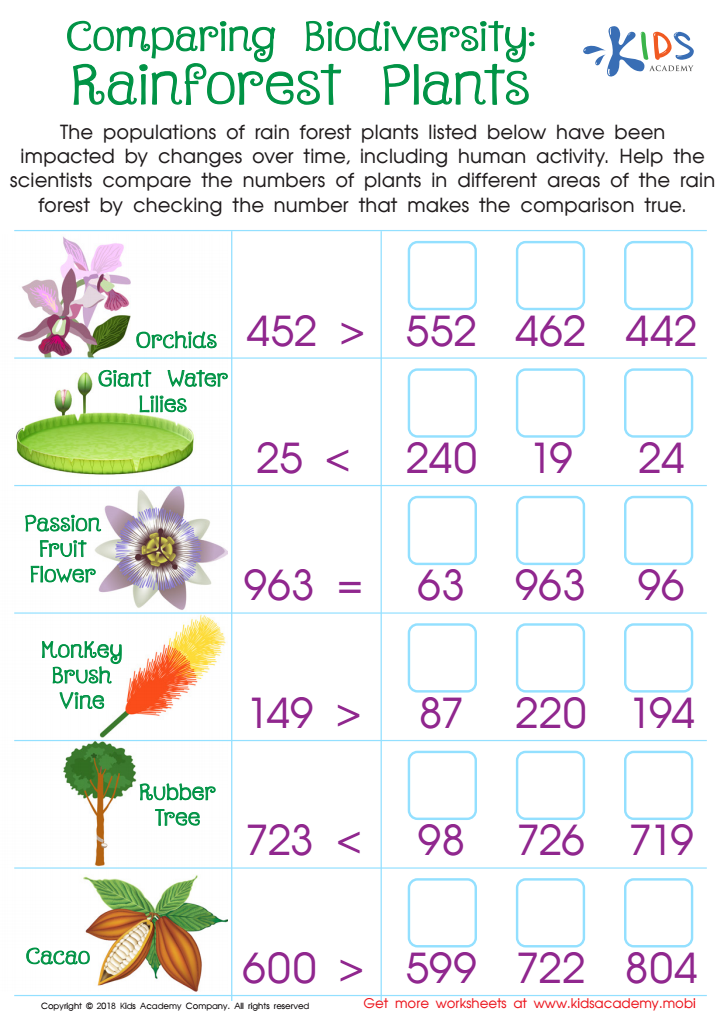
Comparing Biodiversity: Rainforest Plants Worksheet
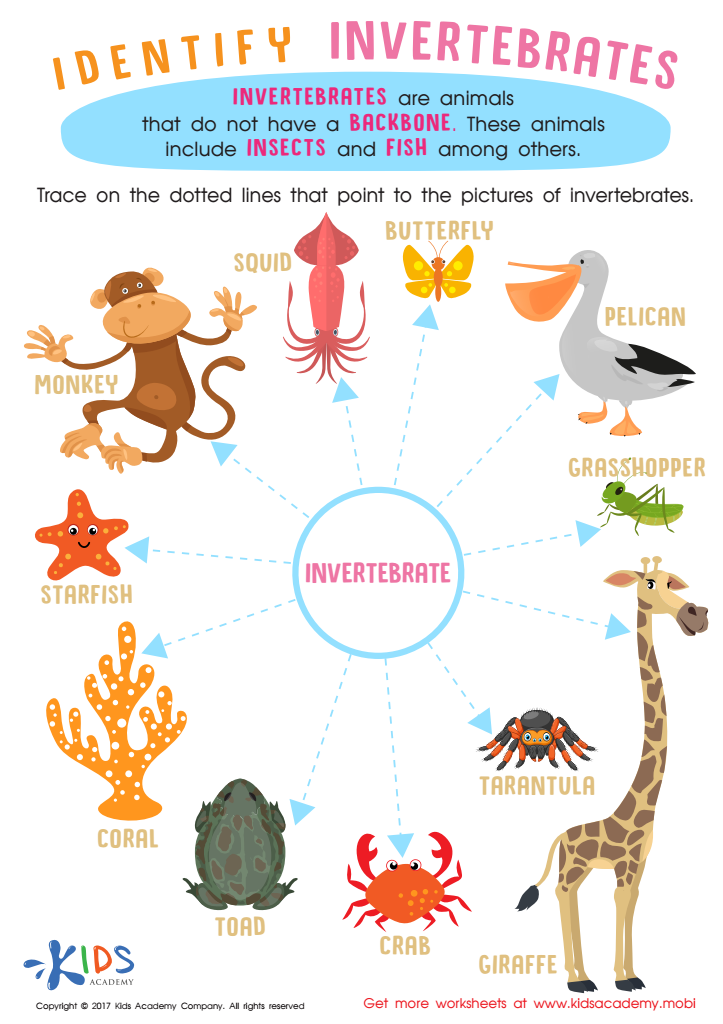
Invertebrates Worksheet for Grade 3
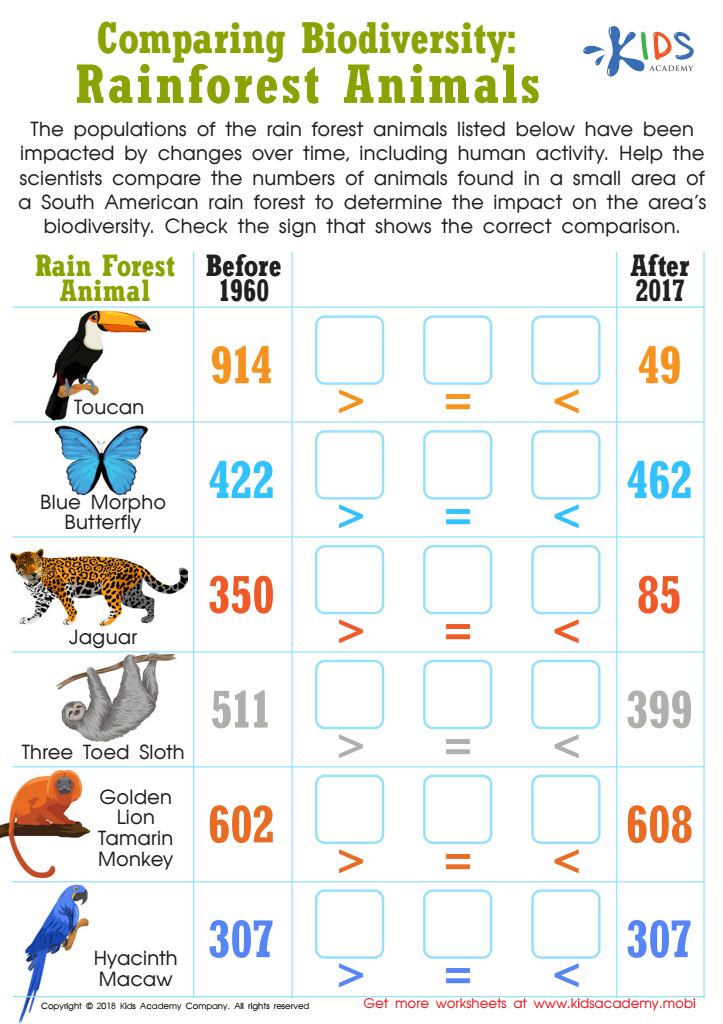
Comparing Biodiversity: Rainforest Animals Worksheet







Understanding biodiversity is crucial for children aged 5 to 9 because it lays the foundation for their ecological awareness and respect for the environment. At this stage, children are naturally curious about the world around them, and introducing them to the concept of biodiversity helps to satisfy that curiosity. Learning about the variety of life, from plants and insects to animals, fosters a sense of wonder and connection to nature.
By exploring biodiversity, children develop critical thinking skills as they notice patterns and relationships in ecosystems. This understanding nurtures problem-solving abilities and encourages them to think about how everyday actions affect the environment. Awareness of biodiversity also promotes empathy and responsibility; as children learn about endangered species and habitats, they may feel inspired to take action, whether through conservation efforts or simple acts like planting gardens.
Moreover, incorporating biodiversity into education aligns with core subjects such as science and social studies, enriching the curriculum while promoting interdisciplinary learning. Ultimately, when parents and teachers emphasize the importance of biodiversity, they empower children to be informed, responsible stewards of the planet, ensuring a sustainable future for all.








