
Understanding economics Worksheets for Ages 5-9
3 filtered results
Difficulty Level
Grade
Age
-
From - To
Subject
Activity
Standards
Introduce your child to the exciting world of economics with our specially crafted worksheets for ages 5-9! These engaging printables make learning concepts like money, trade, goods and services a breeze. With friendly illustrations and fun activities, Kids Academy helps young learners grasp the basics of economics in a practical and enjoyable way. Perfect for home or classroom use, these worksheets build foundational skills that foster financial literacy and critical thinking. Empower your child with the knowledge to make smart economic choices and understand the world around them. Explore our collection today and set the stage for future success!
Favorites
With answer key
Interactive
 Assign to My Students
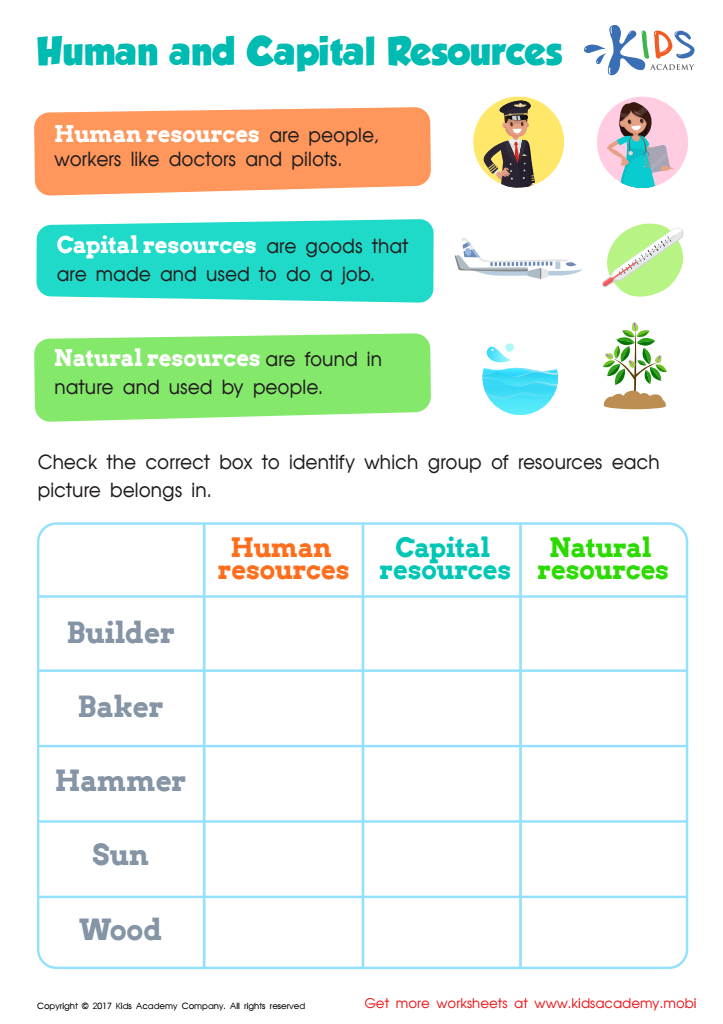
Human and Capital Resources Worksheet
It helps identify and differentiate human, natural and capital resources, so your kid can understand how each affects their world.
Human and Capital Resources Worksheet
Worksheet
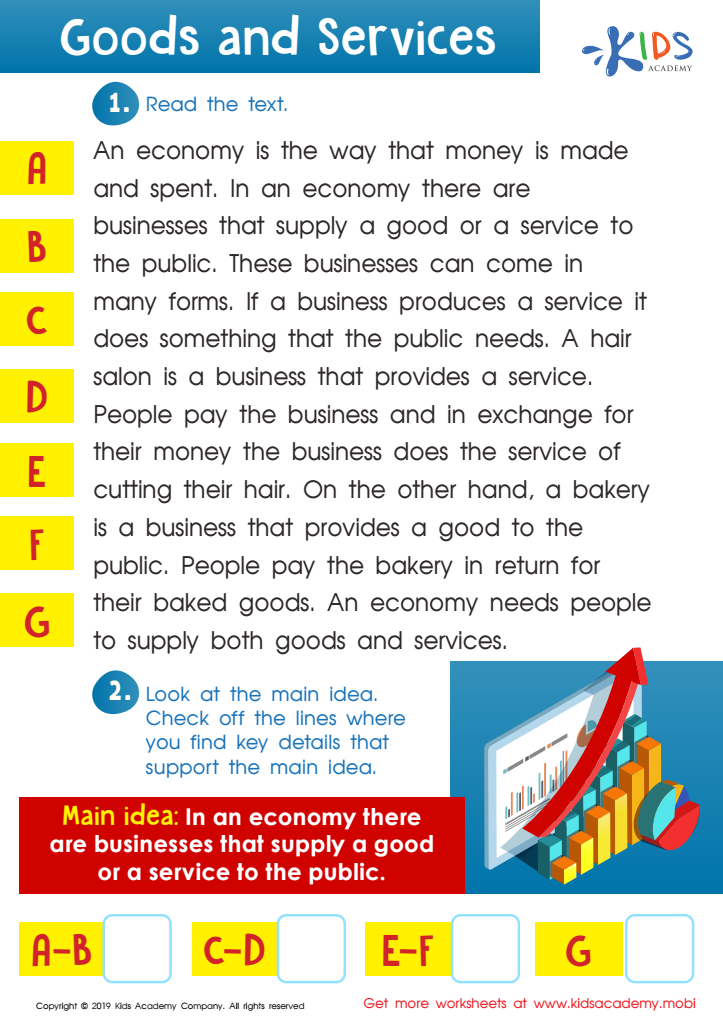
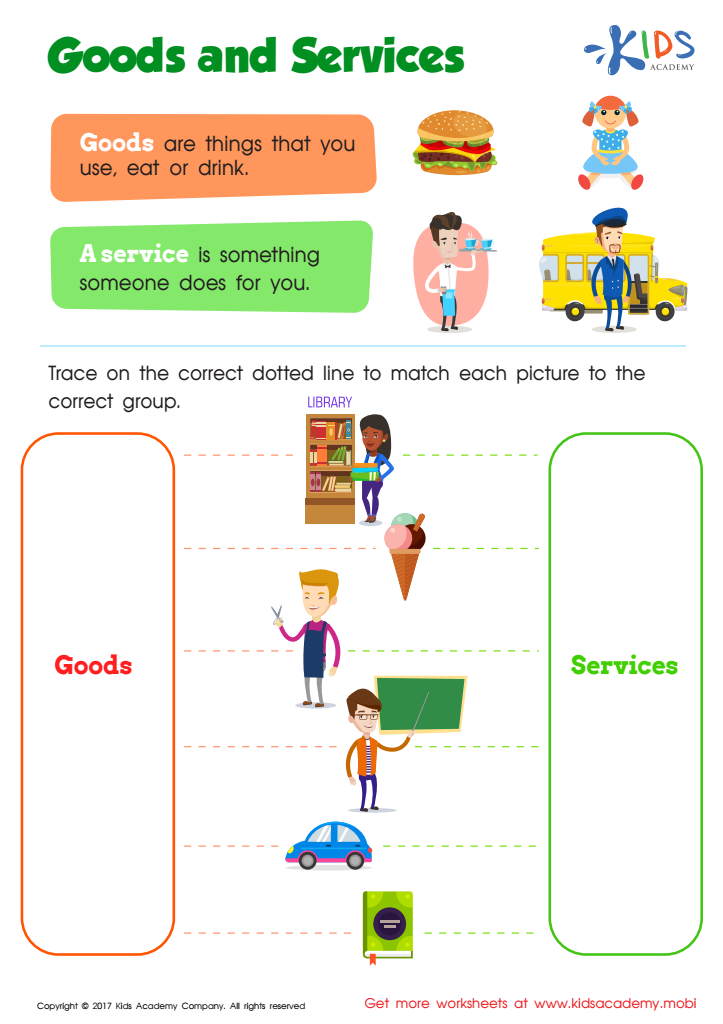
Goods and Services Worksheet
Teach your kids about the economy and businesses with this worksheet. Ask them if they know what goods and services are. After they complete the worksheet, they'll have a better understanding. Read the text to them and guide them step-by-step through the instructions. Help them learn!
Goods and Services Worksheet
Worksheet
Join Kids Academy for Free
Who is primarily going to use this learning content?






Understanding economics, even at an early age, equips children with essential life skills and critical thinking abilities that will benefit them throughout their lives. For ages 5-9, introducing basic economic concepts can help young minds grasp everyday occurrences like earning, spending, saving, and sharing.
Firstly, learning about economics at a young age fosters financial literacy. Kids start to understand the value of money and the importance of making informed choices about it. This foundational knowledge can lead to better financial decisions in adulthood, such as budgeting, saving, and investing wisely.
Secondly, economic understanding nurtures problem-solving skills. Through simple activities like setting up a lemonade stand, children learn about decision-making, resource allocation, and the consequences of their choices. They begin to see how effort, cost, and reward are interconnected, which enhances their critical thinking.
Moreover, discussing economics promotes social awareness and empathy. For instance, talking about fair trade or charitable giving can help children understand social justice and community welfare. They become cognizant of the disparities and learn the value of kindness and generosity.
Involving children in economic discussions also strengthens parent-child or teacher-student relationships by engaging in meaningful conversations and activities together. Ultimately, building economic literacy early on prepares children for a more informed, responsible, and compassionate future.








