Understanding number bonds Worksheets for Ages 5-9
3 filtered results
-
From - To
Unlock your child's mathematical potential with our "Understanding Number Bonds Worksheets" tailored for ages 5-9. These engaging worksheets introduce the fundamental concept of number bonds, helping young learners grasp how numbers relate to each other in fun and interactive ways. Through colorful illustrations and step-by-step exercises, children will build essential skills in addition and subtraction, fostering a strong foundation for future math success. Ideal for both classroom and home environments, these worksheets are designed to boost confidence and encourage a love for math. Explore our resources today and equip your child with the understanding they need to thrive in mathematics!
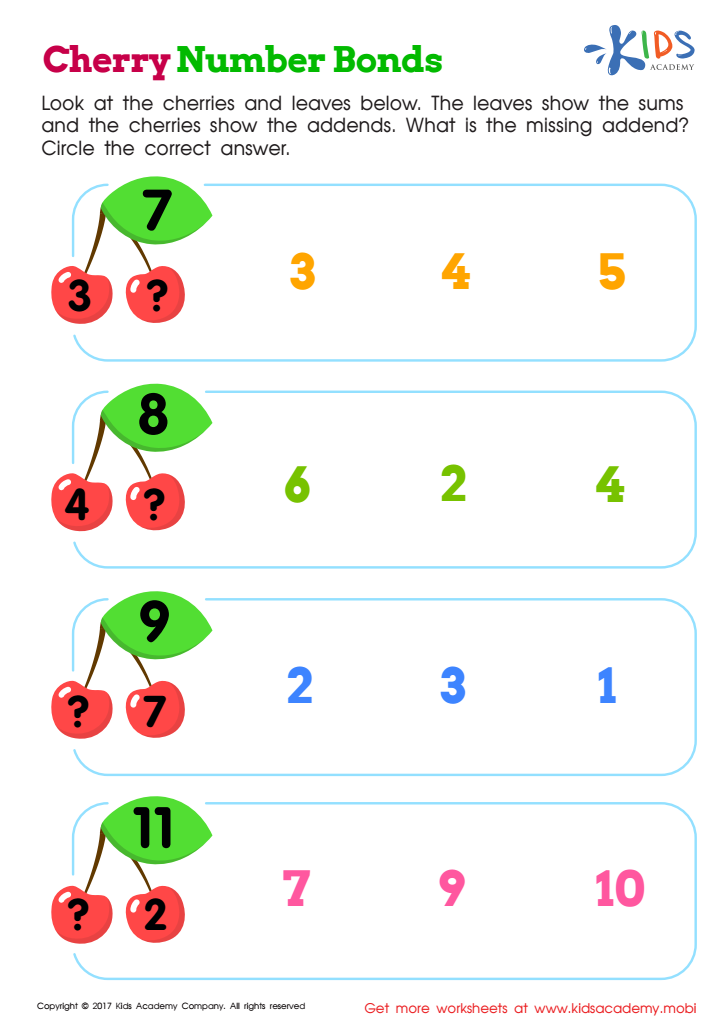
Cherry Number Bonds Worksheet
 Assign to My Students
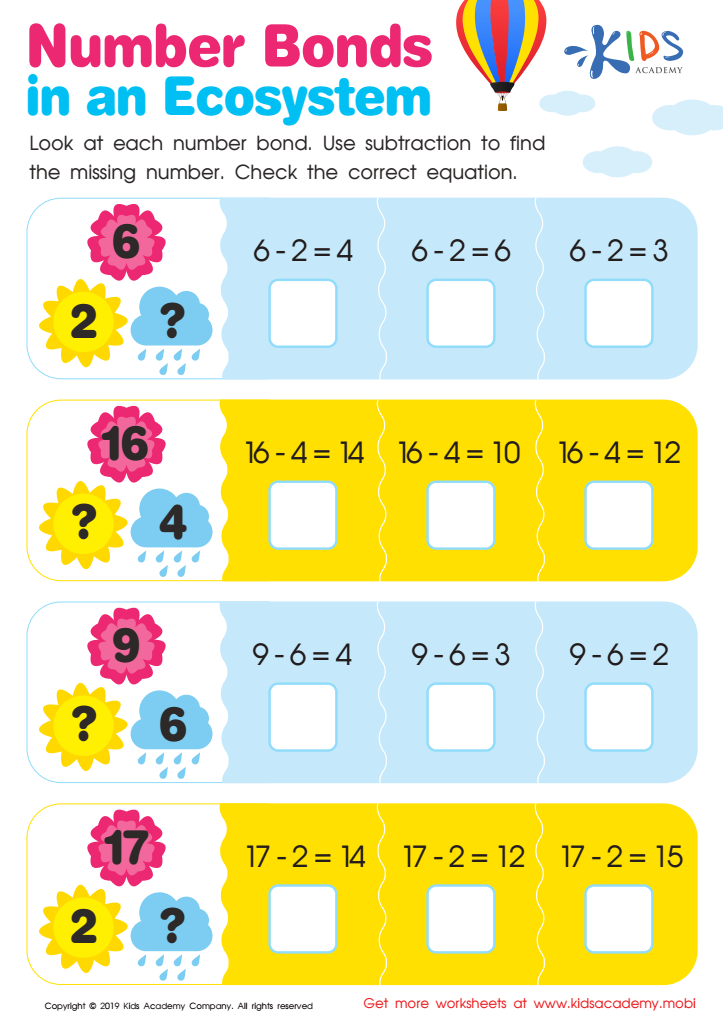
Number Bonds in an Ecosystem Worksheet
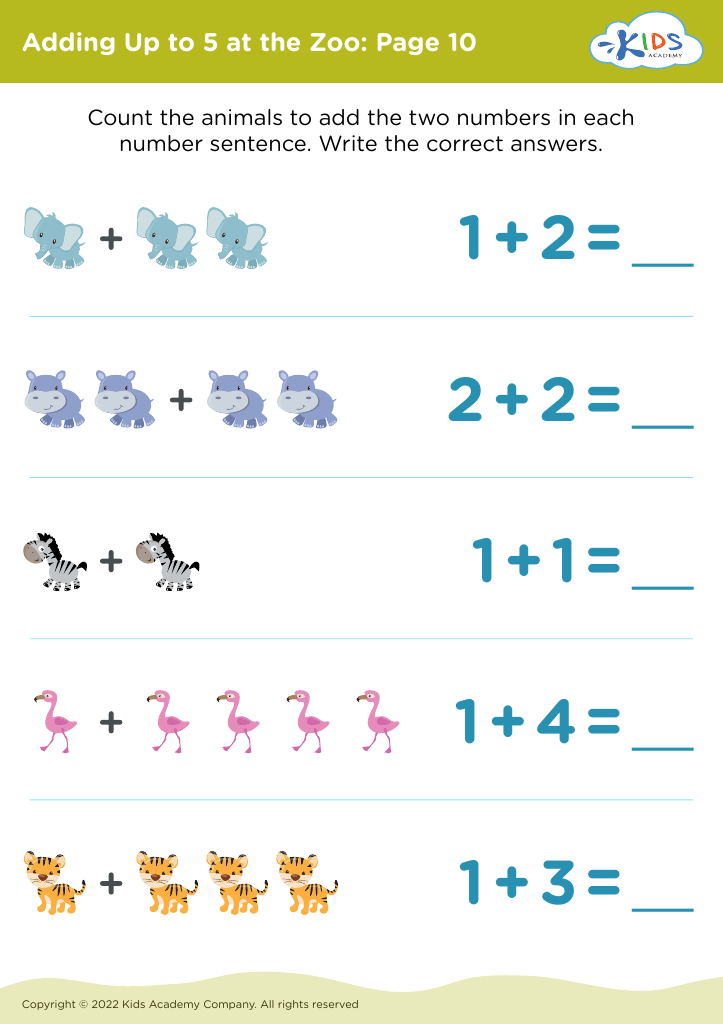



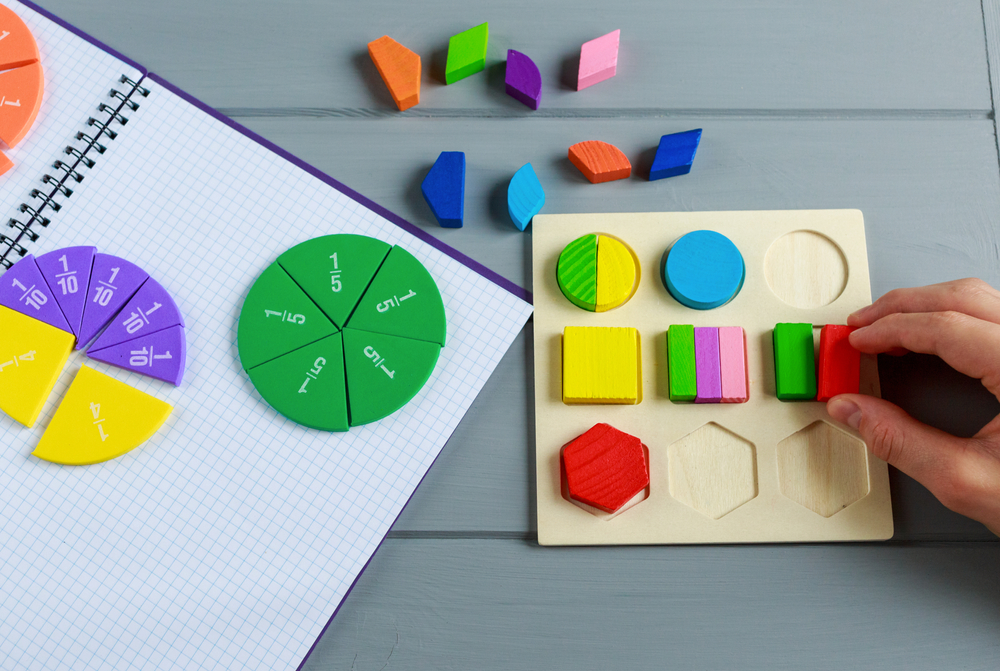
Understanding number bonds is crucial for children aged 5-9, as it lays the foundation for their numerical development and overall mathematics proficiency. Number bonds refer to the relationship between numbers, particularly how they combine to form other numbers, such as understanding that 5 and 5 make 10. Grasping number bonds promotes fluency in basic arithmetic operations, which is essential for future mathematical concepts.
Parents and teachers should care about number bonds because they help children develop strong mental math skills. By mastering these fundamental relationships, students can quickly solve addition and subtraction problems, reducing reliance on fingers or calculators. This builds confidence and independence in their mathematical abilities.
Moreover, number bonds facilitate problem-solving skills and critical thinking. When children understand how numbers relate to one another, they can approach more complex mathematical concepts with ease. Encouraging kids to explore these relationships early on fosters a positive attitude toward math, setting them up for success as they progress in their education.
Investing time in teaching number bonds can lead to greater mathematical understanding and achievement, easing the educational journey and preparing children for the challenges of advanced math in later grades. Therefore, both parents and teachers play a vital role in this developmental milestone.








