Visual discrimination Worksheets for Ages 5-9 - Page 2
28 filtered results
-
From - To
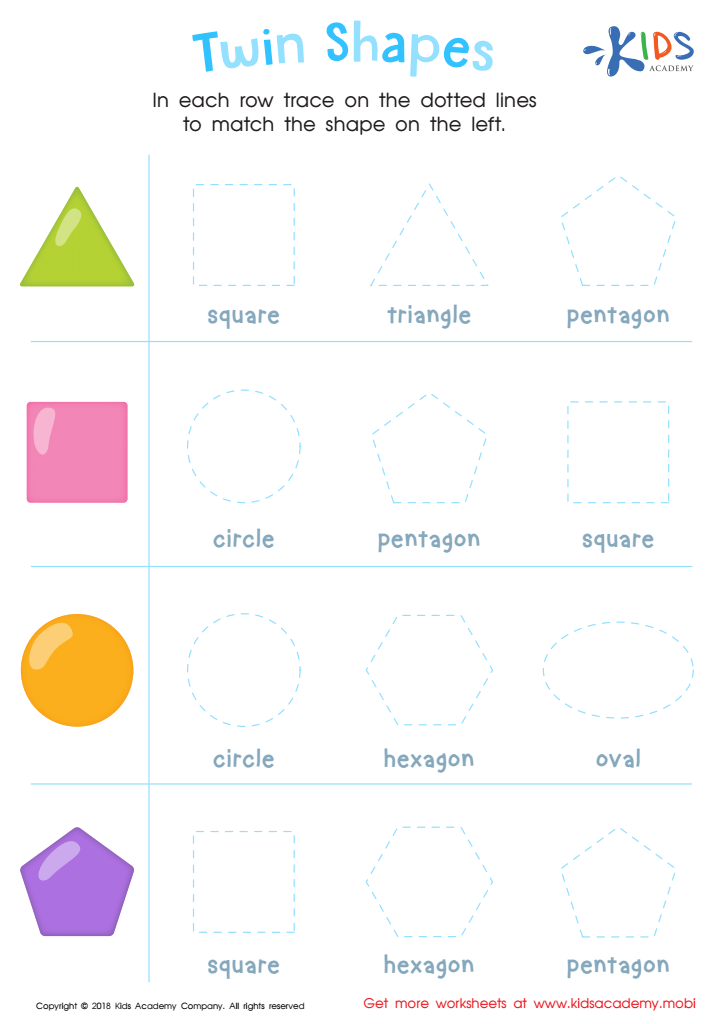
Twin Shapes Dot-to-Dot Worksheet
 Assign to My Students
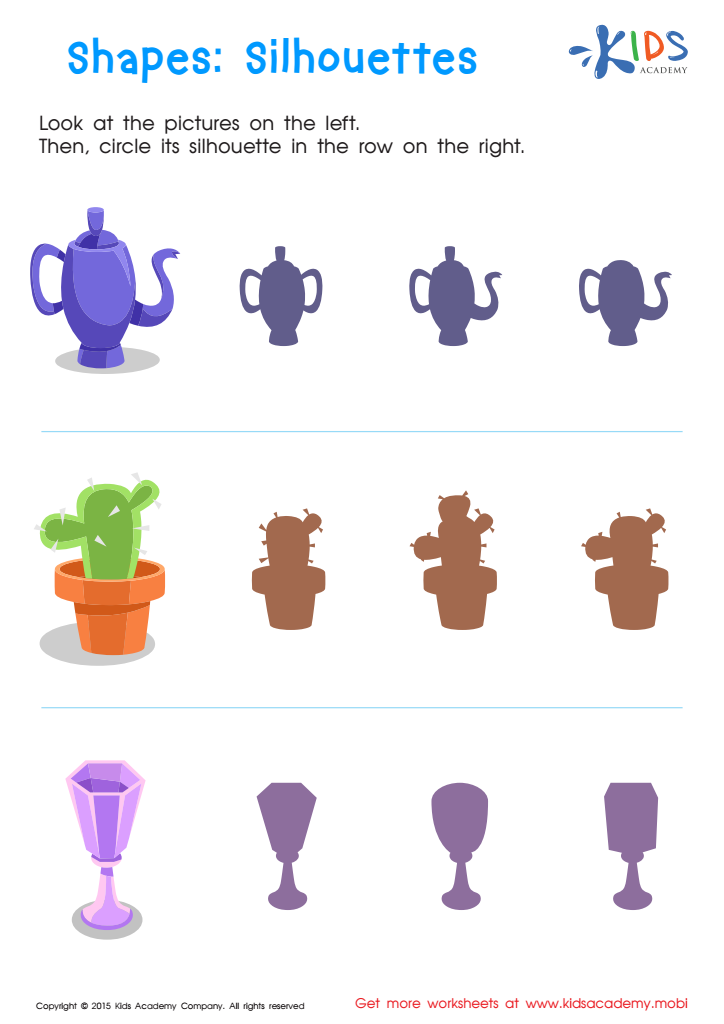
Silhouettes – Shapes Worksheet
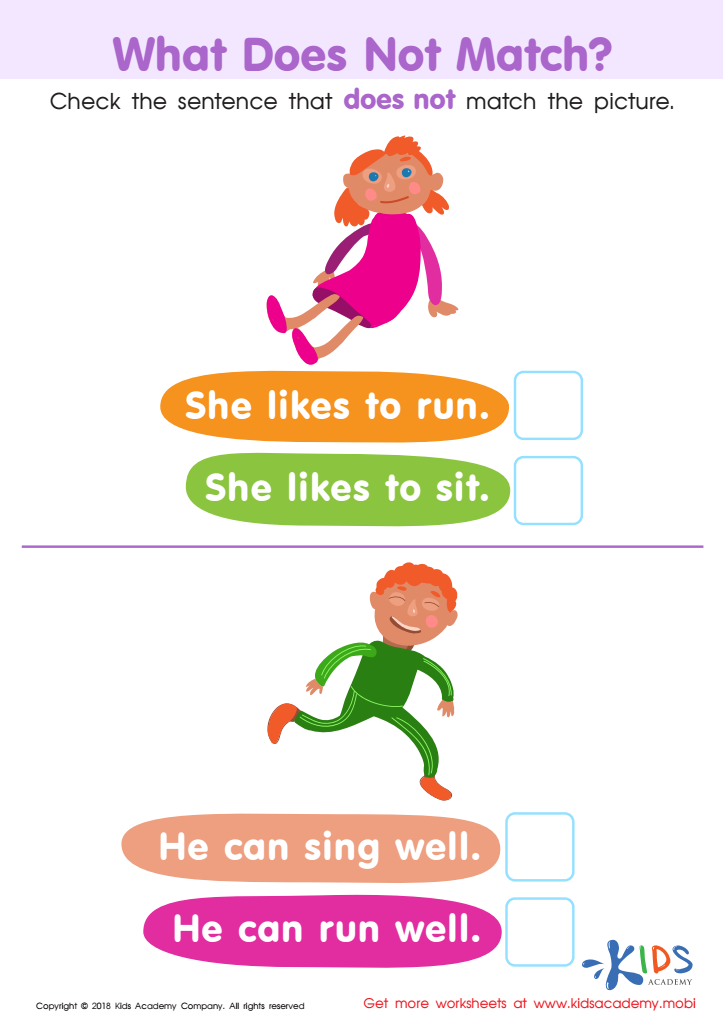
What Does Not Match? Worksheet






Visual discrimination, the ability to notice subtle differences and similarities in shapes, patterns, and objects, is a critical skill for children aged 5-9. Parents and teachers should care about this developmental milestone because it lays the foundation for essential academic skills, particularly in reading and math. For instance, recognizing the differences between letters like “b” and “d” or understanding shapes in geometry relies heavily on visual discrimination.
Moreover, strong visual discrimination skills support problem-solving abilities and enhance cognitive development. Children who can effectively distinguish between similar items tend to exhibit better attention to detail, helping them complete tasks accurately. This skill also fosters creativity, as it enables children to notice patterns and make connections in their environment.
Socially, enhanced visual skills can improve a child's ability to navigate peer interactions and comprehend social cues, which are often communicated through visual means. Encouraging activities that promote visual discrimination—such as matching games, puzzles, and art projects—can significantly contribute to a child’s overall development. Thus, prioritizing visual discrimination helps equip children with the necessary tools for academic success and well-rounded growth in their formative years.








