Check out this FREE "Visual Learning" Trial Lesson for age 5-9!

Animal Life Cycle

Favorites
With answer key
Interactive
  • 5-9
  • Visual Learning
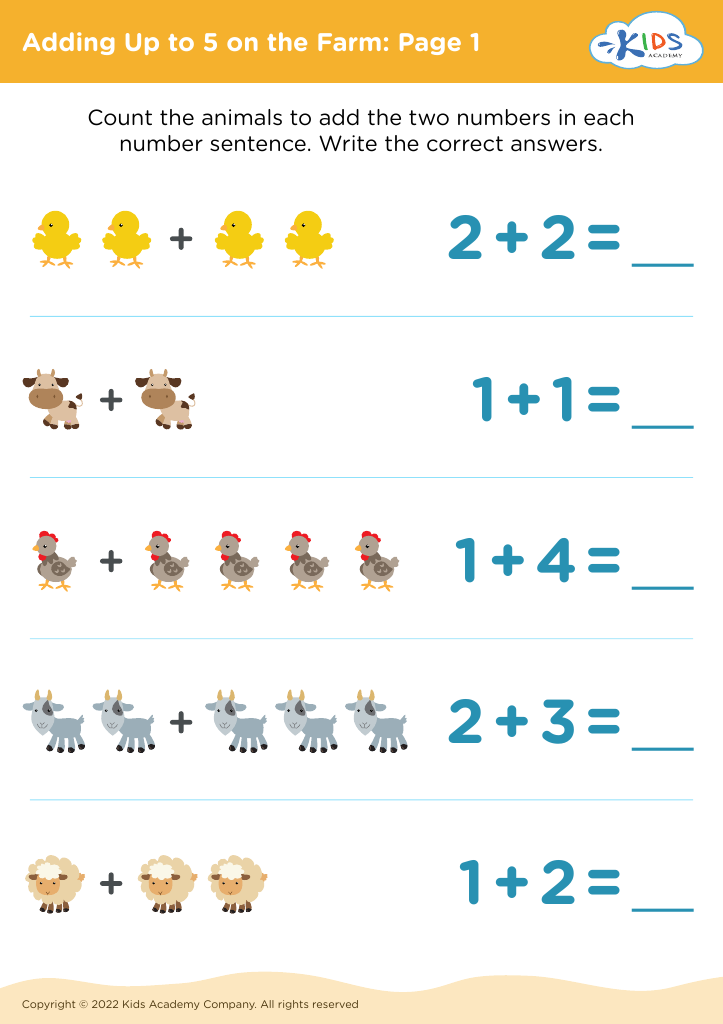
Adding Up to 5 on the Farm: Page 1
Worksheet
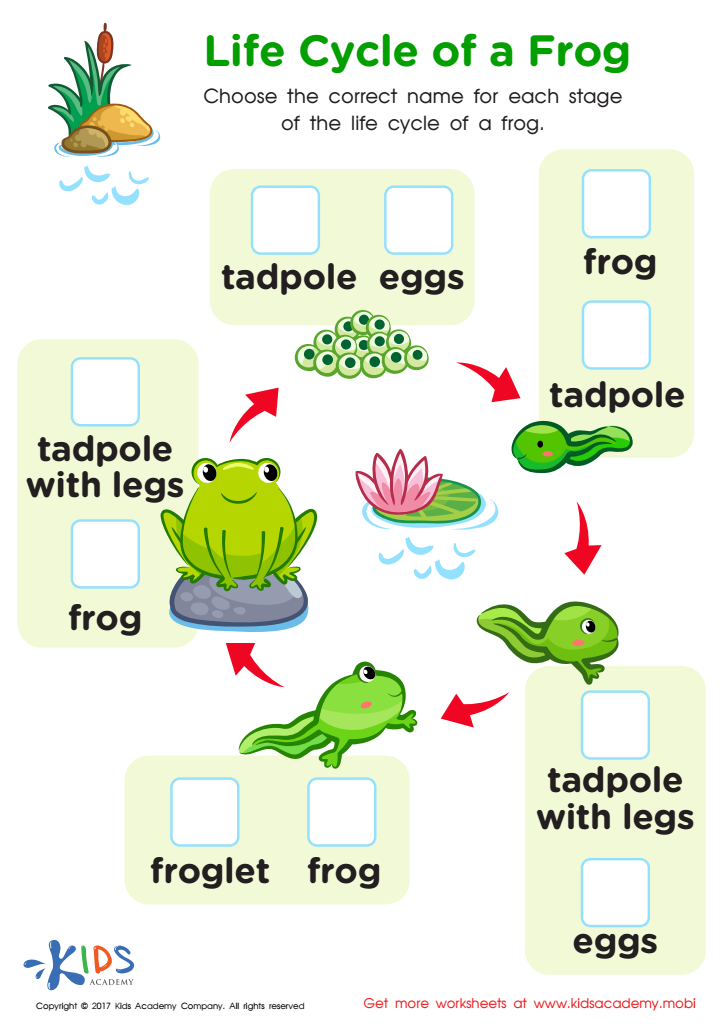
Life Cycle Frog Printable

Life Cycle Frog Printable

Kids can explore the life cycle of frog with this fun worksheet! Draw lines from one stage to the next to follow the transformation from tadpole to frog and learn about the cycle of life.
Life Cycle Frog Printable
Worksheet
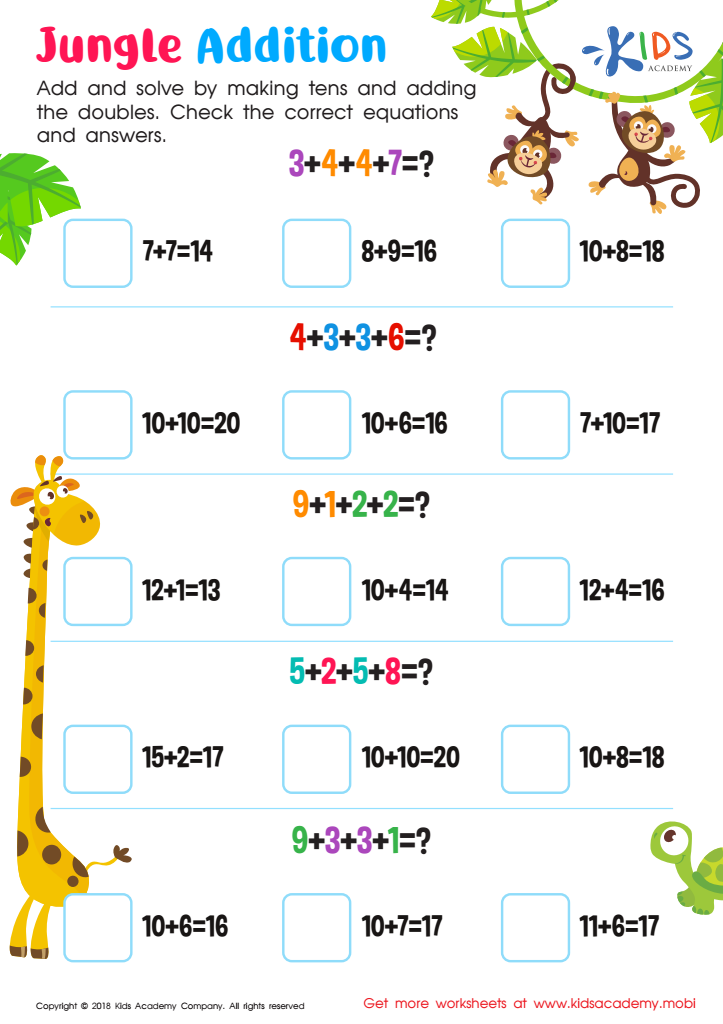
Jungle Addition Worksheet

Jungle Addition Worksheet

With this worksheet, kids can use the strategies of making tens and adding doubles to add numbers with more than three addends. They'll practice choosing the right method and become more confident in their calculations, enabling quicker, more efficient computation.
Jungle Addition Worksheet
Worksheet
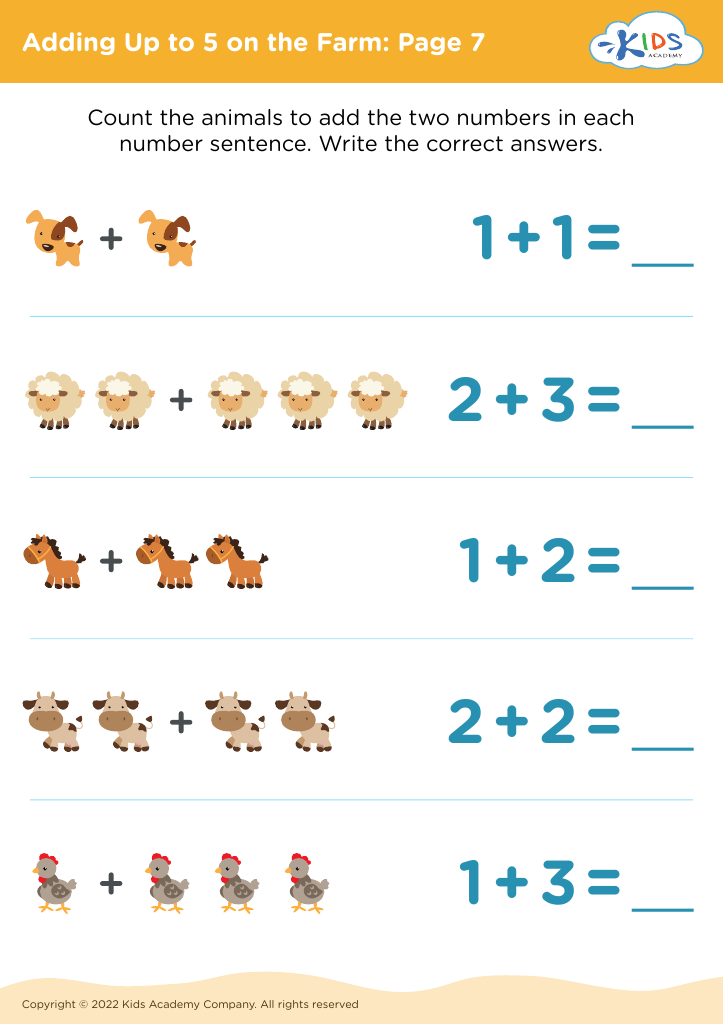
Adding Up to 5 on the Farm: Page 7
Worksheet
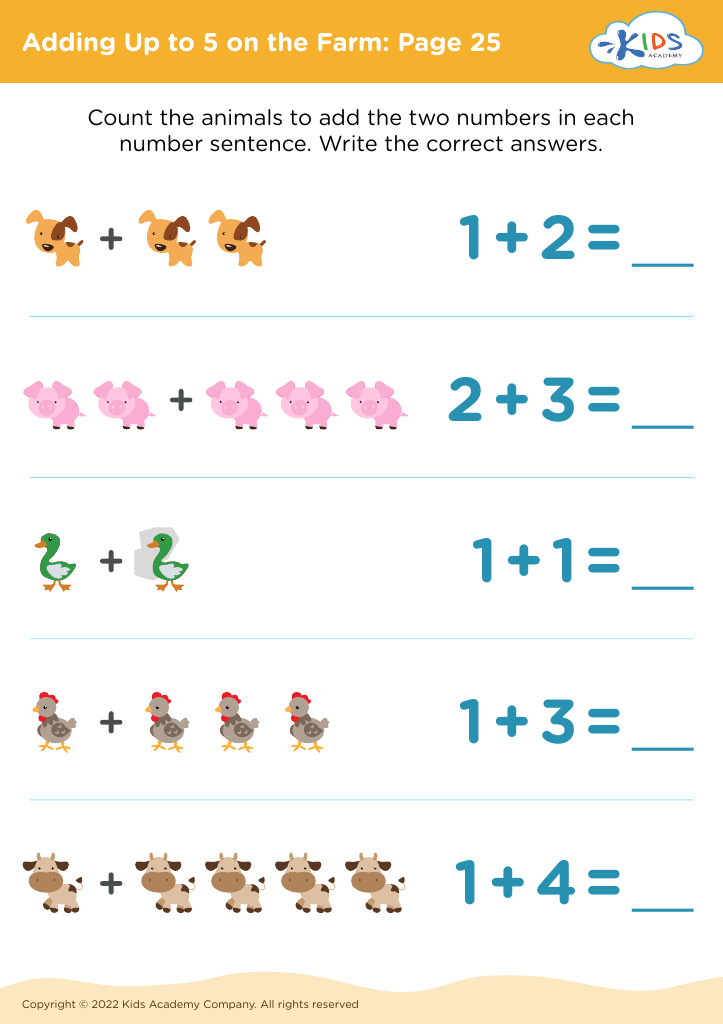
Adding Up to 5 on the Farm: Page 25
Worksheet
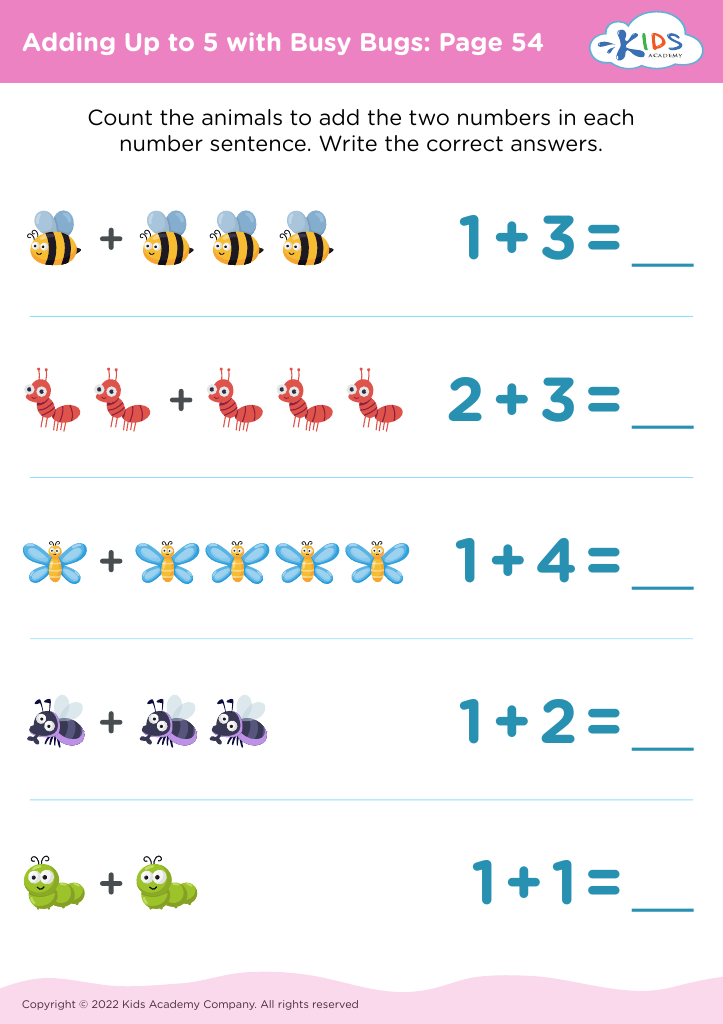
Adding Up to 5 with Busy Bugs: Page 54
Worksheet
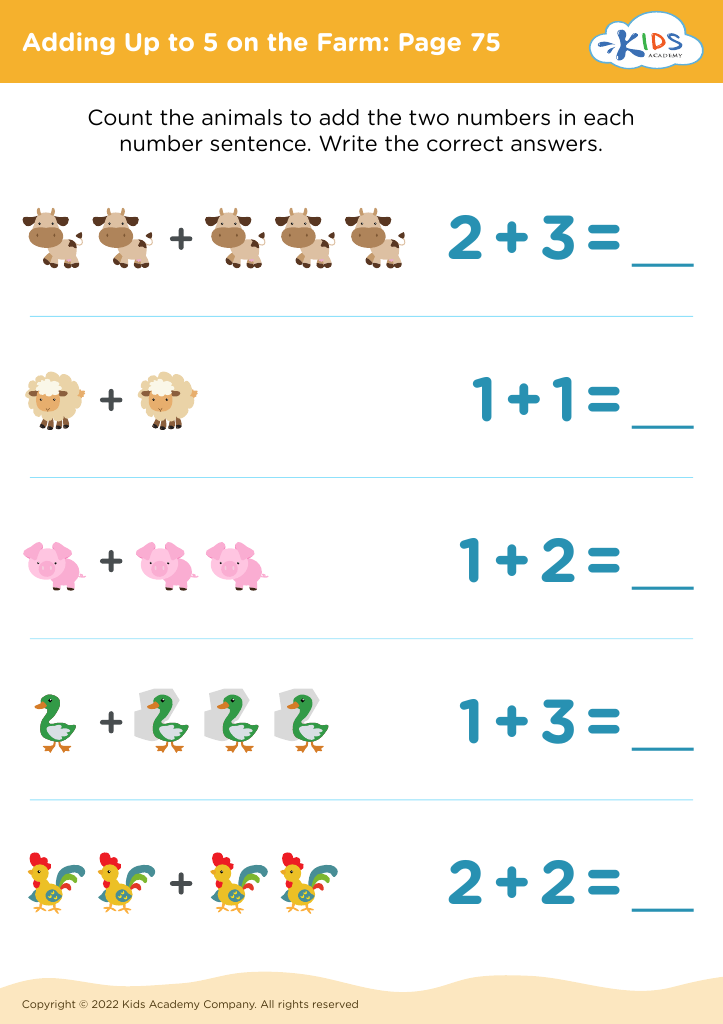
Adding Up to 5 on the Farm: Page 75
Worksheet
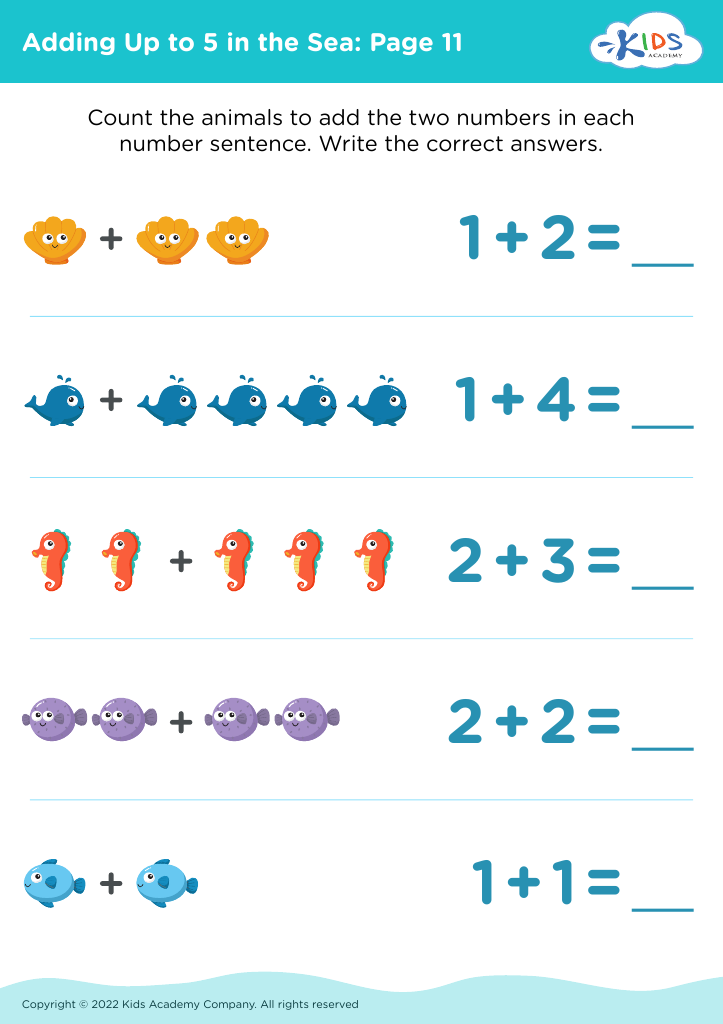
Adding Up to 5 in the Sea: Page 11
Worksheet
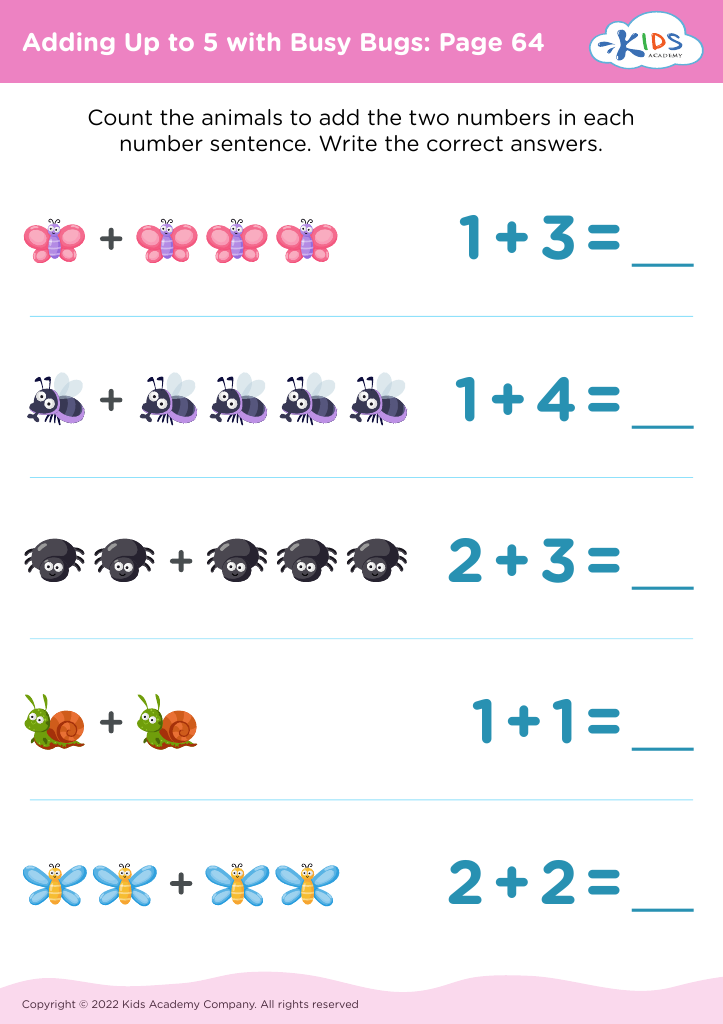
Adding Up to 5 with Busy Bugs: Page 64
Worksheet
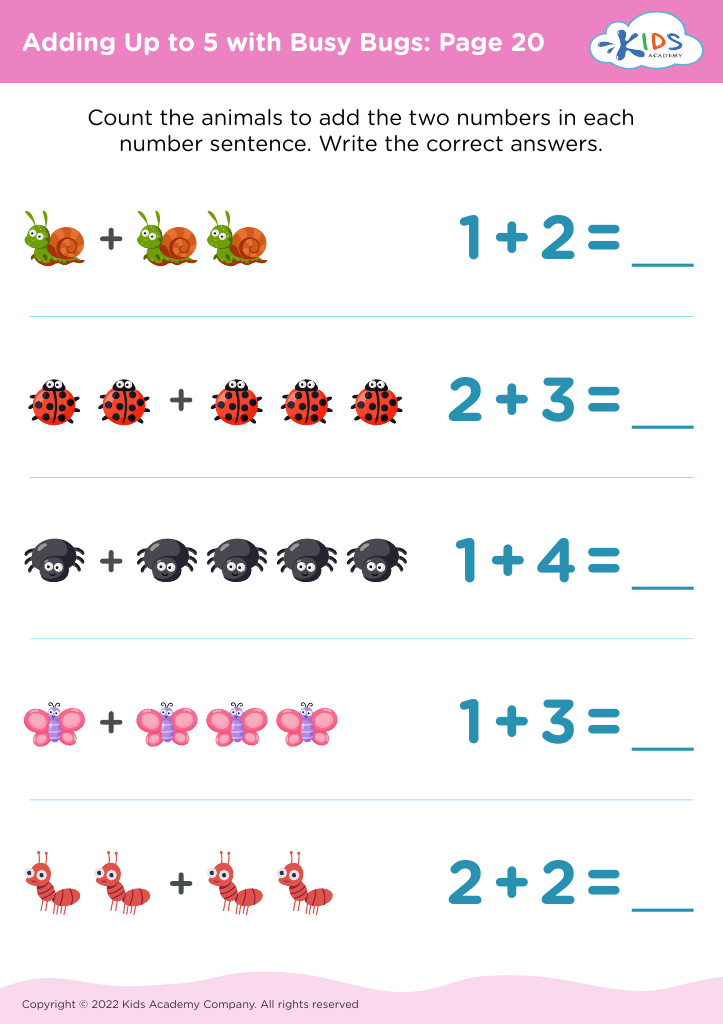
Adding Up to 5 with Busy Bugs: Page 20
Worksheet
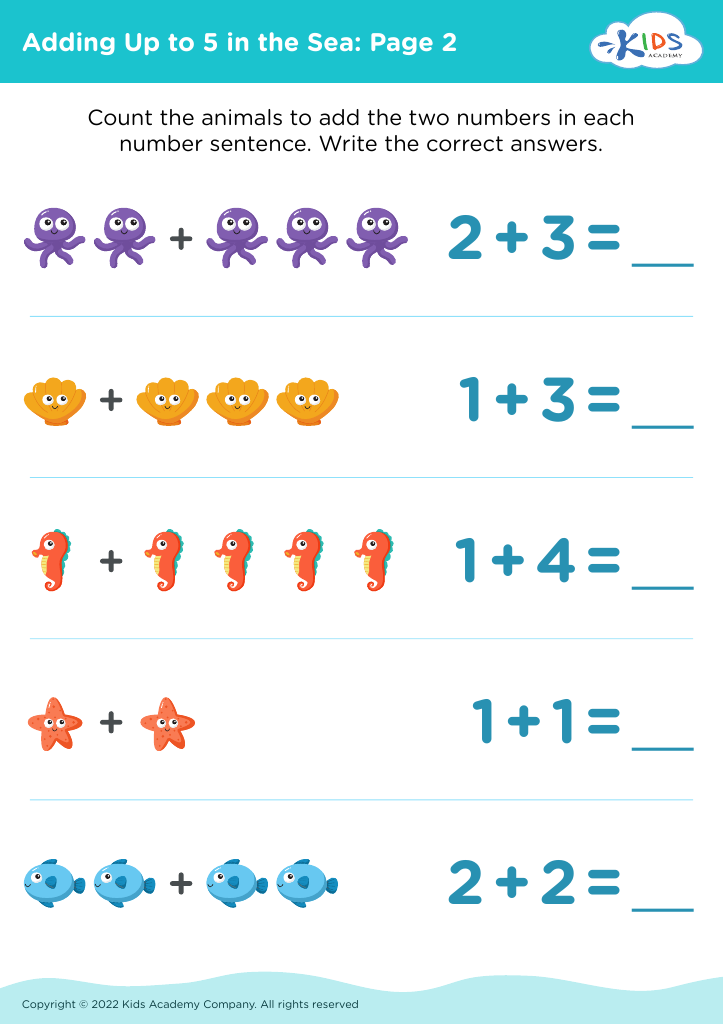
Adding Up to 5 in the Sea: Page 2

Adding Up to 5 in the Sea: Page 2

Adding Up to 5 in the Sea: Page 2
Worksheet
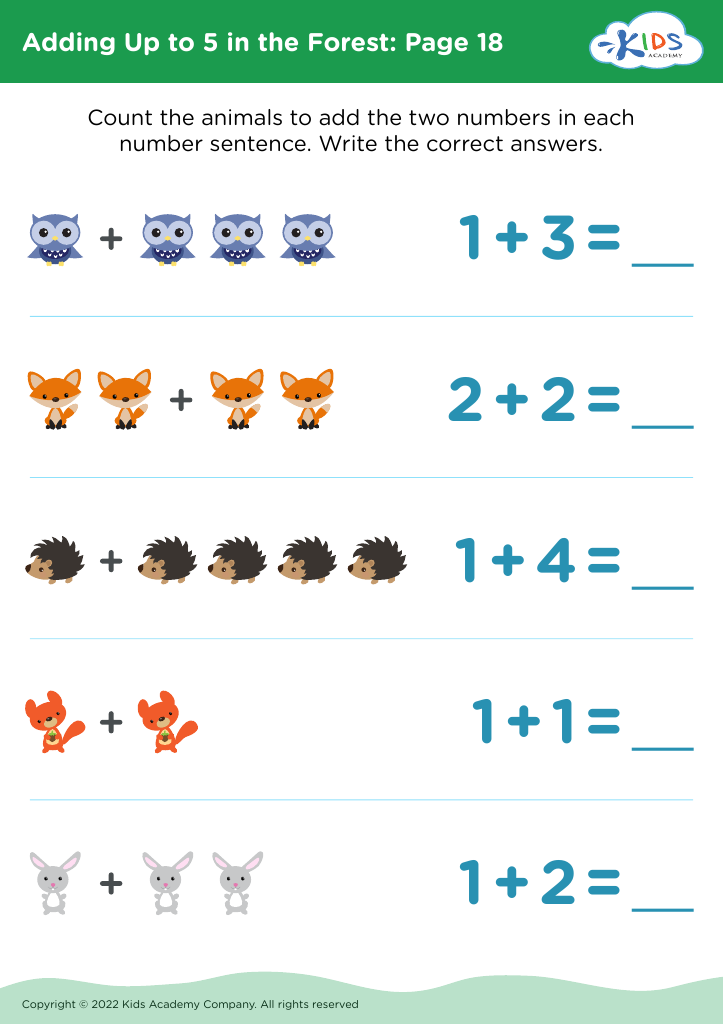
Adding Up to 5 in the Forest: Page 18
Worksheet
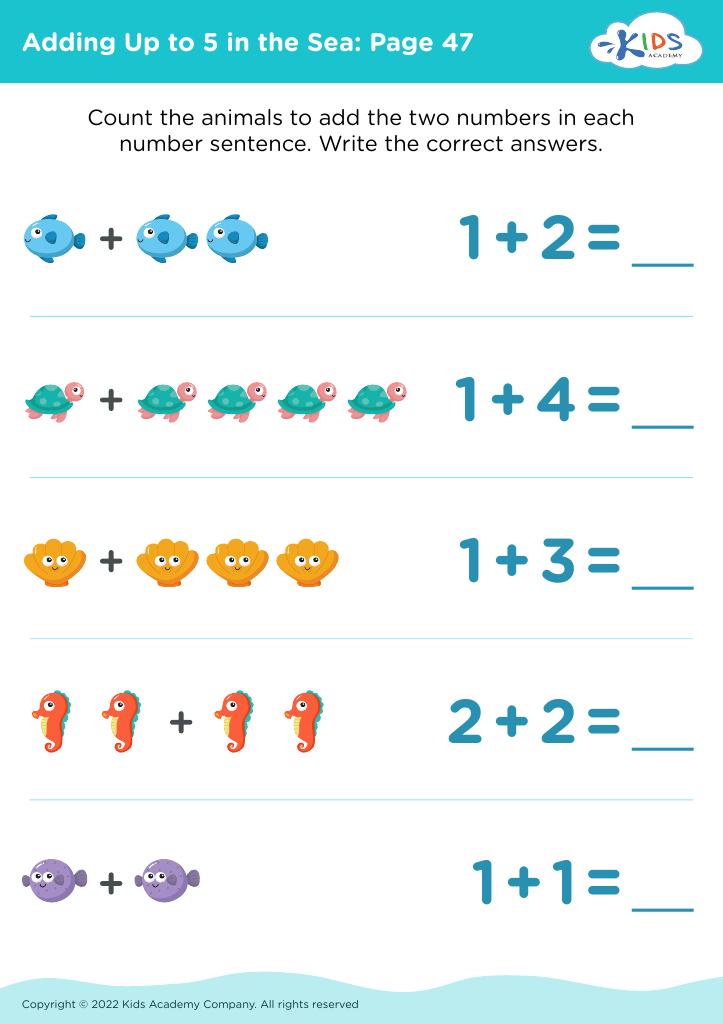
Adding Up to 5 in the Sea: Page 47
Worksheet
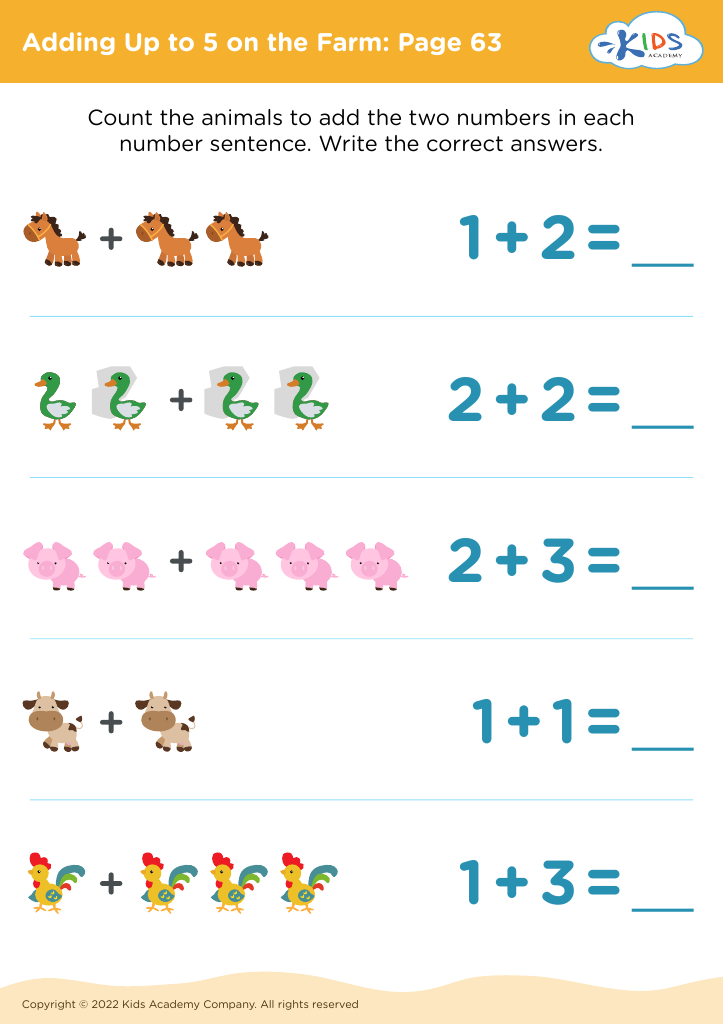
Adding Up to 5 on the Farm: Page 63
Worksheet
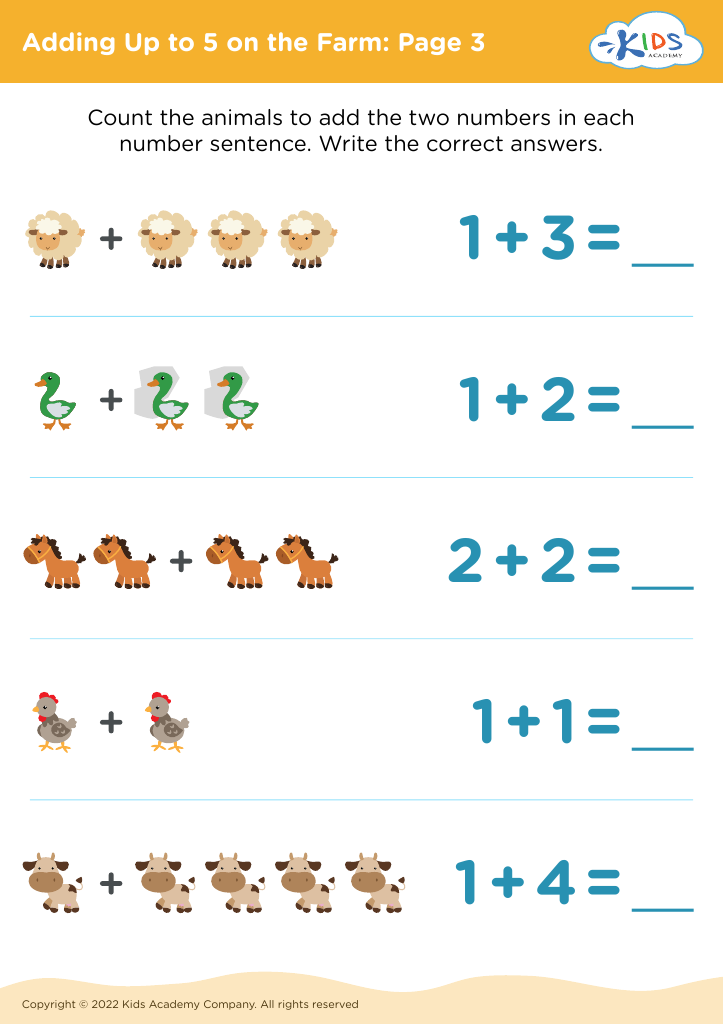
Adding Up to 5 on the Farm: Page 3
Worksheet
Addition at the Zoo Worksheet
Addition at the Zoo Worksheet
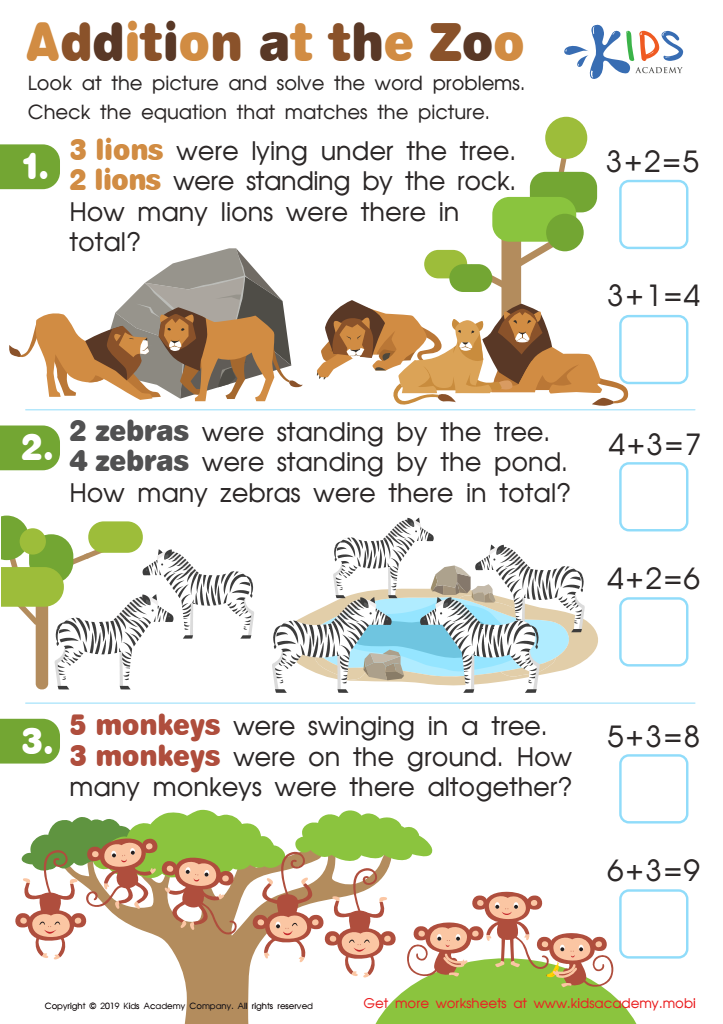
Visit the zoo with your kids and point out all the different animals. Ask them to name their favorites and identify animals on a worksheet. Challenge them to solve word problems related to the pictures. Ask them for the equation that fits the picture and check the answer.
Addition at the Zoo Worksheet
Worksheet
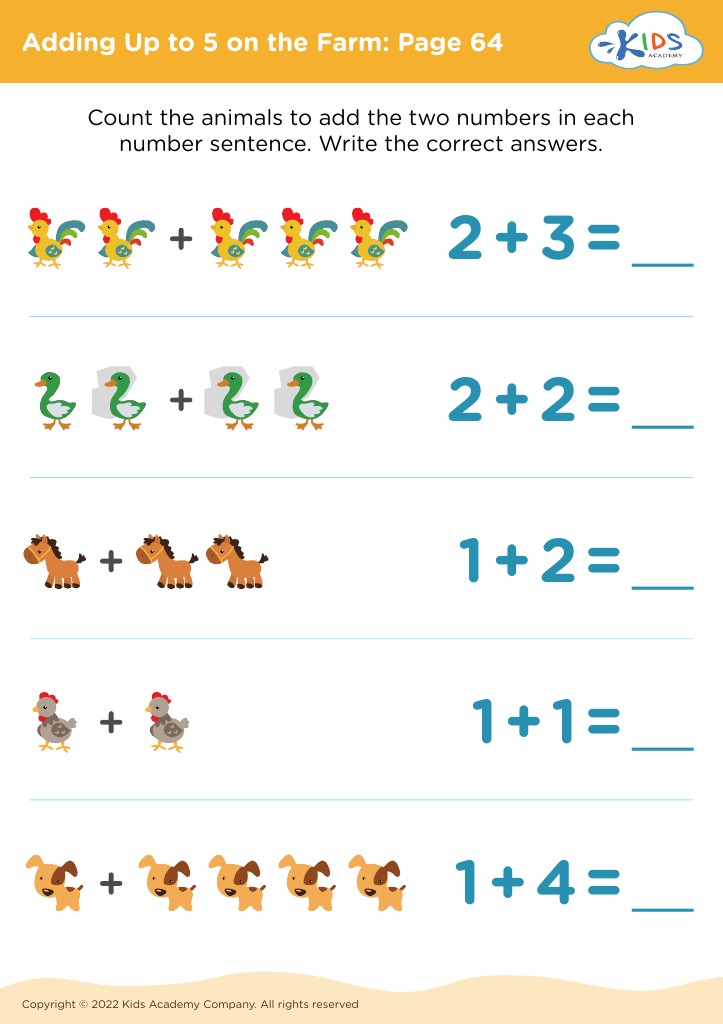
Adding Up to 5 on the Farm: Page 64
Worksheet
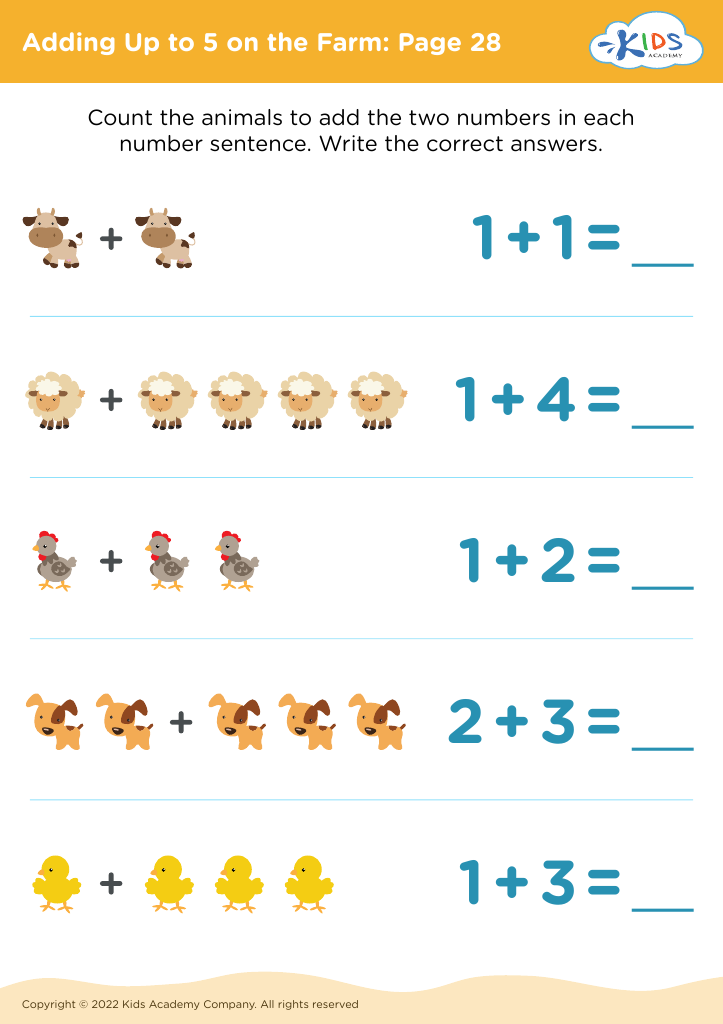
Adding Up to 5 on the Farm: Page 28
Worksheet
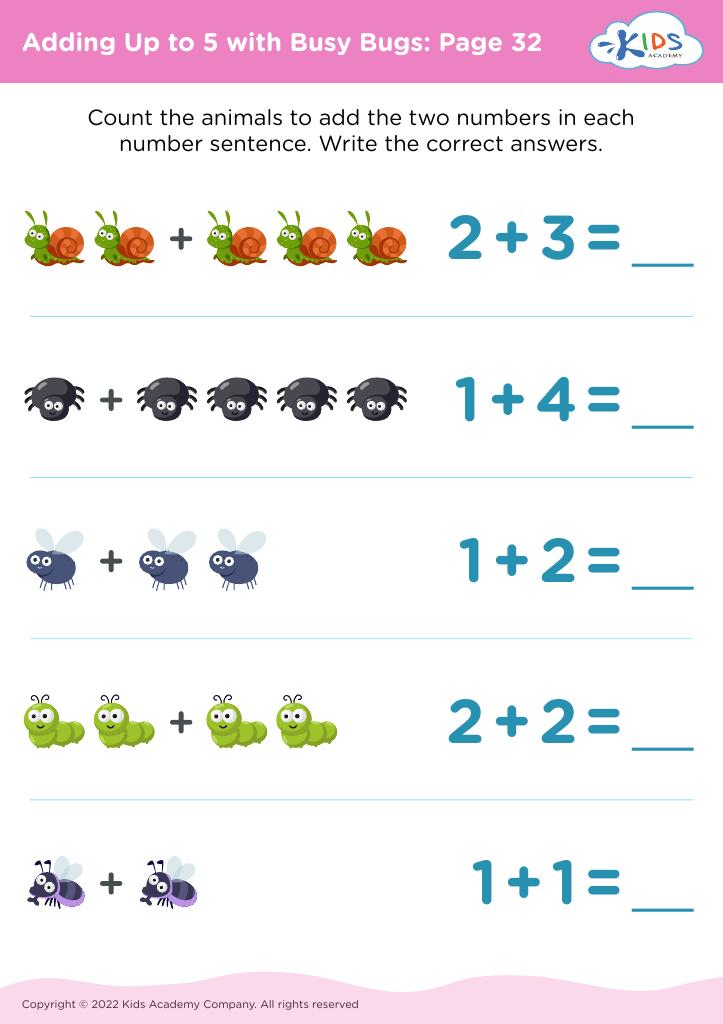
Adding Up to 5 with Busy Bugs: Page 32
Worksheet
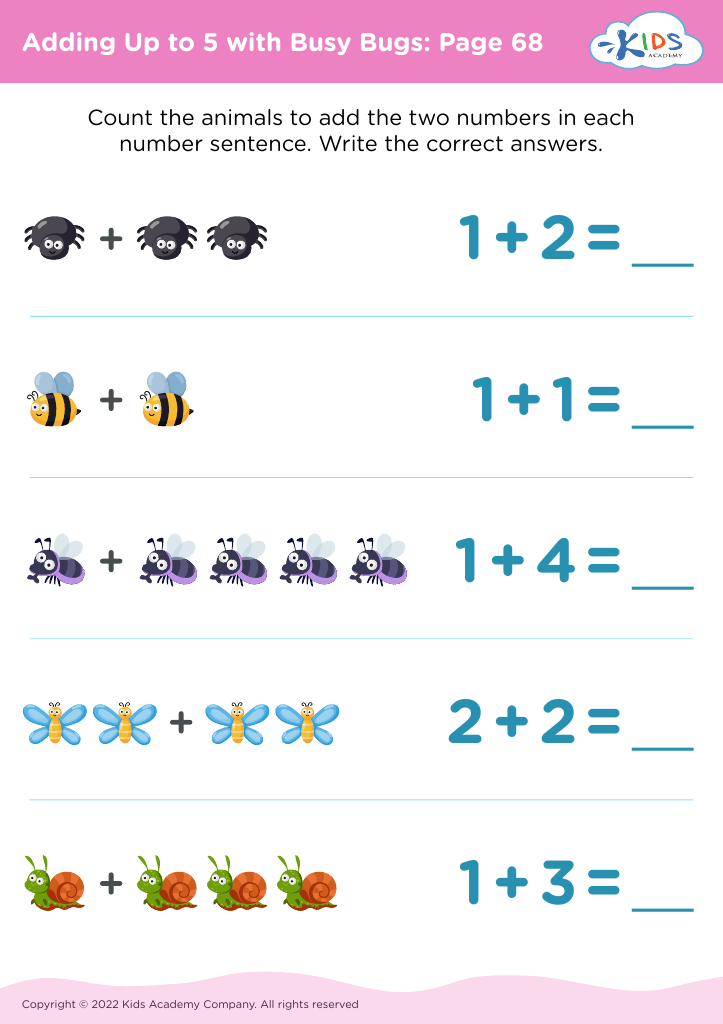
Adding Up to 5 with Busy Bugs: Page 68
Worksheet
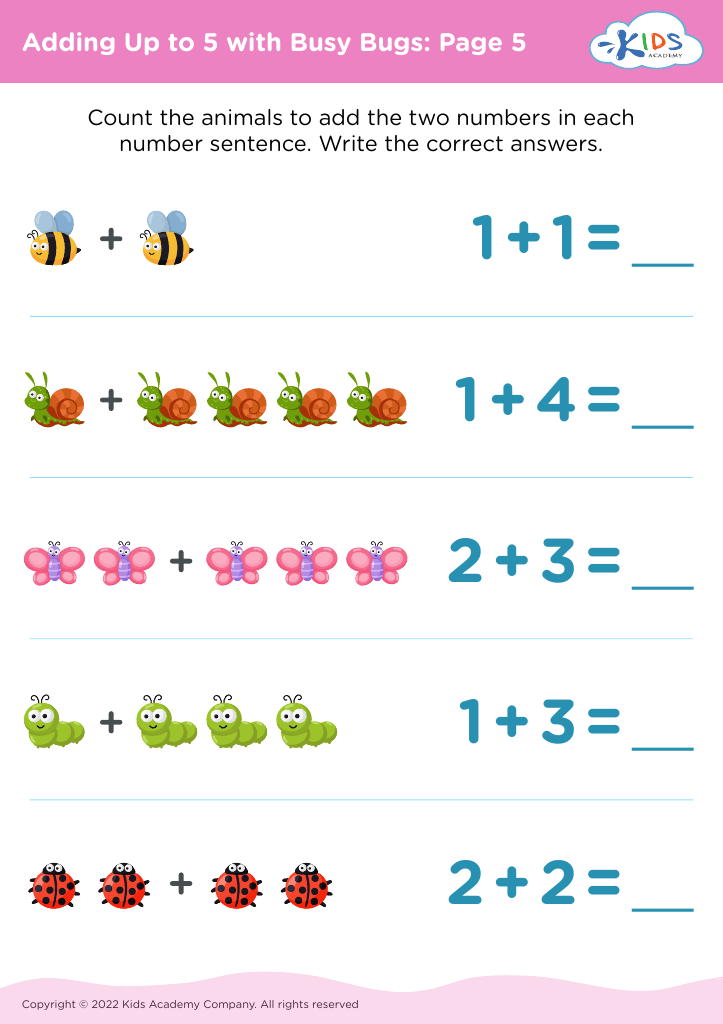
Adding Up to 5 with Busy Bugs: Page 5
Worksheet
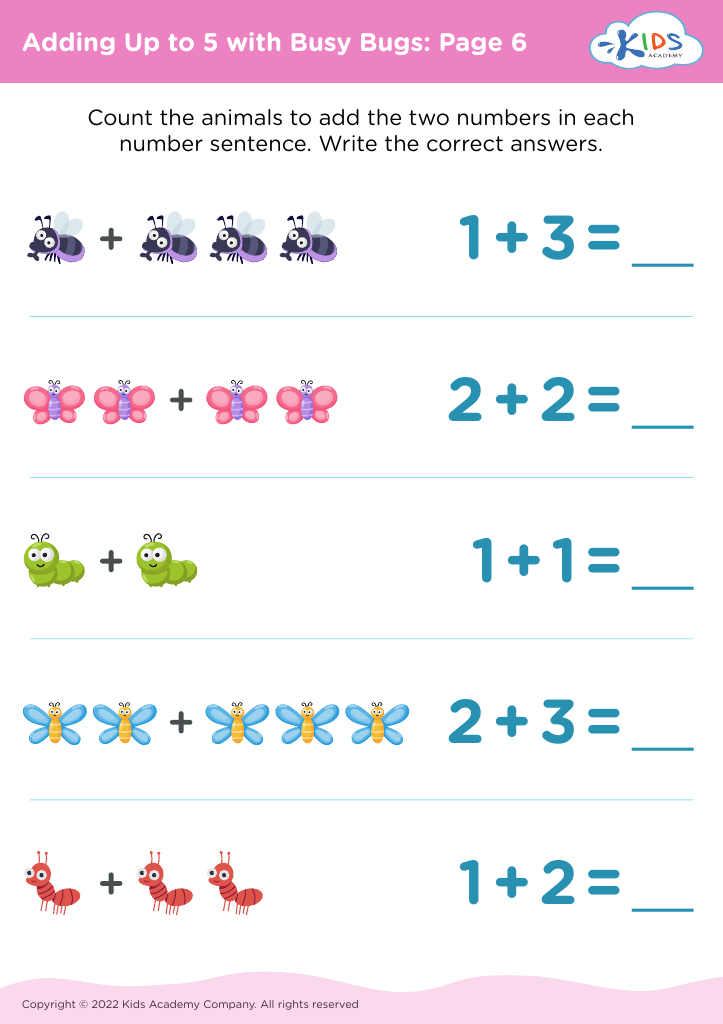
Adding Up to 5 with Busy Bugs: Page 6
Worksheet
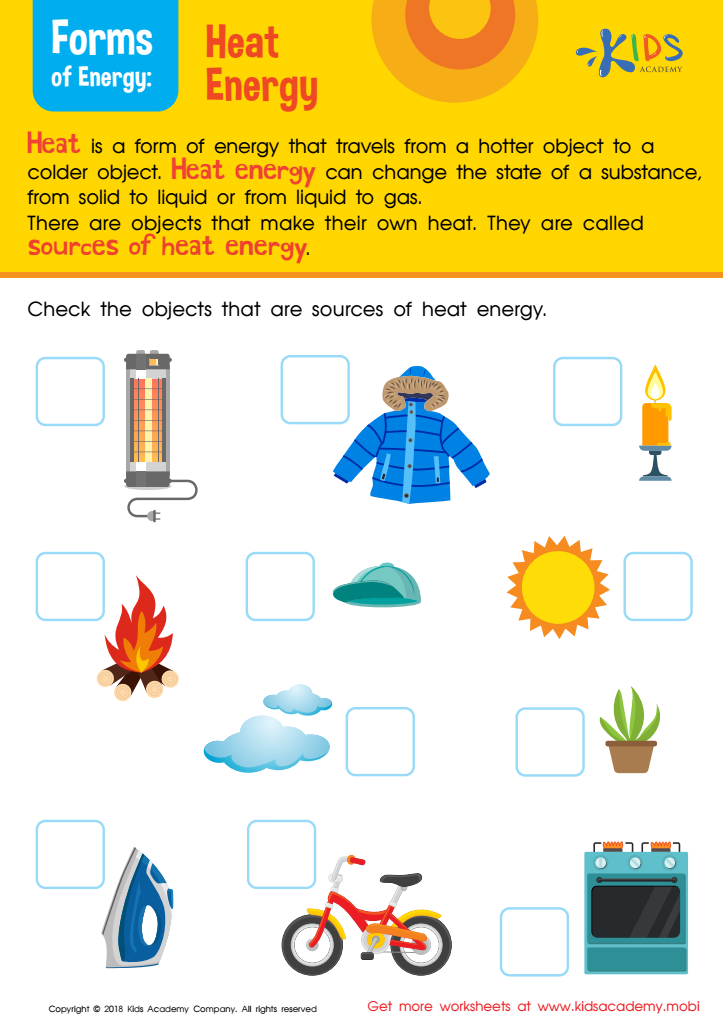
Sources of Heat Energy Worksheet

Sources of Heat Energy Worksheet

Heat energy is everywhere - from inside our homes to outside in the sun. Natural sources include the sun, geothermal energy, and volcanic activity. This worksheet helps kids identify and learn about these sources and more!
Sources of Heat Energy Worksheet
Worksheet
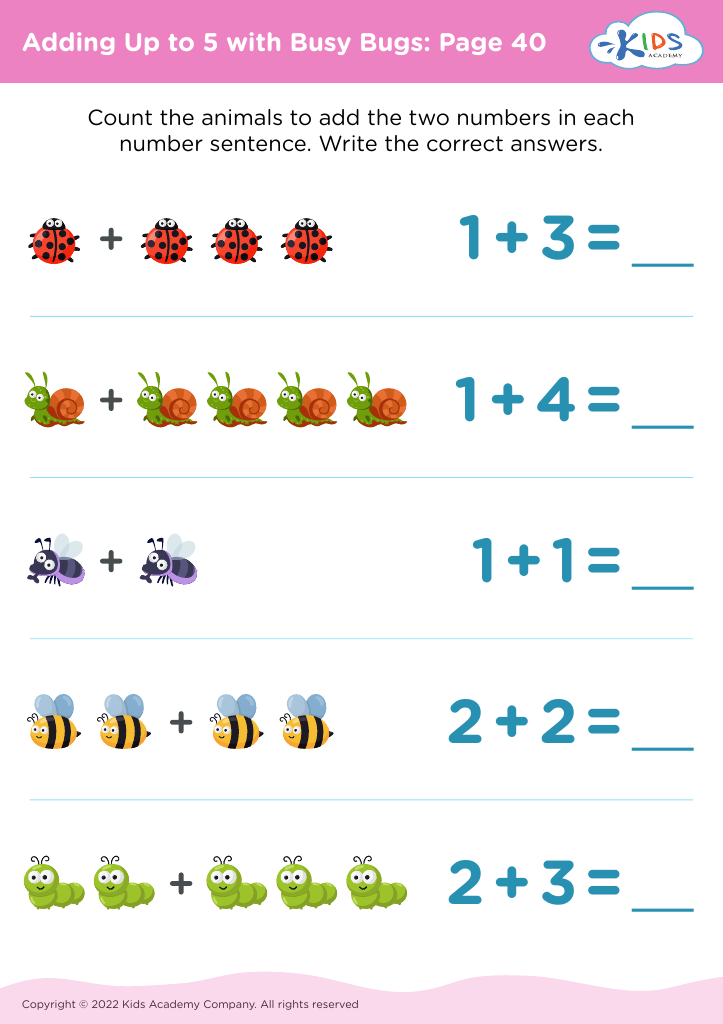
Adding Up to 5 with Busy Bugs: Page 40
Worksheet


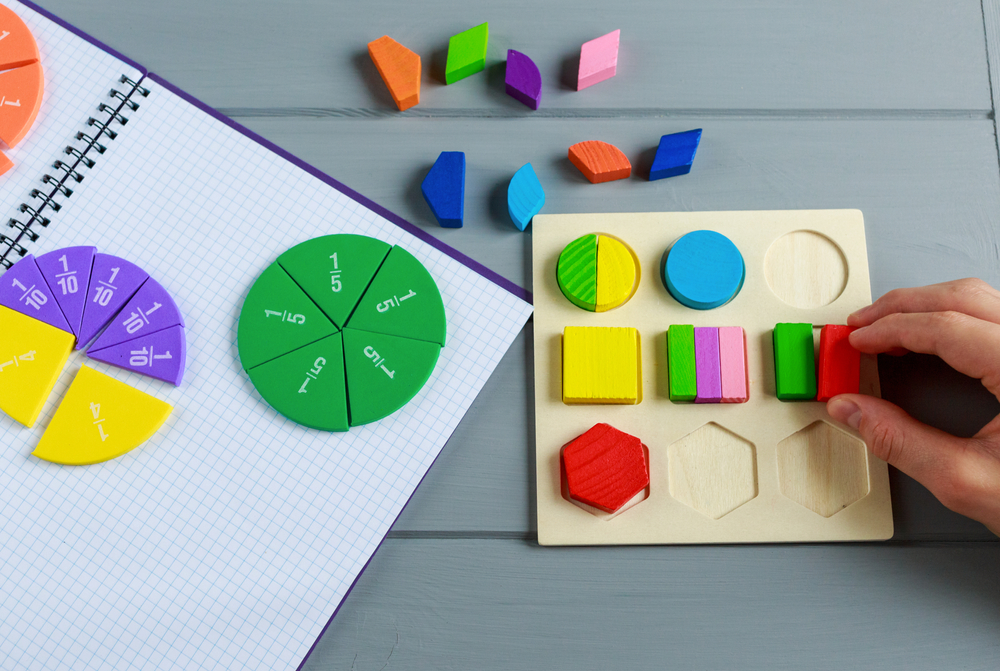
Visual learning is vital for children aged 5-9 because it aligns with their developmental stage and enhances their natural learning processes. At this age, children's visual perception and fine motor skills are rapidly developing, allowing them to better comprehend and retain information presented visually. When parents and teachers incorporate visual elements such as images, charts, and color-coded materials into lessons, they tap into the child’s primary mode of processing the world.

Research shows that visual aids can improve retention and understanding. For instance, children can recall information more effectively when it is presented with pictures, as multiple senses are engaged simultaneously. Visual learning also caters to different learning styles, ensuring that visual learners get the most out of the educational experience while also reinforcing lessons for auditory and kinesthetic learners.

Additionally, visual learning strategies foster creativity and critical thinking. By engaging with graphics, children learn to interpret and analyze data, enhancing their problem-solving abilities. Visual tools like storyboards, diagrams, and interactive apps can make learning interactive and enjoyable, which is crucial for maintaining young children’s attention and motivation.

Overall, investing in visual learning is a smart and effective approach that helps young learners build a strong foundational understanding of concepts, making education more comprehensive, engaging, and effective.