Critical Thinking 2D Shapes Worksheets for Ages 5-9
5 filtered results
-
From - To
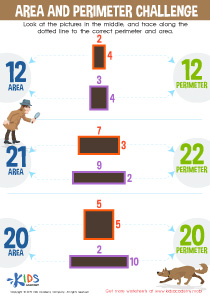
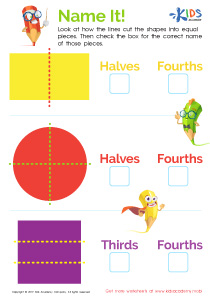
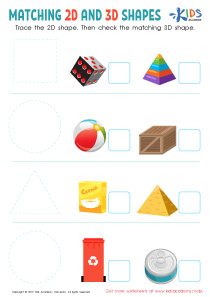
Enhance your child's mathematical abilities with our engaging Critical Thinking 2D Shapes Worksheets, designed for ages 5 to 9! These thoughtfully crafted worksheets not only teach young learners to identify and classify different 2D shapes, but also help develop essential critical thinking skills. Through fun activities and challenges, children will explore problem-solving techniques and learn to connect shapes with real-world examples. Ideal for both classroom use and at-home practice, our worksheets foster creativity while reinforcing foundational math concepts. Dive into an exciting world of learning and watch your child build confidence in their critical thinking and shape recognition skills!
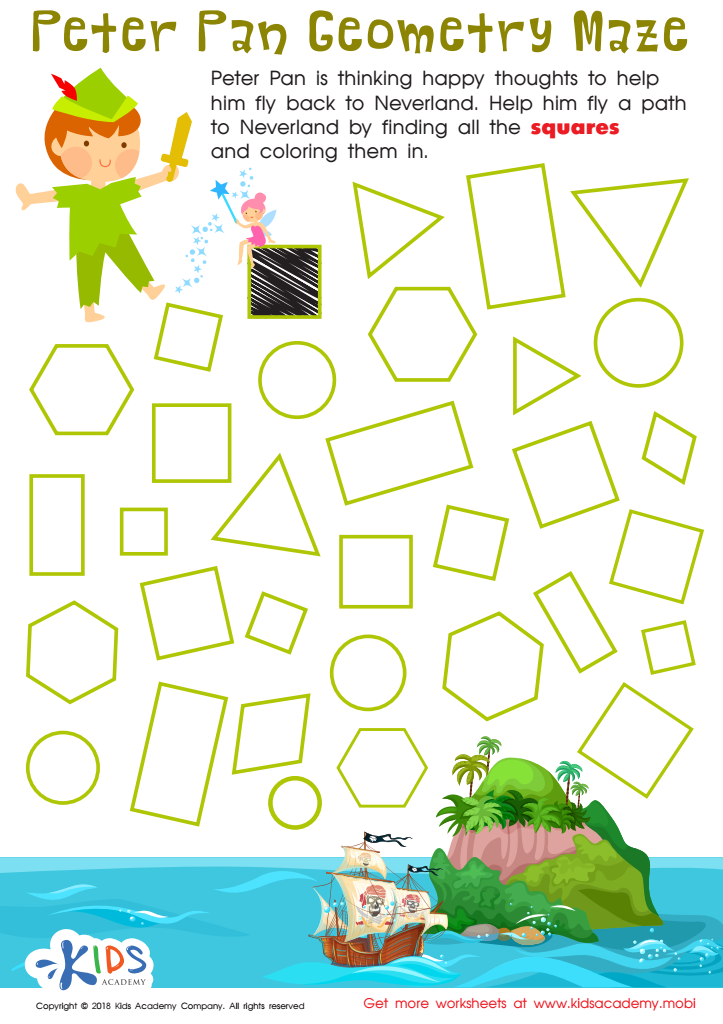
Peter Pan Worksheet
 Assign to My Students





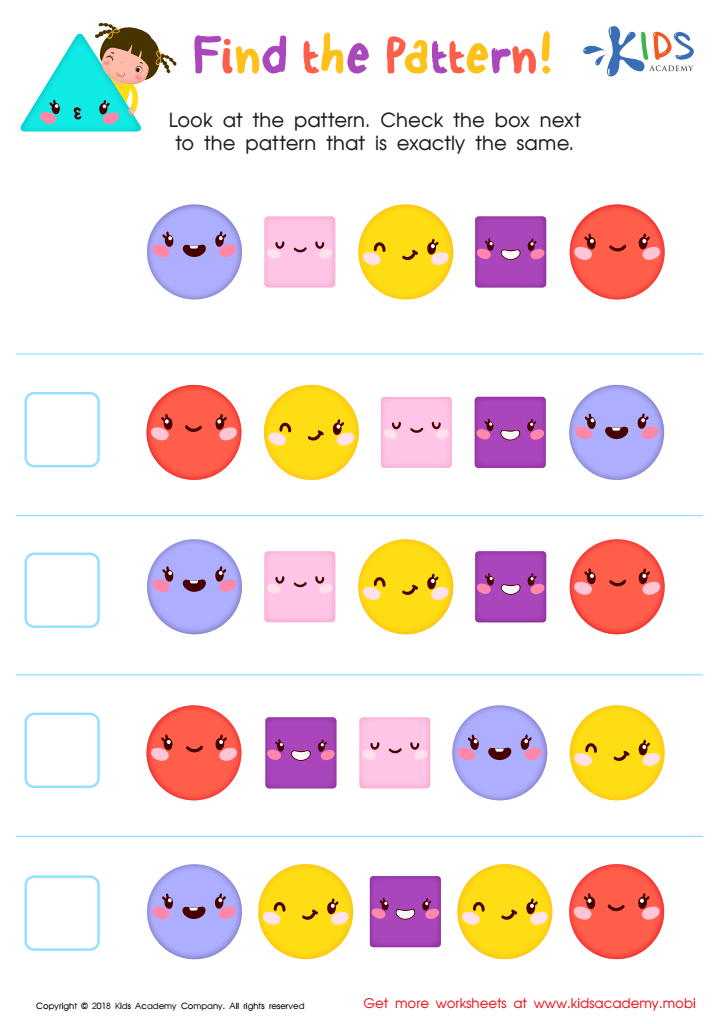
Find the Pattern Worksheet
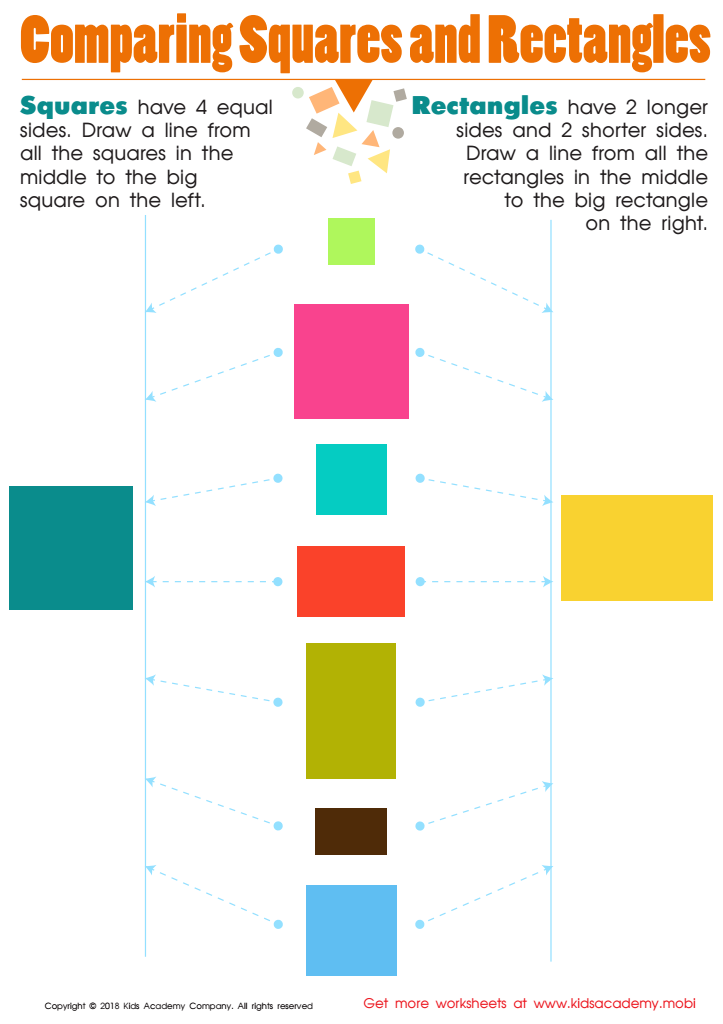
Comparing Squares Rectangles Worksheet
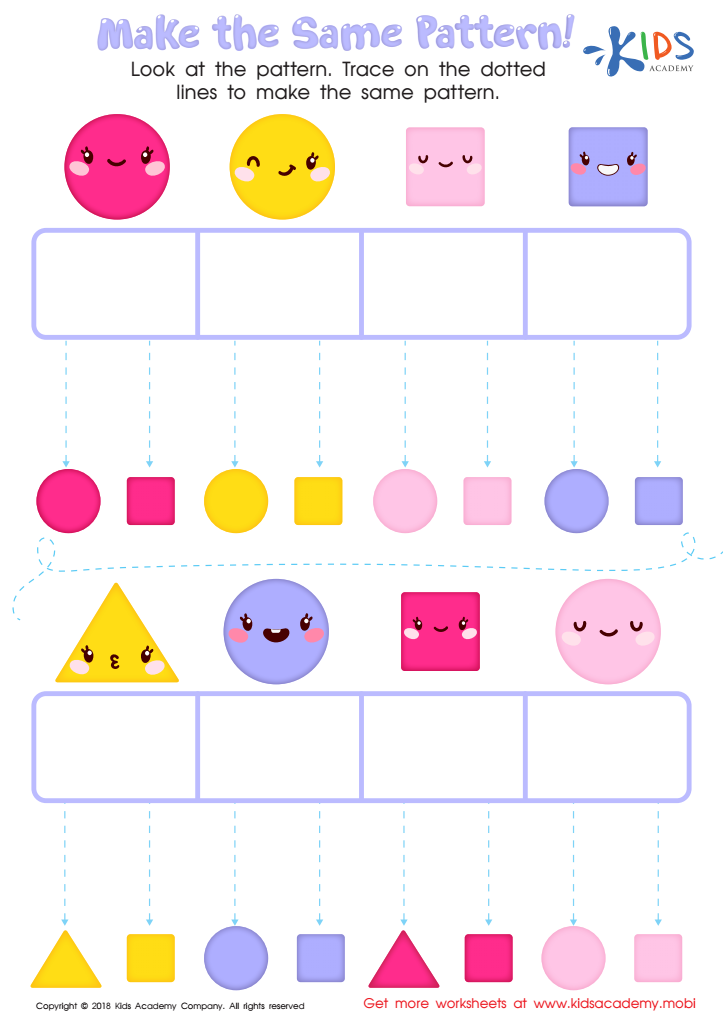
Make the Same Pattern Worksheet
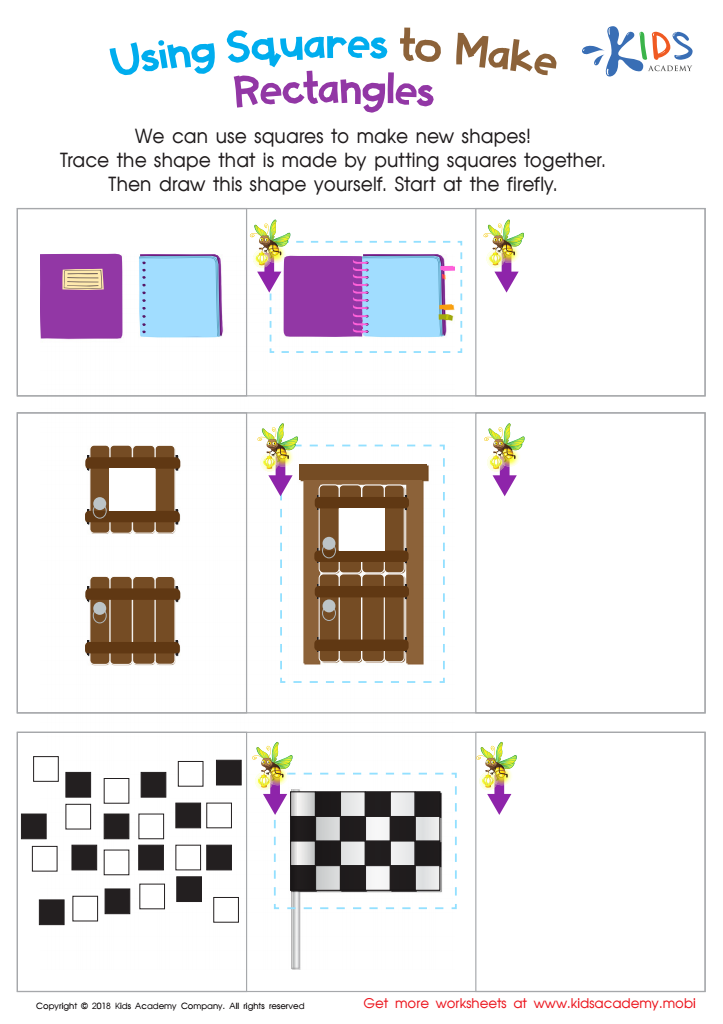
Using Squares to Make Rectangles Worksheet








Critical thinking about 2D shapes is essential for young learners aged 5-9 as it lays the foundation for geometric understanding and enhances problem-solving skills. During these formative years, children are developing cognitive skills that will support future learning in math, science, and beyond. Engaging with 2D shapes allows children to explore concepts such as symmetry, patterns, and spatial reasoning—skills that are integral to more complex mathematical topics later in their education.
Moreover, focusing on critical thinking encourages children to ask questions, make observations, and draw conclusions based on their experiences with shapes, fostering a mindset of inquiry and curiosity. This type of engagement not only enhances their ability to analyze and synthesize information but also boosts creativity when they begin to see shapes in a myriad of contexts, such as art and design.
Additionally, when parents and teachers prioritize critical thinking, they create an environment where collaboration and communication flourish. Children learn to share their thoughts, debate ideas, and learn from each other, preparing them for teamwork in their future endeavors. Ultimately, nurturing these abilities at a young age equips children with essential skills for lifelong learning, helping them to become confident, innovative thinkers.