Visual discrimination 2D Shapes Worksheets for Ages 5-9
5 filtered results
-
From - To
Enhance your child's visual discrimination skills with our engaging 2D Shapes Worksheets, designed for ages 5-9. These educational worksheets help young learners identify, differentiate, and classify various 2D shapes, such as circles, squares, triangles, and more. Each activity encourages critical thinking and sharpens attention to detail, supporting foundational math and geometry knowledge. Perfect for both classroom and home use, our visually appealing worksheets make learning fun and effective. Foster a love for shapes and boost your child's cognitive development with Kids Academy's expertly crafted resources. Download now and watch your child thrive!
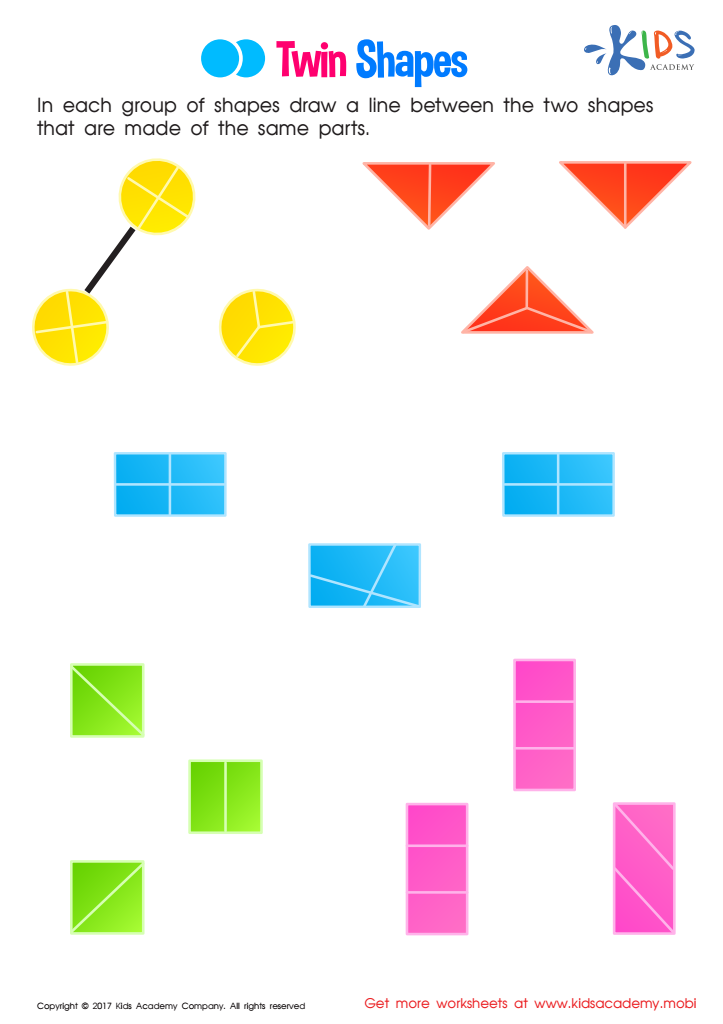
Twin Shapes Worksheet
 Assign to My Students











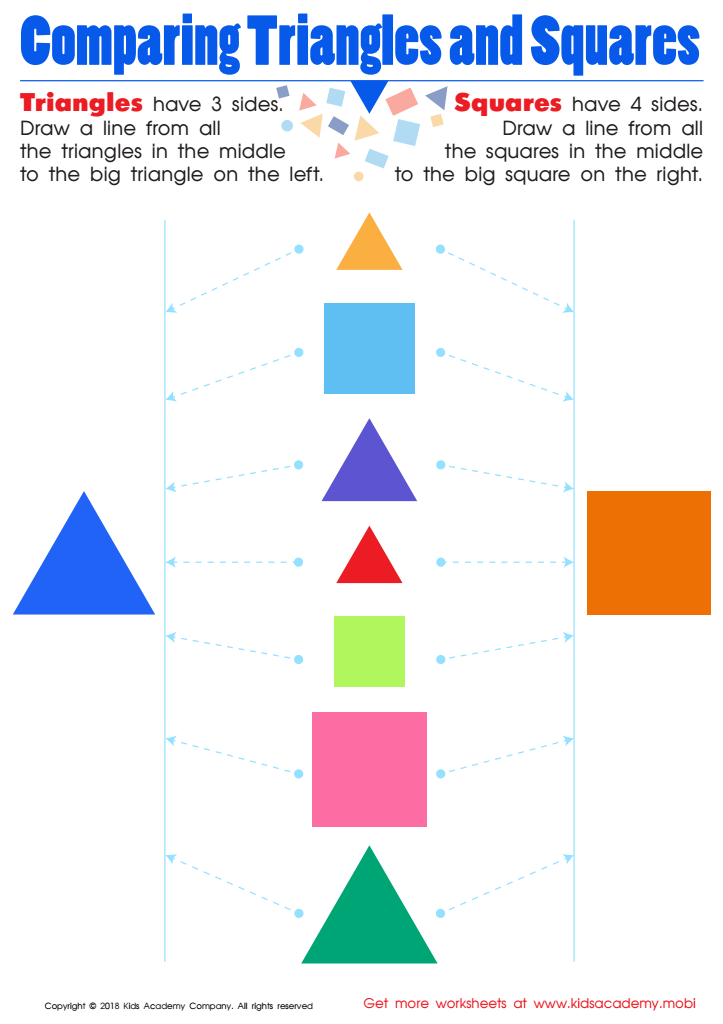
Comparing Triangles Squares Worksheet
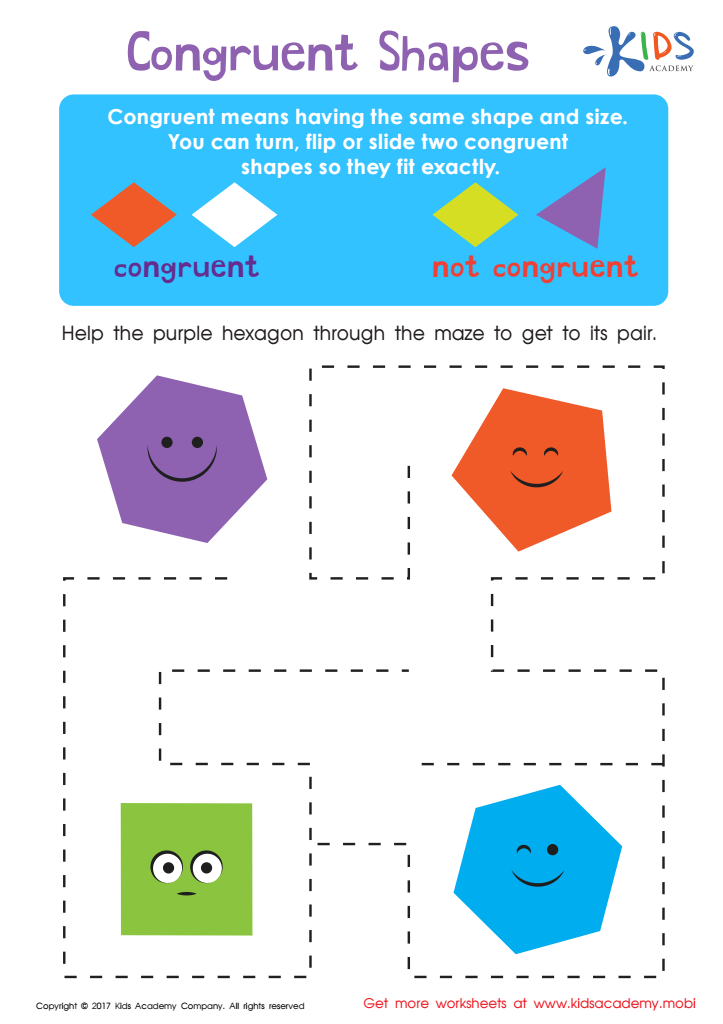
Congruent Shapes Worksheet
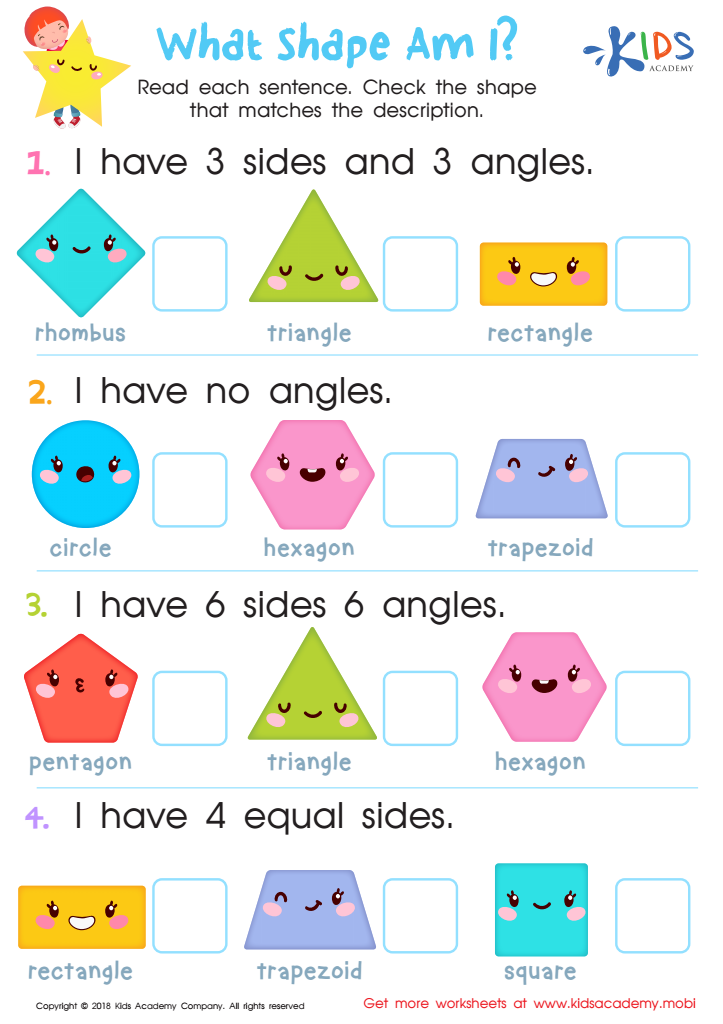
What Shape Am I? Worksheet
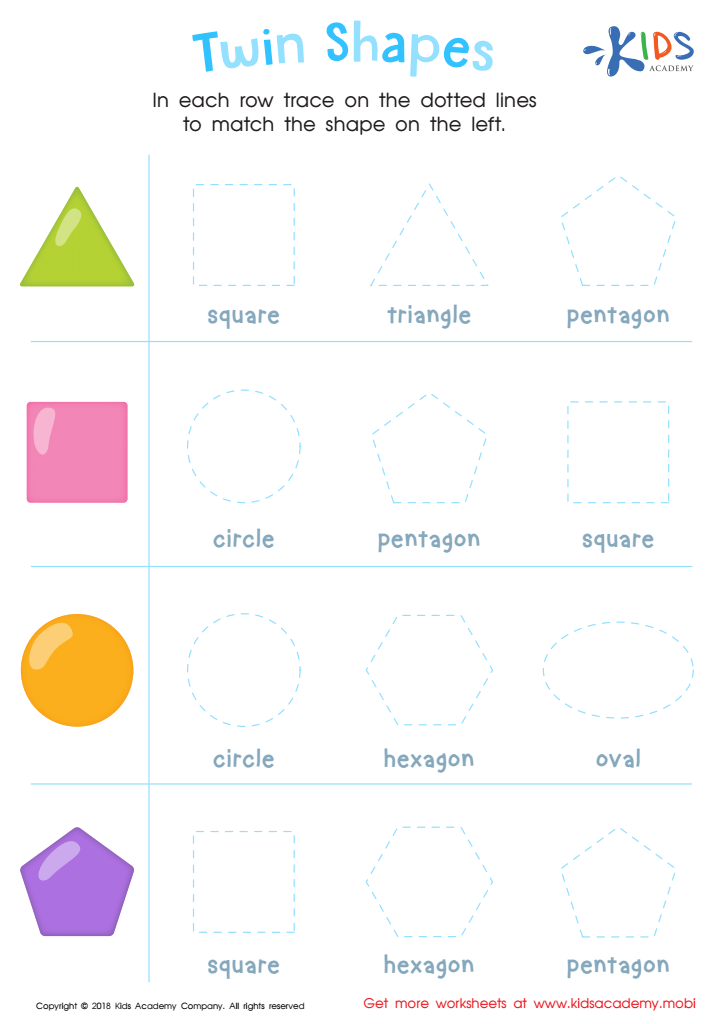
Twin Shapes Dot-to-Dot Worksheet








Visual discrimination is a crucial skill for children aged 5-9 and involves the ability to detect differences and similarities in shapes, symbols, and objects. Developing visual discrimination skills through 2D shapes is essential for several reasons.
Firstly, understanding 2D shapes forms the foundation for later geometric learning. Recognizing shapes involves observing their attributes like the number of sides and angles, which helps children develop critical thinking and categorization skills. These skills are beneficial not just for math, but also for reading, as letters can be viewed as shapes with distinguishing features.
Secondly, fostering visual discrimination enhances fine motor skills and hand-eye coordination, which are important for writing. When children learn to identify and draw different shapes with accuracy, it improves their ability to control a pencil and create clearer written work.
Moreover, visual discrimination is closely linked to reading comprehension. Being able to distinguish between similar-looking letters (like 'b' and 'd') aids in word recognition and reduces the likelihood of reading errors. Therefore, activities involving 2D shapes can unintentionally prepare children for better literacy outcomes.
In addition, this skill translates to everyday problem-solving and observational tasks. It helps children navigate and interpret the world around them more effectively. Parents and teachers investing time in activities that build visual discrimination skills are supporting a child's academic and everyday life aspirations.