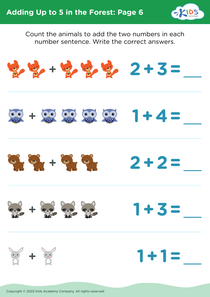
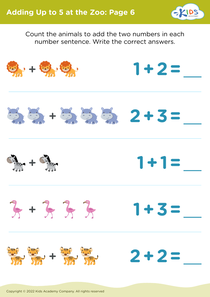
Visual Learning Adding in the Sea Worksheets for Ages 5-9
18 filtered results
-
From - To
Dive deep into fun with our "Visual Learning Adding in the Sea Worksheets" designed specifically for ages 5-9! Our captivating underwater math activities help young learners practice addition using vibrant sea-themed illustrations. Each worksheet, bursting with colorful marine life, reinforces visual learning through engaging exercises, tailored to promote critical thinking and counting skills. Ideal for both classroom and home environments, our worksheets make learning addition an exciting adventure. Inspire your child's math journey and foster a love for learning with our creative, easy-to-follow resources. Join the fun under the sea and watch your child's math confidence grow!
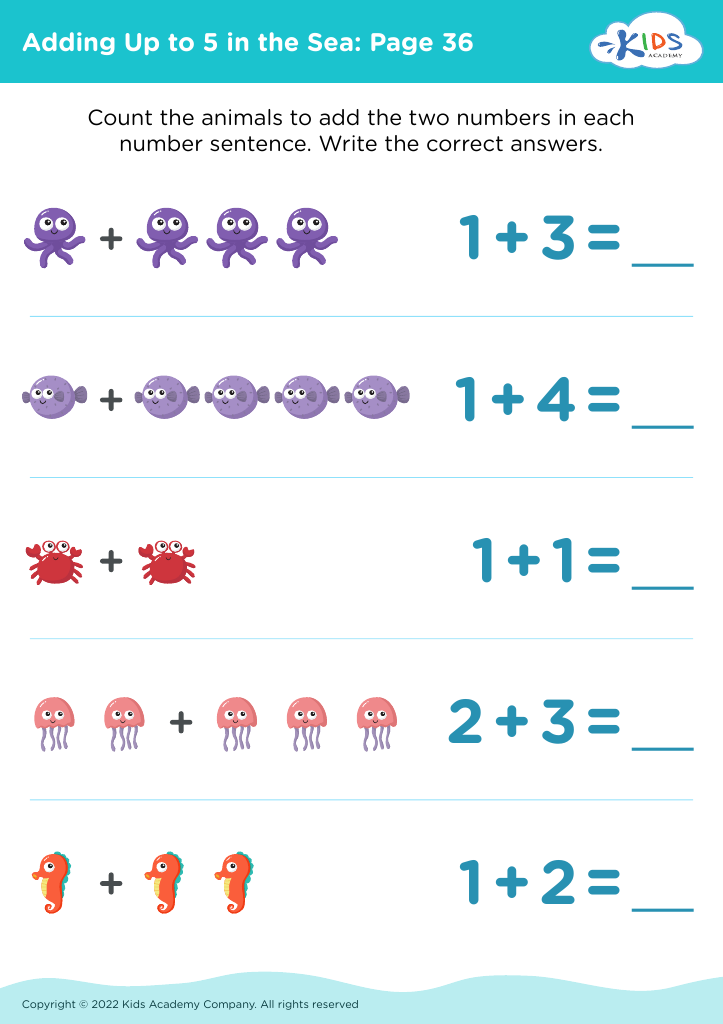
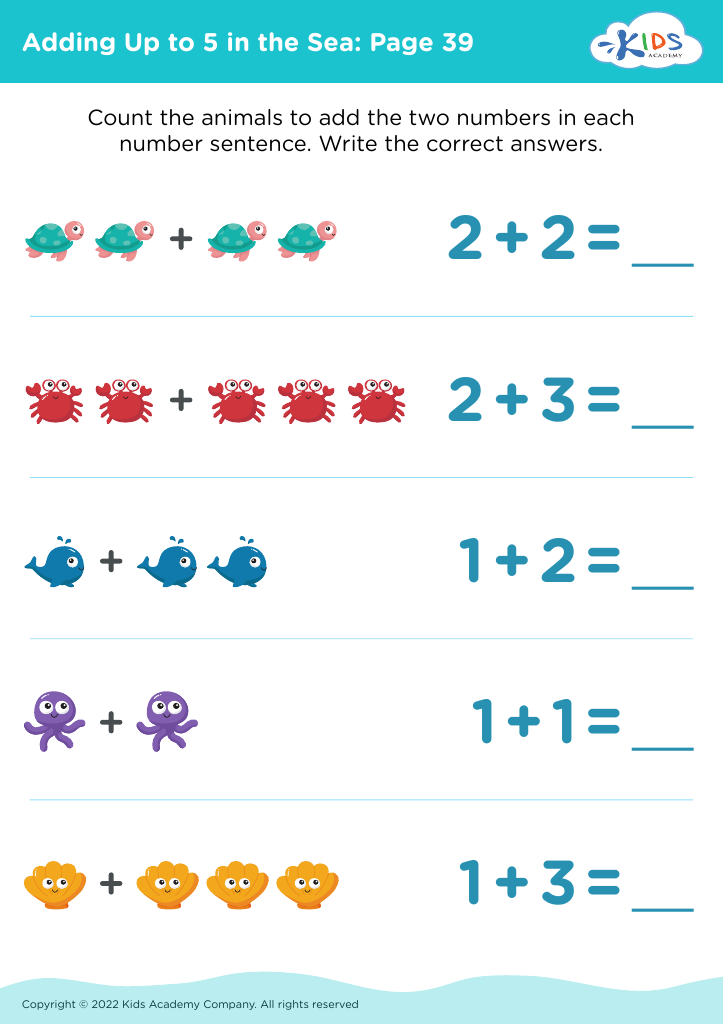
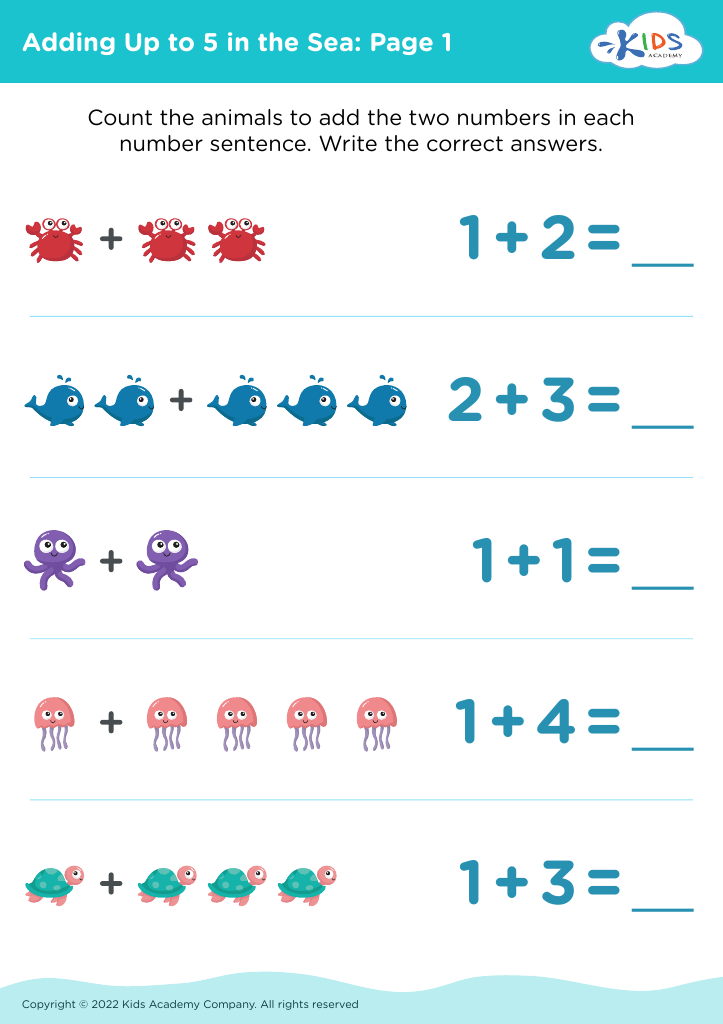
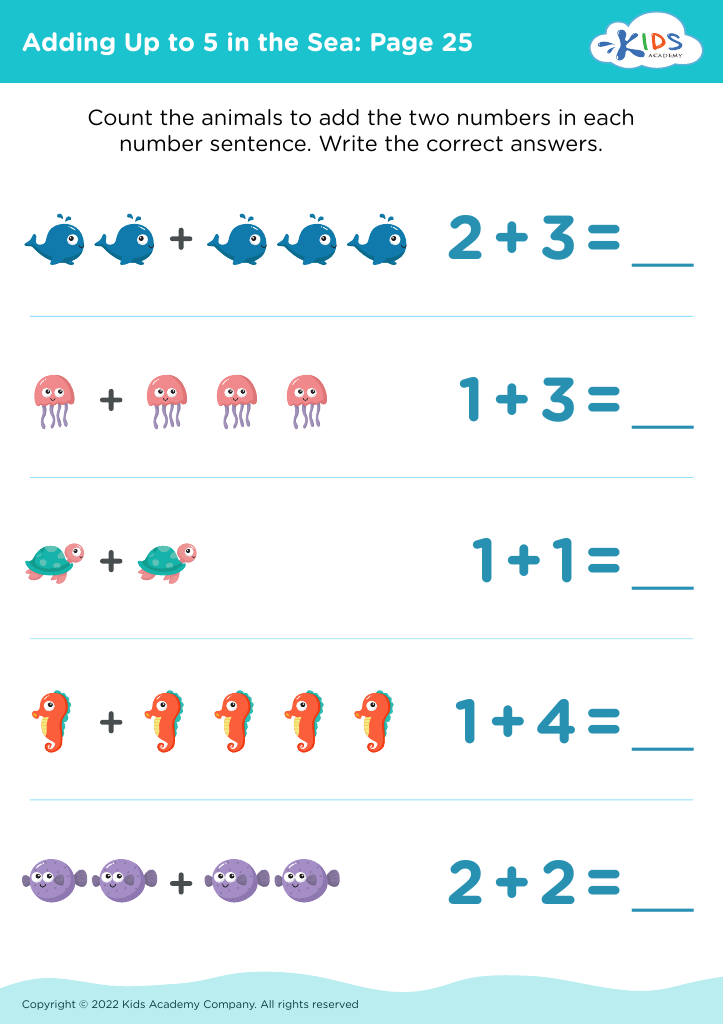
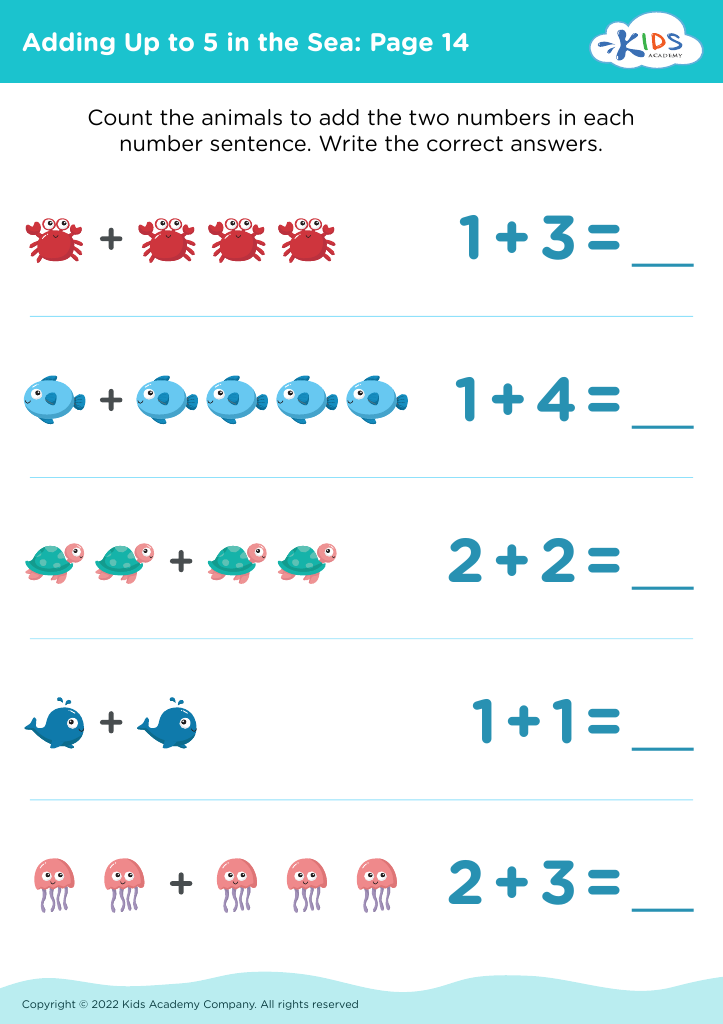
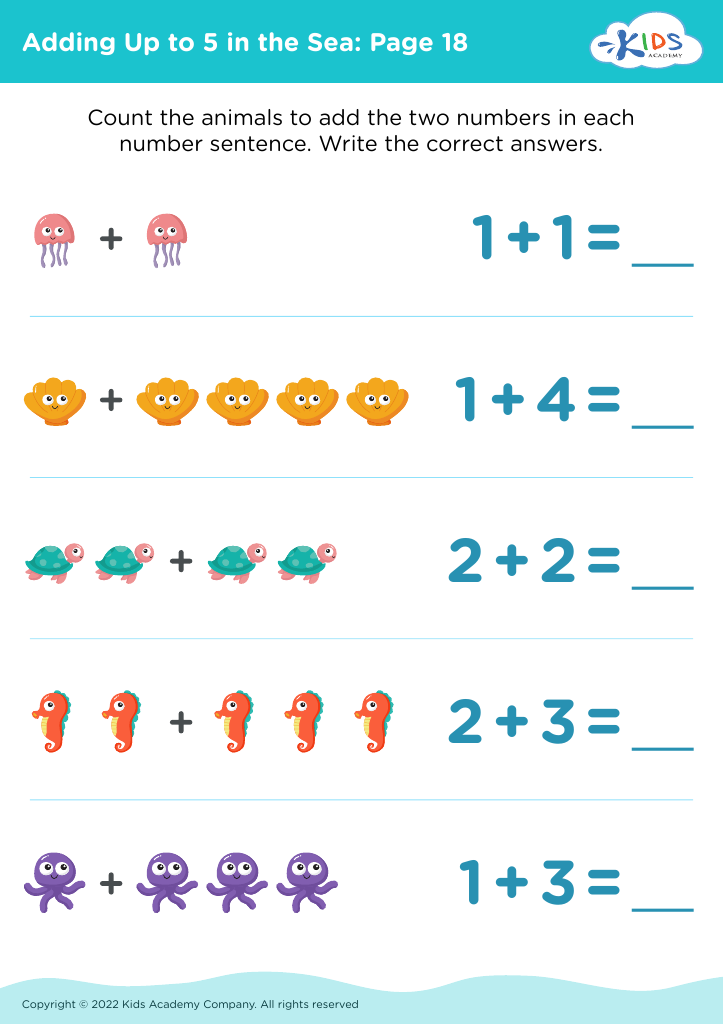
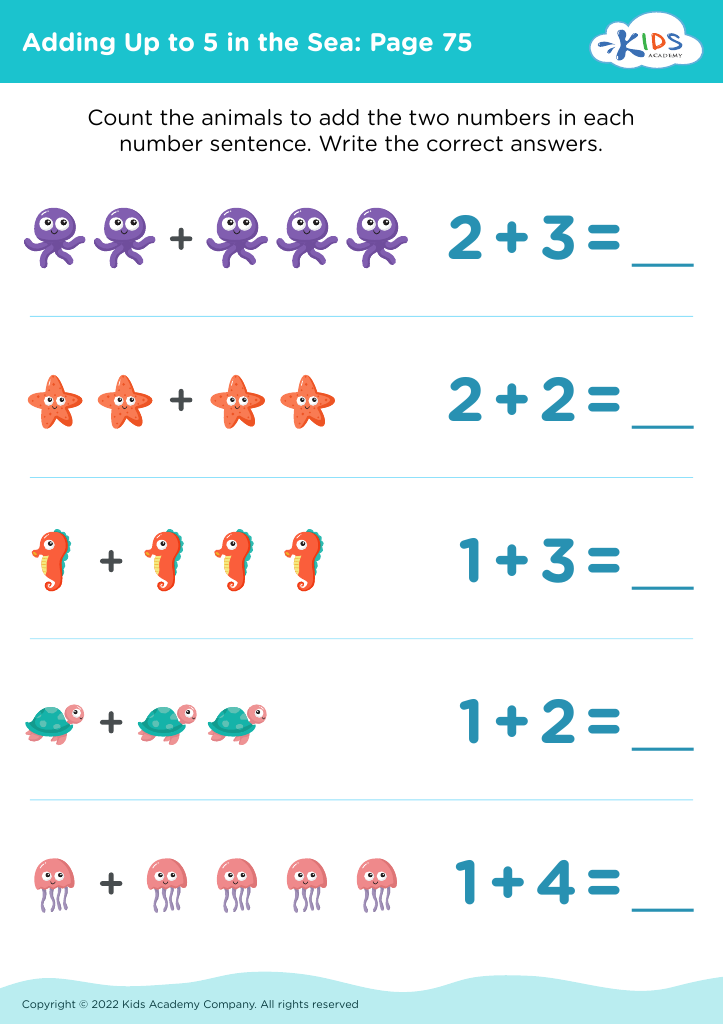
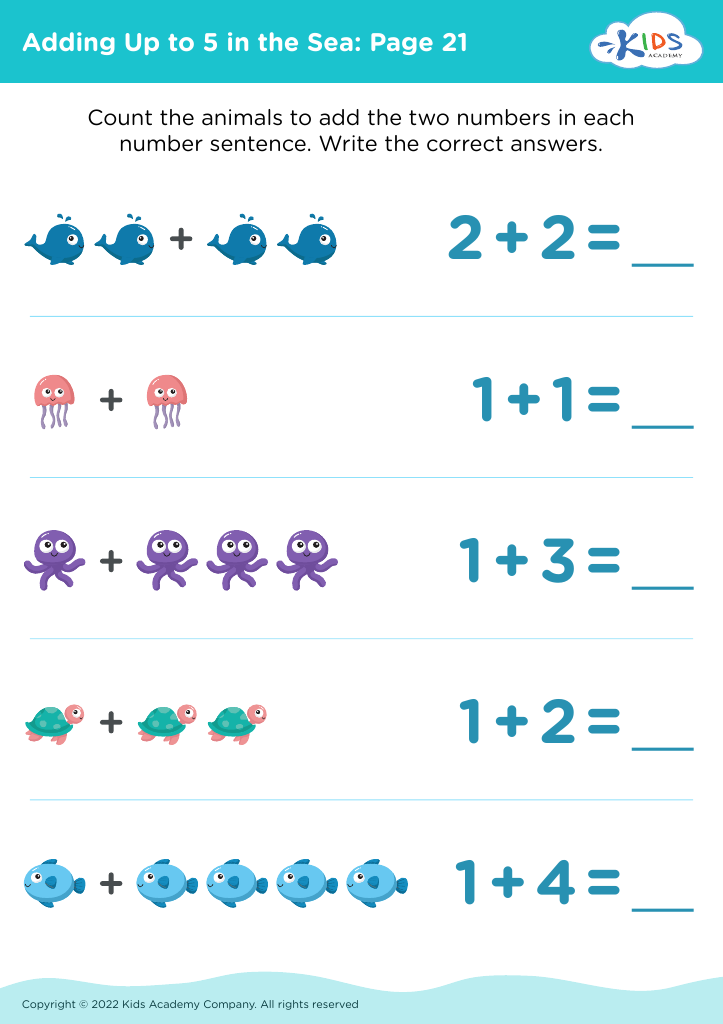
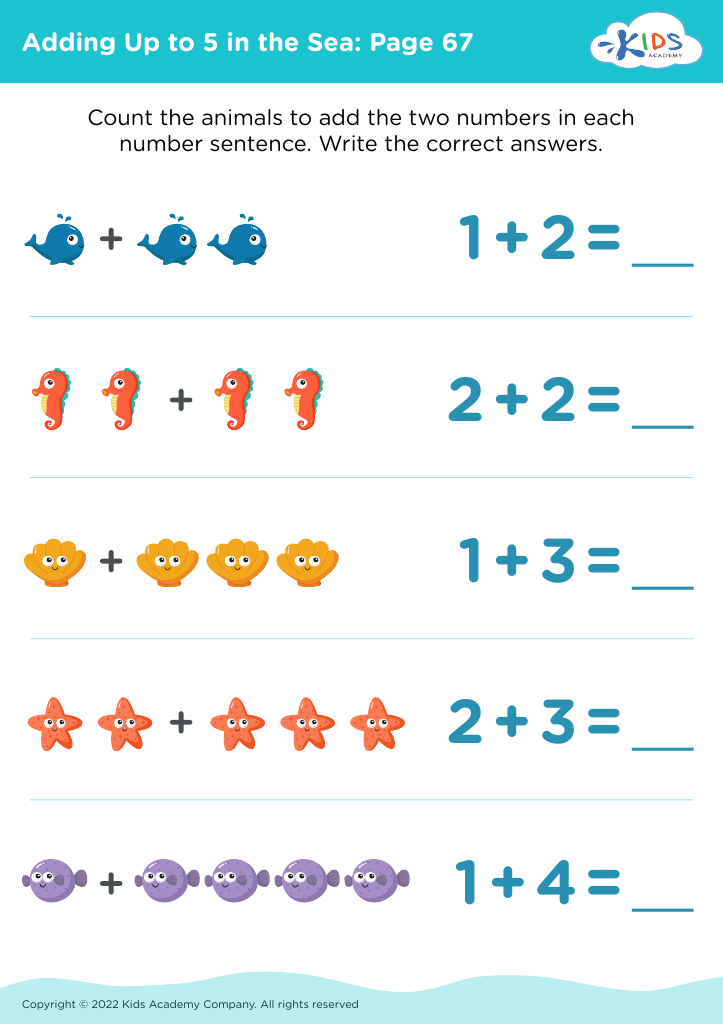
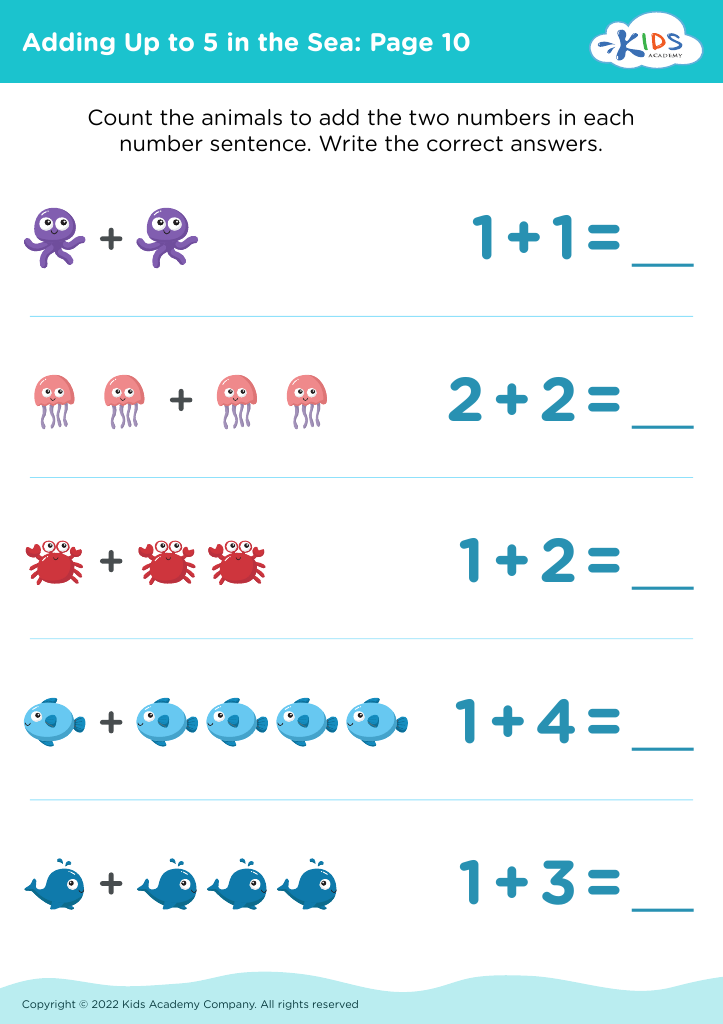
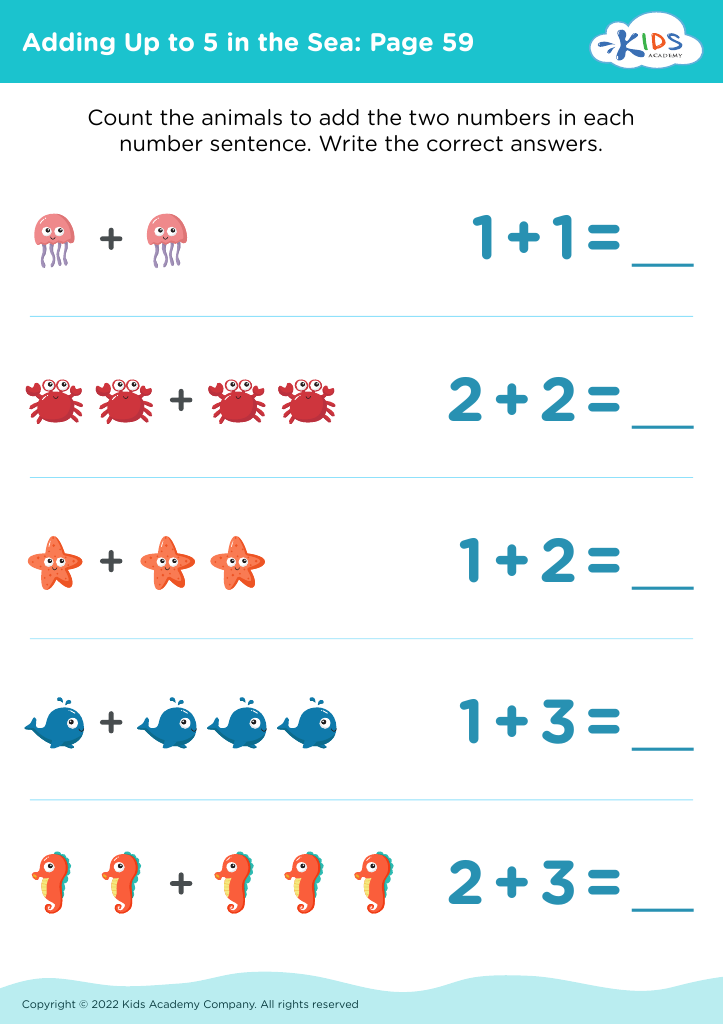
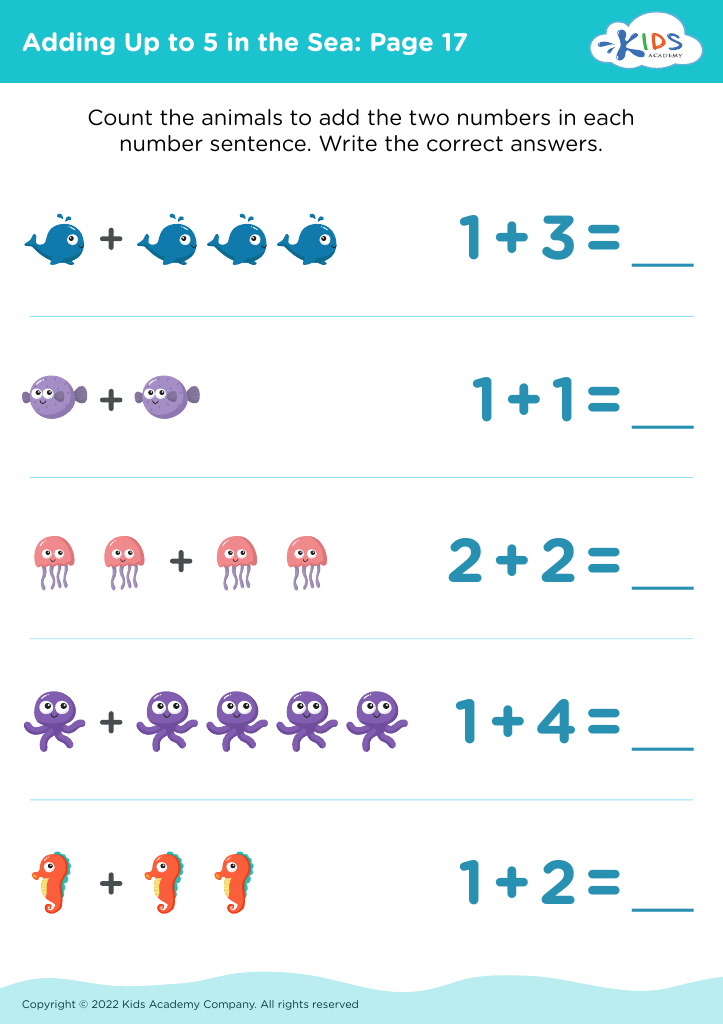
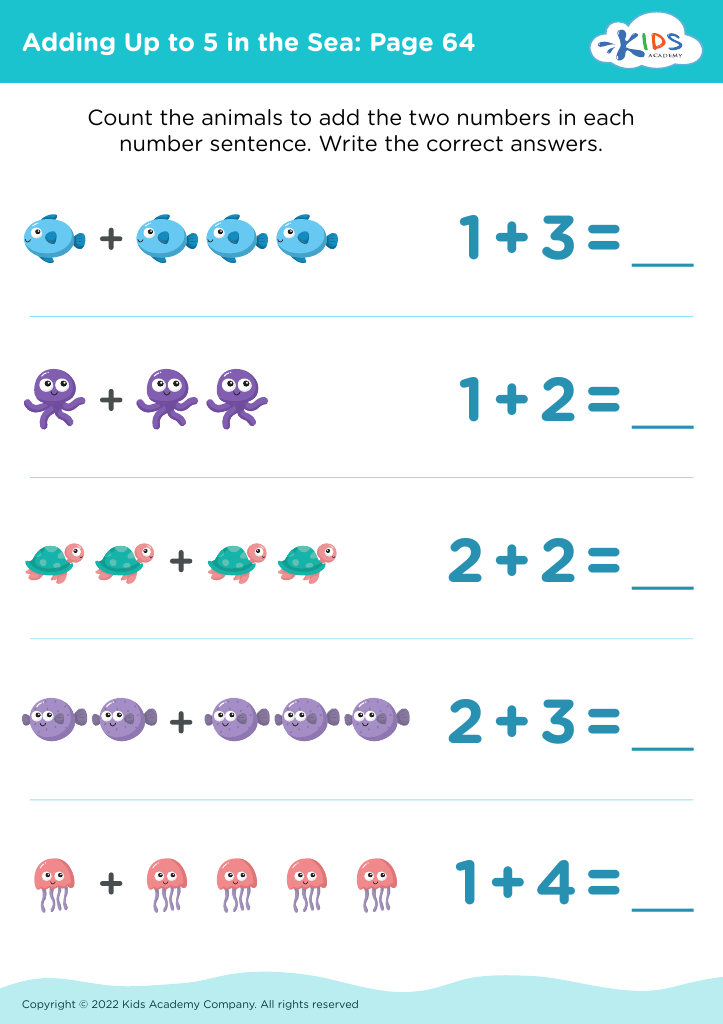
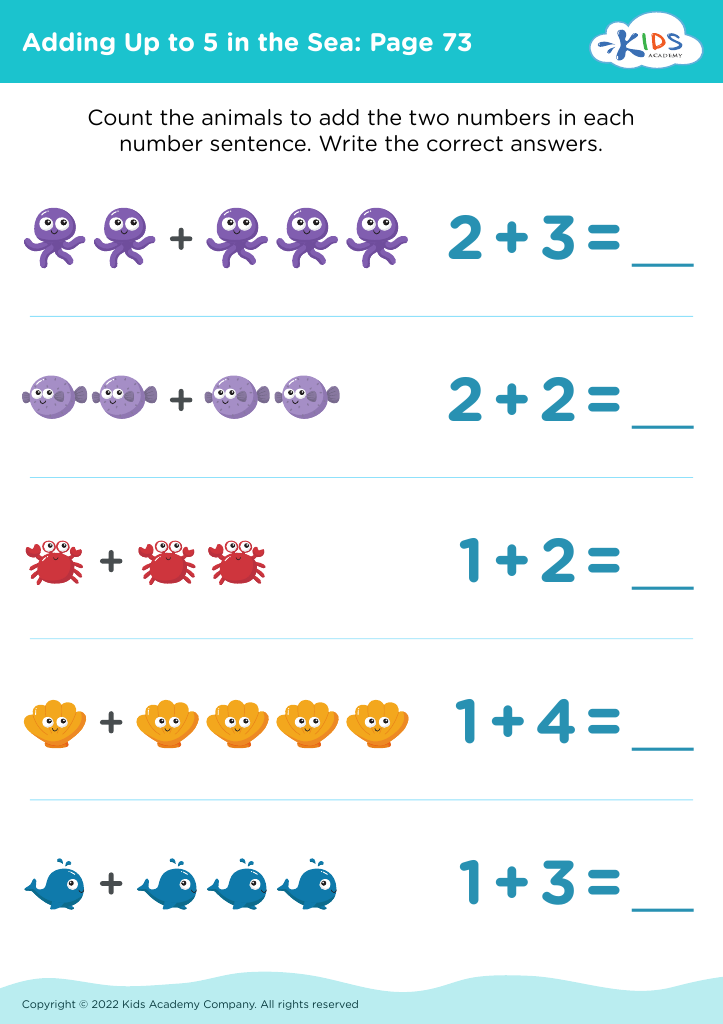
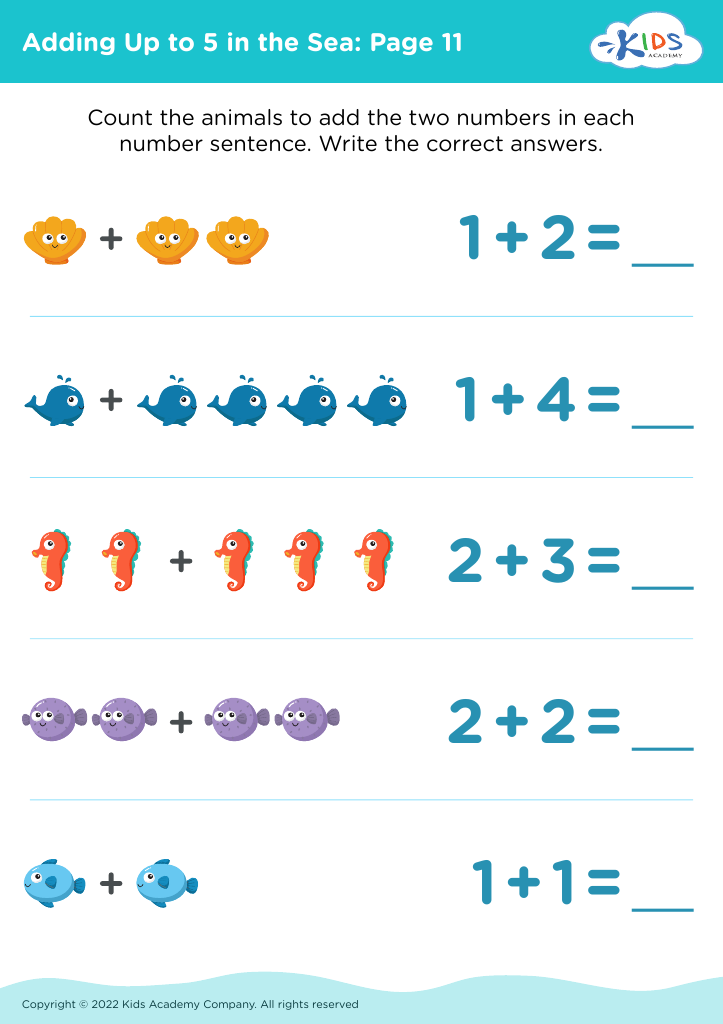
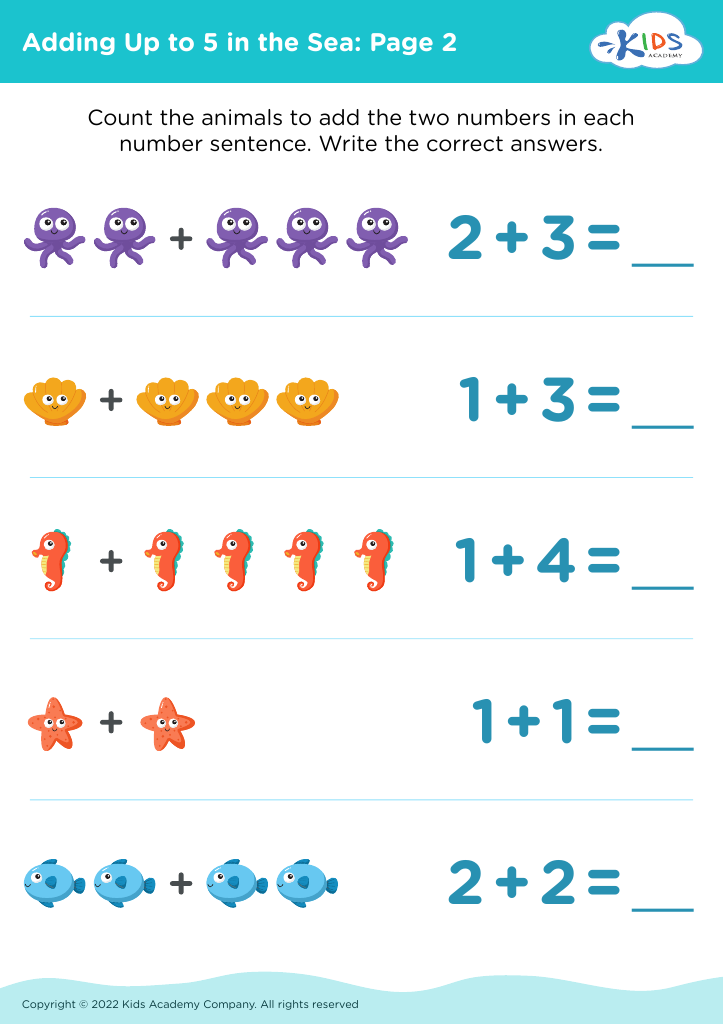
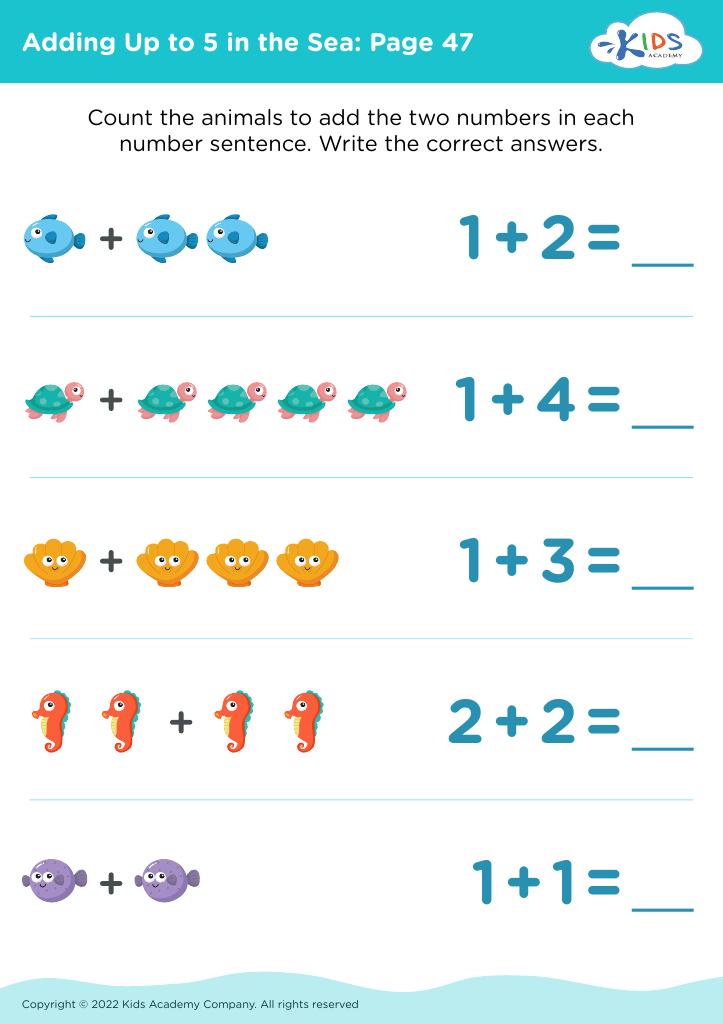
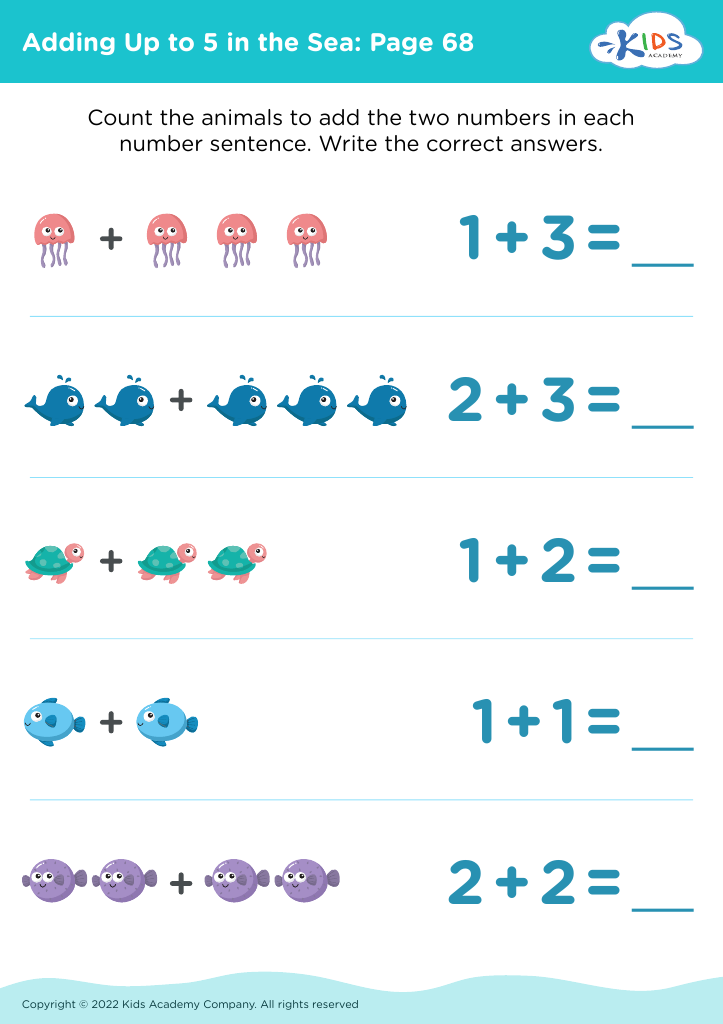



Visual learning, especially through thematic activities like "Adding in the Sea," is transformative for young children aged 5-9, providing a robust foundation for future academic success and cognitive growth. Harnessing visuals enchants young minds, making abstract concepts like addition tangible and memorable. Visual aids, such as colorful ocean-themed graphics, engage children, enhancing focus and maintaining their enthusiasm for learning.
When children see playful dolphins or vibrant fish that represent numbers, complex mathematical ideas become relatable, fostering early numeracy skills in a gentle, enjoyable manner. Picture-based problems encourage children to visualize solutions, enhancing spatial awareness and critical thinking. This method resonates particularly well with visual learners, who comprise a significant portion of early elementary students.
Furthermore, visual learning strengthens comprehension by allowing children to associate written symbols and numerical values with concrete images. It transcends linguistic barriers, assisting those still mastering reading or ELL students to grasp addition concepts effectively.
Integrating this mode within educational practices fosters a multi-sensory learning environment, catering to diverse learning styles. It cultivates a love for learning, while building confidence and independence in problem-solving. By supporting "Adding in the Sea" and similar strategies, parents and teachers play a vital role in nurturing a future generation of enthusiastic, capable learners eager to explore new domains with curiosity and joy.