Counting proficiency Addition & Subtraction Worksheets for Ages 5-9
11 filtered results
-
From - To
Enhance your child's counting proficiency with our engaging addition and subtraction worksheets, designed specifically for ages 5-9. These interactive resources focus on developing essential math skills while making learning fun and accessible. Each worksheet progressively builds your child's understanding of basic arithmetic through playful exercises, helping them master numbers and improve their confidence. From simple sums to fun challenges, our worksheets are perfect for home or classroom use. Browse our wide variety of themed activities that make counting and calculation enjoyable. Equip your young learner with a strong foundation in math and watch their skills flourish!
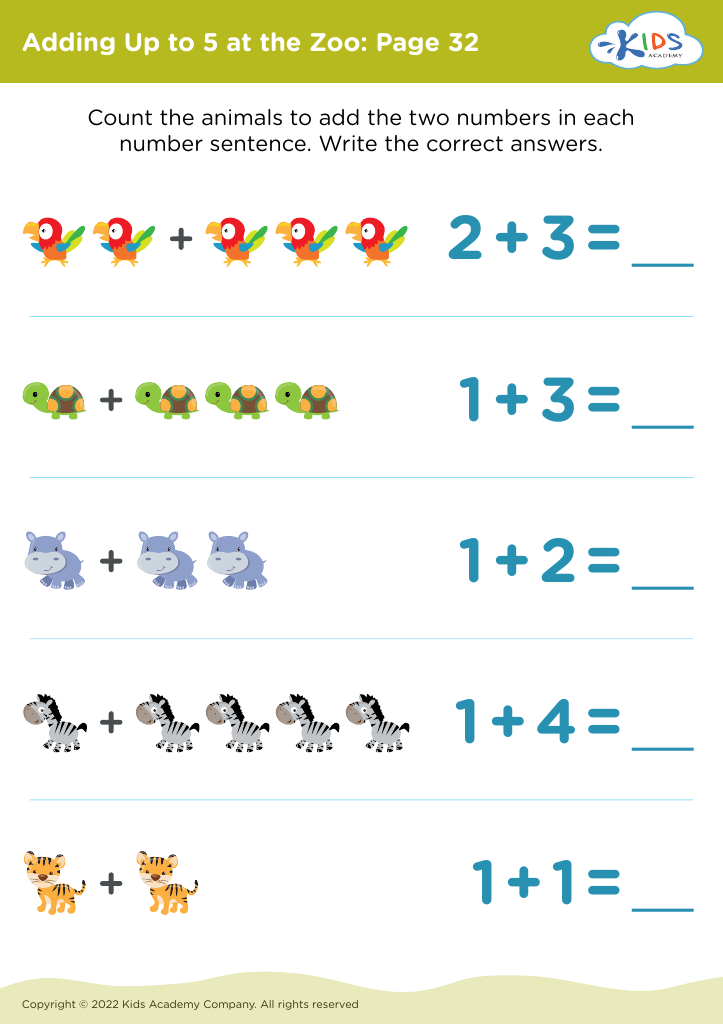
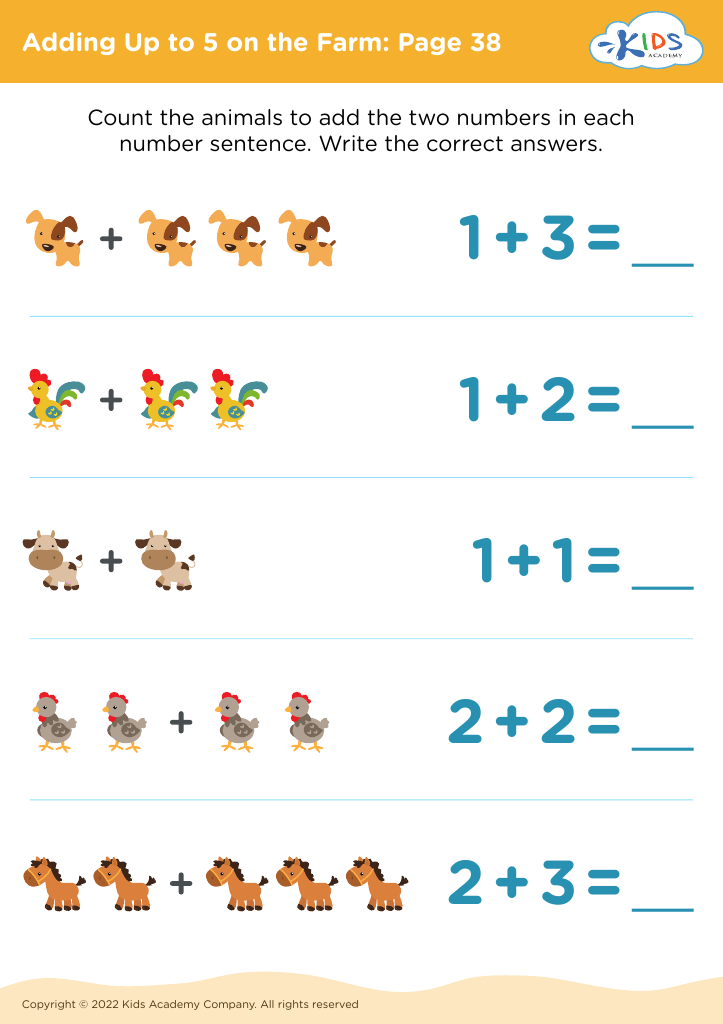
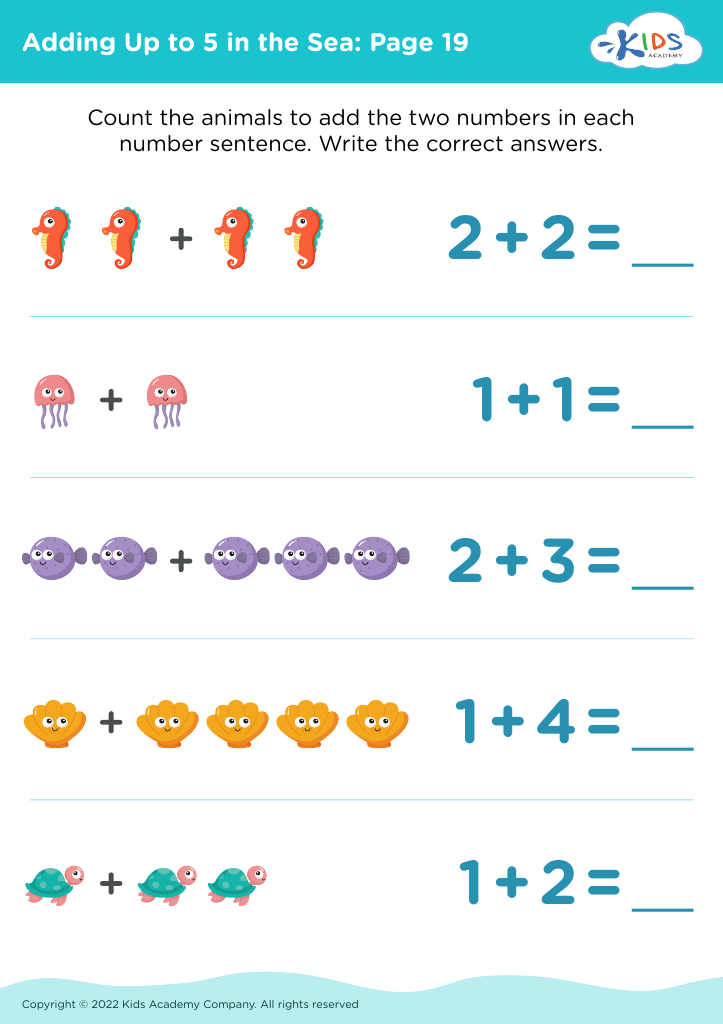
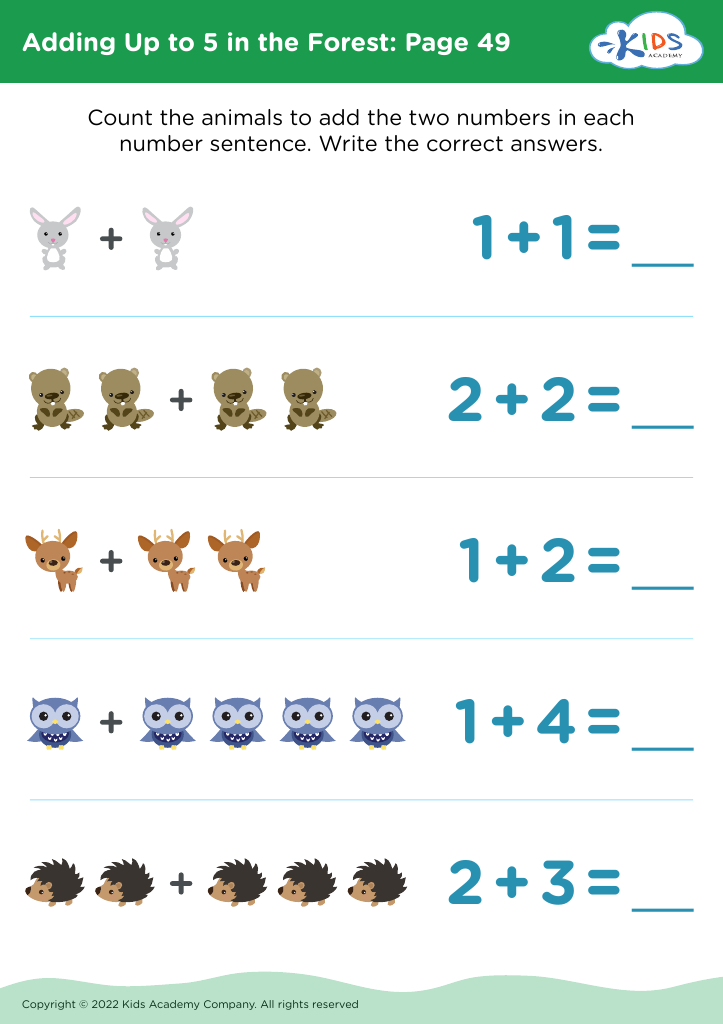
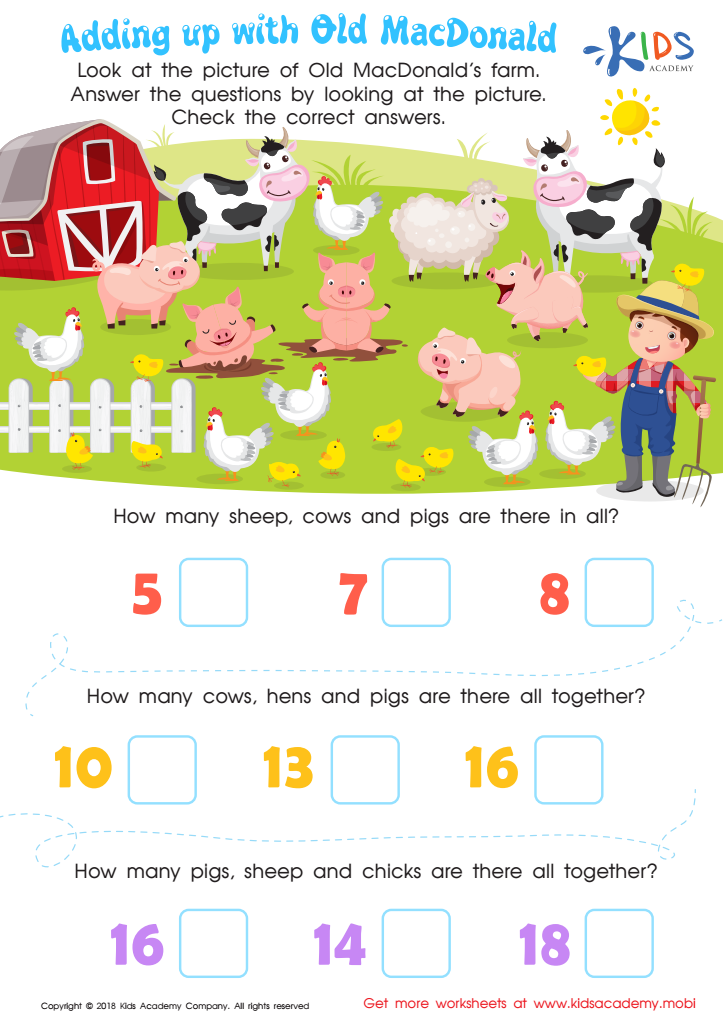
Adding Up with Old MacDonald Worksheet
 Assign to My Students
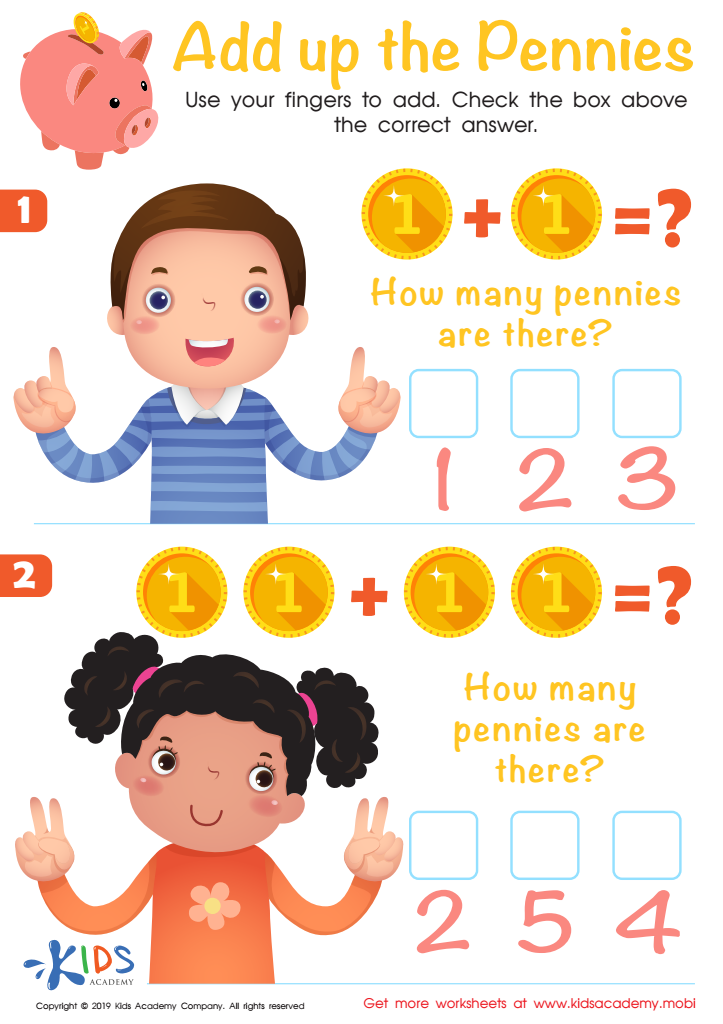
Add up the Pennies Worksheet
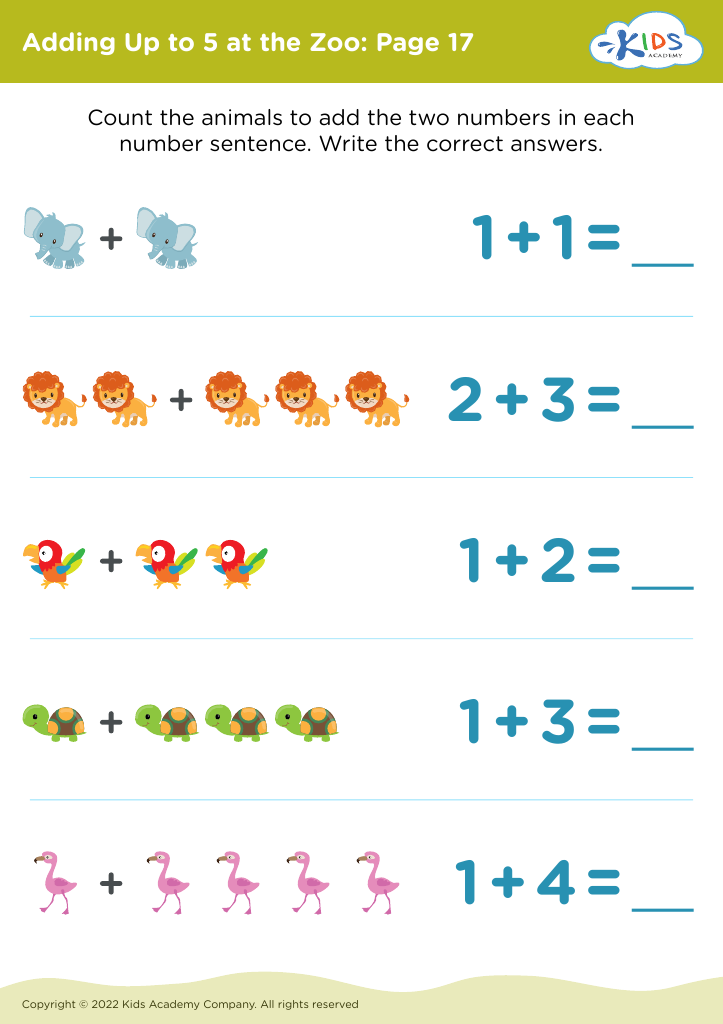
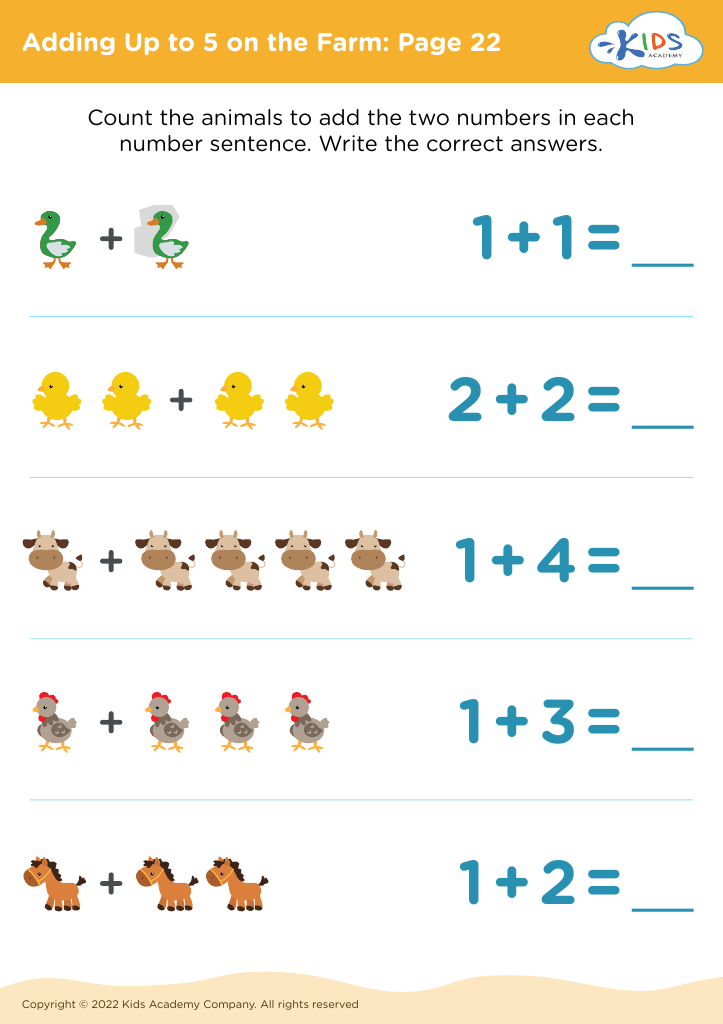
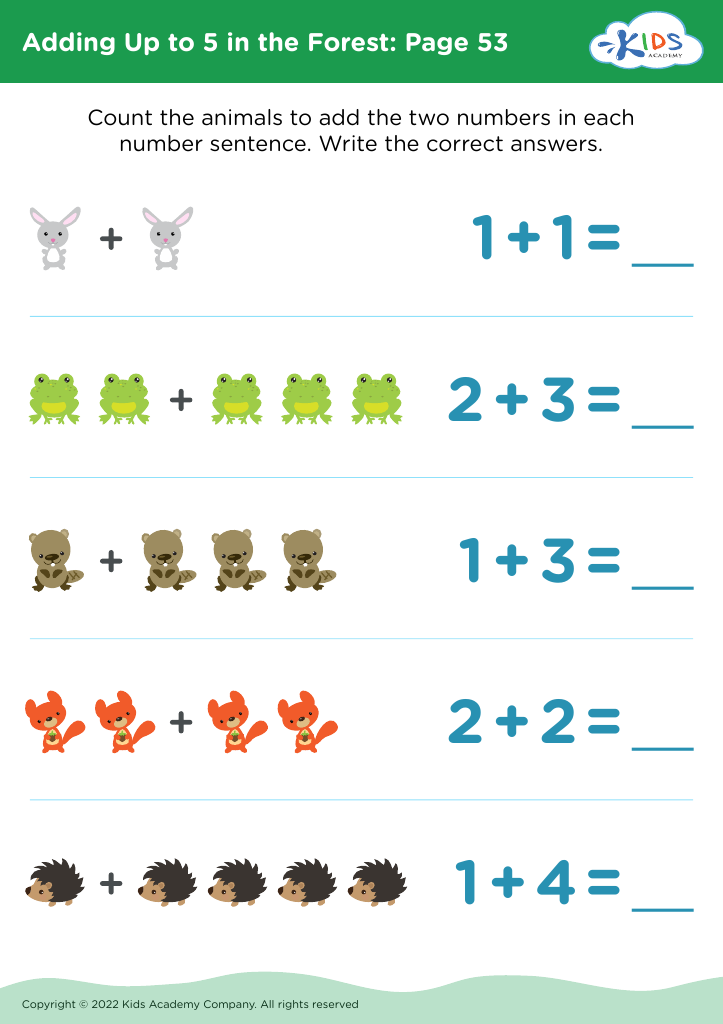
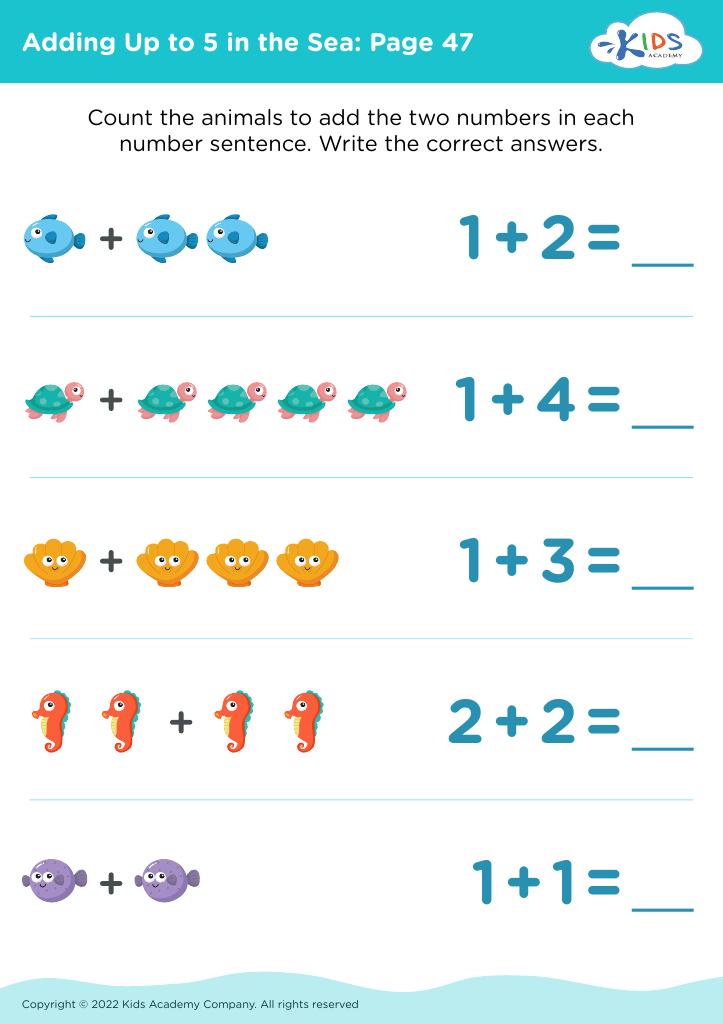
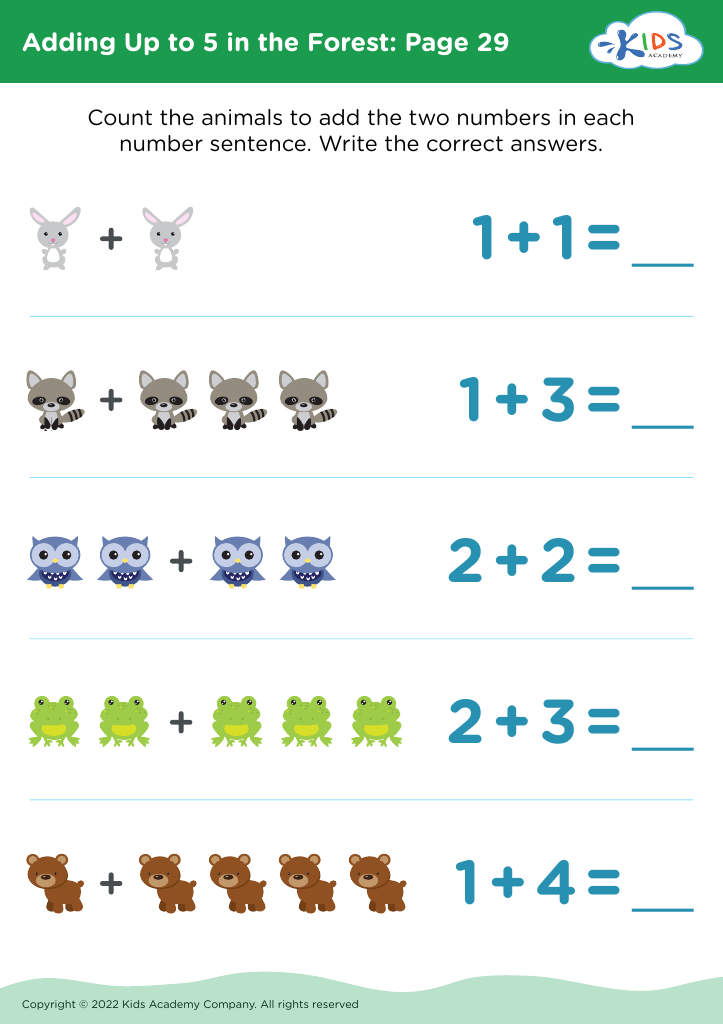








Counting proficiency in addition and subtraction is crucial for children aged 5-9, and both parents and teachers should prioritize this foundational skill. Strong counting skills form the backbone of mathematical understanding, empowering children to solve problems, comprehend relationships between numbers, and grasp basic arithmetic concepts. Mastering counting not only enhances a child's ability to perform simple calculations but also builds confidence and fosters a love for mathematics.
Early proficiency in addition and subtraction aids cognitive development, contributing to critical thinking and logical reasoning skills. As students progress through their education, a solid foundation in these areas supports more complex mathematical concepts, such as multiplication, division, and fractions. Early struggles in math can lead to long-term anxiety and disengagement, making it imperative for parents and teachers to ensure that children receive the support they need.
Moreover, math skills are not just academic; they are essential for everyday life, from managing finances to solving practical problems. Parents and teachers can work together to create engaging, hands-on learning experiences that make counting and arithmetic fun, reinforcing the importance of these skills in a child's overall development. By prioritizing counting proficiency, adults can set the stage for future academic success and lifelong mathematical understanding.








