Unlock your child's potential with our "Enhance Number Recognition Addition & Subtraction Worksheets" tailored for ages 5-9! These engaging worksheets combine fun and learning, helping young learners recognize and understand numbers while mastering basic addition and subtraction. Each activity is designed to strengthen numerical skills through visual aids and interactive exercises, ensuring your child builds a solid foundation in mathematics. Perfect for home or classroom use, these worksheets cater to diverse learning styles, promoting confidence and self-esteem in young mathematicians. Download now and embark on an enriching educational adventure that enhances both number recognition and essential math operations!
Check out this FREE Trial Lesson on Addition & Subtraction for age 5-9!

My Family

Favorites
With answer key
Interactive
  • 5-9
  • Enhance number recognition
  • Addition & Subtraction
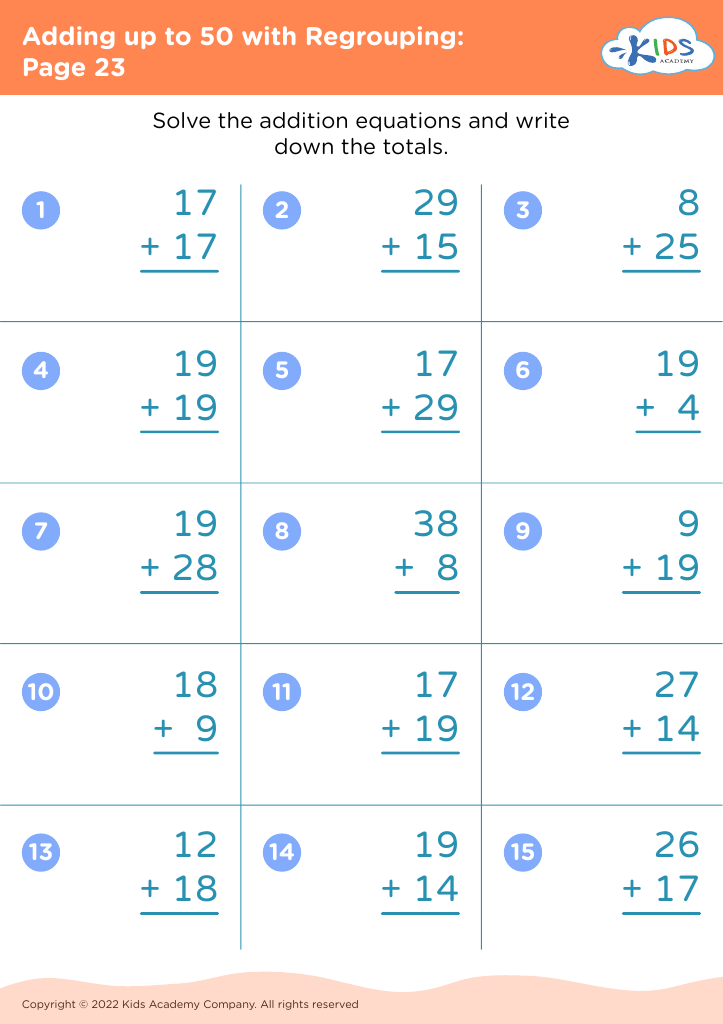
Adding up to 50 with Regrouping: Page 23
Worksheet
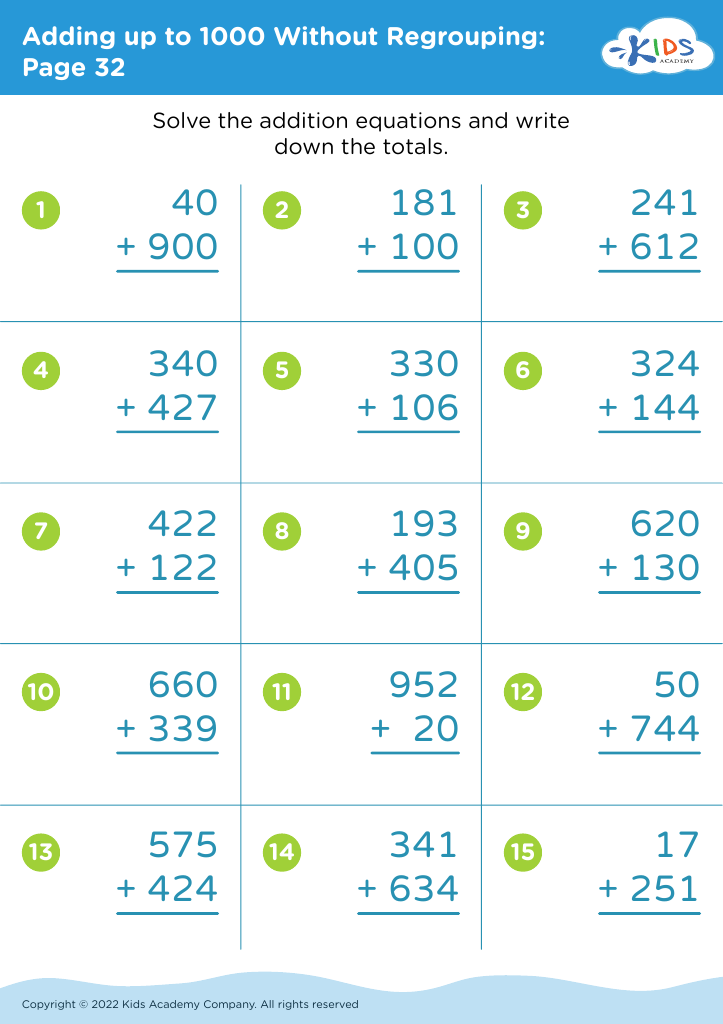
Adding up to 1000 Without Regrouping: Page 32
Worksheet
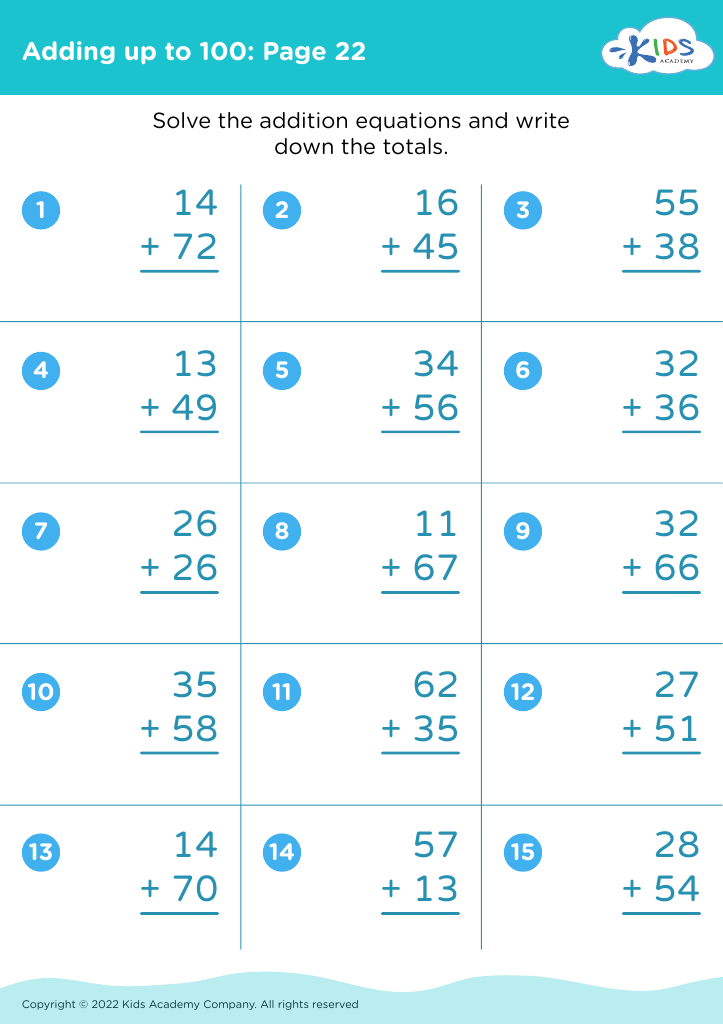
Adding up to 100: Page 22

Adding up to 100: Page 22

Adding up to 100: Page 22
Worksheet
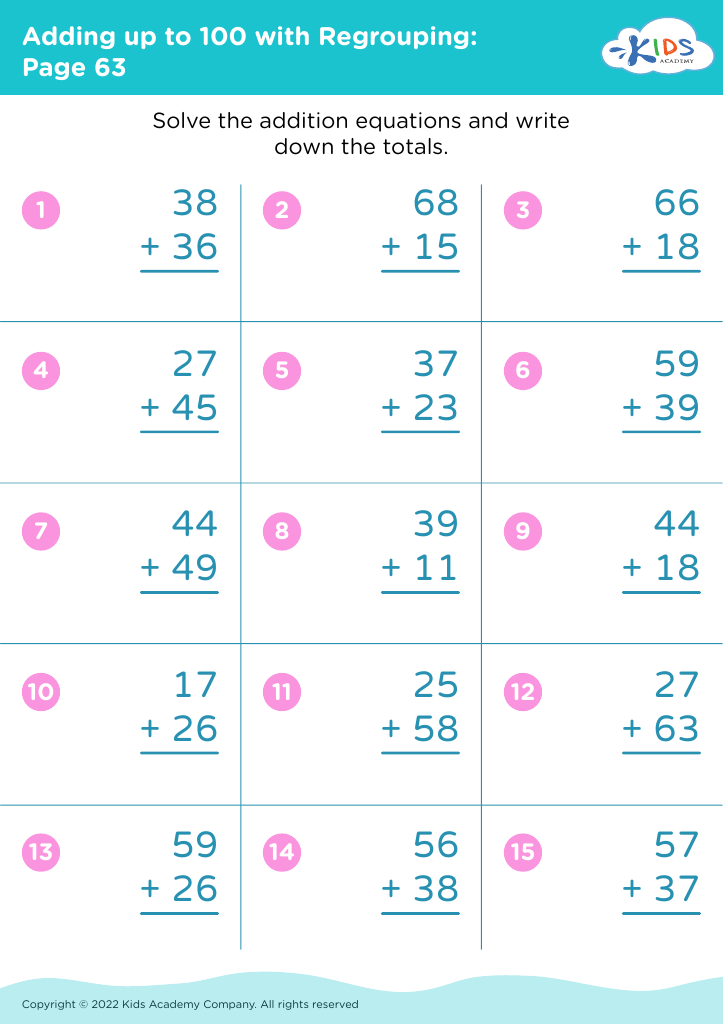
Adding up to 100 with Regrouping: Page 63
Worksheet
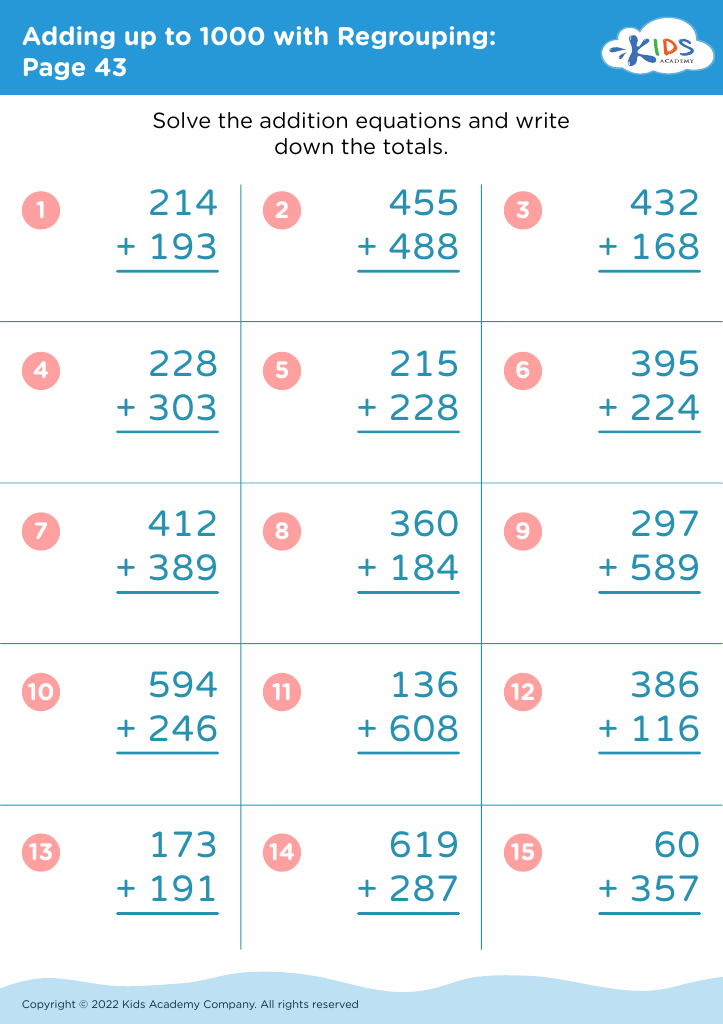
Adding up to 1000 with Regrouping: Page 43
Worksheet
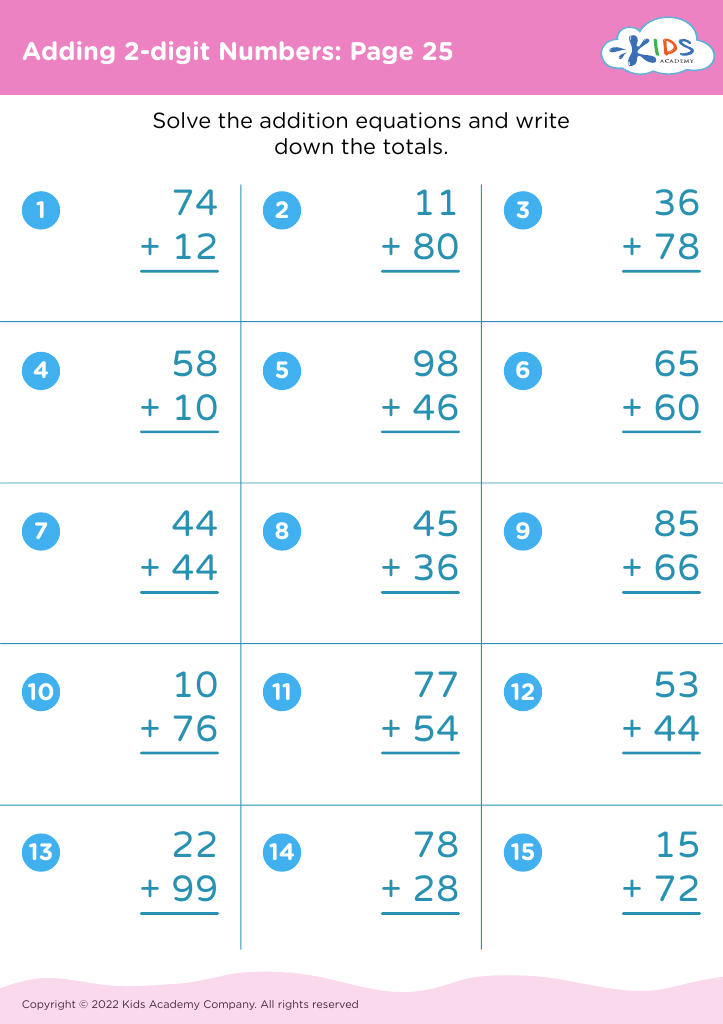
Adding 2-digit Numbers: Page 25

Adding 2-digit Numbers: Page 25

Adding 2-digit Numbers: Page 25
Worksheet
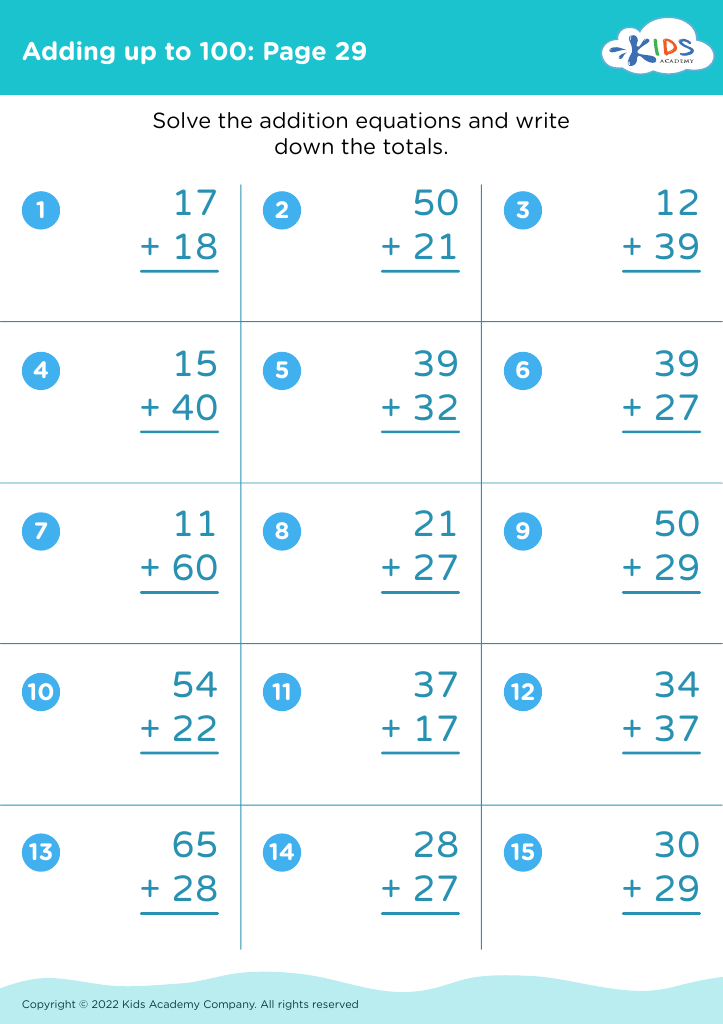
Adding up to 100: Page 29

Adding up to 100: Page 29

Adding up to 100: Page 29
Worksheet
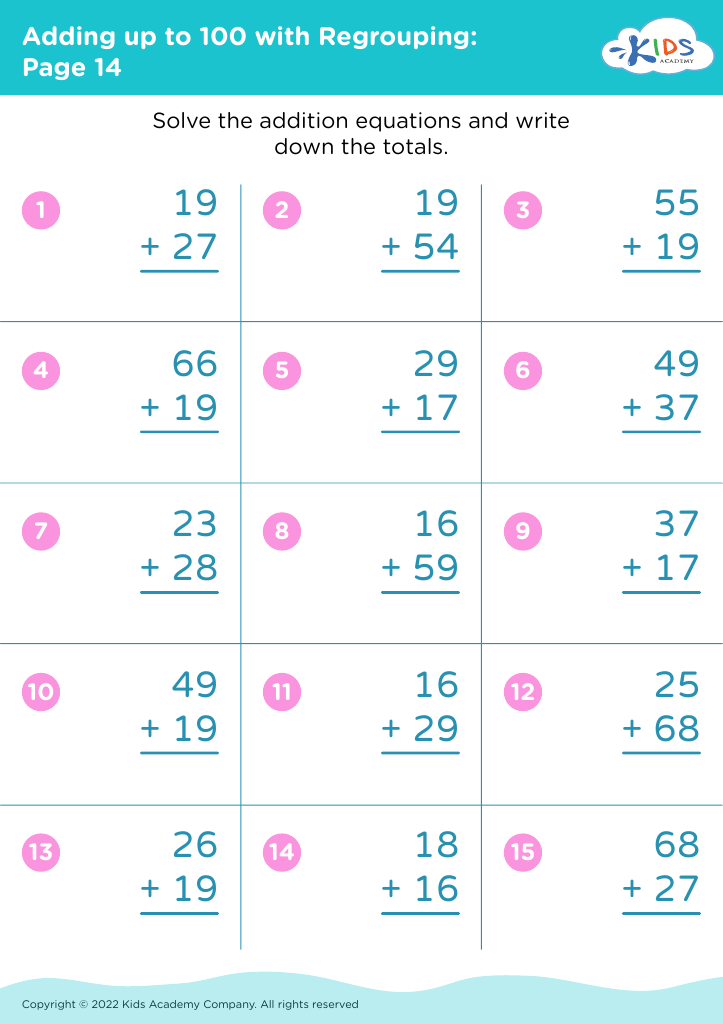
Adding up to 100 with Regrouping: Page 14
Worksheet
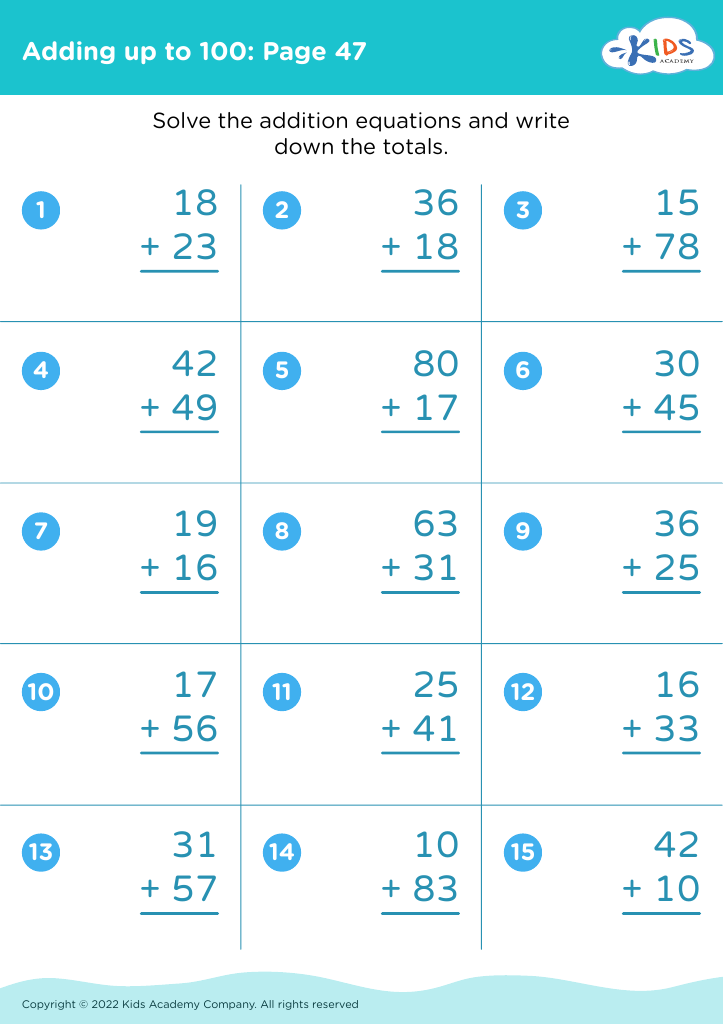
Adding up to 100: Page 47

Adding up to 100: Page 47

Adding up to 100: Page 47
Worksheet
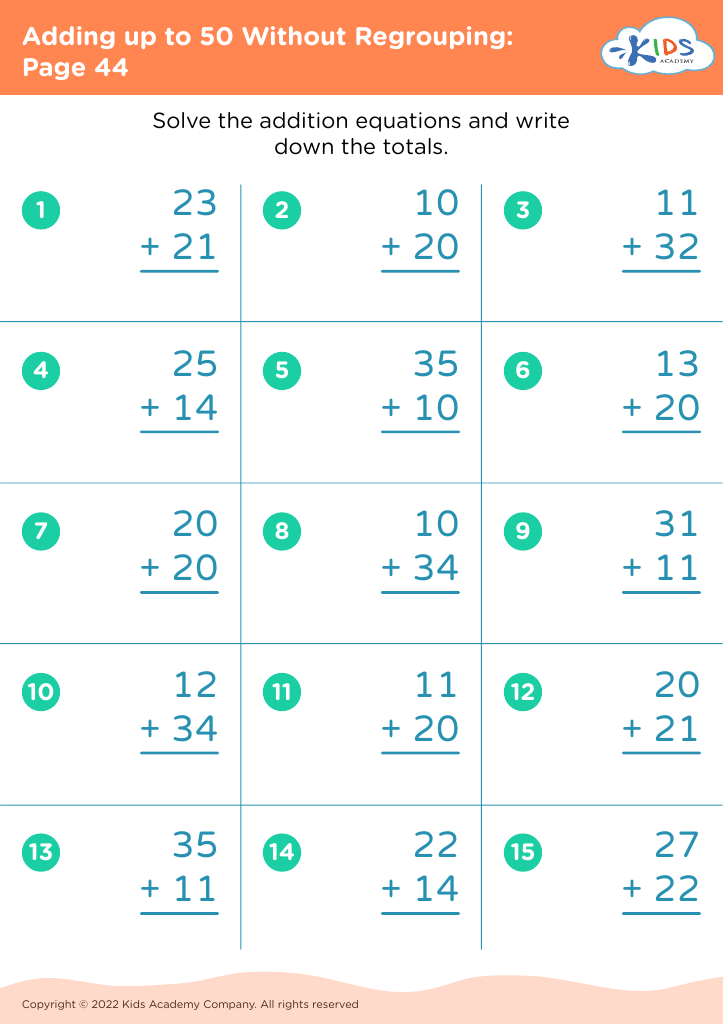
Adding up to 50 Without Regrouping: Page 44
Worksheet
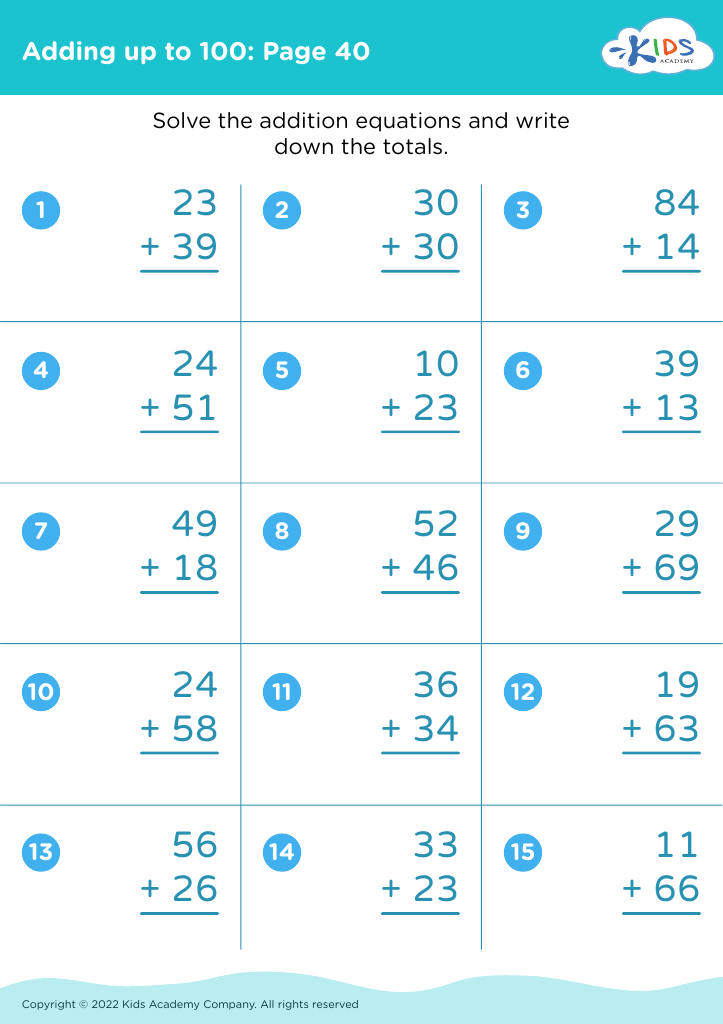
Adding up to 100: Page 40

Adding up to 100: Page 40

Adding up to 100: Page 40
Worksheet
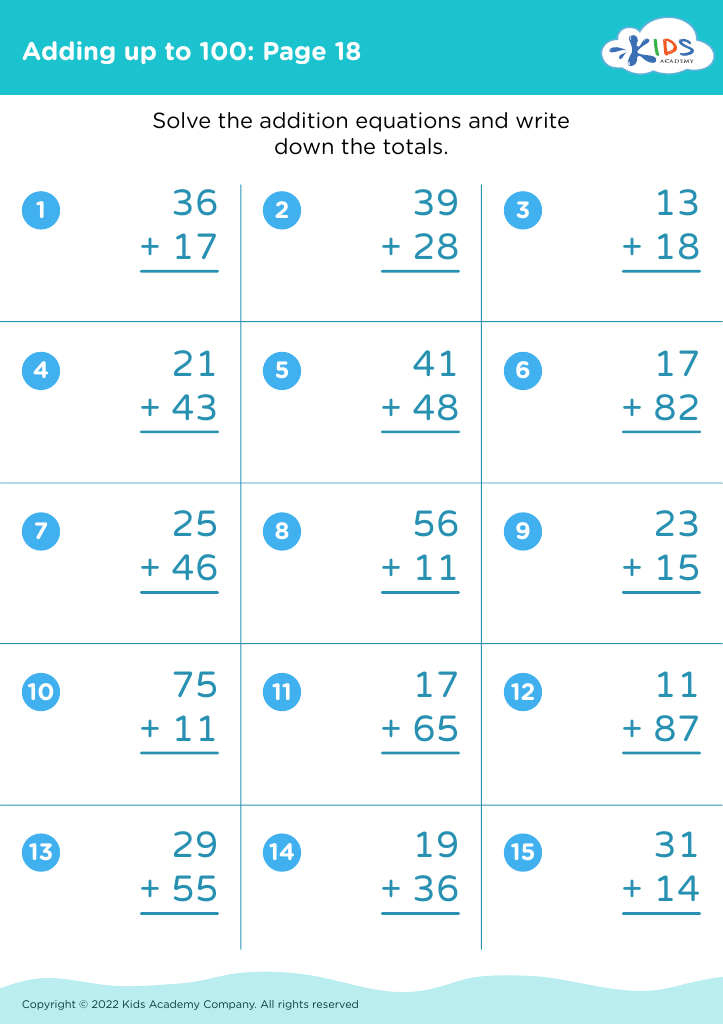
Adding up to 100: Page 18

Adding up to 100: Page 18

Adding up to 100: Page 18
Worksheet
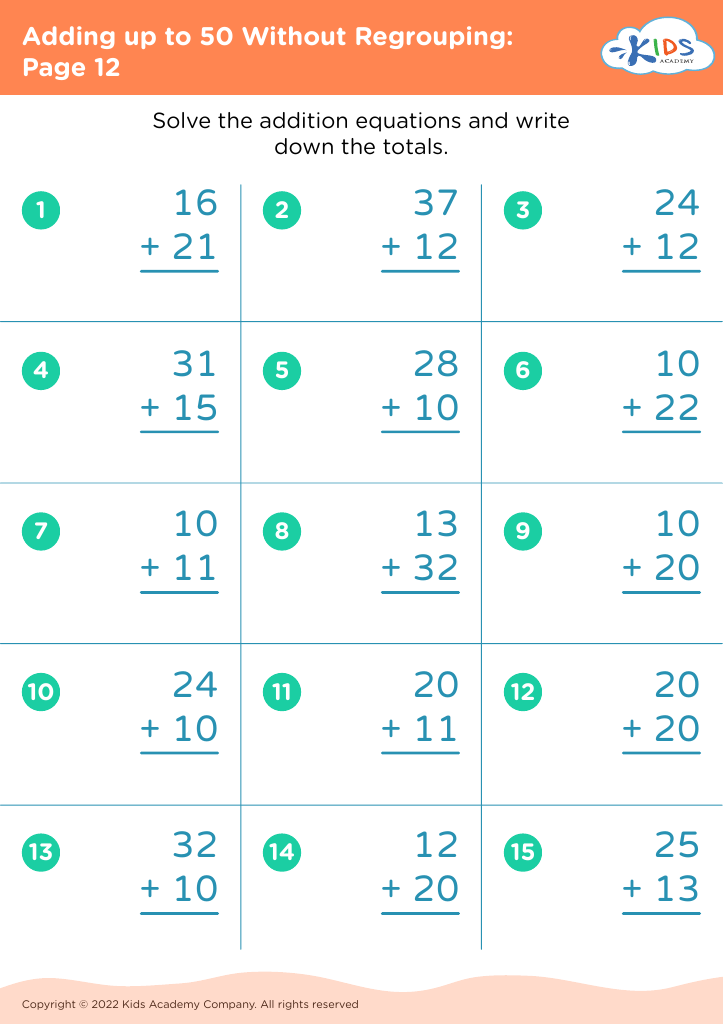
Adding up to 50 Without Regrouping: Page 12
Worksheet
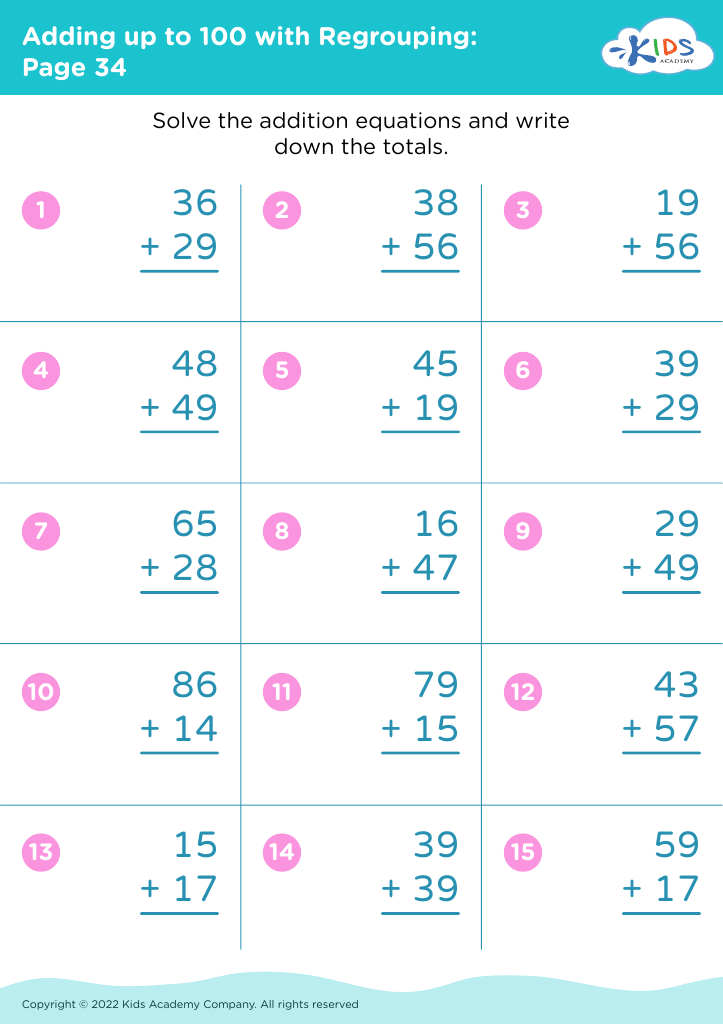
Adding up to 100 with Regrouping: Page 34
Worksheet
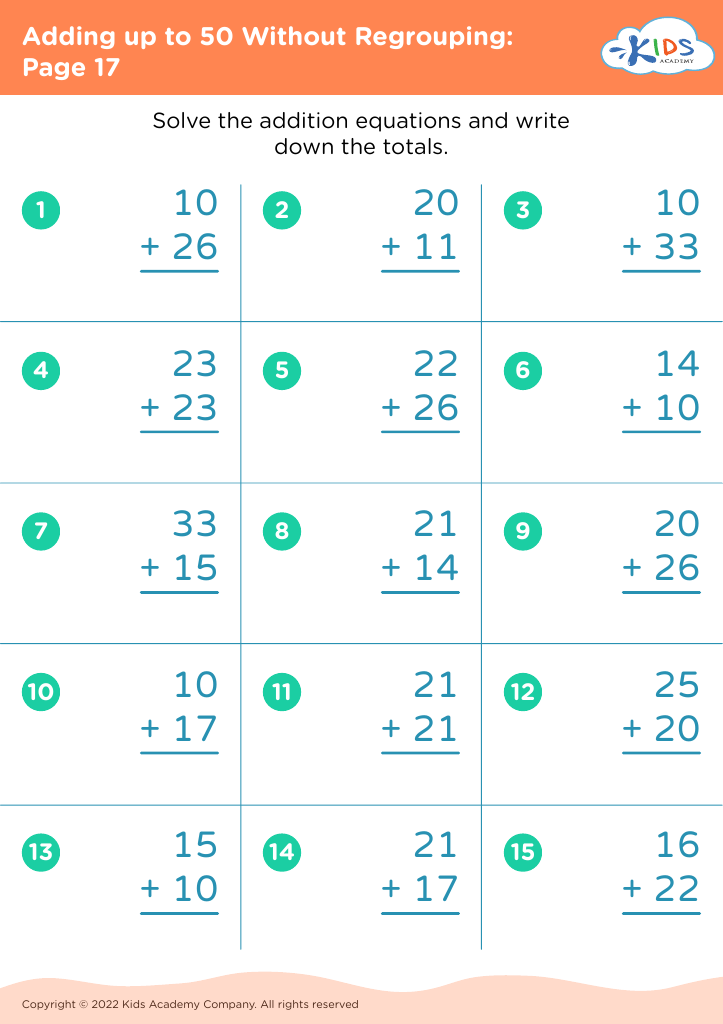
Adding up to 50 Without Regrouping: Page 17
Worksheet
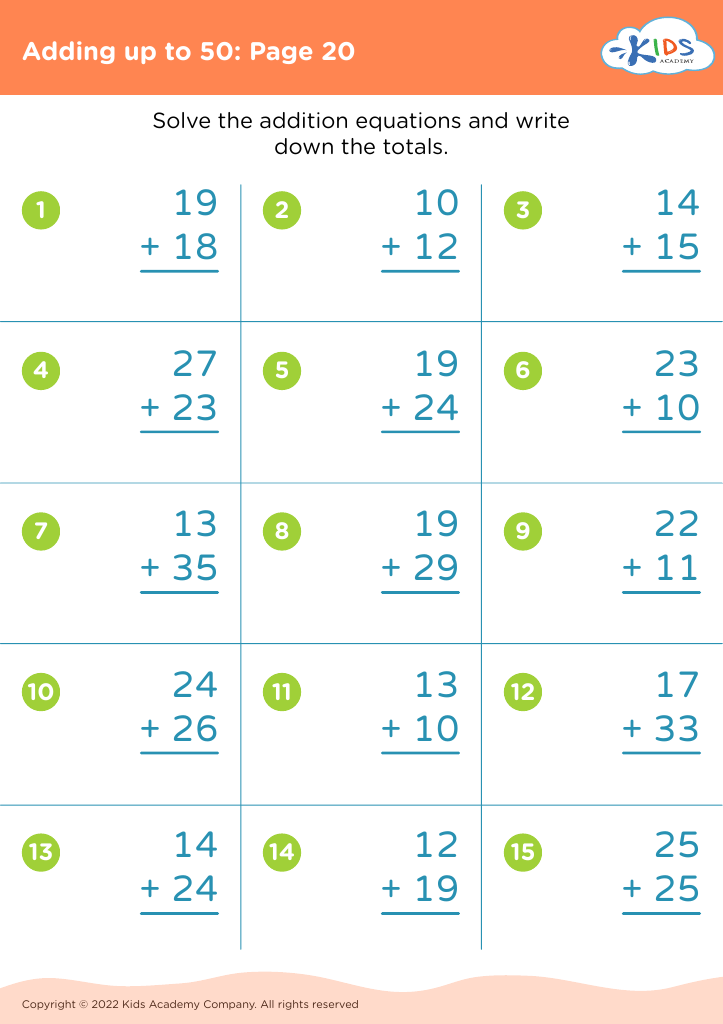
Adding up to 50: Page 20

Adding up to 50: Page 20

Adding up to 50: Page 20
Worksheet
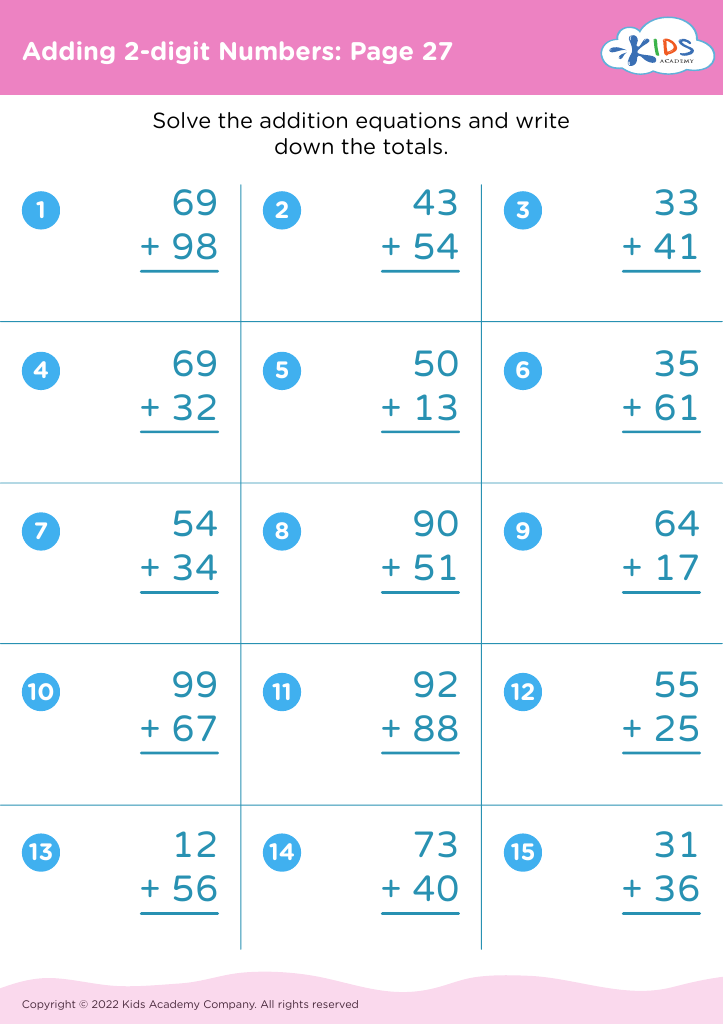
Adding 2-digit Numbers: Page 27

Adding 2-digit Numbers: Page 27

Adding 2-digit Numbers: Page 27
Worksheet


Enhancing number recognition, addition, and subtraction skills for children ages 5-9 is crucial for a variety of reasons. First and foremost, these foundational skills form the building blocks of all future mathematics learning. Understanding numbers helps children grasp basic concepts and fosters logic and problem-solving abilities, essential for their overall cognitive development.

Additionally, proficiency in addition and subtraction contributes to children’s confidence and reduces math anxiety. When children can recognize numbers and perform basic operations fluently, they feel more competent in school, encouraging them to participate actively in math-related activities. This leads to a positive attitude toward learning and sets the stage for complex mathematical concepts they will encounter later.

Moreover, this early math exposure can impact broader academic achievement. Research links strong math skills with higher performance in literacy and critical thinking. Therefore, by focusing on number recognition and basic operations, parents and teachers can significantly influence a child's academic trajectory, fostering a lifelong love for learning. Ultimately, strong math foundations not only help in school but also prepare children for real-world challenges, enhancing their problem-solving skills and independent thinking capabilities in daily life activities.