Hand-eye Coordination Addition & Subtraction Worksheets for Ages 5-9 - Page 2
29 filtered results
-
From - To
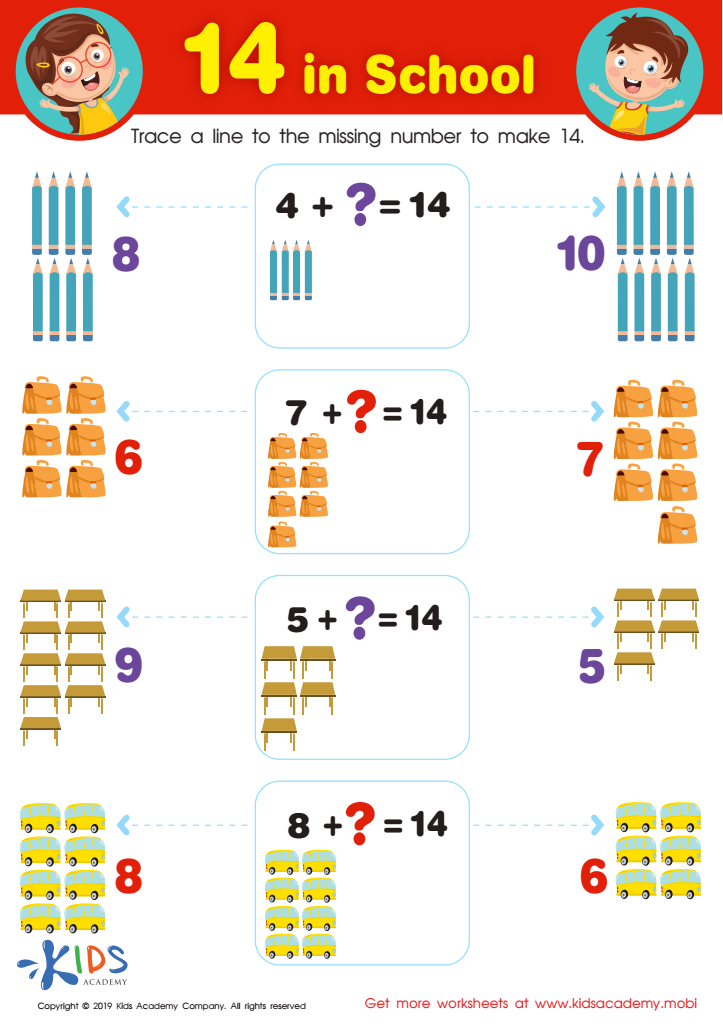
14 in School Worksheet
 Assign to My Students
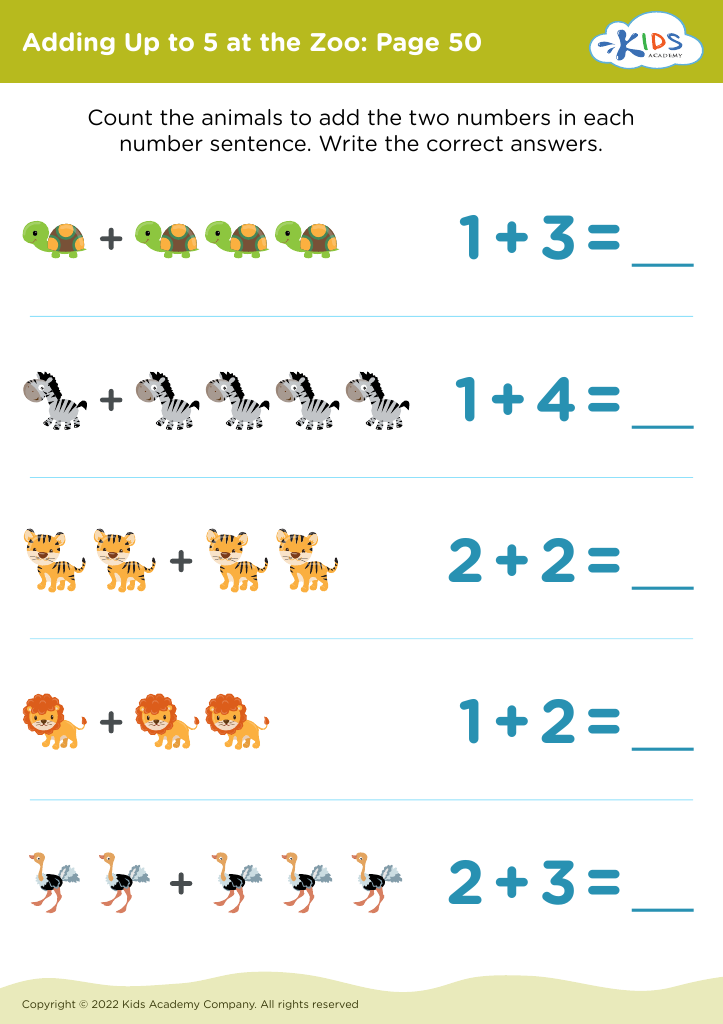








Hand-eye coordination is a fundamental skill that involves the synchronized control of eye movement with hand movement and processing visual input to guide the hands. For children aged 5-9, this skill is particularly important for several reasons, especially when integrated with learning mathematical concepts like addition and subtraction.
Firstly, good hand-eye coordination enhances fine motor skills, which are essential for writing numbers and mathematical symbols clearly. When children practice adding and subtracting through physical activities like manipulating objects or interactive games, they naturally develop better dexterity and precision.
Secondly, incorporating hand-eye coordination into addition and subtraction exercises can make learning more engaging. Physical activities ensure that children are not just passively absorbing information but actively participating, which helps maintain their interest and encourages energetic learners who are keen to explore and problem-solve.
Additionally, combining physical actions with mental calculations strengthens cognitive development, fostering better problem-solving skills and boosting overall academic performance. Kids are more likely to remember concepts when they actively interact with materials. For instance, using blocks to add or subtract can help solidify their understanding of mathematical principles through tactile and visual feedback.
Overall, intertwining hand-eye coordination with learning not only enriches the educational experience but also lays the groundwork for more advanced skills and academic success in the future.








