Improving calculation skills Addition & Subtraction Worksheets for Ages 5-9
3 filtered results
-
From - To
Welcome to our “Improving Calculation Skills: Addition & Subtraction Worksheets” page designed specifically for children aged 5-9! These engaging worksheets provide young learners with the opportunity to practice and enhance their math skills in a fun and effective way. With a variety of activities focusing on both addition and subtraction, children will gain confidence in their calculation abilities while enjoying colorful illustrations and interactive exercises. Our worksheets are tailored to support different learning styles, ensuring each child can grasp essential math concepts at their own pace. Start your child's math journey today and watch them excel in their arithmetic skills!
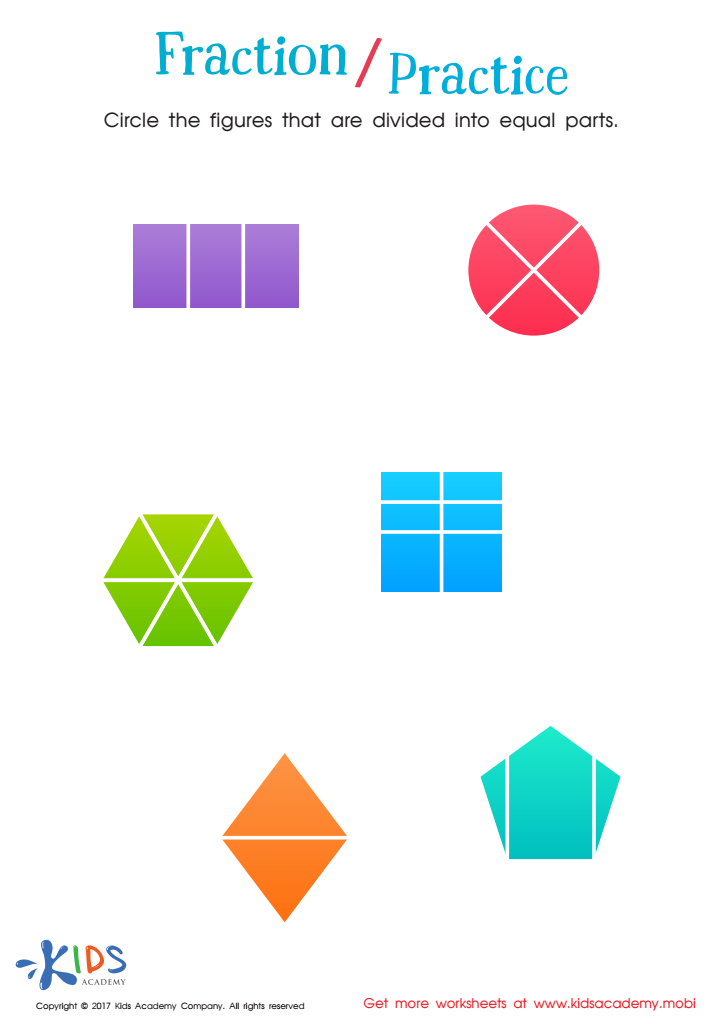
Fractions: Shapes Worksheet
 Assign to My Students
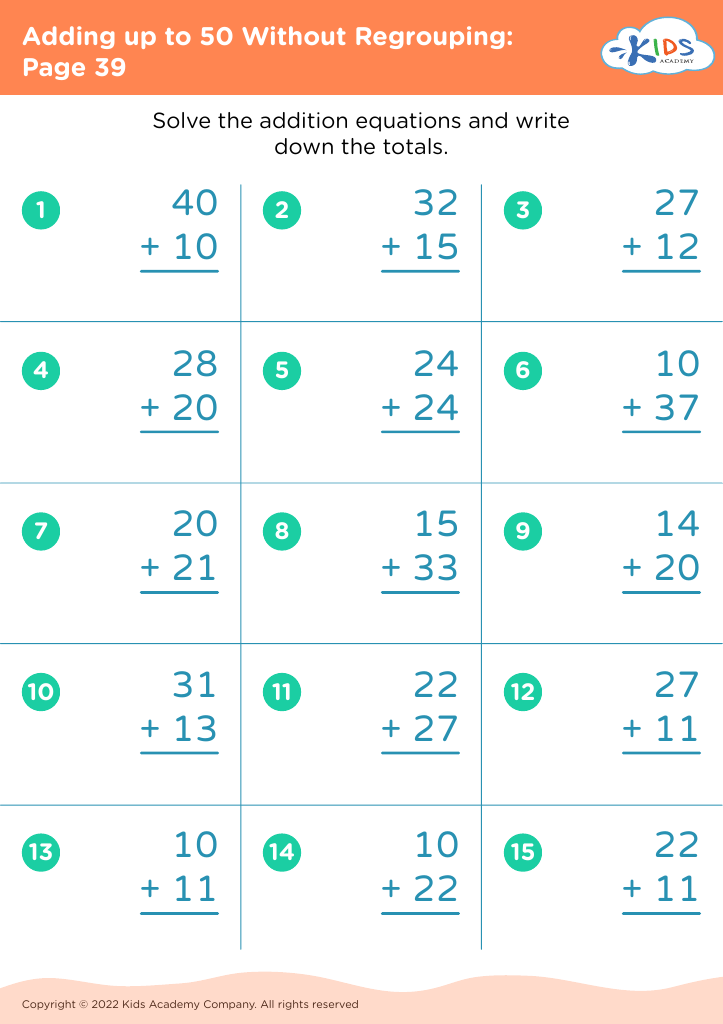
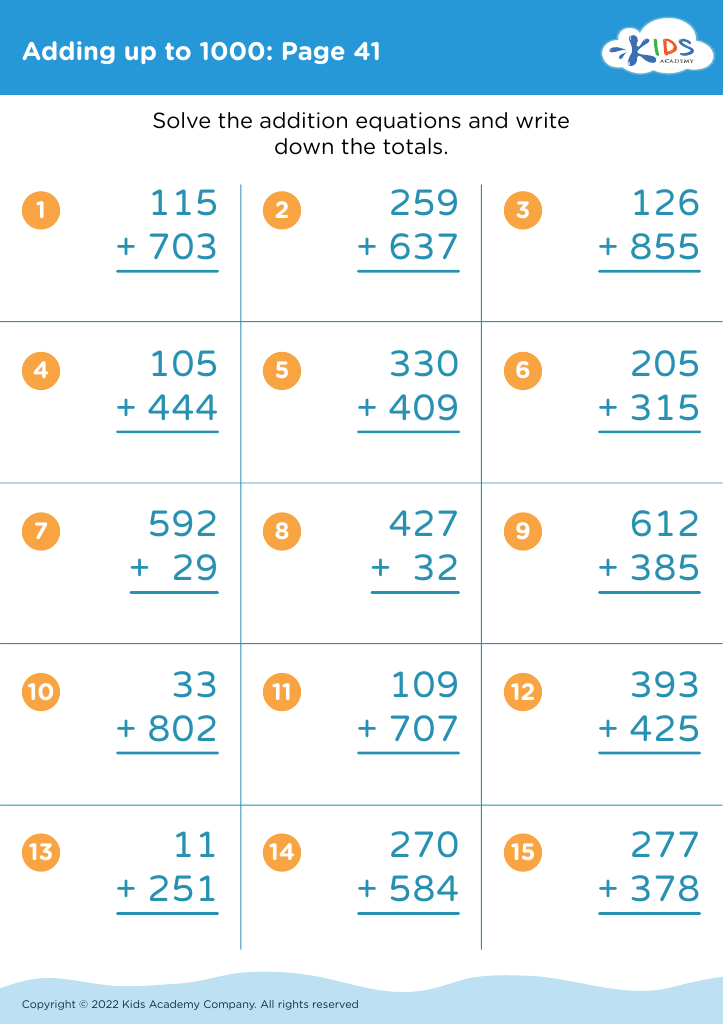








Improving calculation skills in addition and subtraction for children aged 5-9 is crucial for several reasons. First, these foundational skills are vital for everyday life and set the stage for more complex mathematical concepts. Mastery of basic arithmetic supports future learning in mathematics, as children will need strong number sense to tackle multiplication, division, and even algebra as they progress in their education.
Secondly, developing calculation skills fosters confidence and a positive attitude towards math. When children can perform basic operations, they experience academic success, which boosts their self-esteem and motivation to learn. A strong mathematical foundation also helps to reduce math anxiety, a common issue that can hinder learning as children advance in grades.
Moreover, addition and subtraction skills are linked to cognitive development. Engaging with these calculations promotes critical thinking, problem-solving, and mental agility. Teachers and parents play a pivotal role in instilling these skills, whether through playful activities, interactive games, or everyday conversations involving counting and simple math.
Ultimately, by prioritizing addition and subtraction skills in young learners, parents and teachers can equip children with the tools they need to navigate both their academic journey and real-life situations effectively.








