Recognizing equivalent fractions Addition & Subtraction Worksheets for Ages 5-9
5 filtered results
-
From - To
Empower young learners with our meticulously designed worksheets focused on recognizing equivalent fractions, addition, and subtraction. Tailored for children ages 5-9, these resources from Kids Academy foster essential math skills through engaging, age-appropriate exercises. Your child will excel in understanding and identifying equivalent fractions while mastering basic addition and subtraction. Each worksheet aims to build a strong numerical foundation, encouraging problem-solving skills and mathematical confidence. Spark a passion for math and make learning an enjoyable experience with our collection of printable worksheets. Ideal for both classroom use and at-home practice, they're your go-to tools for mathematical success!
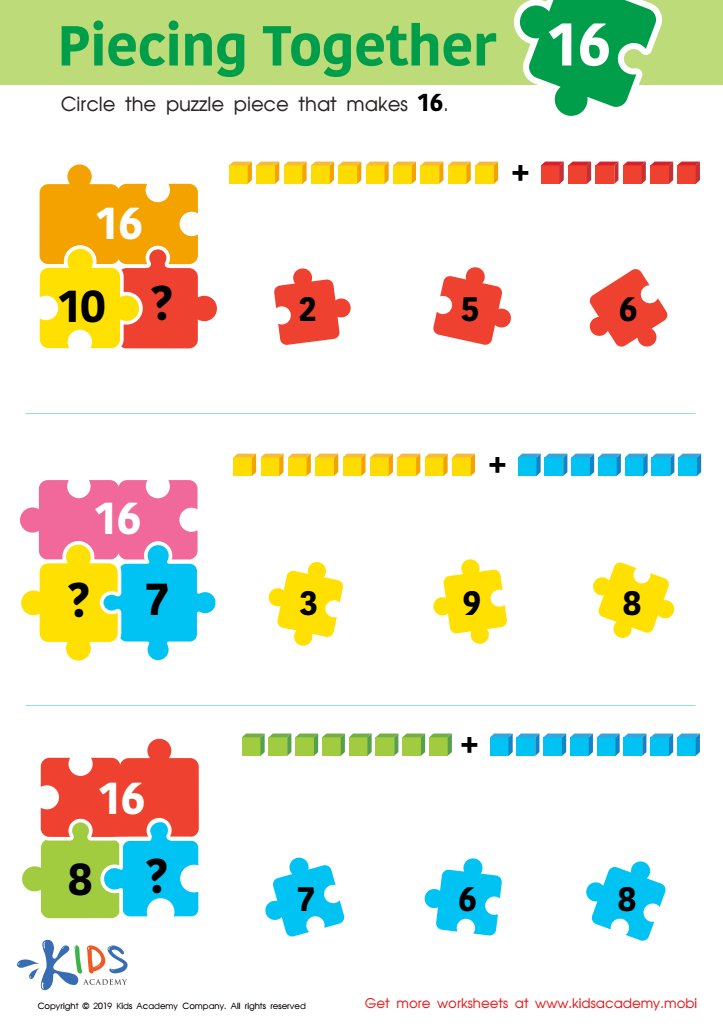
Piecing Together 16 Worksheet
 Assign to My Students
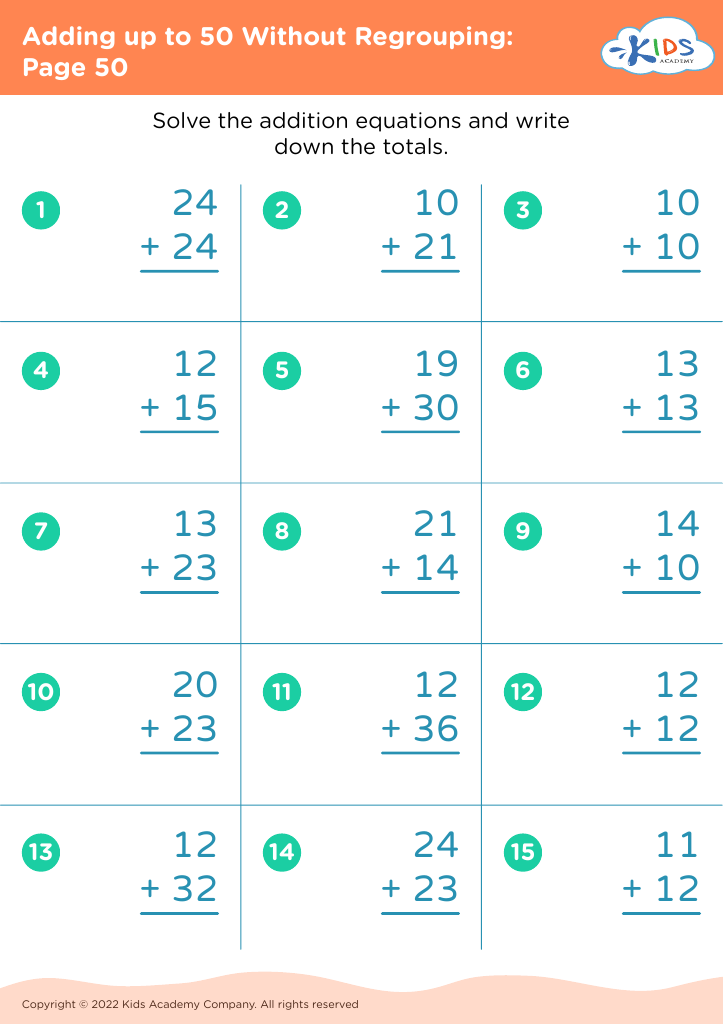








Recognizing equivalent fractions and understanding the basics of fraction addition and subtraction are crucial skills for young learners aged 5-9. These concepts form a critical foundation for more advanced mathematical learning in later grades.
Firstly, understanding equivalent fractions helps children recognize that different-looking fractions can express the same value. This knowledge is fundamental in simplifying fractions and solving problems involving fractions in real-life situations, such as measuring ingredients in a recipe or dividing objects among friends. Recognizing equivalency fosters a deeper comprehension of the concept of fractions beyond rote memorization.
Secondly, mastering the addition and subtraction of fractions develops problem-solving and analytical thinking skills. When children learn to add and subtract fractions, they engage in a process that requires both procedural knowledge (like finding a common denominator) and conceptual understanding (like grasping the parts-to-whole relationship). These activities enhance cognitive abilities, logical reasoning, and numerical fluency.
Moreover, proficiency in fractions paves the way for success in higher-level mathematics and science. A solid understanding at a young age prevents future difficulties and fosters confidence in handling complex mathematical concepts later.
Parents and teachers should invest time and resources into teaching these fundamental skills because they play a decisive role in educational development, ensuring that young learners build a strong mathematical foundation with lasting impact.








