Understanding bar graphs Addition & Subtraction Worksheets for Ages 5-9
3 filtered results
-
From - To
Discover our engaging "Understanding Bar Graphs Addition & Subtraction Worksheets" designed specifically for children aged 5 to 9. These printable resources help young learners grasp the concepts of addition and subtraction through the visual representation of bar graphs. By interpreting, creating, and analyzing bar graphs, children enhance their math skills while also developing critical thinking and problem-solving abilities. Teachers and parents can easily integrate these worksheets into their lessons, making learning fun and interactive. Our carefully crafted activities ensure that kids build a strong foundation in math, setting them up for future success. Download now and watch your child's confidence soar!
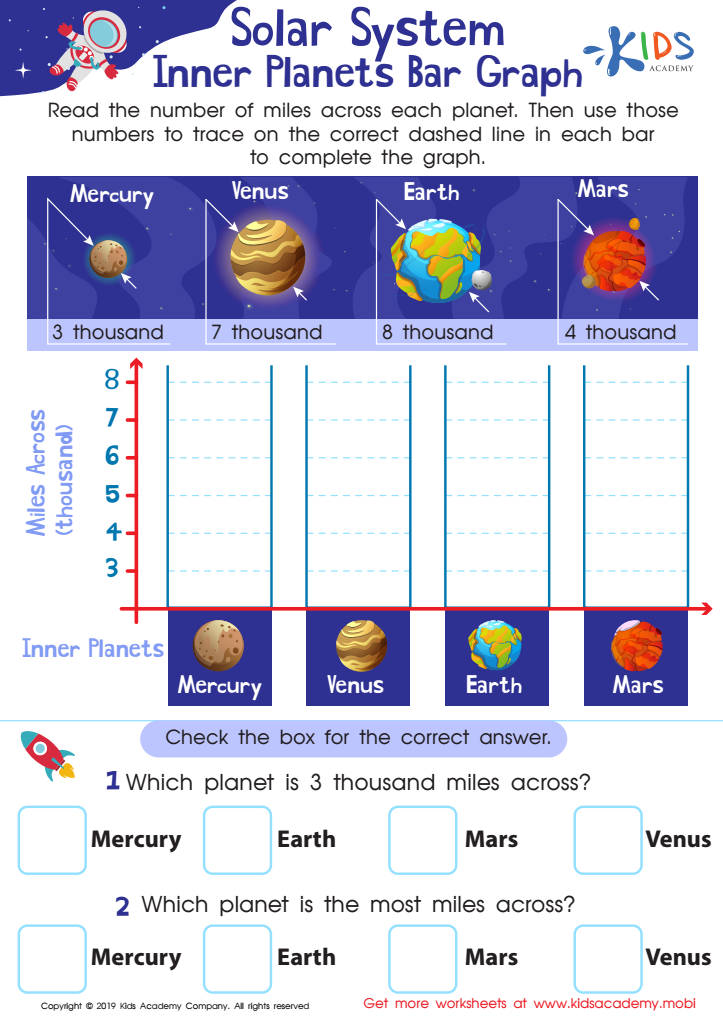
Planets Bar Graph Worksheet
 Assign to My Students
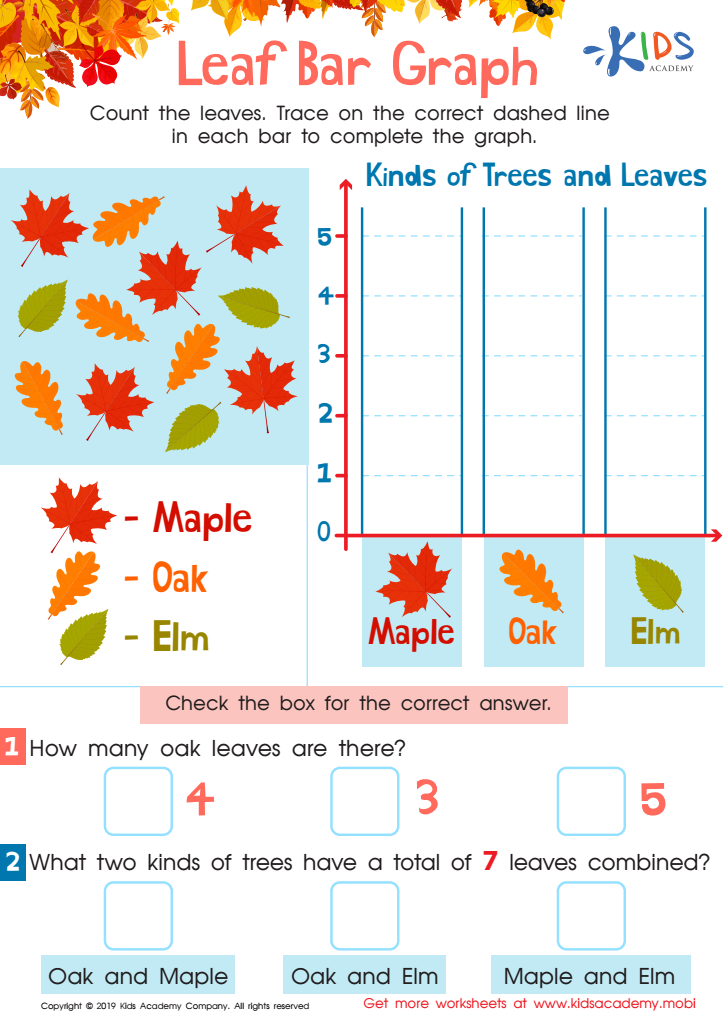
Leaf Bar Graph Worksheet
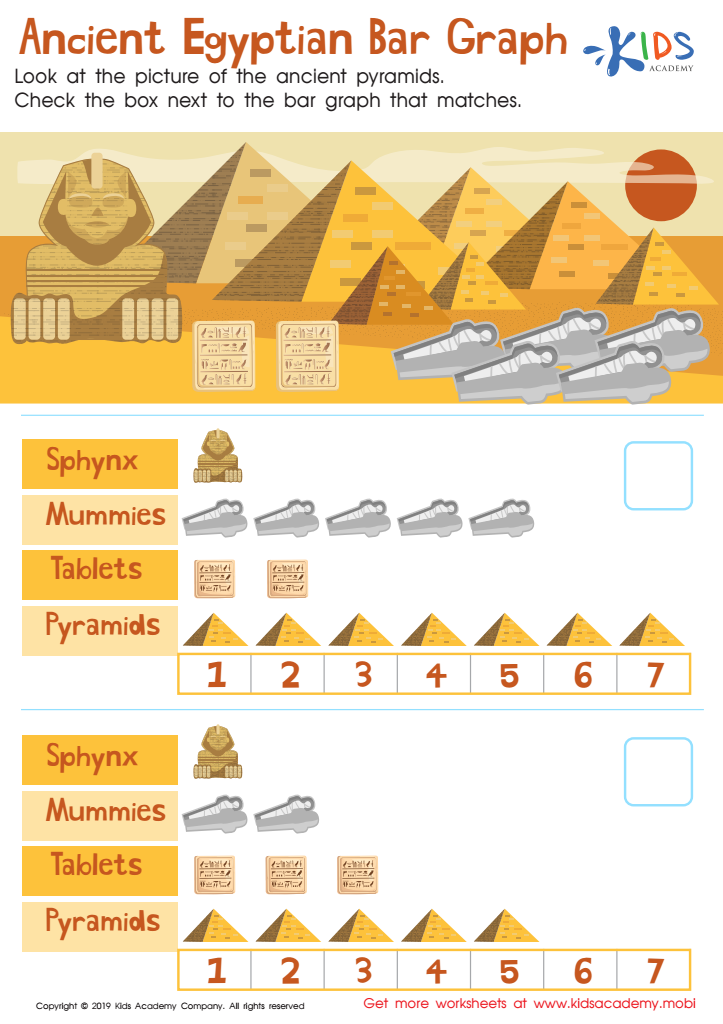
Egyptian Bar Graph Worksheet








Understanding bar graphs and mastering addition and subtraction are fundamental skills for children aged 5 to 9, and both hold significant importance for parents and teachers. Firstly, bar graphs introduce students to data interpretation—an essential skill for making sense of information in our data-driven world. Recognizing patterns and trends in visual formats fosters critical thinking and analytical skills that extend beyond mathematics.
Additionally, addition and subtraction are foundational mathematical operations that students will build upon throughout their education. Mastery of these skills allows children to solve real-life problems, manage finances, and make logical decisions in everyday scenarios. When children grasp these concepts, they develop confidence in their mathematical abilities, which lays a strong foundation for higher-level math.
Parents and teachers play a crucial role in facilitating this understanding. By engaging children with interactive tools such as games, manipulatives, and real-life examples, they can enhance interest and motivation to learn mathematical concepts. Providing support and positive reinforcement also encourages a growth mindset, enabling children to embrace challenges. Ultimately, understanding bar graphs and basic arithmetic prepares young learners for future academic success and fosters essential life skills. Investing time in these areas can significantly benefit children's overall development.








