Understanding sequencing Addition & Subtraction Worksheets for Ages 5-9
7 filtered results
-
From - To
Discover our engaging "Understanding Sequencing Addition & Subtraction Worksheets" designed for children ages 5-9. These worksheets focus on developing essential sequencing skills in addition and subtraction, enhancing young learners' ability to follow mathematical processes step-by-step. By practicing these worksheets, children will strengthen their understanding of number operations, improve problem-solving skills, and build a strong foundation for future math concepts. Our colorful and interactive resources keeps learning fun and allows for easy tracking of progress. Perfect for teachers and parents alike, these worksheets offer a structured approach to mastering basic math operations through the concept of sequencing. Start your child's math journey today!
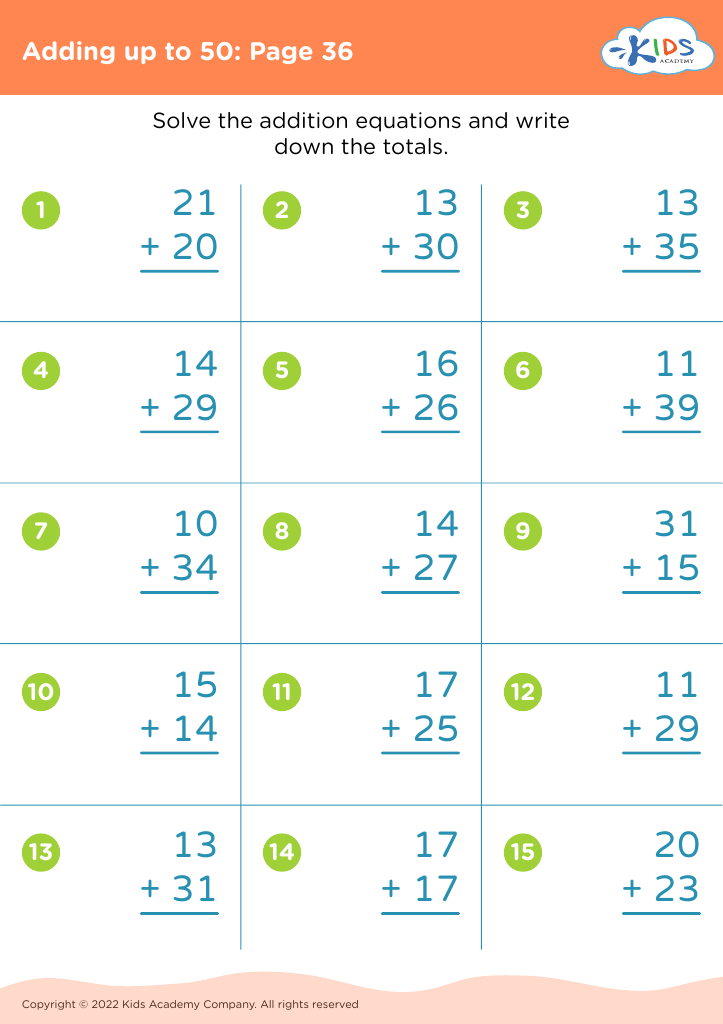
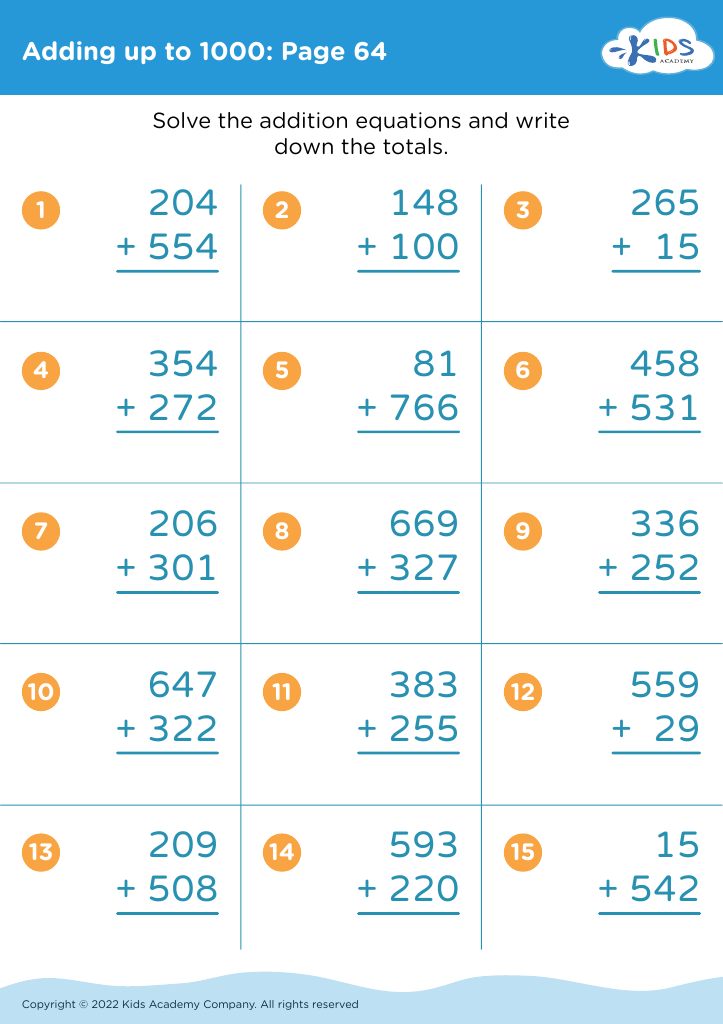
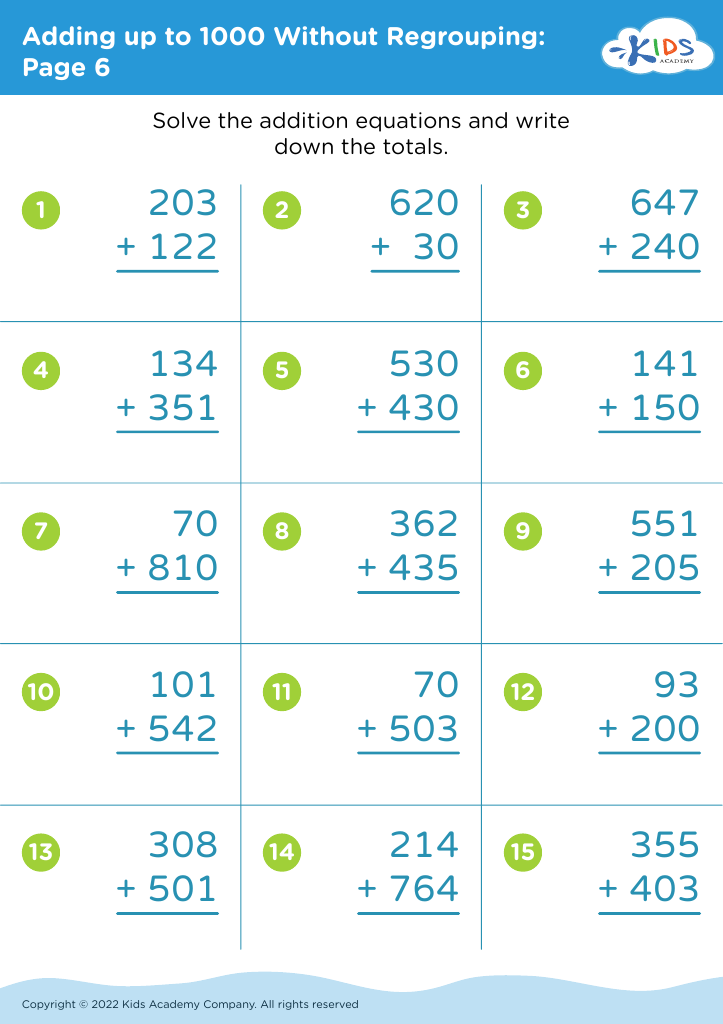
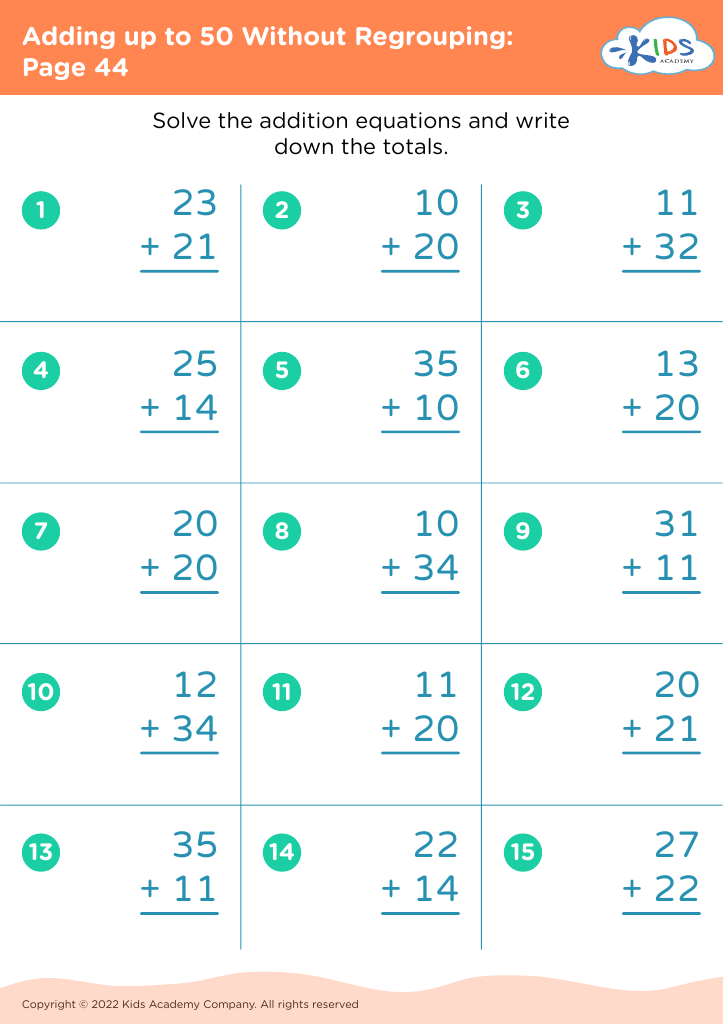
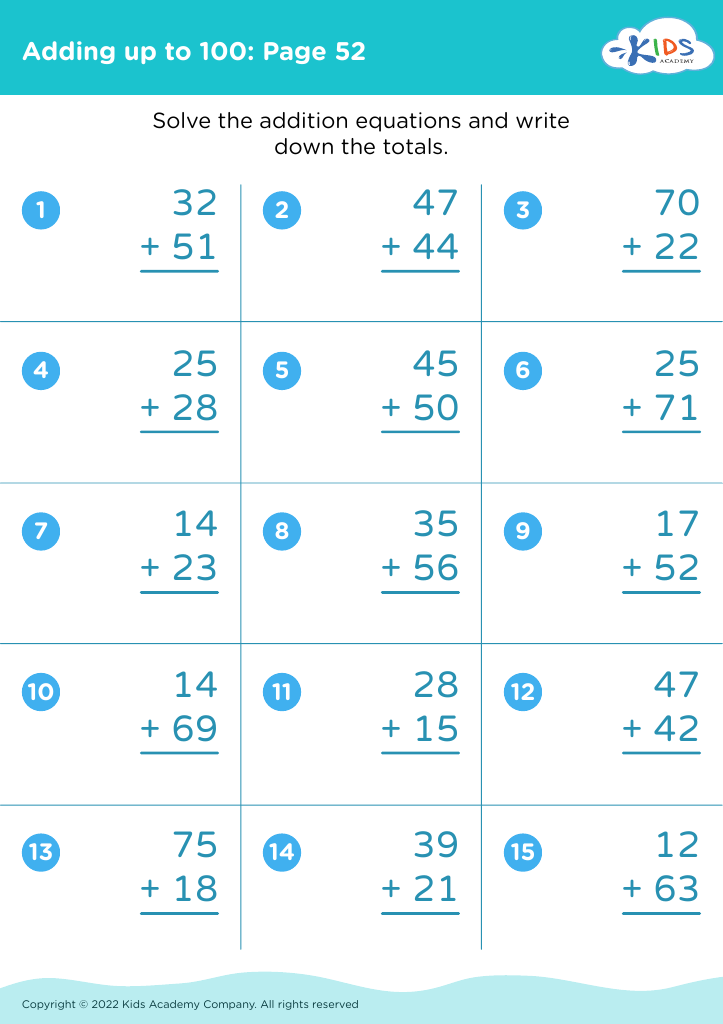
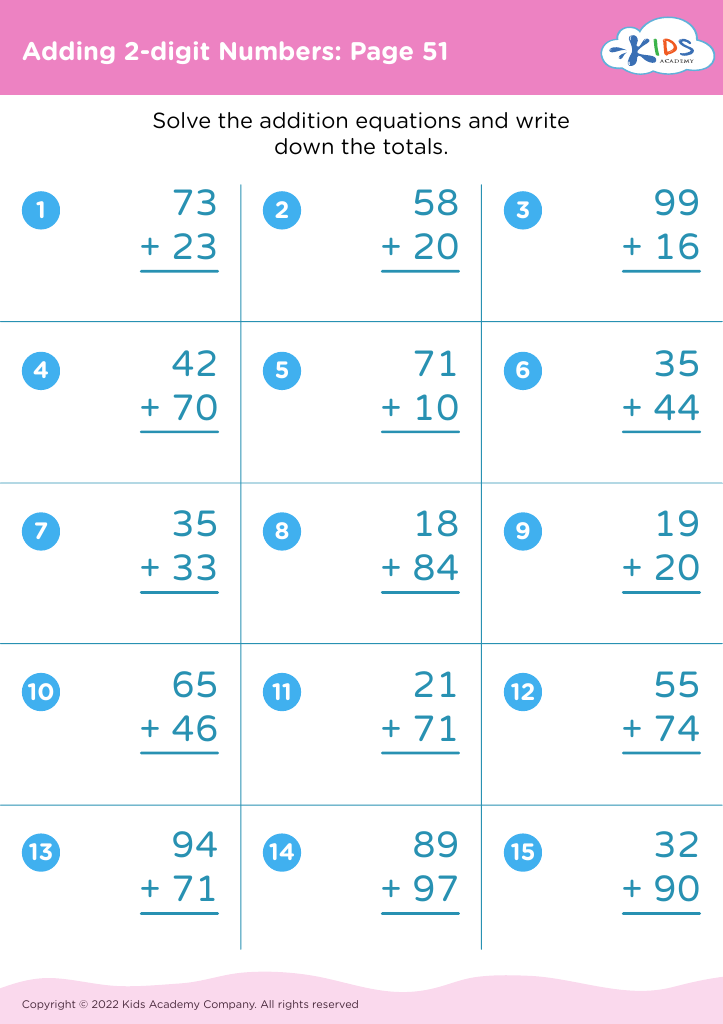
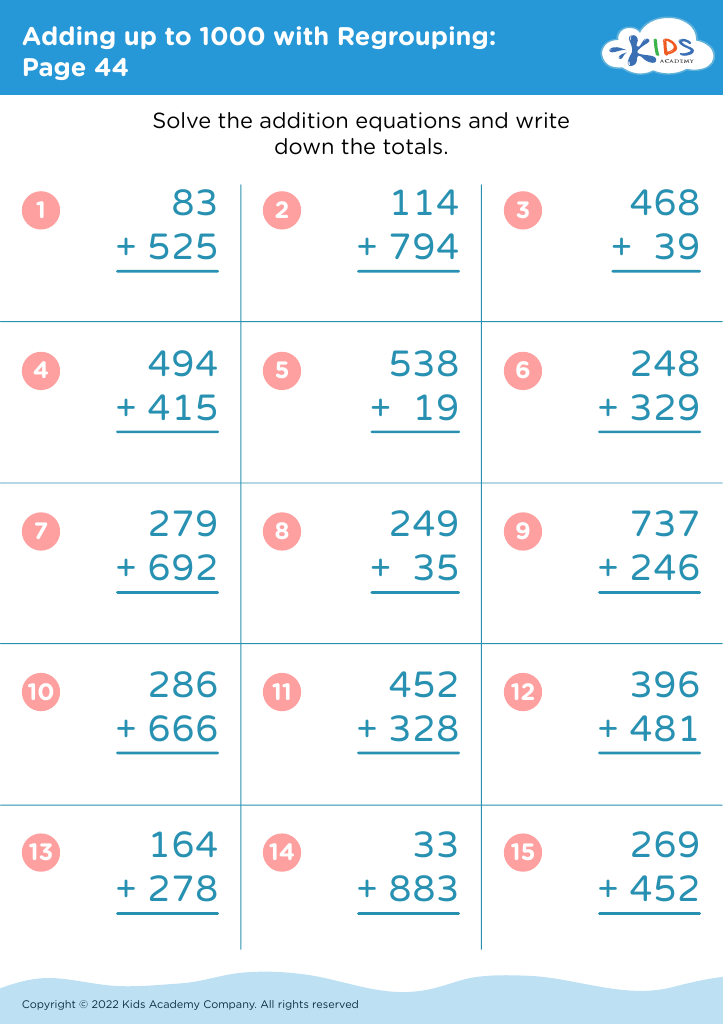








Understanding sequencing in addition and subtraction is crucial for children aged 5-9, as it lays the foundation for their mathematical skills and overall cognitive development. When children grasp the concept of sequencing, they learn to follow logical steps in problem-solving. This skill fosters critical thinking and improves their ability to tackle more complex math problems in the future.
Parents and teachers should care because early development of these skills translates into greater confidence and competence in mathematics later on. For instance, recognizing the order in which numbers are added or subtracted allows children to solve equations efficiently. Additionally, sequencing skills teach kids to break down problems into manageable steps, which is a valuable life skill beyond math.
Moreover, understanding sequencing in addition and subtraction aids in the development of number sense, promoting comprehension of larger concepts like place value and word problems. It can also enhance a child's ability to explain their thought processes, which is key in collaborative learning environments. Thus, fostering these skills early on not only supports academic success but also builds a sense of achievement and motivation among young learners, inspiring a lifelong love for learning.








