Visual comprehension Addition & Subtraction Worksheets for Ages 5-9
7 filtered results
-
From - To
Enhance your child's math skills with our engaging Visual Comprehension Addition and Subtraction Worksheets, specifically designed for ages 5-9. These worksheets combine playful visuals with essential math concepts, making learning fun and intuitive. Children will develop their problem-solving abilities as they interpret pictures and diagrams to tackle addition and subtraction problems. Our resources promote critical thinking and reinforce foundational math skills essential for academic success. With a variety of colorful and interactive activities, young learners can explore math concepts at their own pace, ensuring a productive and enjoyable learning experience. Start your child's math journey today with our specialized worksheets!
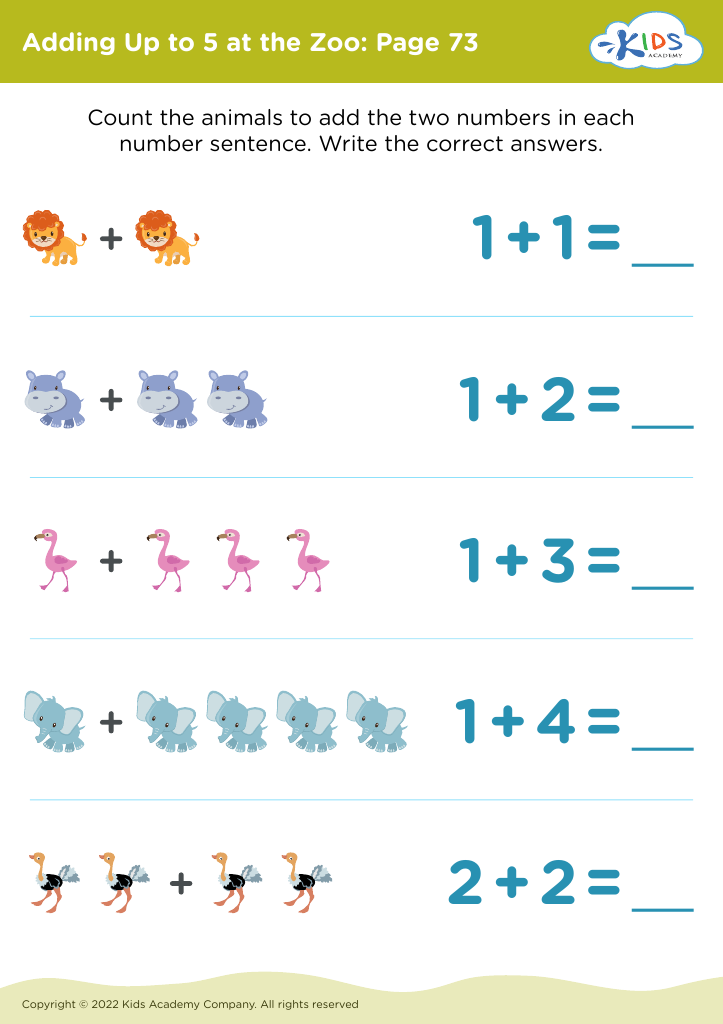
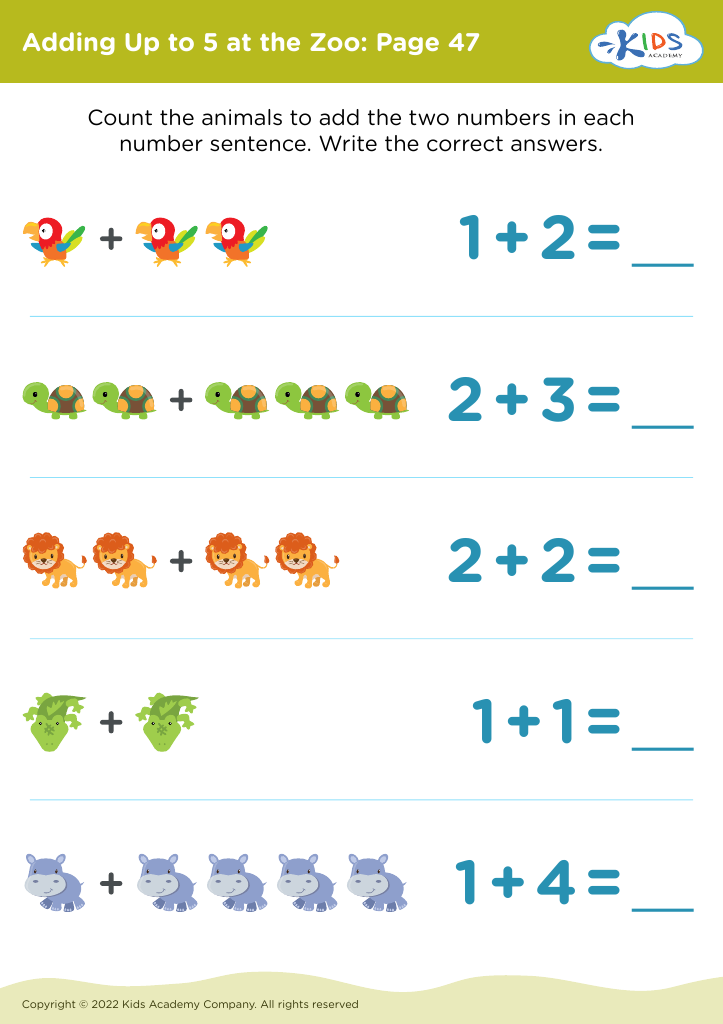
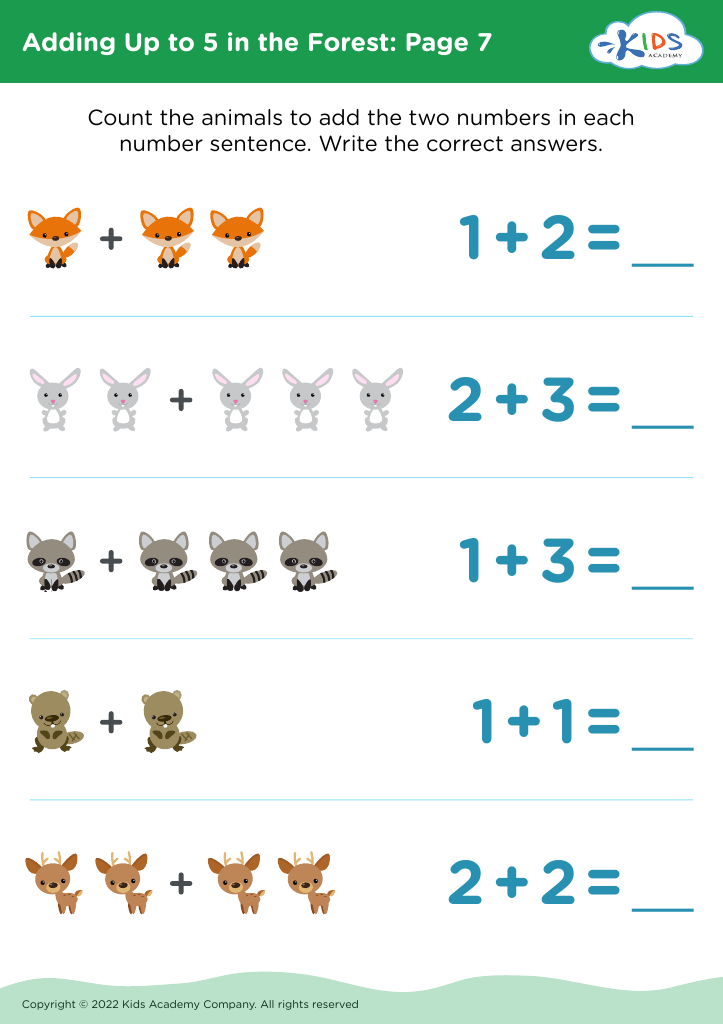
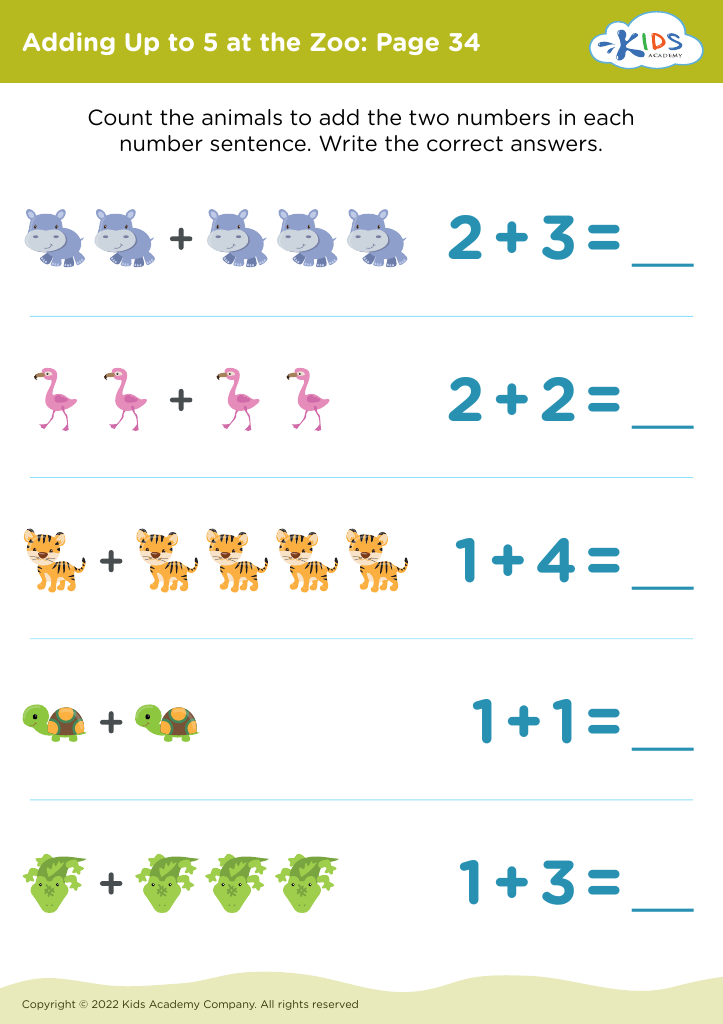
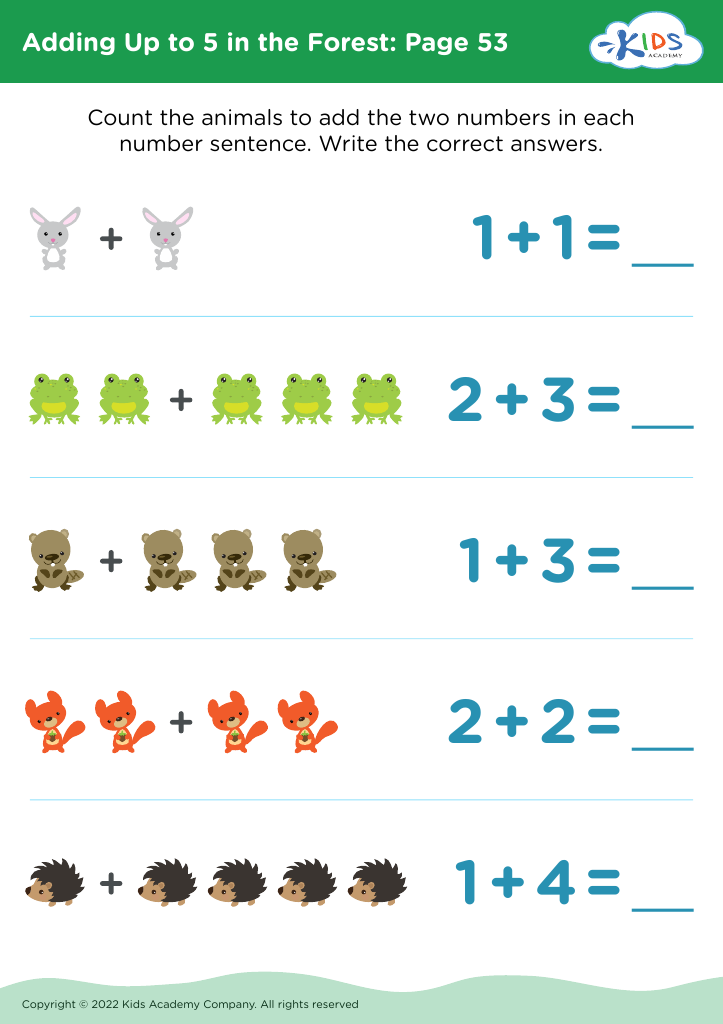
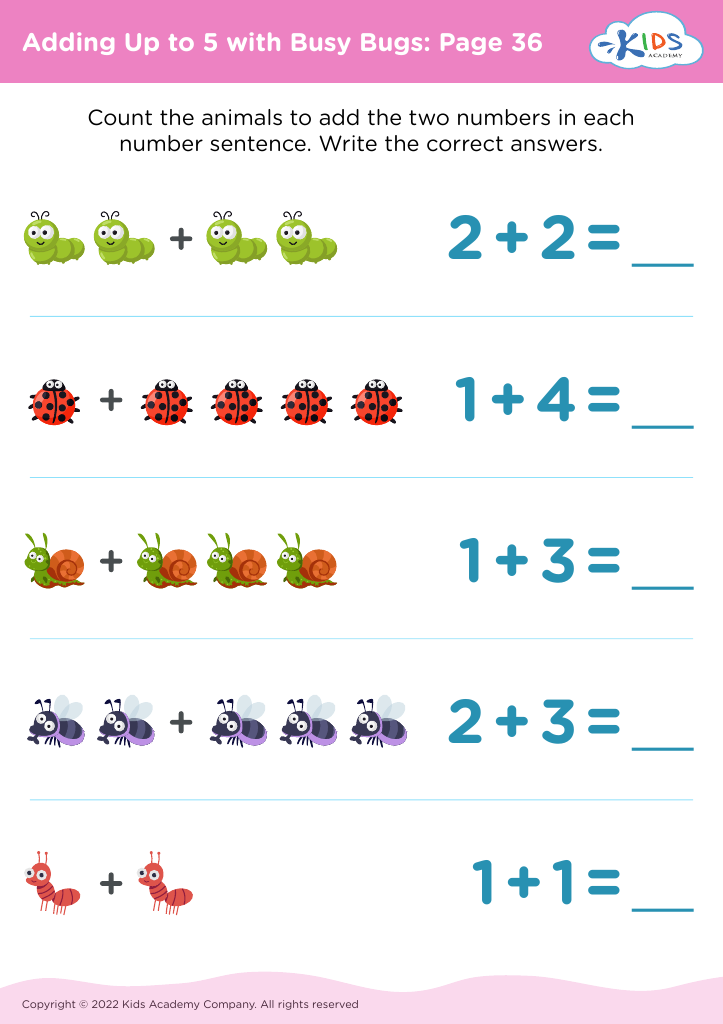
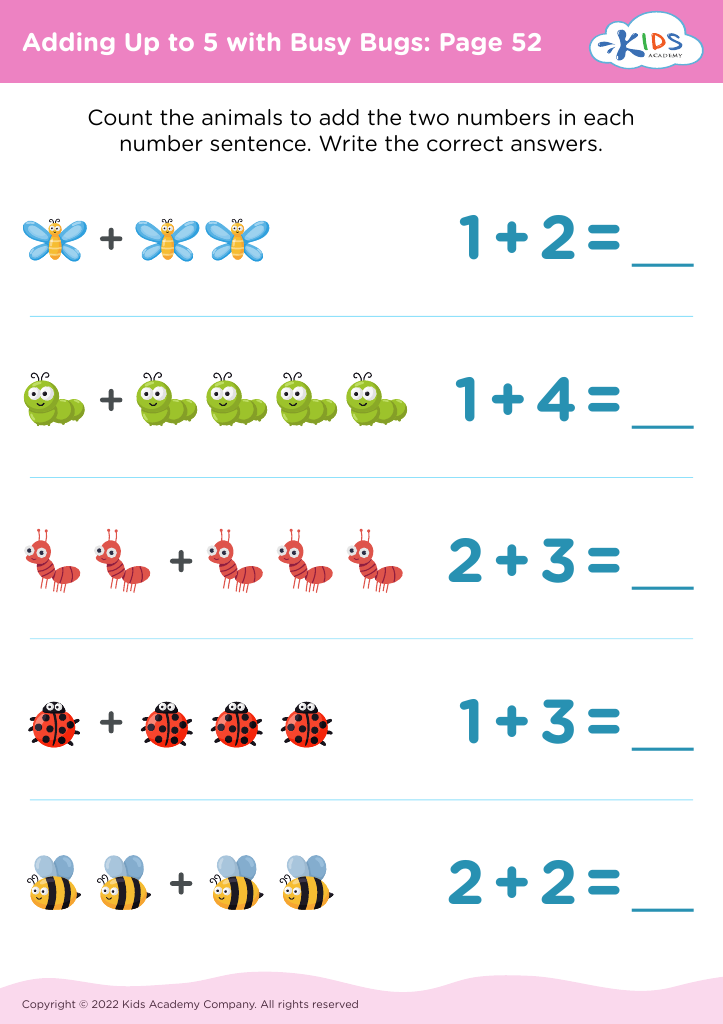








Visual comprehension in addition and subtraction is crucial for children aged 5-9 as it lays the foundation for their mathematical understanding and problem-solving skills. At this stage, children are developing their ability to visualize numerical relationships and operations, which is essential for grasping more complex concepts later on. By using visual aids such as number lines, block models, or pictorial representations, they can better understand how addition combines numbers and how subtraction involves taking away.
Moreover, visual comprehension enhances a child’s ability to engage with mathematics in a more interactive and meaningful way. When children can see and manipulate objects, they can more effectively internalize what addition and subtraction truly represent, moving beyond rote memorization. Parents and teachers who prioritize visual learning help students build confidence and foster a positive attitude towards math.
Additionally, visual engagement aids in identifying patterns and connections between concepts, which supports critical thinking. In the long run, such skills not only improve mathematical fluency but also contributes to overall cognitive development. Thus, understanding and supporting visual comprehension in math is a vital aspect of helping young learners achieve academic success and a love for learning.








