
Visual perception improvement Addition & Subtraction Worksheets for Ages 5-9
9 filtered results
Difficulty Level
Grade
Age
-
From - To
Subject
Activity
Standards
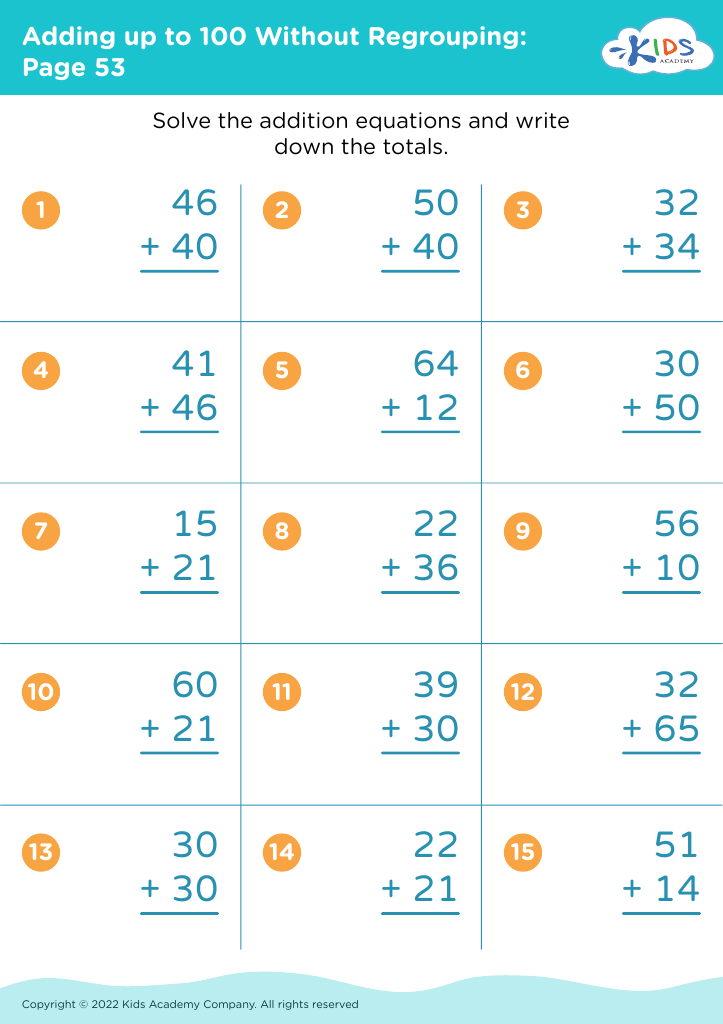
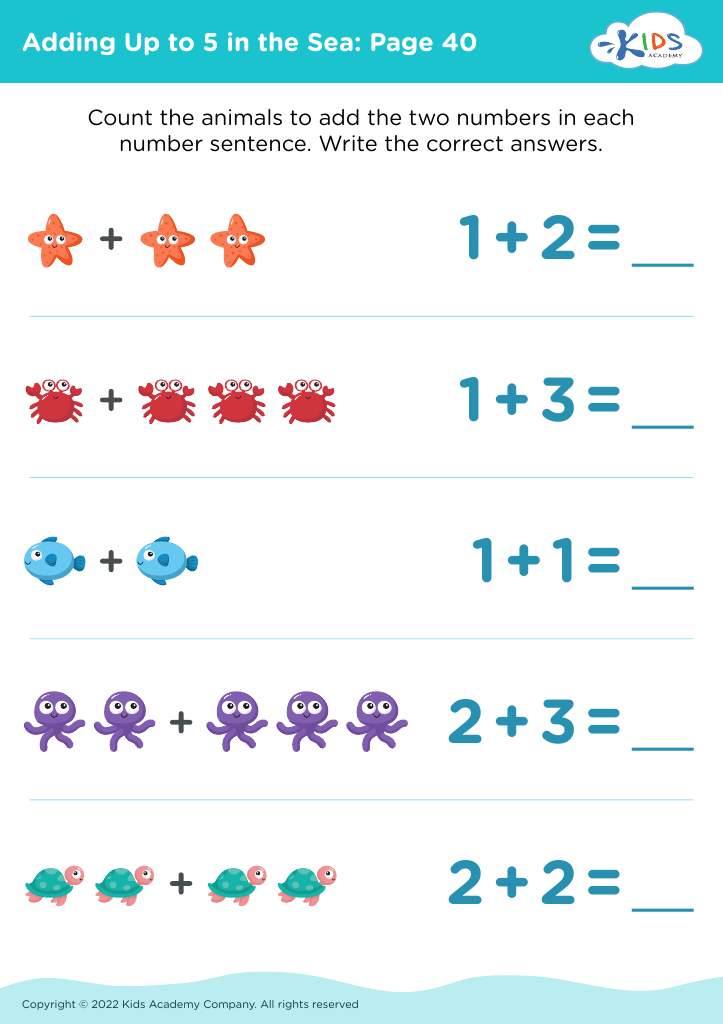
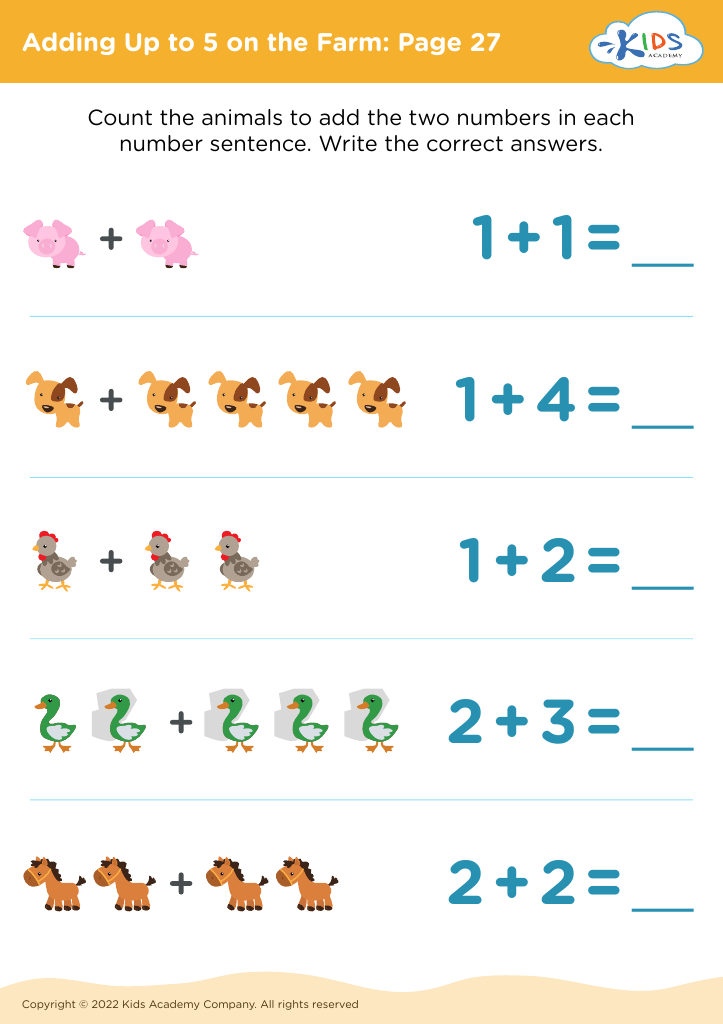
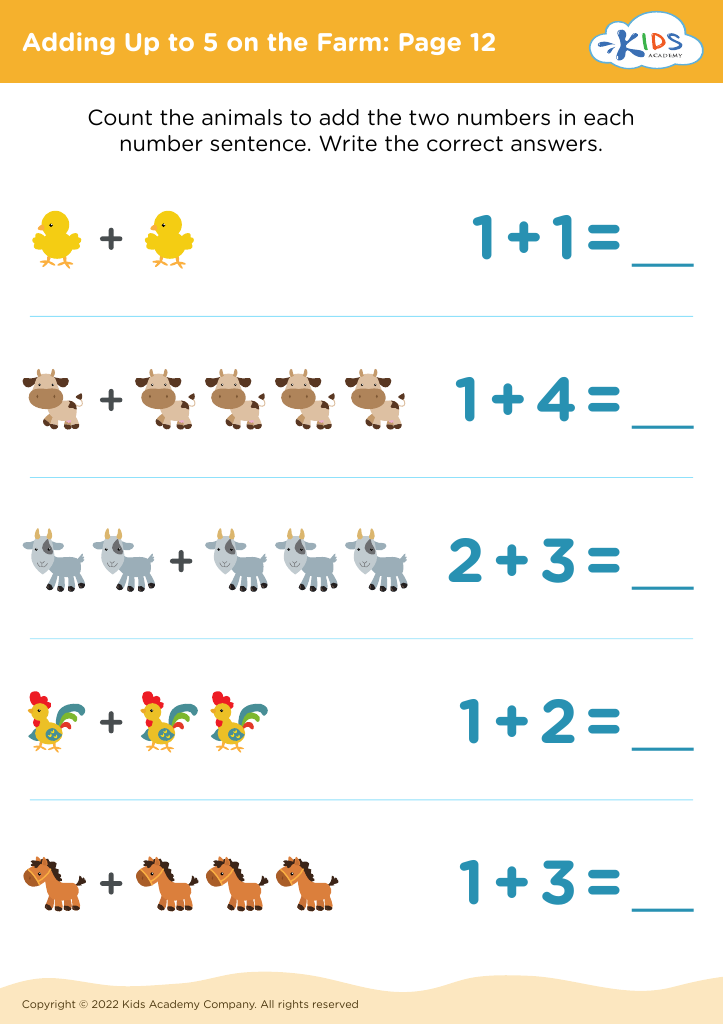
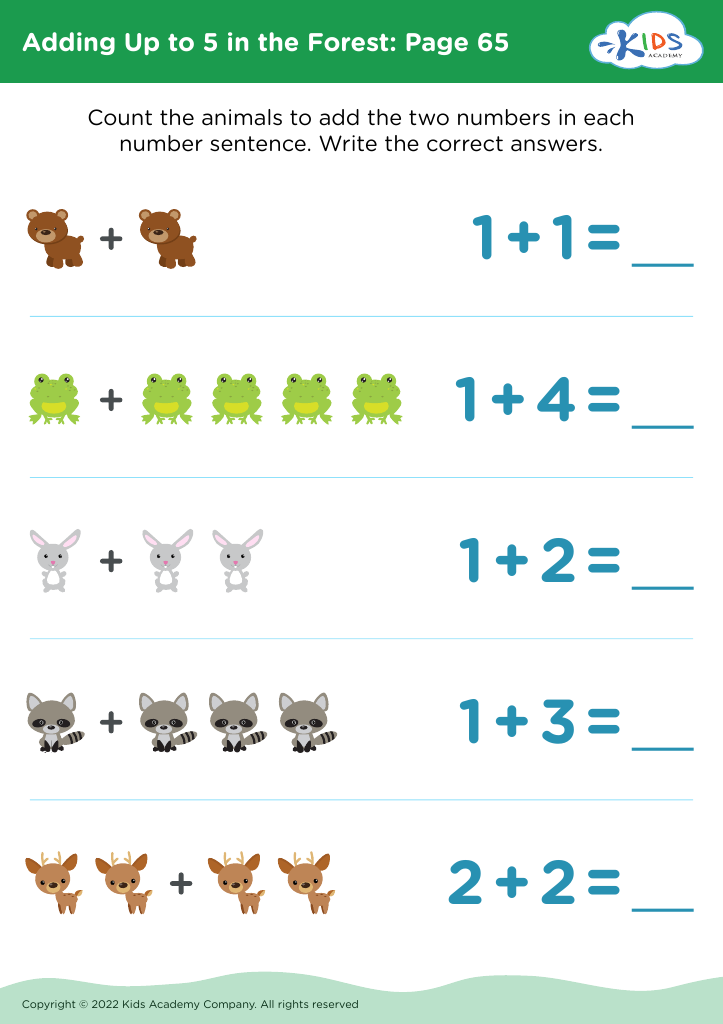
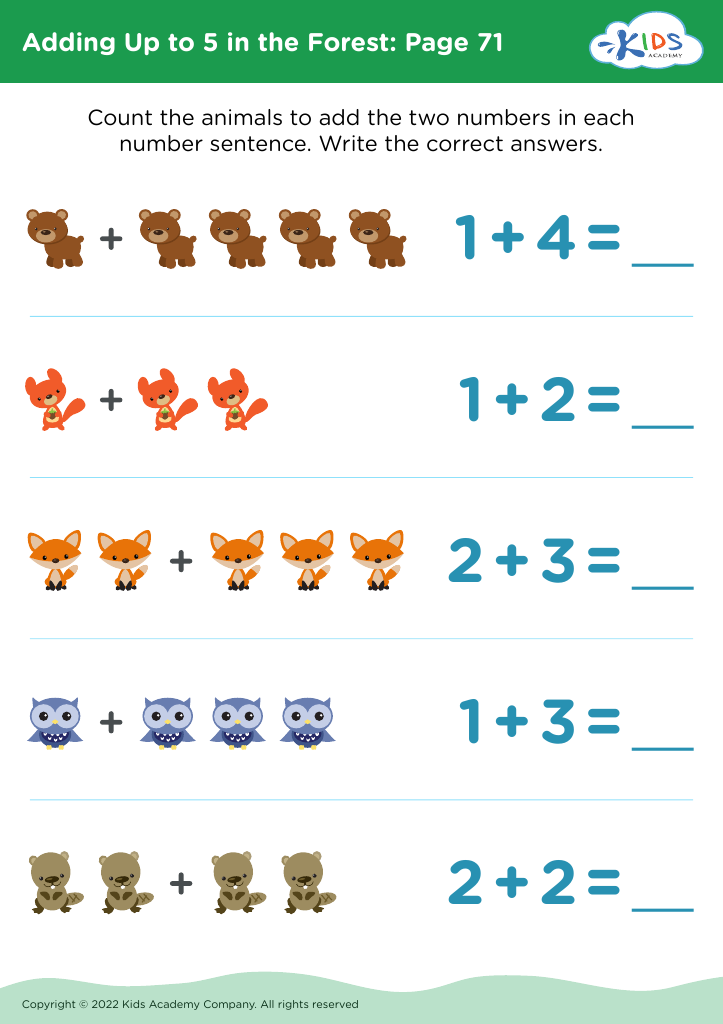
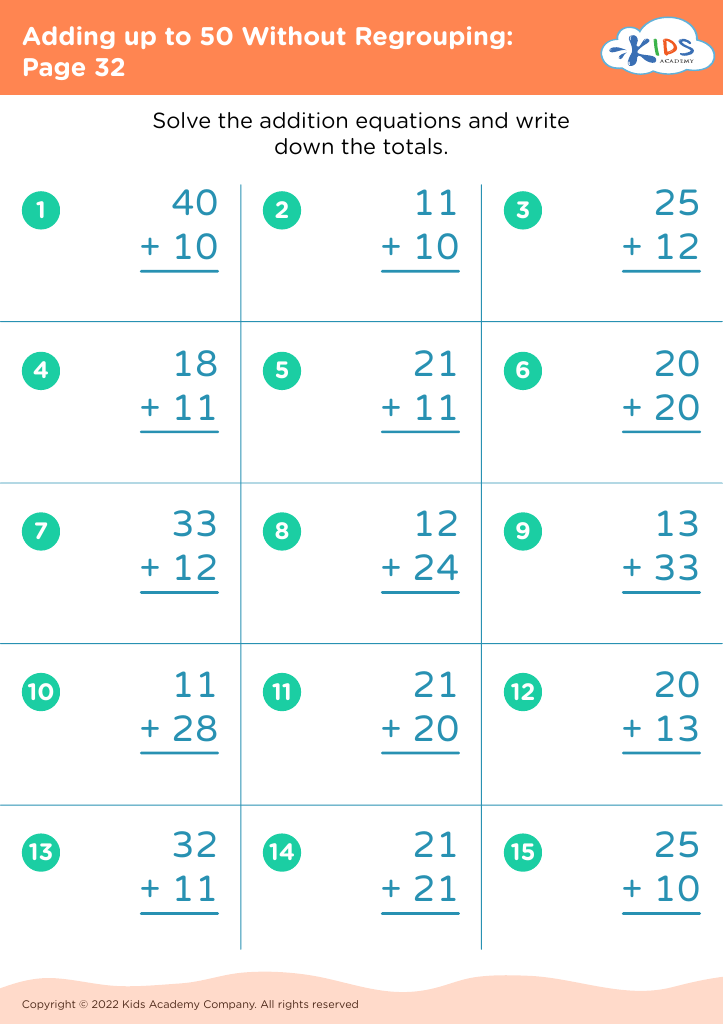
Enhance your child's math skills with our engaging Visual Perception Improvement Addition & Subtraction Worksheets, specifically designed for ages 5-9. These worksheets focus on developing essential visual perception skills, helping young learners recognize patterns, shapes, and spatial relationships vital for mastering mathematics. Each worksheet features colorful illustrations and age-appropriate exercises, ensuring that learning remains fun and interactive. By integrating visual perception activities with addition and subtraction practice, children will gain confidence and improve their problem-solving abilities. Explore our diverse collection to support your child's mathematical journey and watch them thrive in their early learning environment!
Favorites
With answer key
Interactive
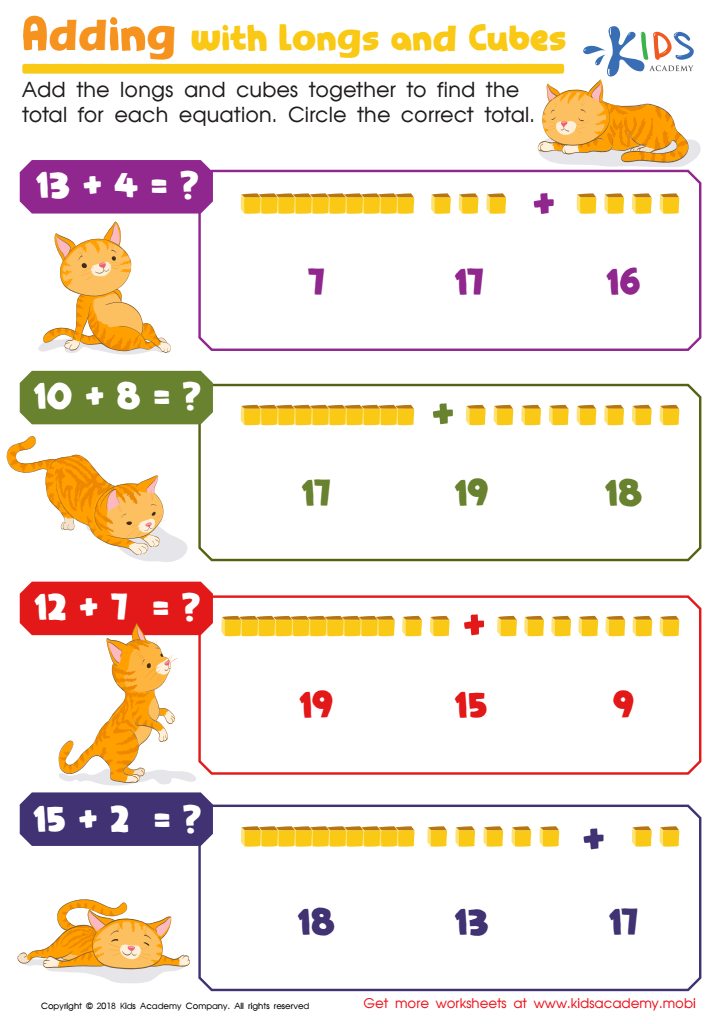
Adding With Longs and Cubes Worksheet
Math might not be your child's favorite, but they must master it to advance. If they're having difficulties or don't like it, use this worksheet to make it easier. Have them add longs and cubes together to find the total for each question, then circle the correct answer. This exercise can help make math experiences better.
 Assign to My Students
Adding With Longs and Cubes Worksheet
Worksheet
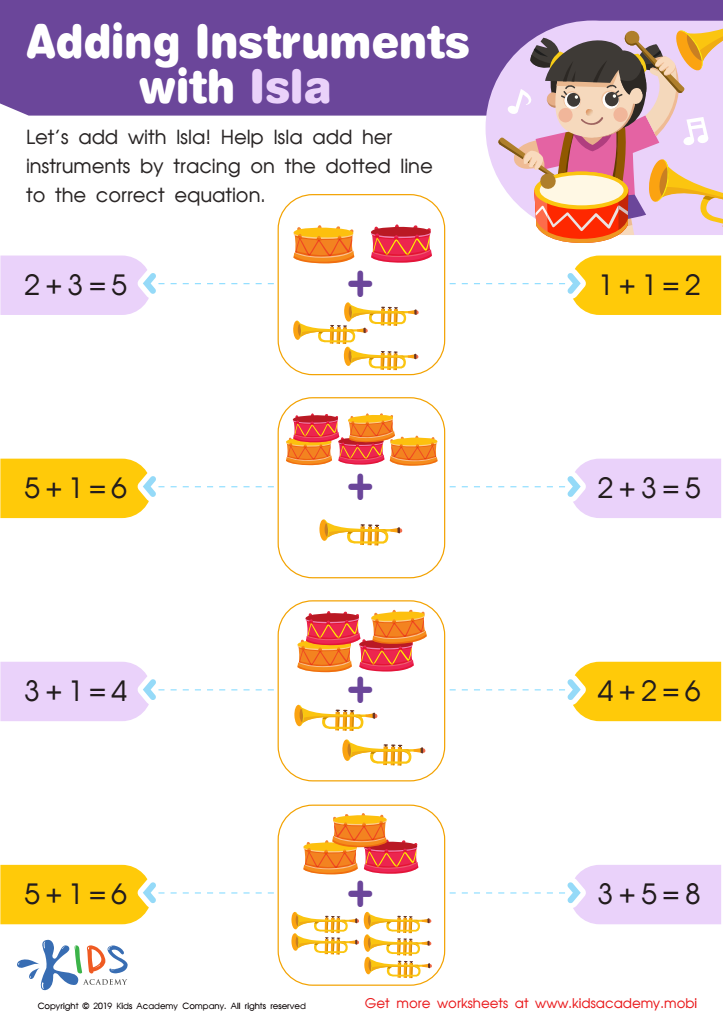
Adding Instruments with Isla Worksheet
Your kids can have fun helping Isla add her musical instruments. With colorful pics and one-to-one representation, they can pick the correct addition sentence. They can connect each pic with traceable lines and get to the right sum up to 10.
Adding Instruments with Isla Worksheet
Worksheet
Join Kids Academy for Free
Who is primarily going to use this learning content?








Visual perception plays a crucial role in early math skills, particularly in addition and subtraction for children ages 5-9. This cognitive skill helps children interpret and process visual information, which is vital for understanding numbers and mathematical concepts. Improved visual perception enhances a child's ability to recognize patterns, shapes, and numerical relationships, leading to greater confidence and competence in tackling math problems.
Parents and teachers should prioritize visual perception improvement because it builds the foundation for future academic success. Children with strong visual perception skills can better grasp spatial reasoning, which translates to not only math but also science and technology subjects. Enhancing these skills at an early age can reduce math anxiety, enabling students to engage more fully in learning activities.
Additionally, incorporating fun visual games and activities can make learning addition and subtraction enjoyable. Tools like puzzles, board games, and interactive apps can capture children's interest while developing essential skills. Cultivating visual perception not only aids in math proficiency but also boosts overall cognitive development, critical thinking, and problem-solving abilities. By nurturing these skills early on, parents and teachers can help set children on a path to lifelong learning and success in academics.








