Filters

271 filtered results

Clear all filters
Favorites
With answer key
Interactive

271 filtered results

Difficulty Level

Grade


Check out this FREE Trial Lesson on Addition for age 5-9!

Match Exactly the Same

Favorites
With answer key
Interactive
  • 5-9
  • Basic Addition Skills
  • Addition
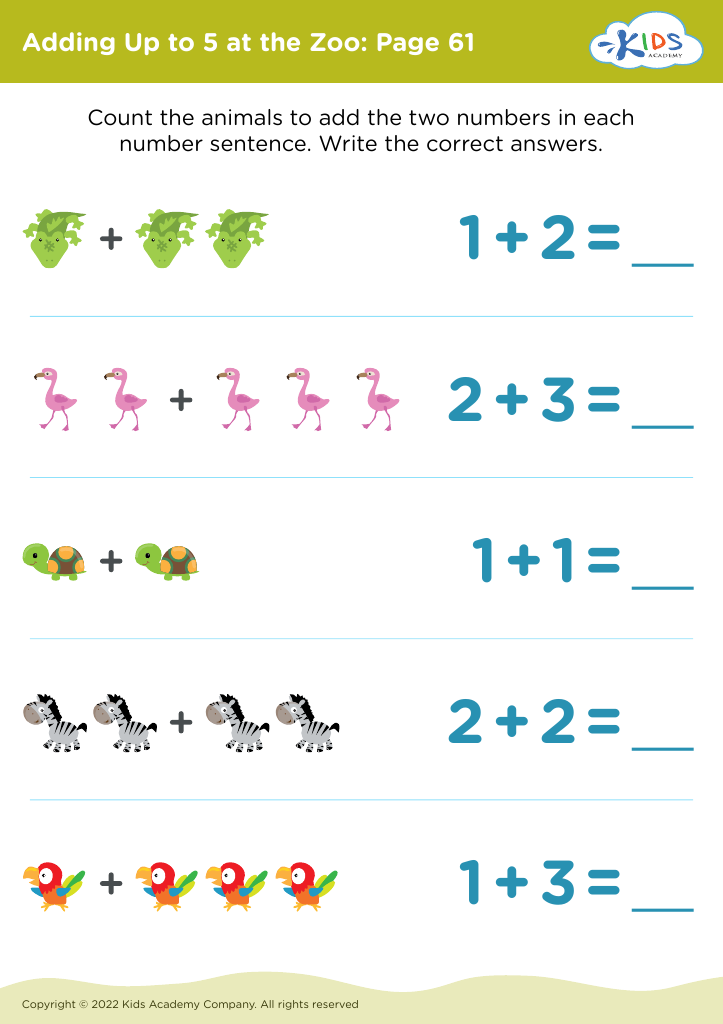
Adding Up to 5 at the Zoo: Page 61
Worksheet
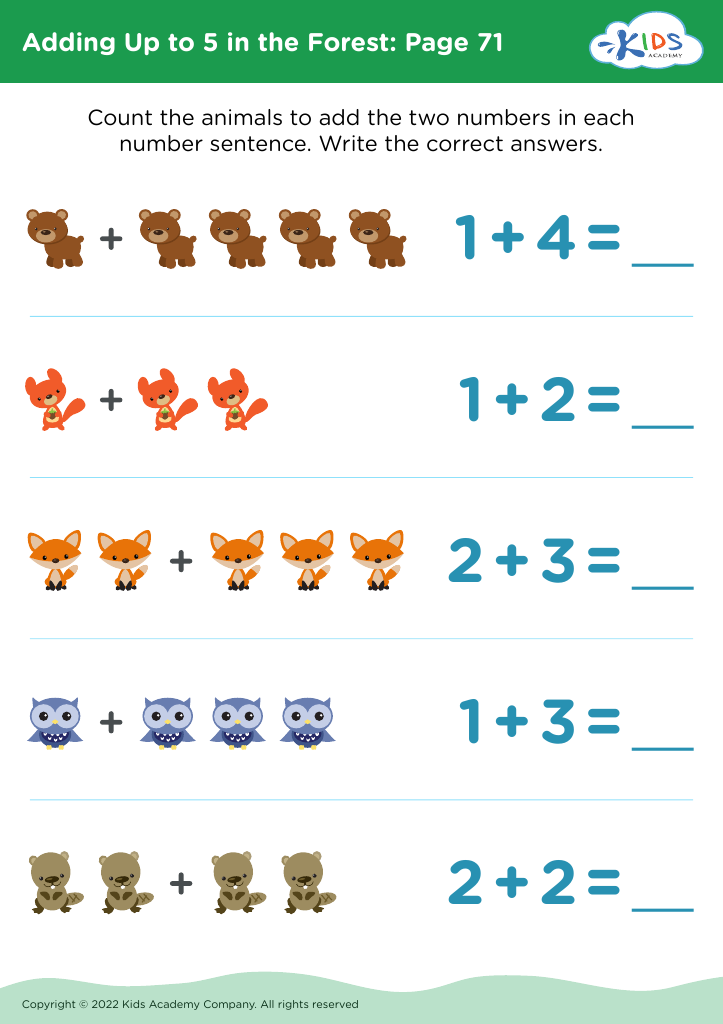
Adding Up to 5 in the Forest: Page 71
Worksheet
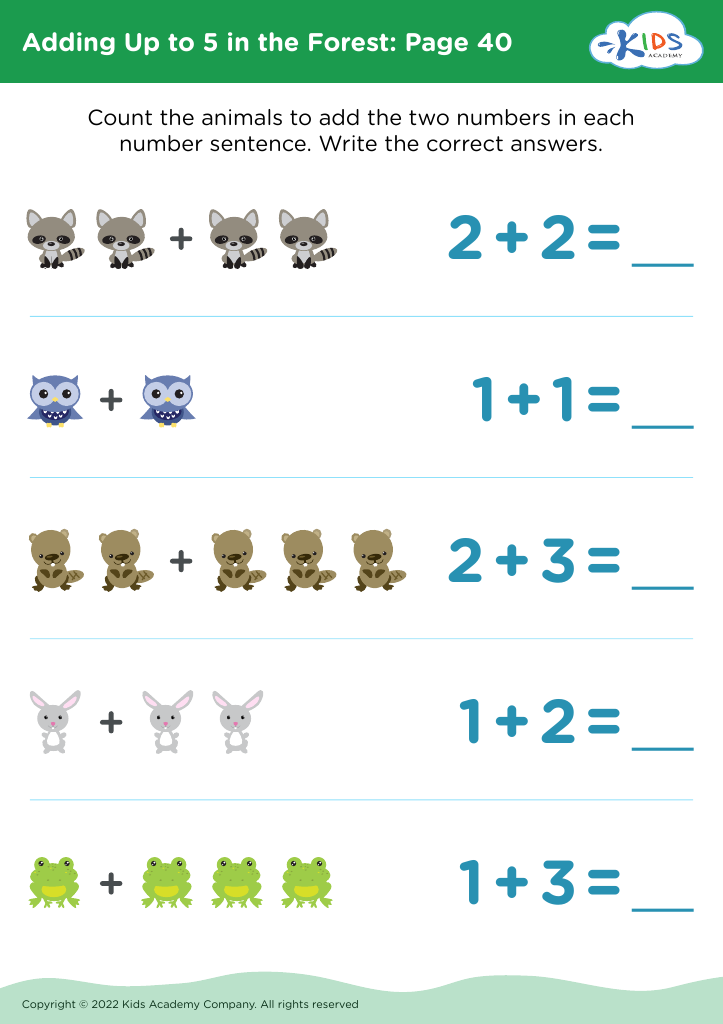
Adding Up to 5 in the Forest: Page 40
Worksheet
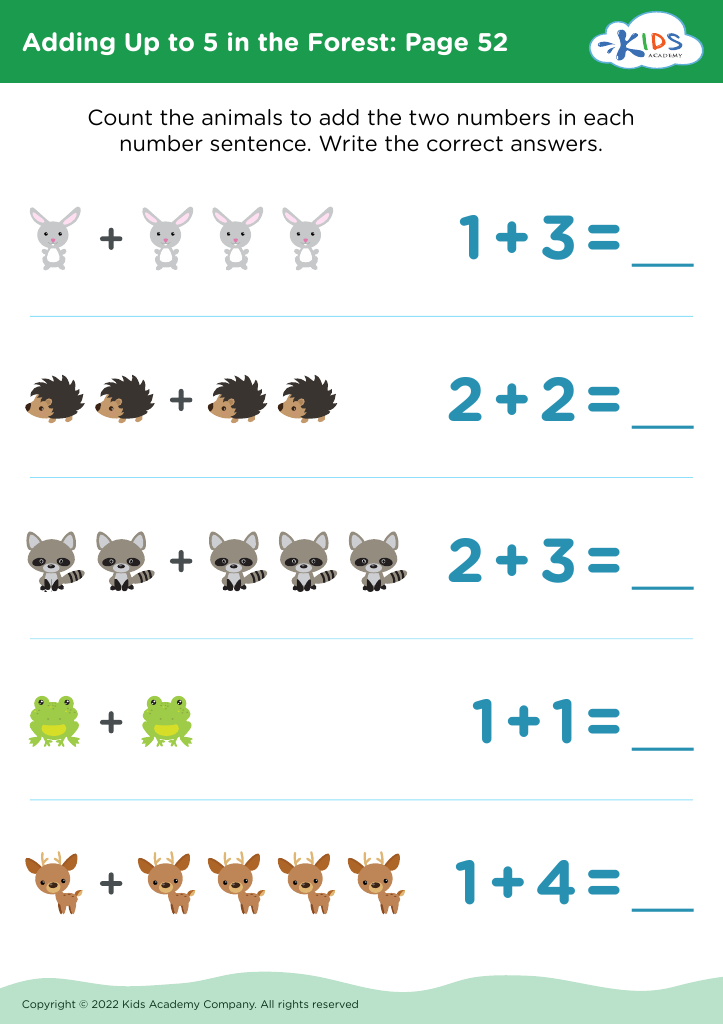
Adding Up to 5 in the Forest: Page 52
Worksheet
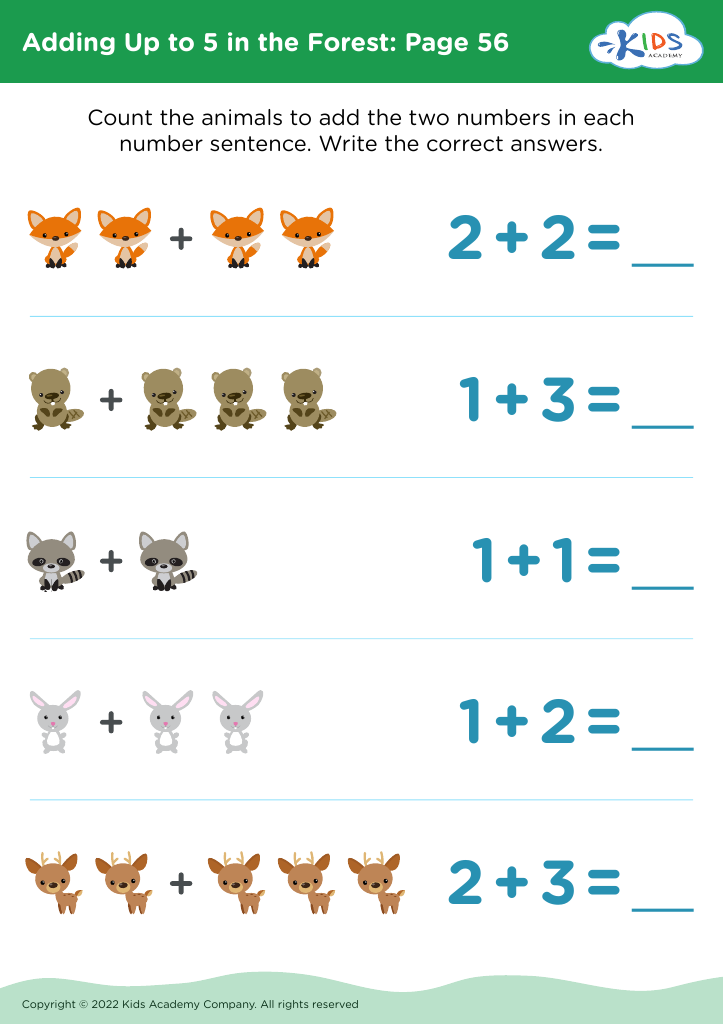
Adding Up to 5 in the Forest: Page 56
Worksheet
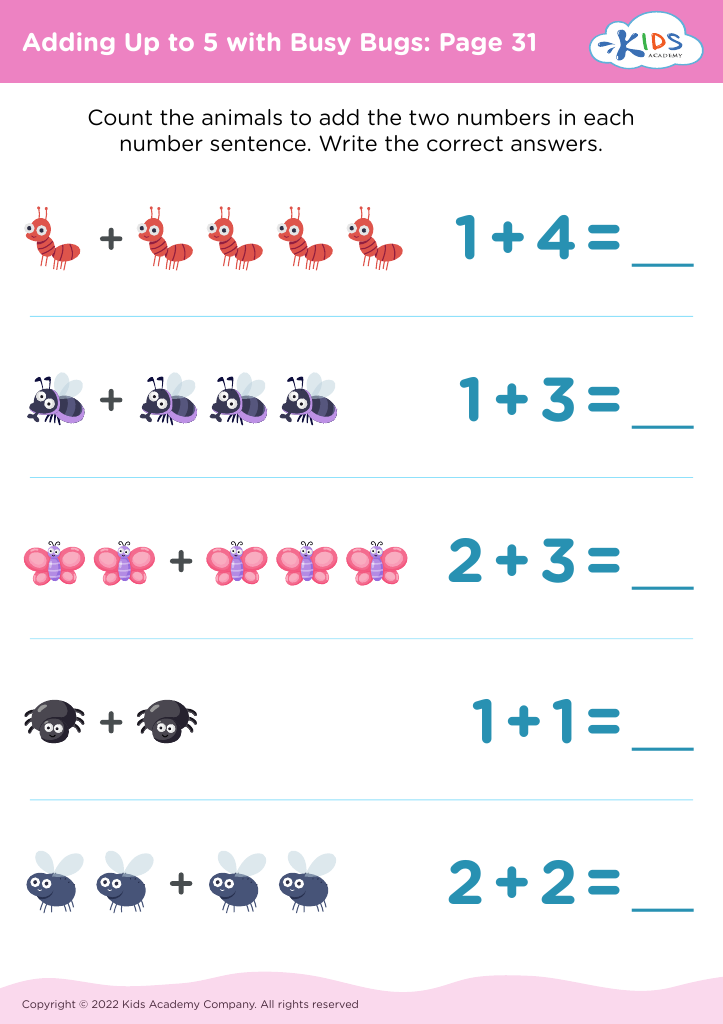
Adding Up to 5 with Busy Bugs: Page 31
Worksheet
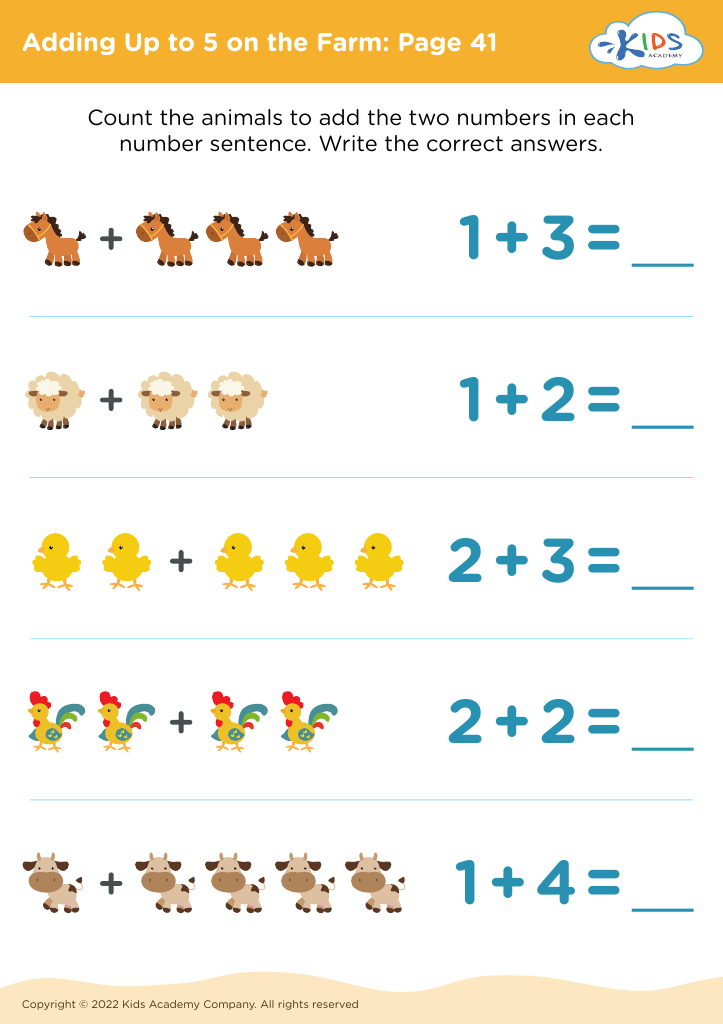
Adding Up to 5 on the Farm: Page 41
Worksheet
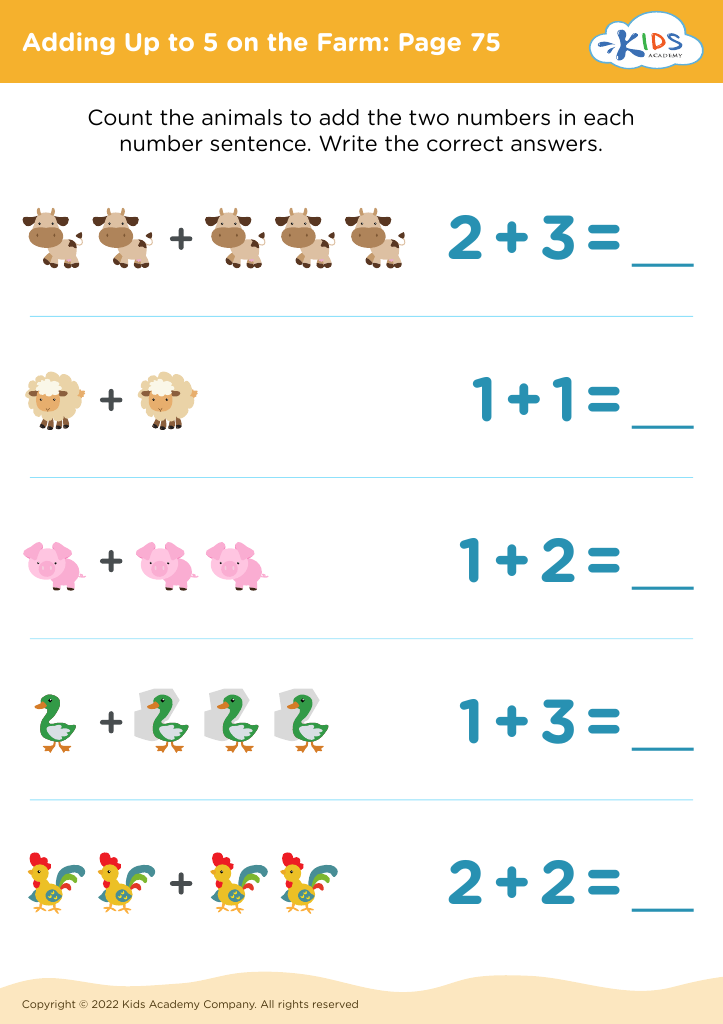
Adding Up to 5 on the Farm: Page 75
Worksheet
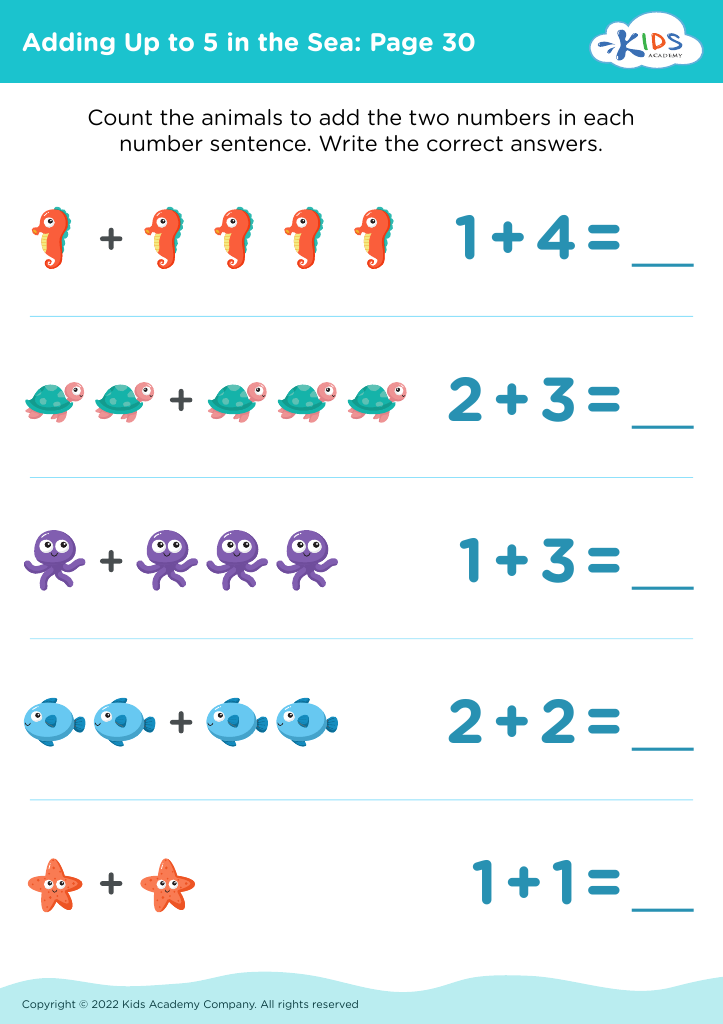
Adding Up to 5 in the Sea: Page 30
Worksheet
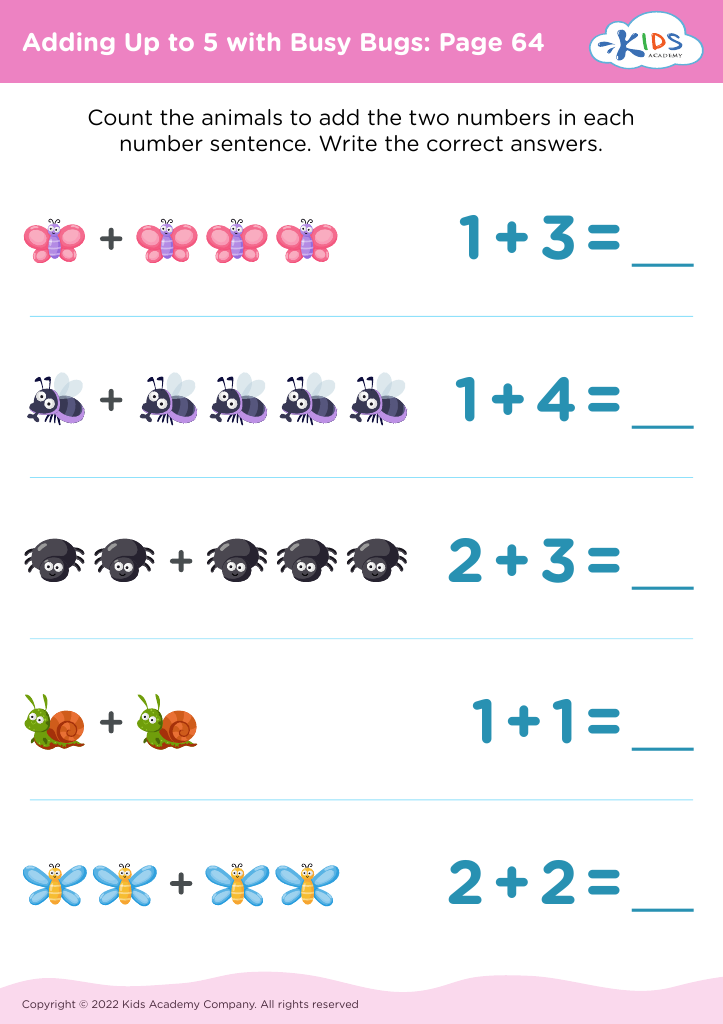
Adding Up to 5 with Busy Bugs: Page 64
Worksheet
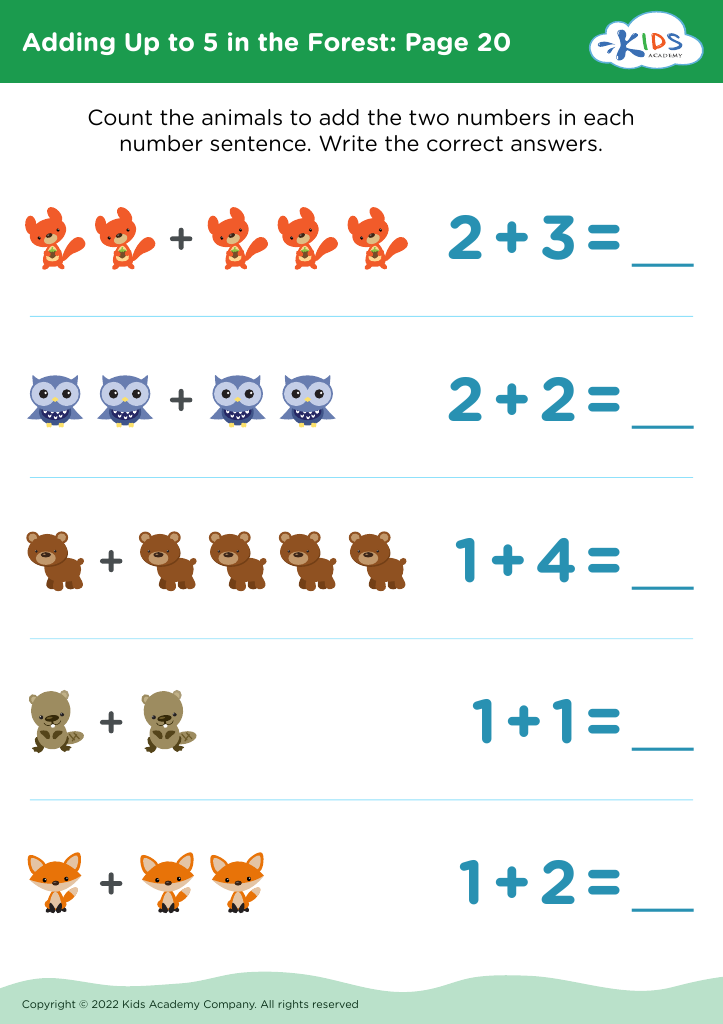
Adding Up to 5 in the Forest: Page 20
Worksheet
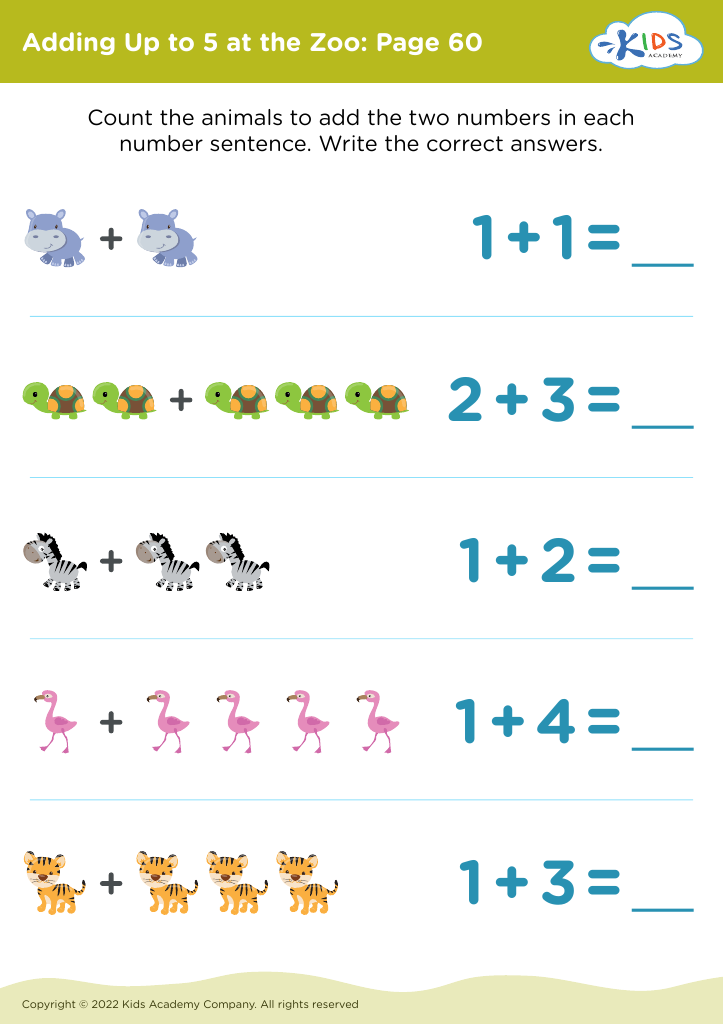
Adding Up to 5 at the Zoo: Page 60
Worksheet
Adding Up to 5 in the Sea: Page 31
Worksheet
Adding Up to 5 in the Forest: Page 53
Worksheet
Adding Up to 5 in the Forest: Page 70
Worksheet
Adding up to 1000 Without Regrouping: Page 30
Worksheet
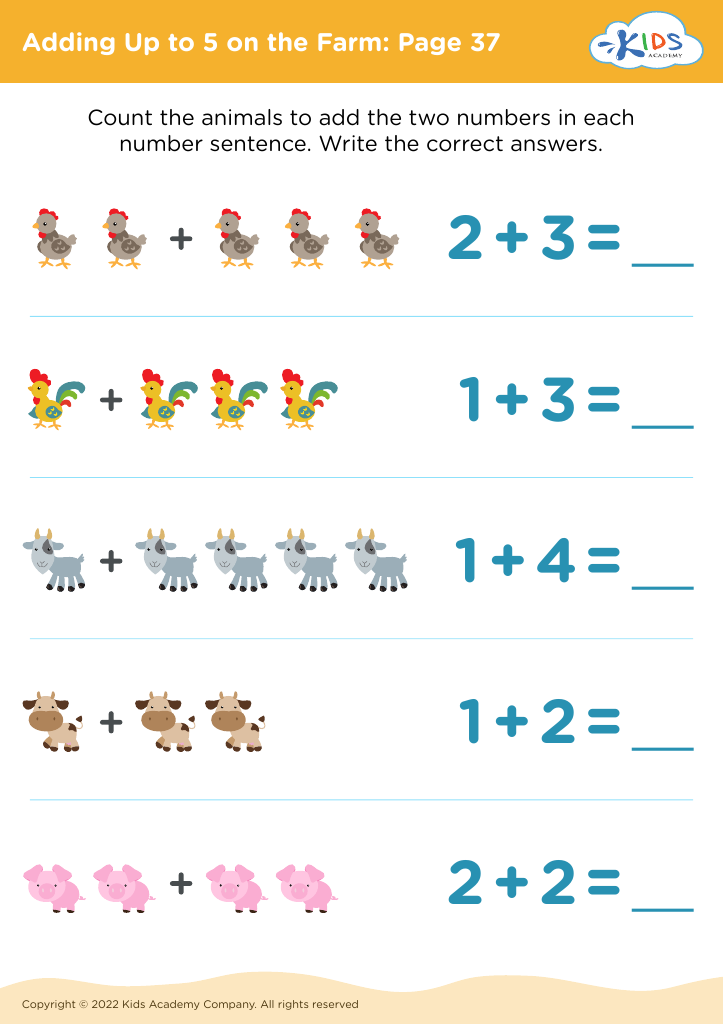
Adding Up to 5 on the Farm: Page 37
Worksheet
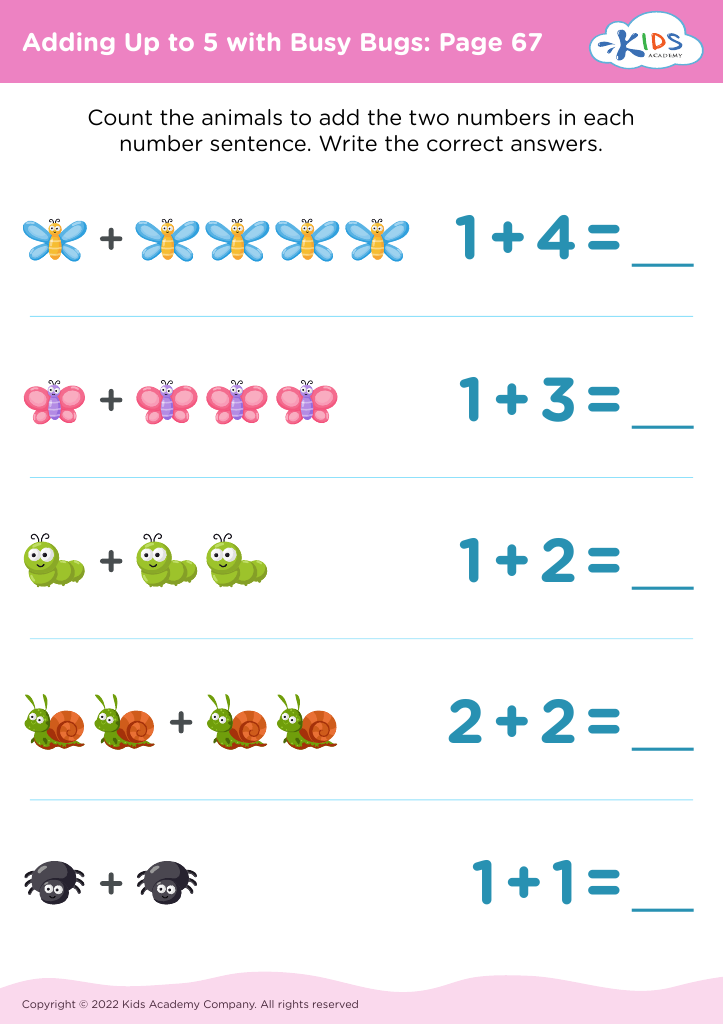
Adding Up to 5 with Busy Bugs: Page 67
Worksheet
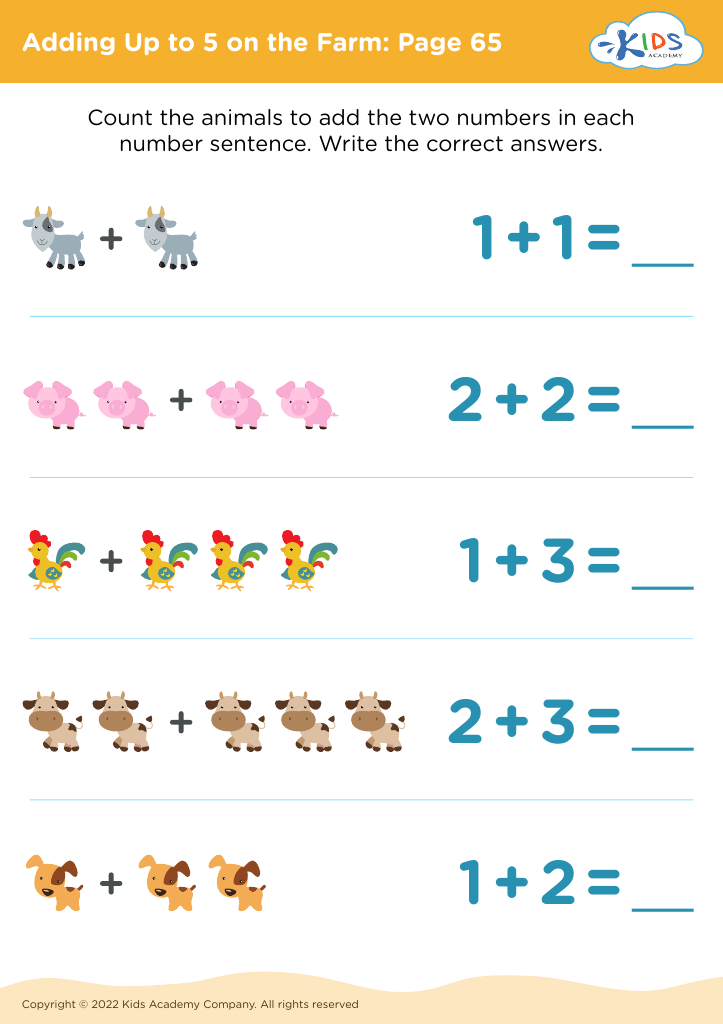
Adding Up to 5 on the Farm: Page 65
Worksheet
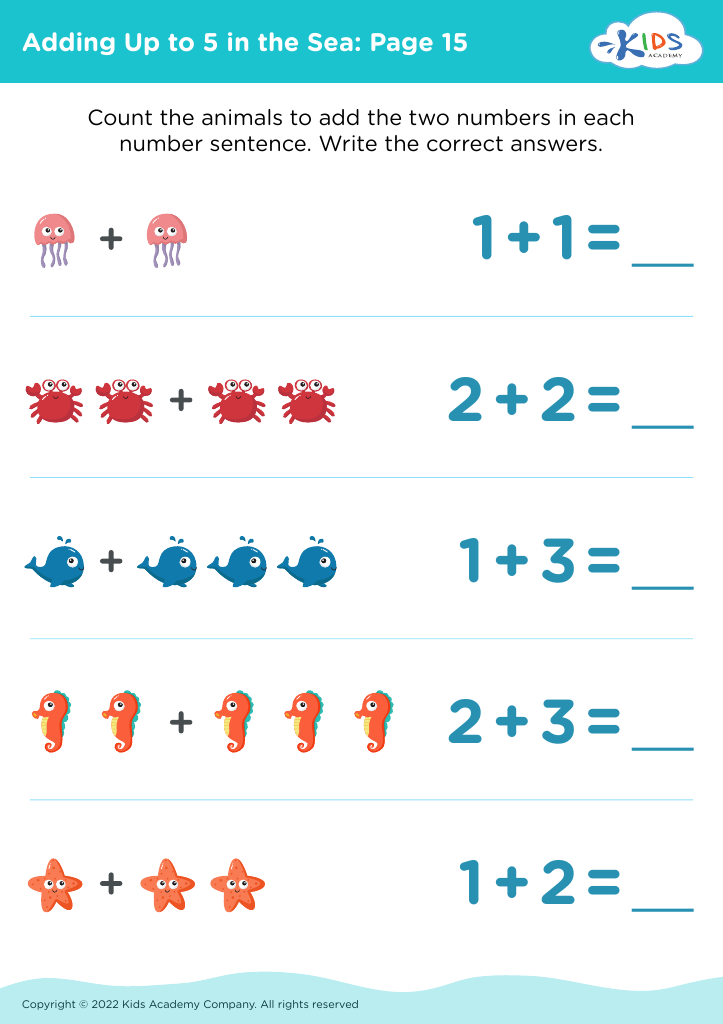
Adding Up to 5 in the Sea: Page 15
Worksheet
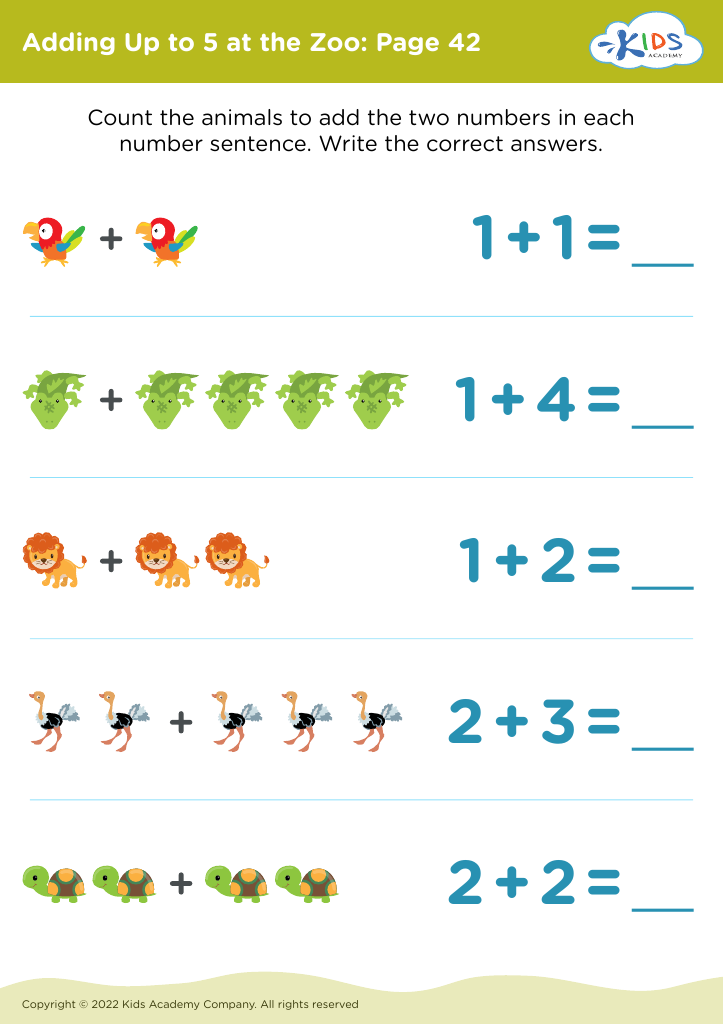
Adding Up to 5 at the Zoo: Page 42
Worksheet
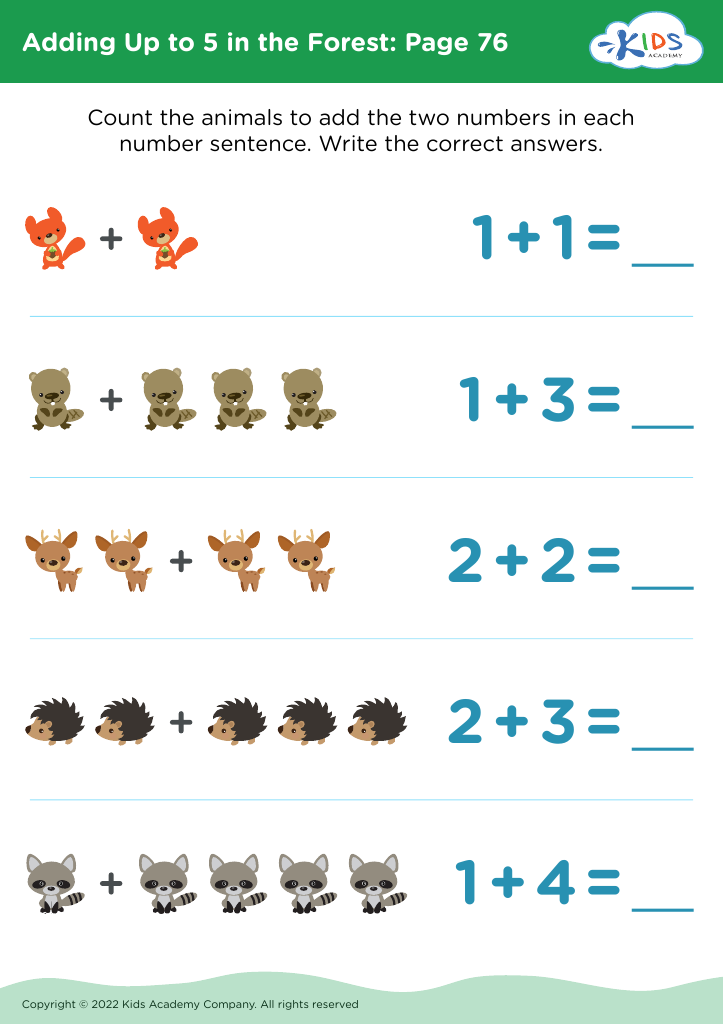
Adding Up to 5 in the Forest: Page 76
Worksheet
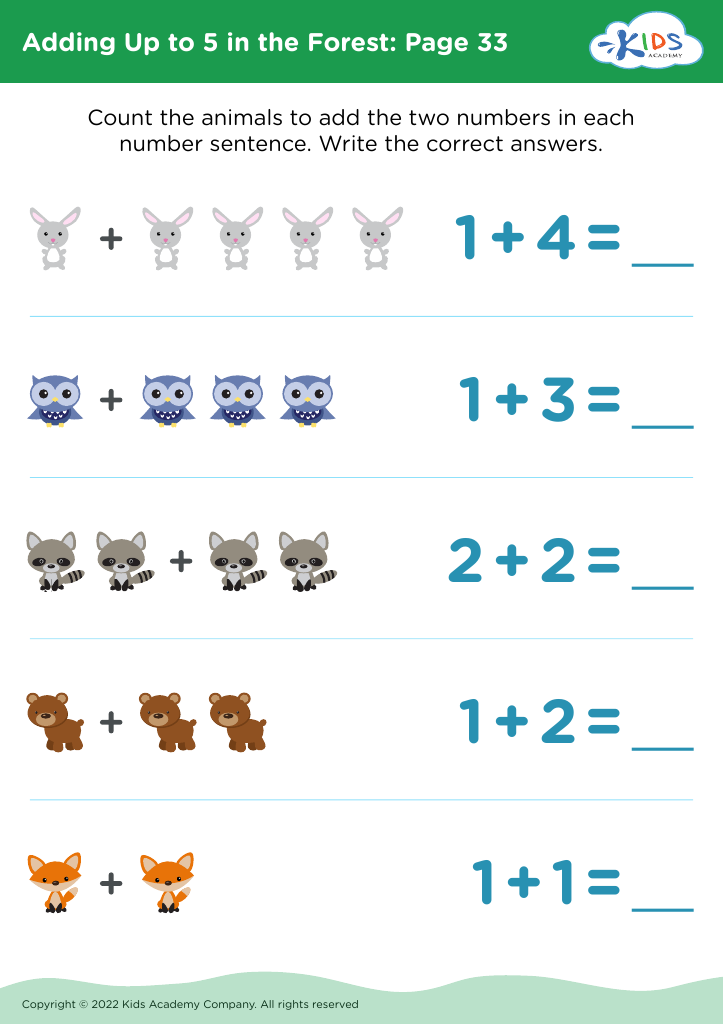
Adding Up to 5 in the Forest: Page 33
Worksheet
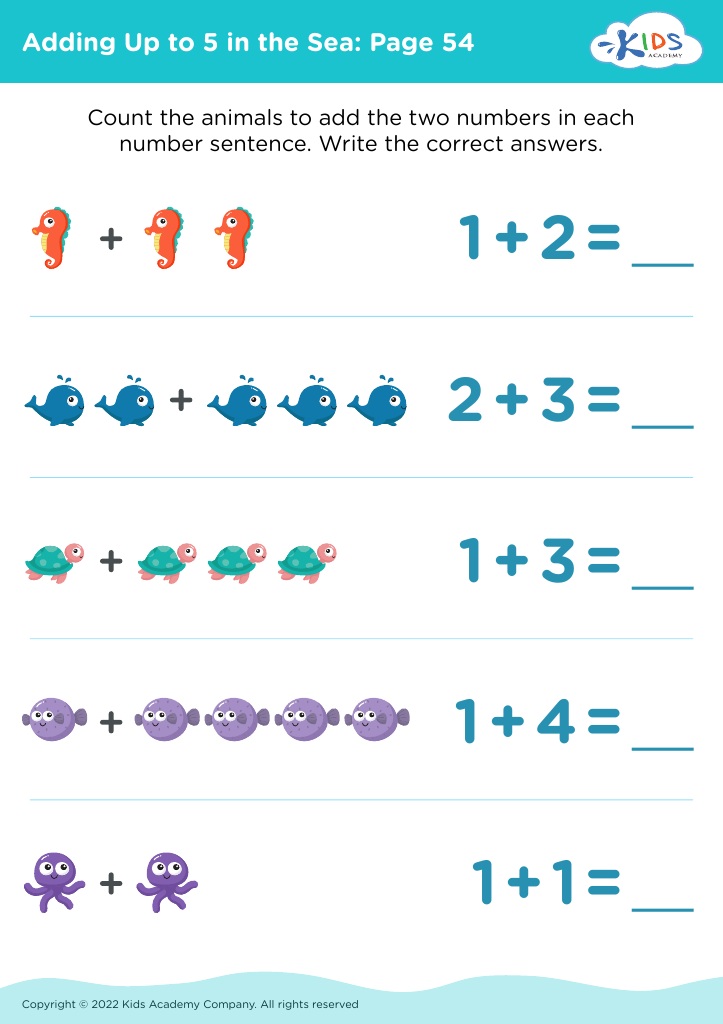
Adding Up to 5 in the Sea: Page 54
Worksheet


Basic addition skills are a cornerstone of early mathematical understanding and are crucial for children aged 5-9. For parents and teachers, fostering these skills is essential because they form the foundation for more advanced mathematical concepts. Children proficient in basic addition are more likely to develop confidence in their overall math abilities, making future learning less intimidating.

At this young age, kids are developing cognitive skills such as memory, attention, and logical thinking. Basic addition exercises these faculties by requiring children to hold numbers in their minds, follow sequential steps, and understand numerical relationships. Success in these tasks boosts self-esteem and reinforces a positive attitude toward learning.

Moreover, basic addition is crucial for real-world applications. Whether it's counting money, telling time, or measuring ingredients for a recipe, mastering addition helps children navigate daily tasks effectively. Early proficiency ensures they can understand and perform these activities without frustration.

Furthermore, practicing basic addition enhances problem-solving skills. It teaches children to break down complex tasks into simpler steps and explore different strategies to find solutions.

In summary, parents and teachers should prioritize basic addition skills for ages 5-9 to ensure a solid mathematical foundation, build critical cognitive abilities, and prepare children for both academic and real-life challenges.