Fine motor development Addition Worksheets for Ages 5-9
4 filtered results
-
From - To
Boost your child's arithmetic and fine motor skills with our specialized Fine Motor Development Addition Worksheets for ages 5-9. These engaging, expertly-designed worksheets combine the excitement of math addition exercises with activities like tracing, cutting, and coloring, all aimed at enhancing pencil control and hand-eye coordination. Perfect for young learners, our worksheets not only build essential mathematical foundations but also support crucial motor skills development through fun, interactive activities. Ideal for use at home or in the classroom, these worksheets offer a comprehensive approach to learning that stimulates both cognitive and physical growth in children.
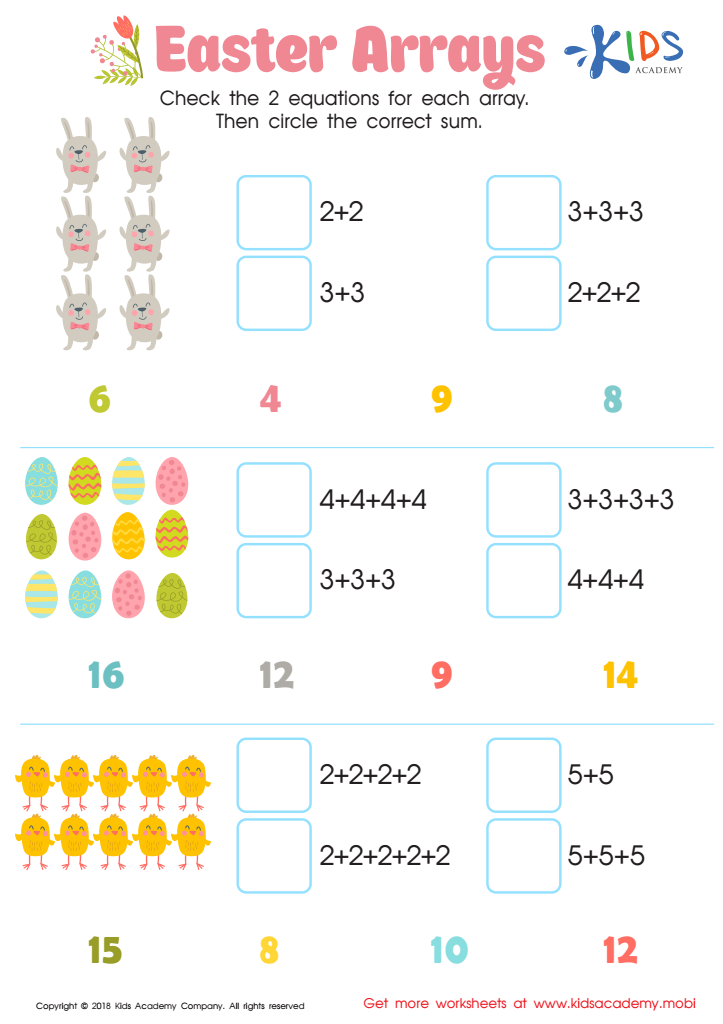
Easter Arrays Worksheet
 Assign to My Students
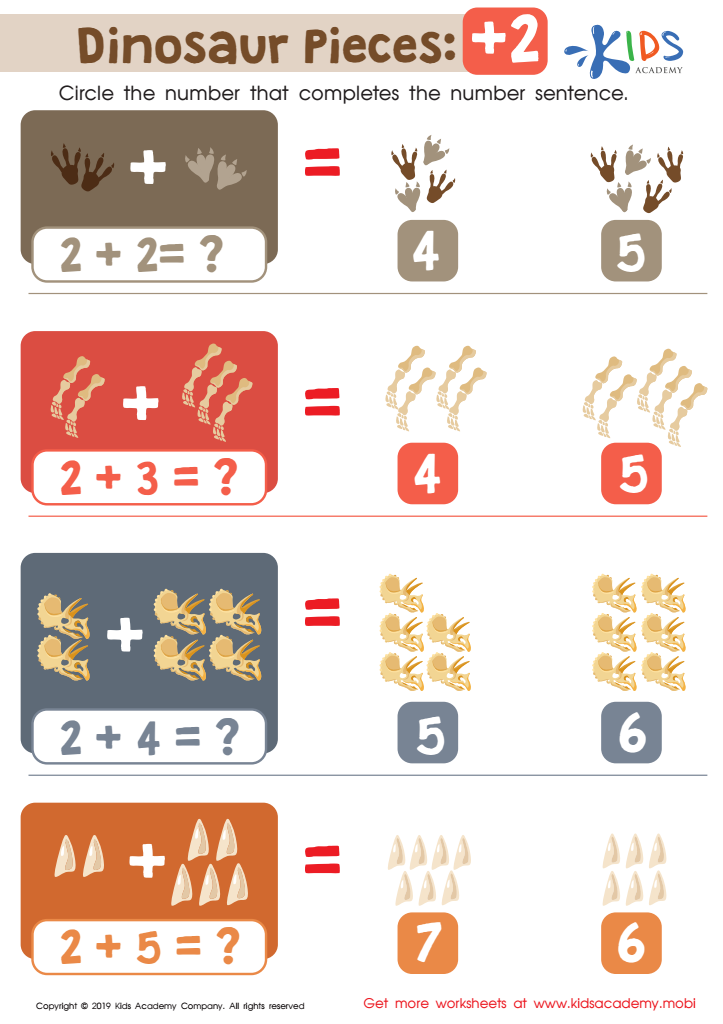
Dinosaur Pieces: +2 Worksheet




.jpg)



Parents and teachers should prioritize fine motor development in children aged 5-9 because it is fundamental for performing everyday activities and early educational tasks. Fine motor skills involve the coordination of small muscles in the hands and fingers, which are essential for tasks such as writing, buttoning clothes, using scissors, and even tying shoelaces. By enhancing these skills, children can become more independent and self-sufficient.
Additionally, fine motor development supports academic achievement and classroom participation. For instance, strong fine motor skills contribute to better handwriting, which is crucial for legible note-taking and effective communication. Improved dexterity also aids in art and craft activities, enhancing creativity and self-expression.
Moreover, developing these skills can boost a child's confidence and self-esteem. Success in small tasks helps children realize their potential and encourages a positive mindset towards learning and personal growth. Activities that promote fine motor skills also foster better visual-motor integration, essential for reading and mathematics.
Neglecting fine motor development can lead to frustration, academic delays, and challenges in daily life. Therefore, parents and teachers must engage children in age-appropriate activities like drawing, puzzles, and manipulative toys to cultivate these essential skills. Early attention to fine motor development sets the stage for lifelong success and well-being.








