Filters

21 filtered results

Clear all filters
Favorites
With answer key
Interactive

21 filtered results

Difficulty Level

Grade


Welcome to our "Recognizing Patterns Addition Worksheets" designed specifically for children ages 5-9! These engaging worksheets help young learners develop essential math skills by identifying and completing patterns through addition. By recognizing numerical sequences and applying these patterns, children enhance their problem-solving abilities and boost confidence in math. Our vivid and interactive worksheets provide a fun, hands-on approach to learning, making maths enjoyable and accessible. Ideal for home or classroom settings, these resources align with educational standards and cater to different learning styles. Start your child's journey to math mastery today with our thoughtfully crafted addition worksheets!
Check out this FREE Trial Lesson on Addition for age 5-9!

P

Favorites
With answer key
Interactive
  • 5-9
  • Recognizing Patterns
  • Addition
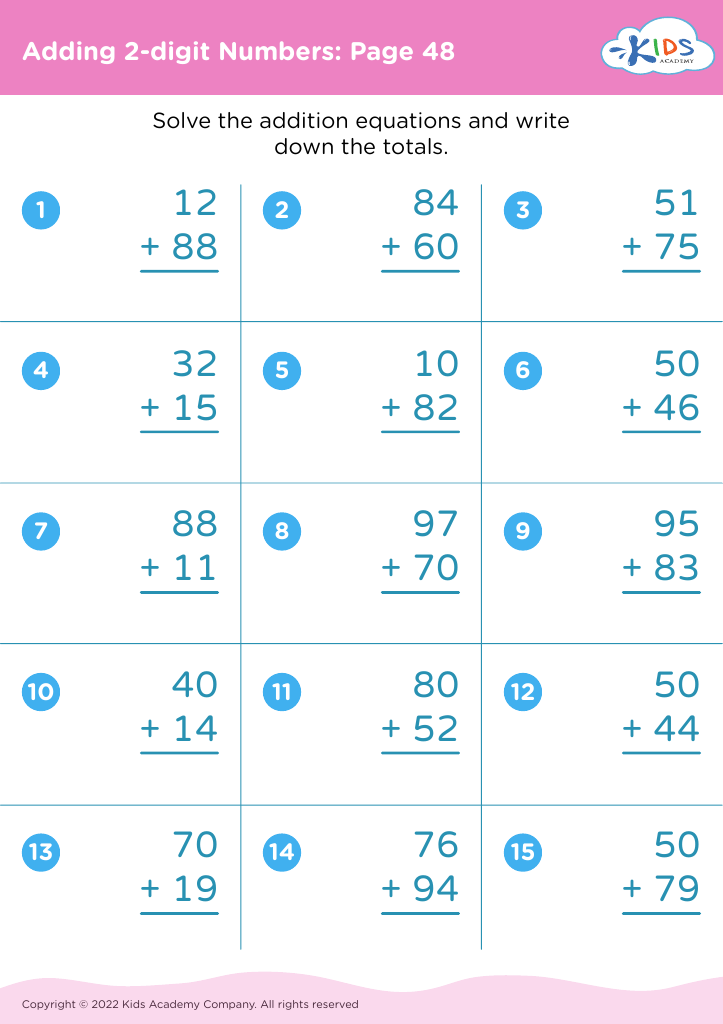
Adding 2-digit Numbers: Page 48

Adding 2-digit Numbers: Page 48

Adding 2-digit Numbers: Page 48
Worksheet
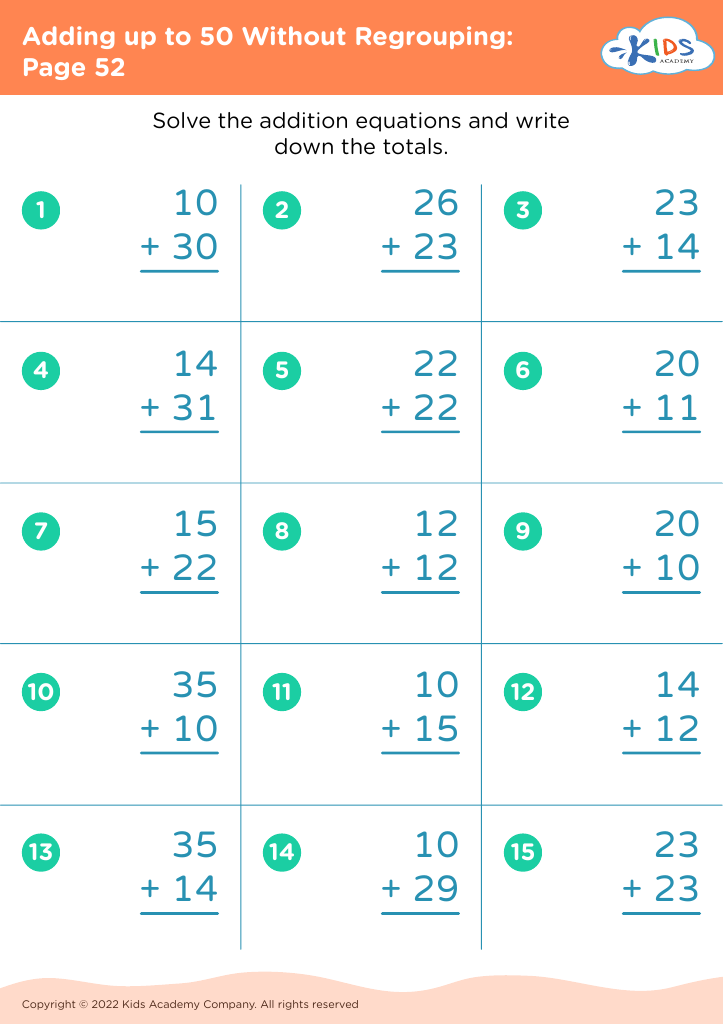
Adding up to 50 Without Regrouping: Page 52
Worksheet
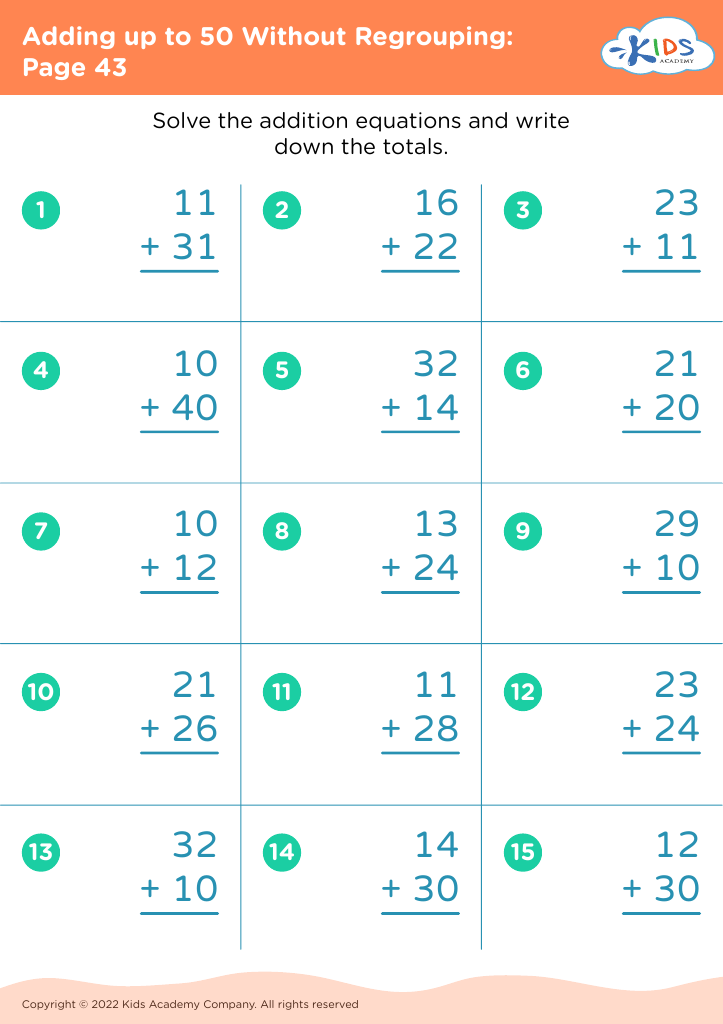
Adding up to 50 Without Regrouping: Page 43
Worksheet
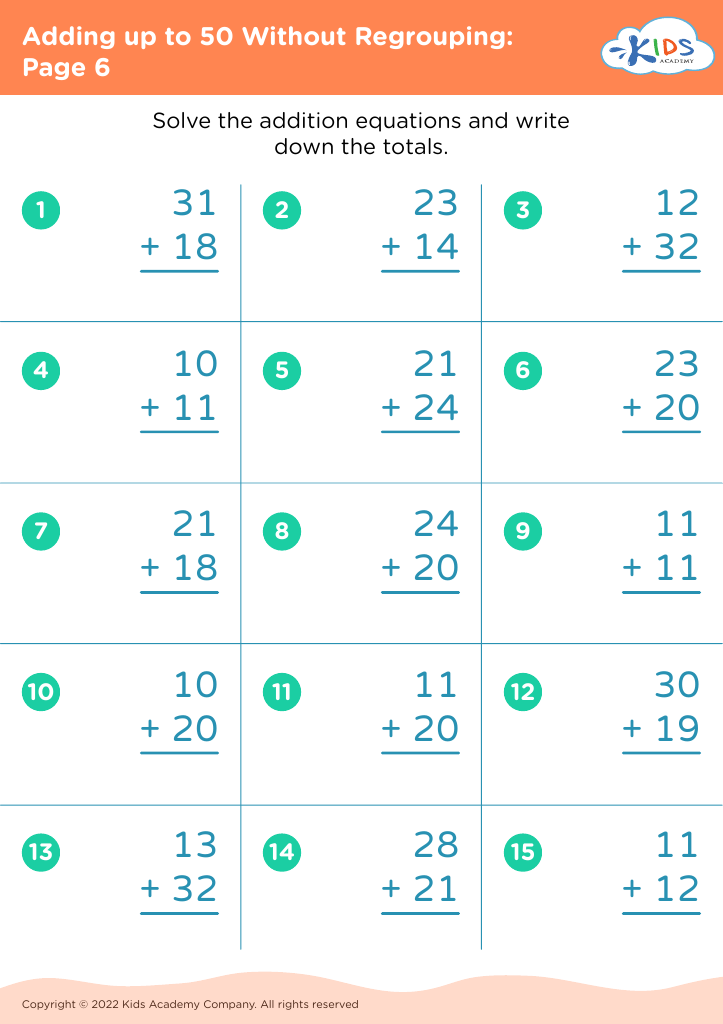
Adding up to 50 Without Regrouping: Page 6
Worksheet
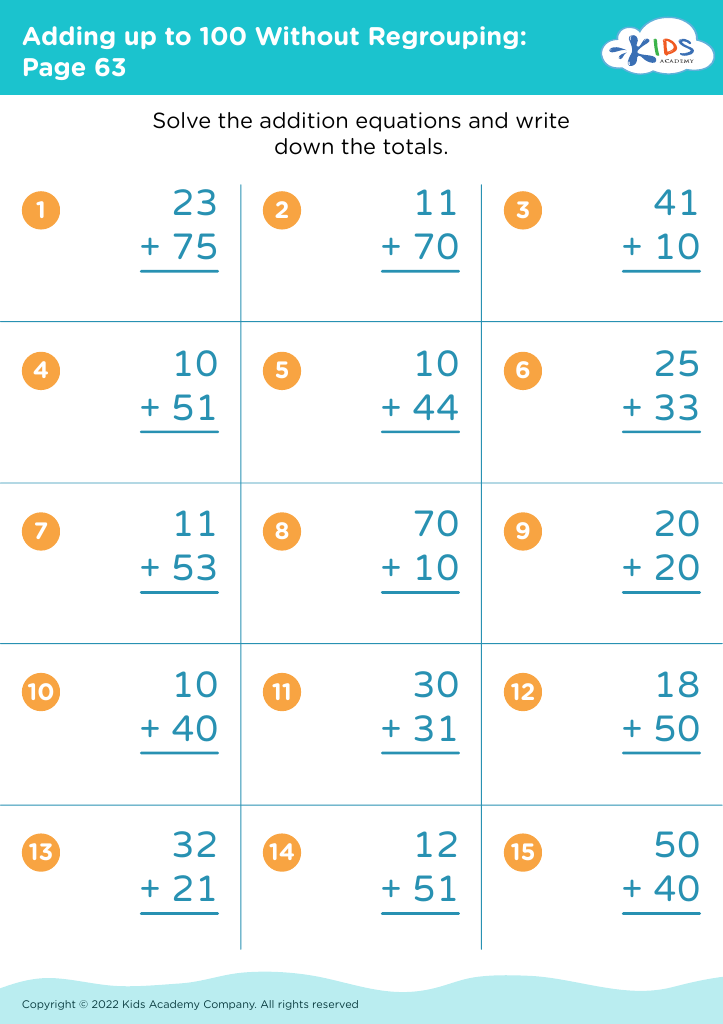
Adding up to 100 Without Regrouping: Page 63
Worksheet
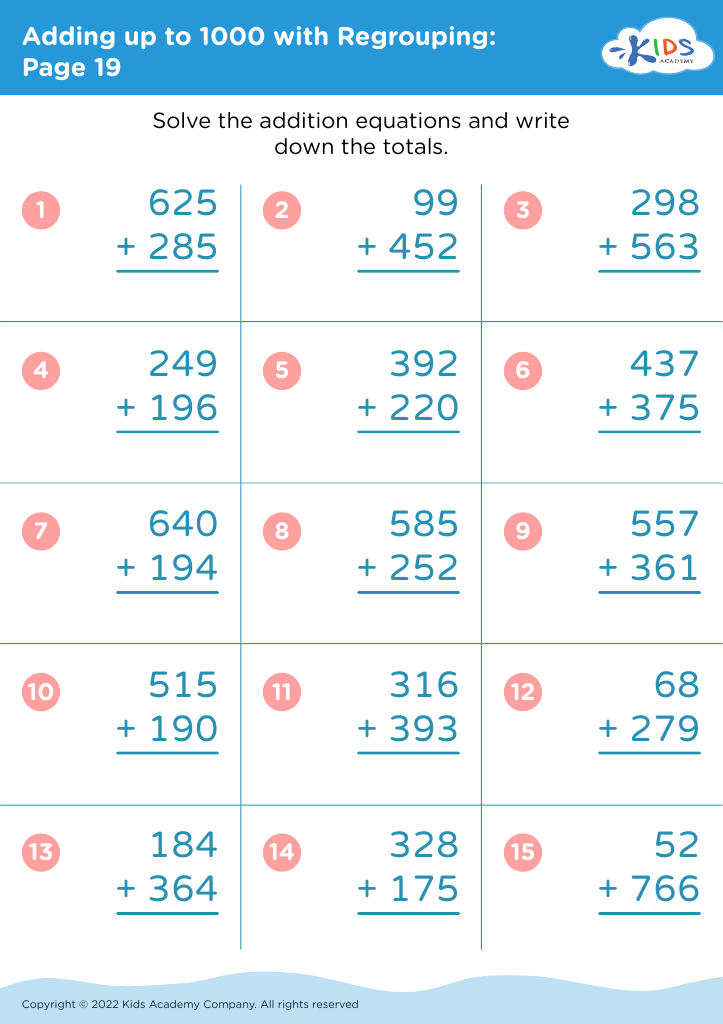
Adding up to 1000 with Regrouping: Page 19
Worksheet
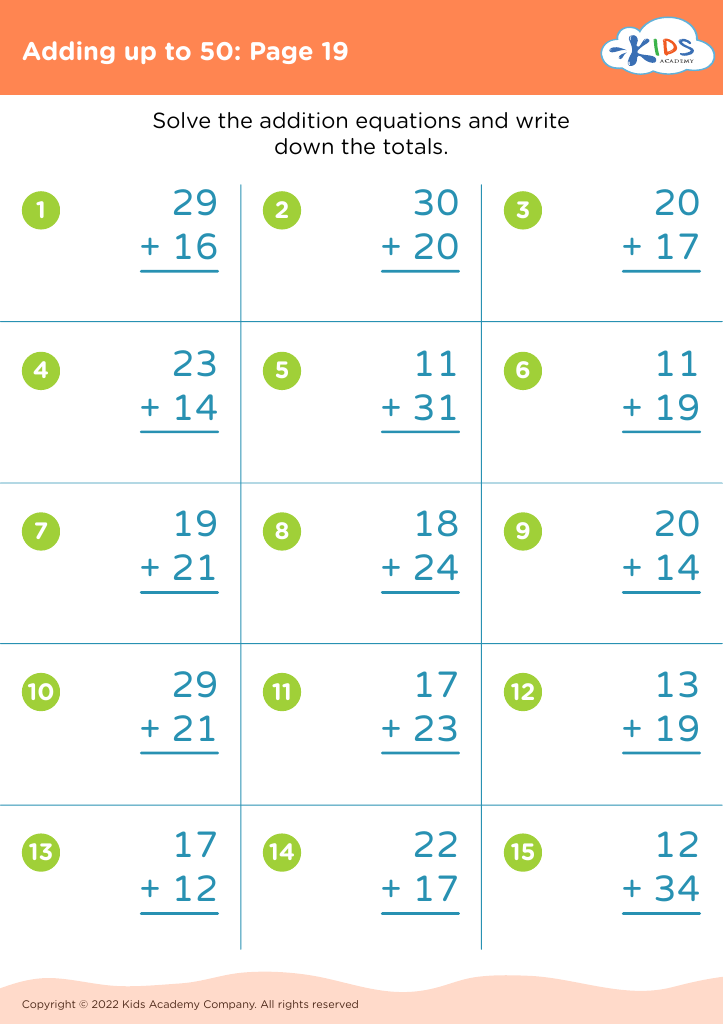
Adding up to 50: Page 19

Adding up to 50: Page 19

Adding up to 50: Page 19
Worksheet
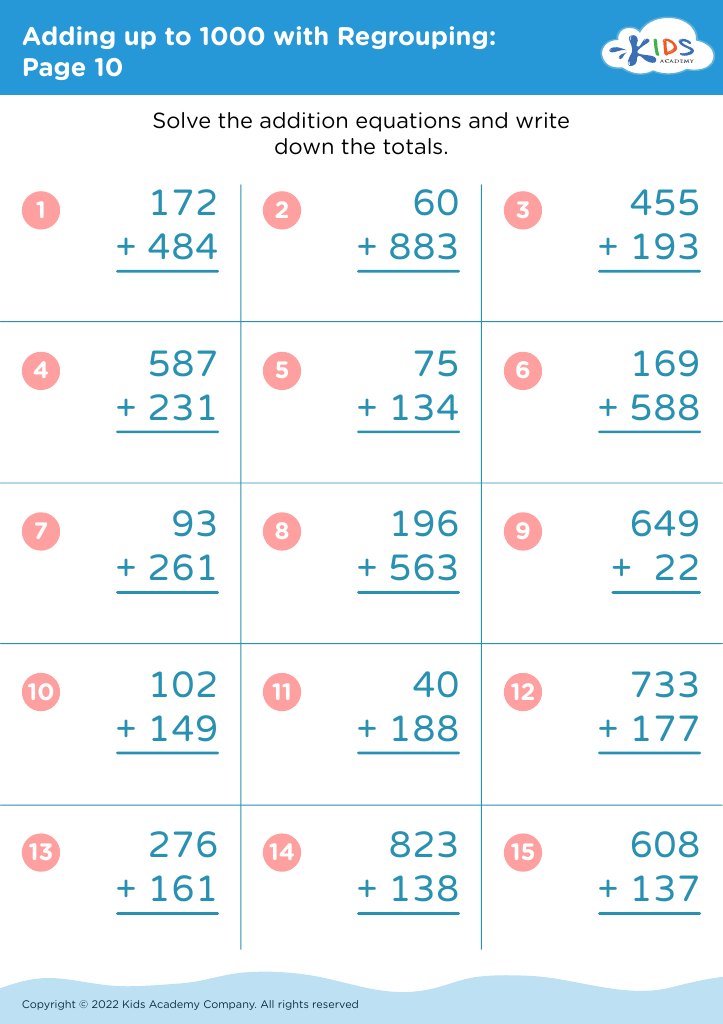
Adding up to 1000 with Regrouping: Page 10
Worksheet
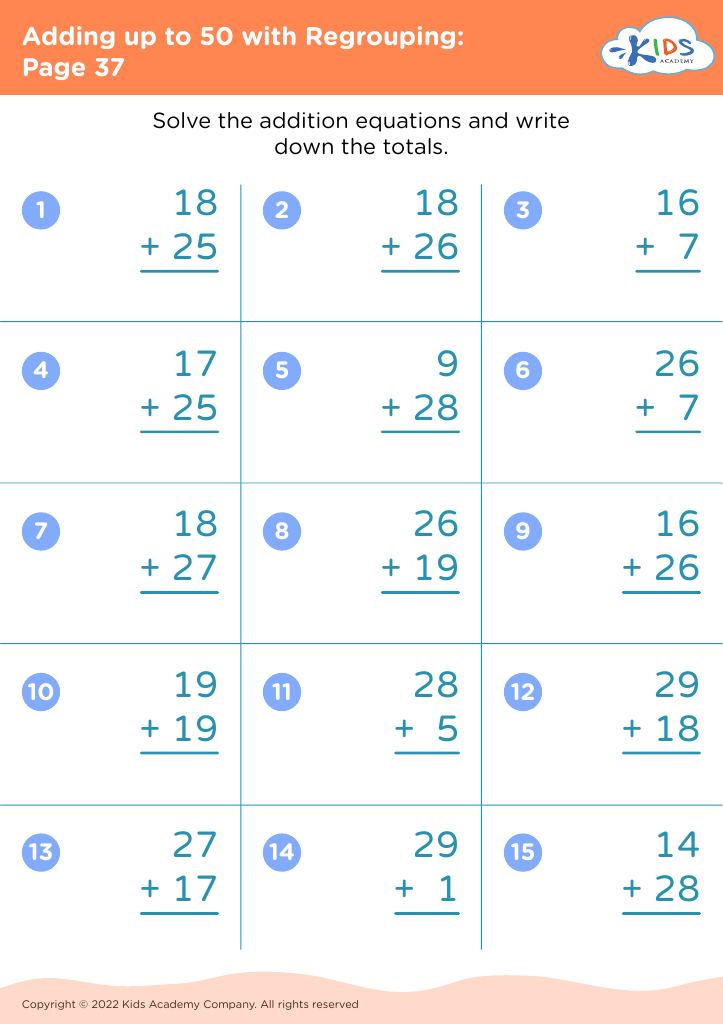
Adding up to 50 with Regrouping: Page 37
Worksheet
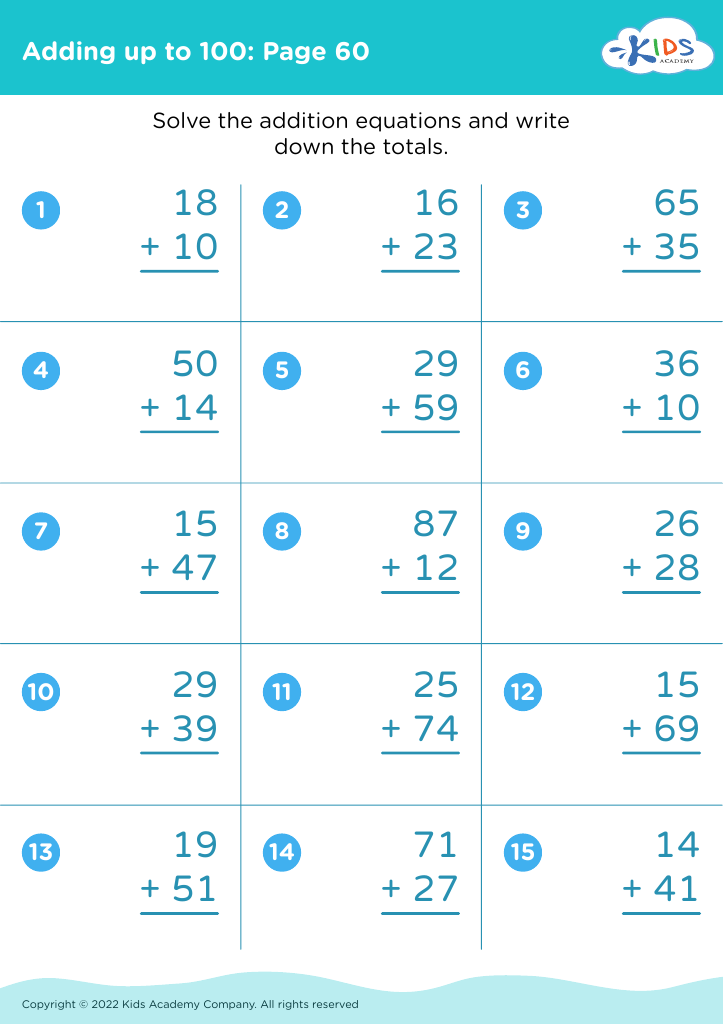
Adding up to 100: Page 60

Adding up to 100: Page 60

Adding up to 100: Page 60
Worksheet
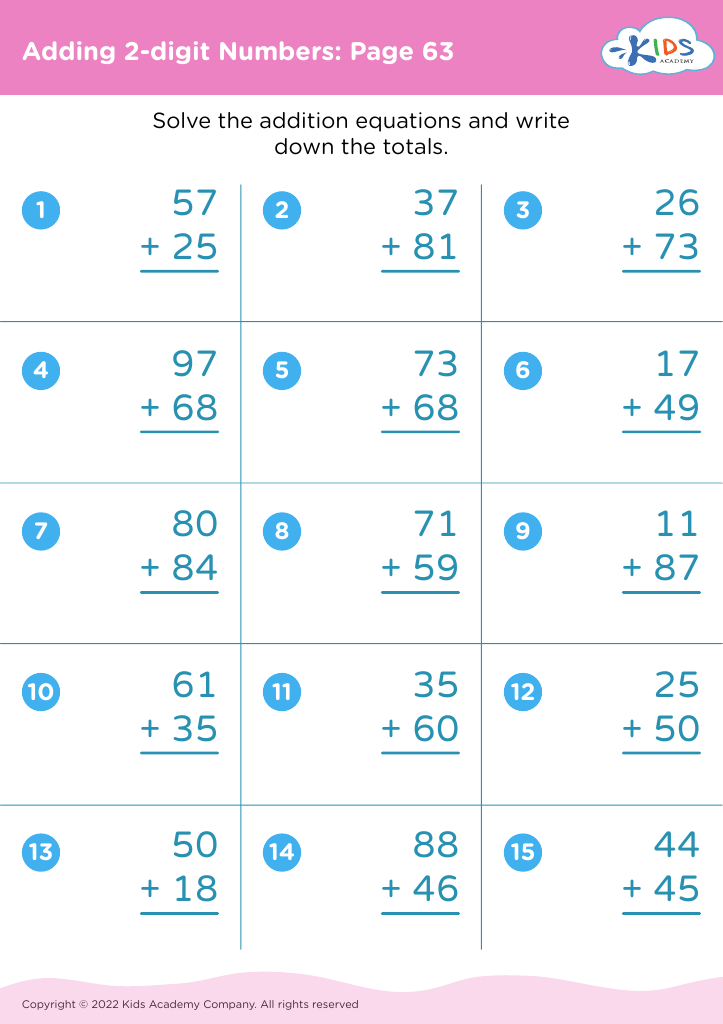
Adding 2-digit Numbers: Page 63

Adding 2-digit Numbers: Page 63

Adding 2-digit Numbers: Page 63
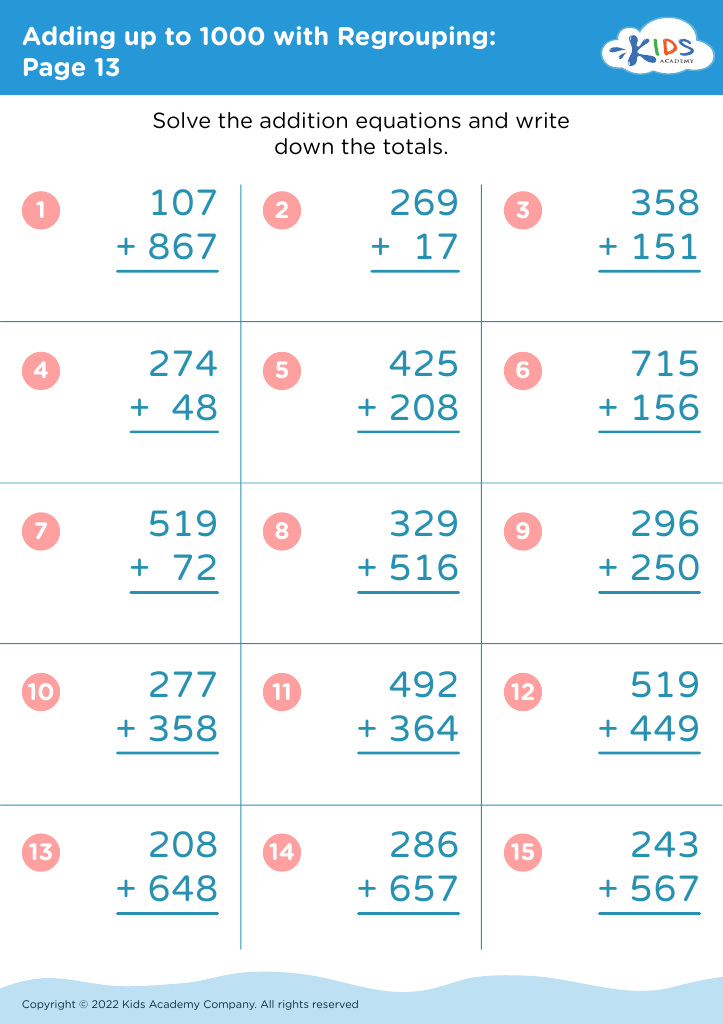
Worksheet
Adding up to 1000 with Regrouping: Page 13
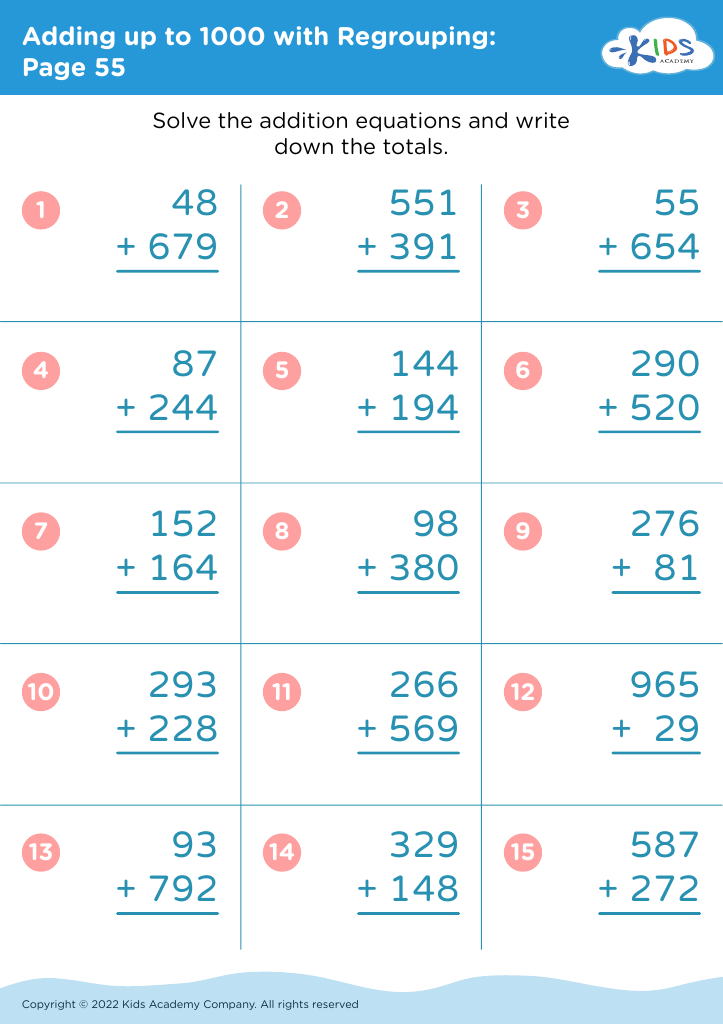
Worksheet
Adding up to 1000 with Regrouping: Page 55
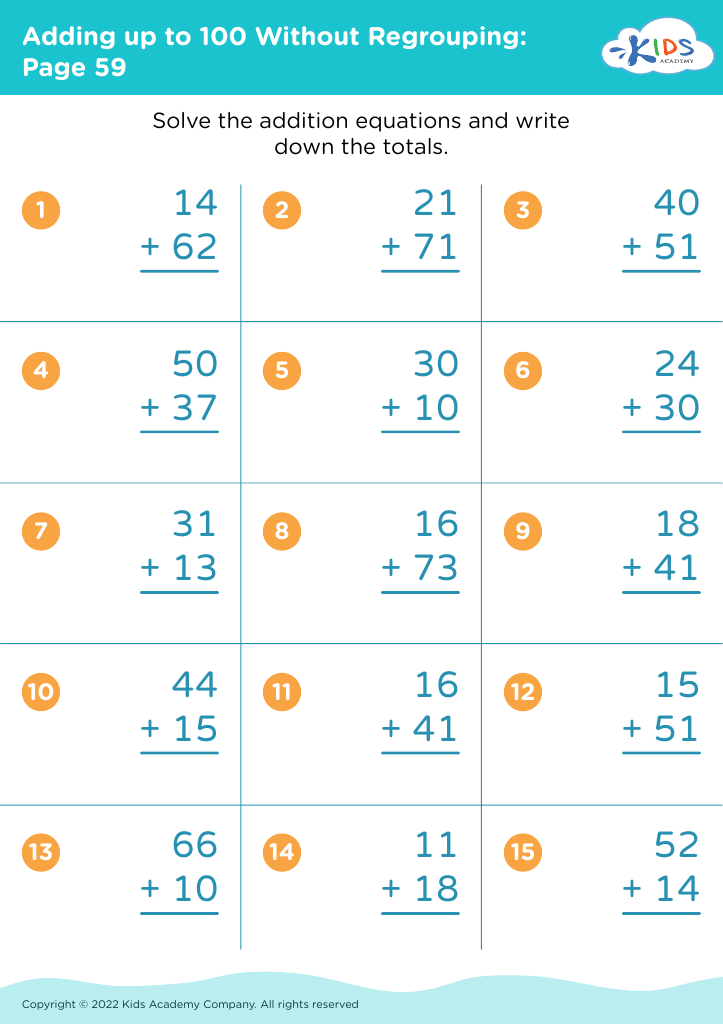
Worksheet
Adding up to 100 Without Regrouping: Page 59
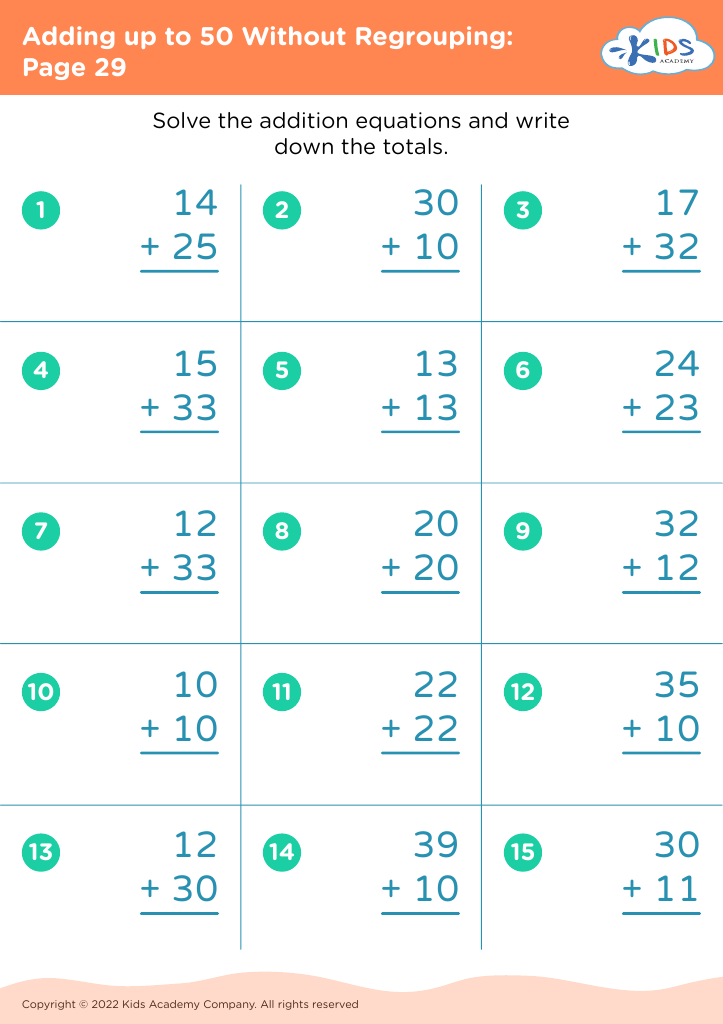
Worksheet
Adding up to 50 Without Regrouping: Page 29
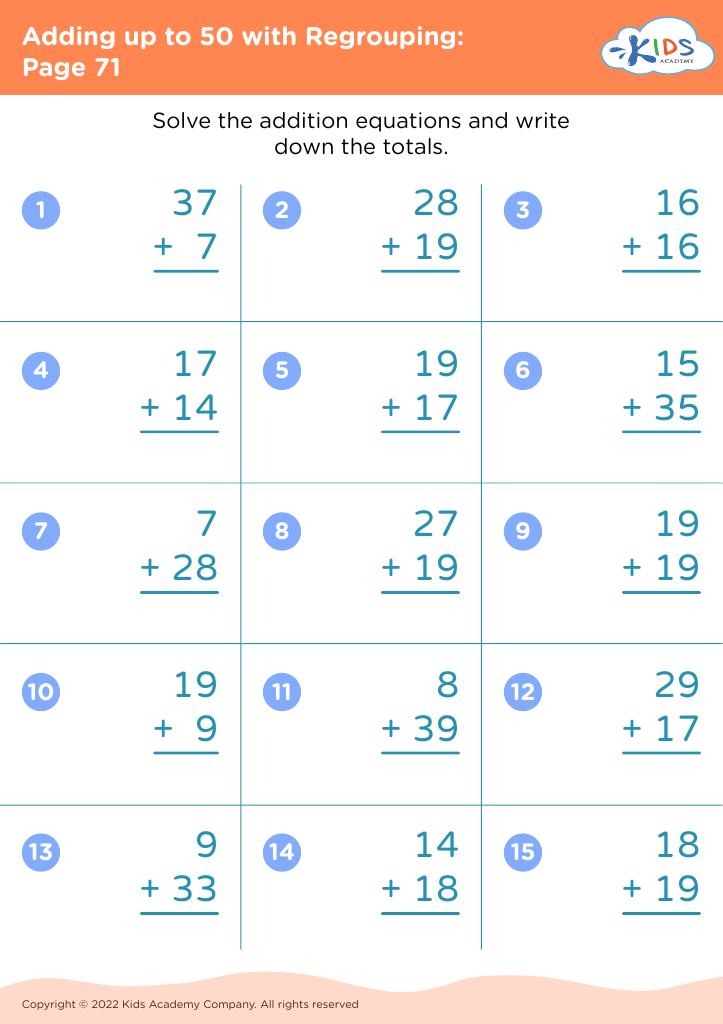
Worksheet
Adding up to 50 with Regrouping: Page 71
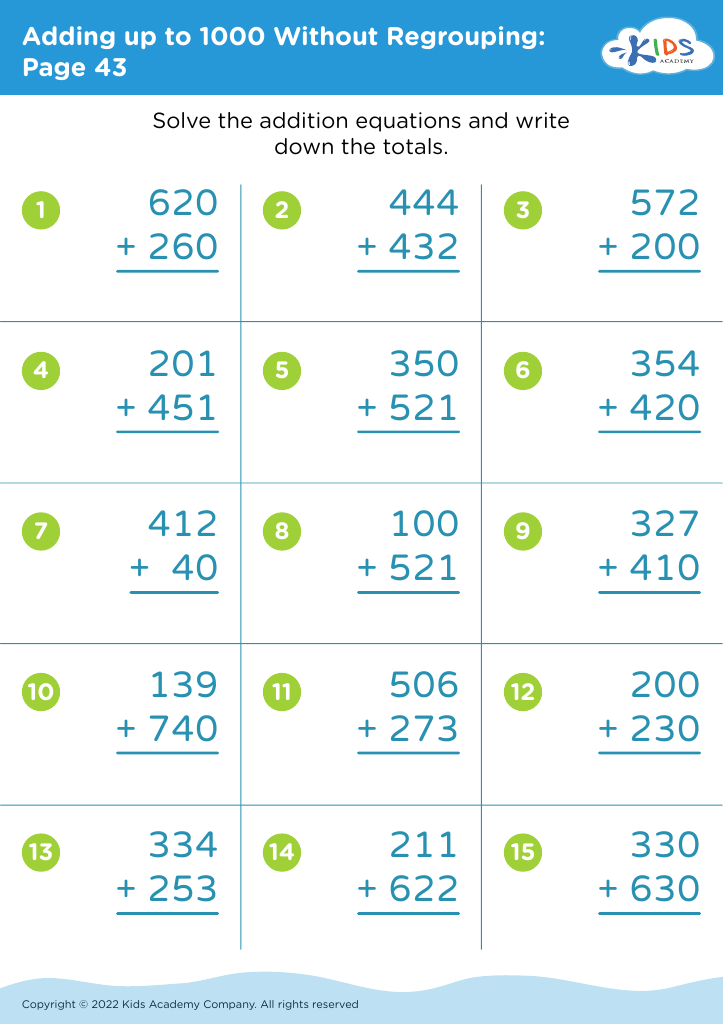
Worksheet
Adding up to 1000 Without Regrouping: Page 43
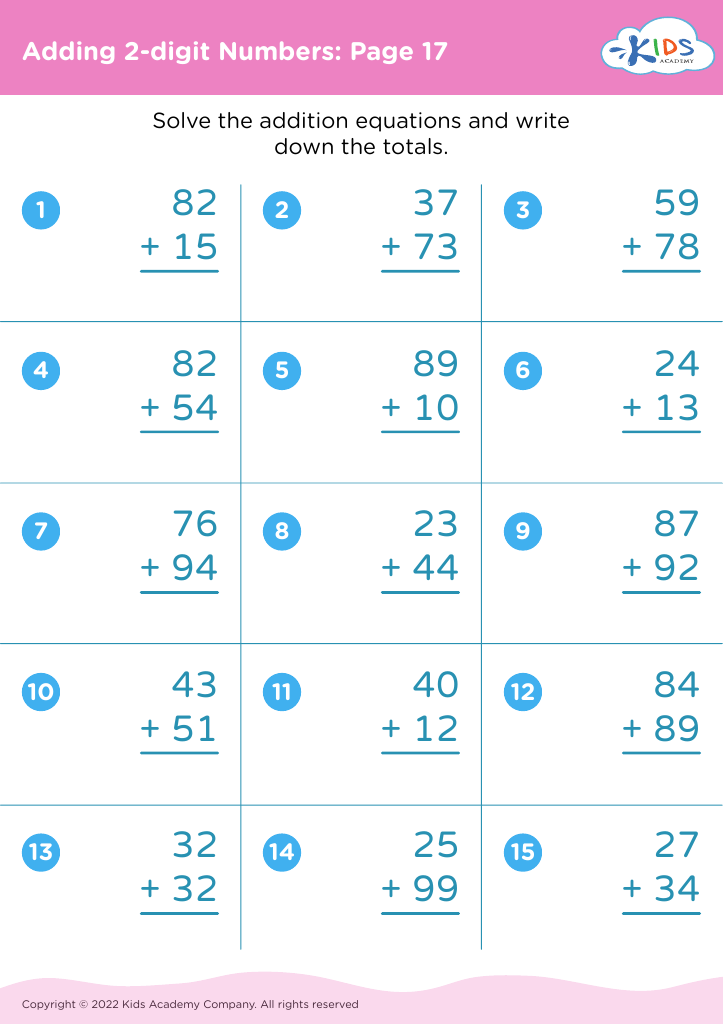
Worksheet
Adding 2-digit Numbers: Page 17

Adding 2-digit Numbers: Page 17

Adding 2-digit Numbers: Page 17
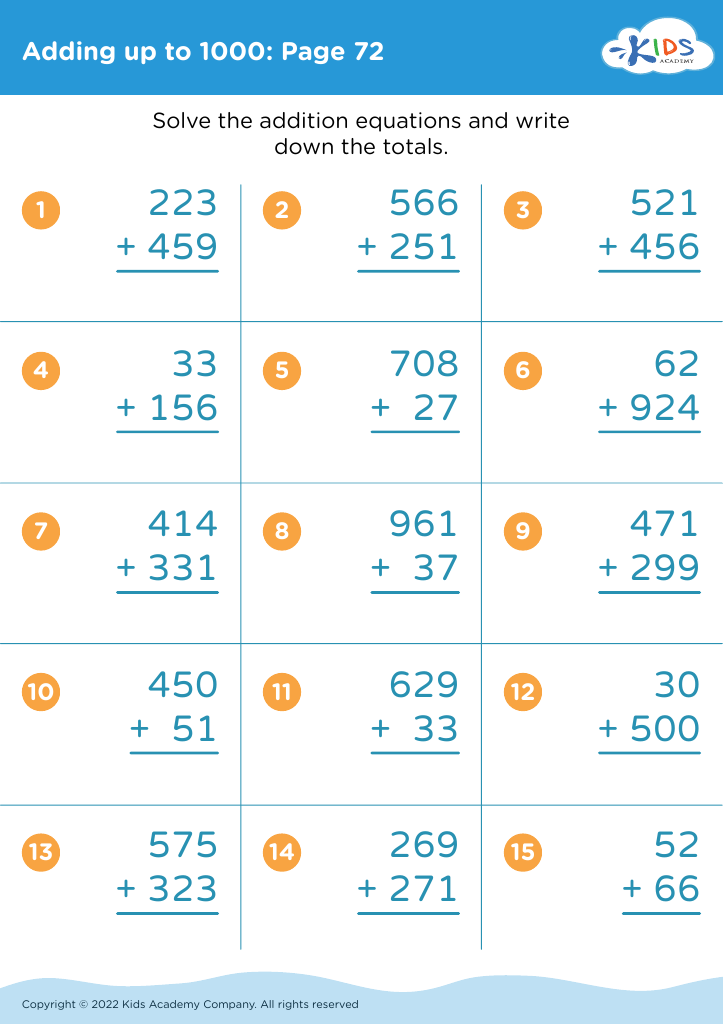
Worksheet
Adding up to 1000: Page 72

Adding up to 1000: Page 72

Adding up to 1000: Page 72
Worksheet
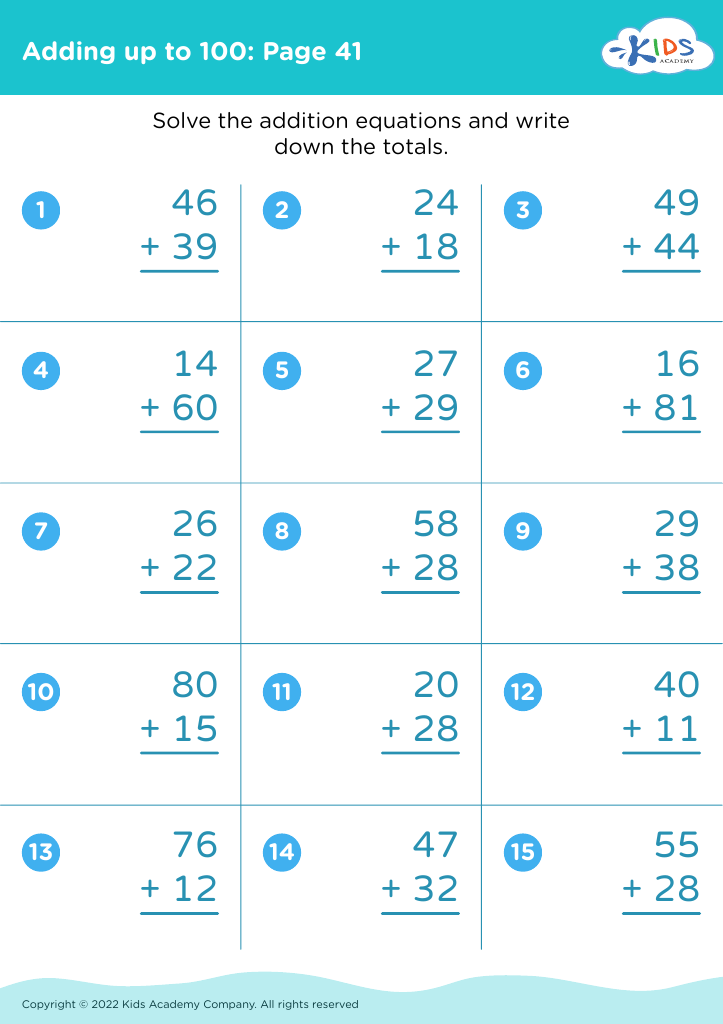
Adding up to 100: Page 41

Adding up to 100: Page 41

Adding up to 100: Page 41
Worksheet
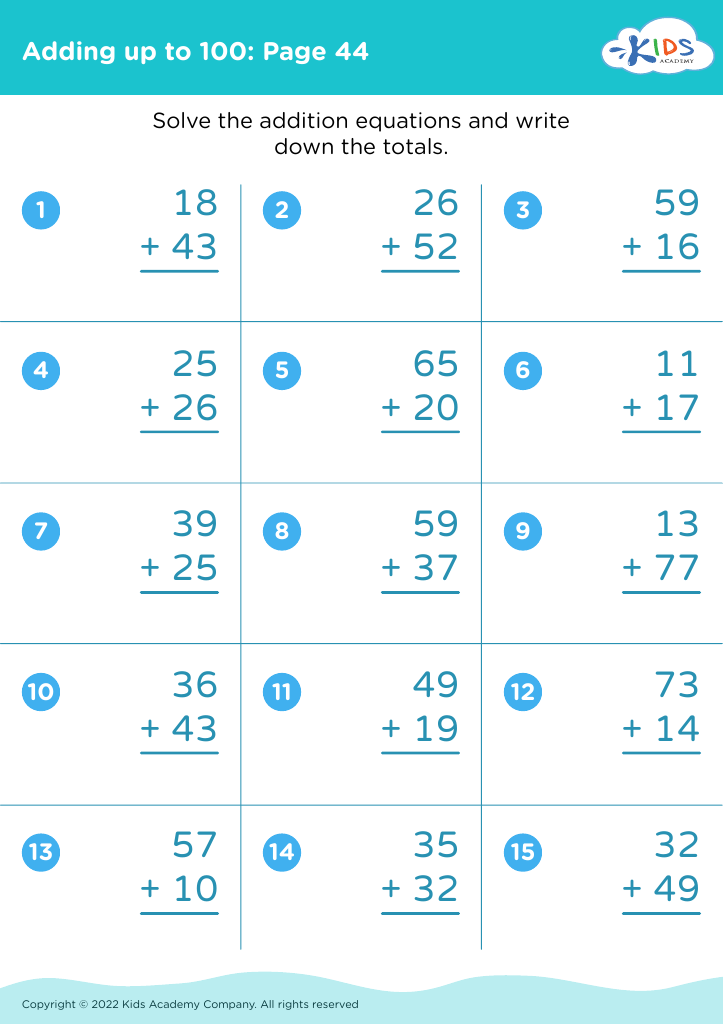
Adding up to 100: Page 44

Adding up to 100: Page 44

Adding up to 100: Page 44
Worksheet


Recognizing patterns in addition is a crucial skill for children aged 5-9, as it lays a foundation for higher-level mathematical understanding. For parents and teachers, fostering this ability is vital because it promotes critical thinking and problem-solving skills that extend beyond math itself.

Patterns help children develop number sense, allowing them to see relationships between numbers, understand the concept of sequence, and recognize the structure in math operations. By engaging with addition patterns, such as doubles (e.g., 2+2, 3+3) or patterns within addition tables, children can simplify calculations and improve their fluency. This foundational knowledge not only boosts confidence in their mathematical abilities but also encourages a positive attitude toward learning.

Furthermore, recognizing patterns enhances memory retention. Children who learn to identify and utilize patterns can grasp more complex mathematical concepts, such as algebra, in future grades with greater ease. It also encourages perseverance and attention to detail, which are essential skills across all subjects.

In summary, by emphasizing pattern recognition in addition, parents and teachers can nurture a love for mathematics, support skill development, and empower children to become confident learners ready to tackle more complex challenges in the future.