Filters

20 filtered results

Clear all filters
Favorites
With answer key
Interactive

20 filtered results

Difficulty Level

Grade


Explore our engaging "Understand Fractions Addition Worksheets" designed for children aged 5-9! These interactive worksheets help young learners grasp the concept of fractions and enhance their addition skills through fun, age-appropriate activities. With a variety of exercises, including visual aids and hands-on practice, our resources cater to different learning styles and ensure a solid foundation in mathematics. Easy to print and perfect for classroom or home use, these worksheets empower kids to confidently tackle fractions and develop essential problem-solving abilities. Dive into the world of fractions and addition, and watch your child's math skills soar!
Check out this FREE Trial Lesson on Addition for age 5-9!

Exactly the Same, or Not

Favorites
With answer key
Interactive
  • 5-9
  • Understand fractions
  • Addition
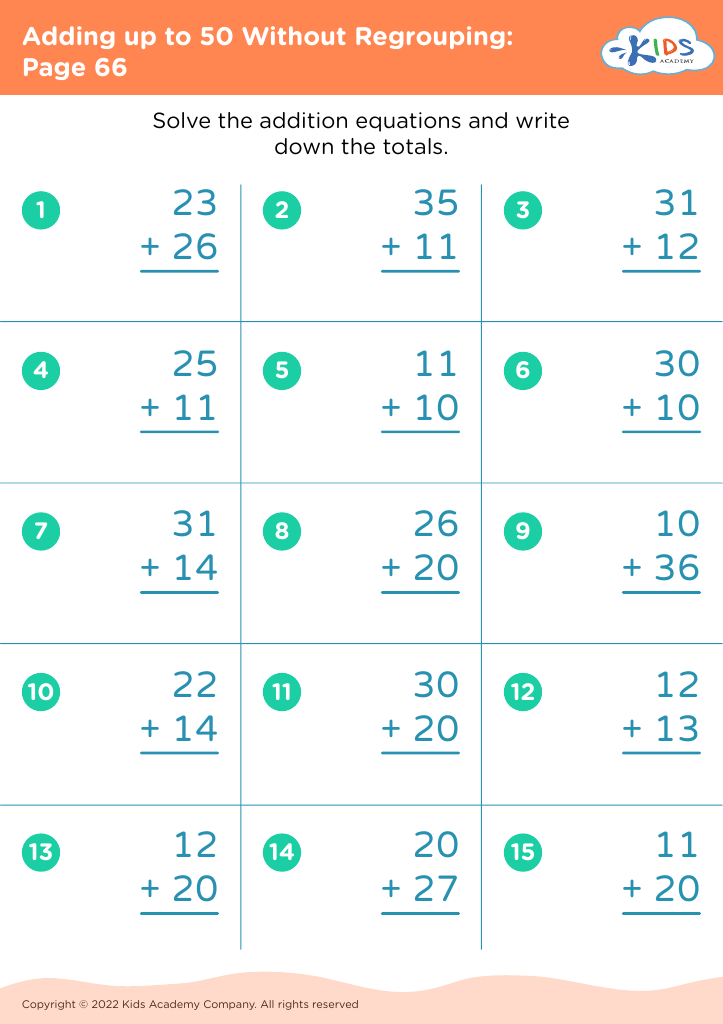
Adding up to 50 Without Regrouping: Page 66
Worksheet
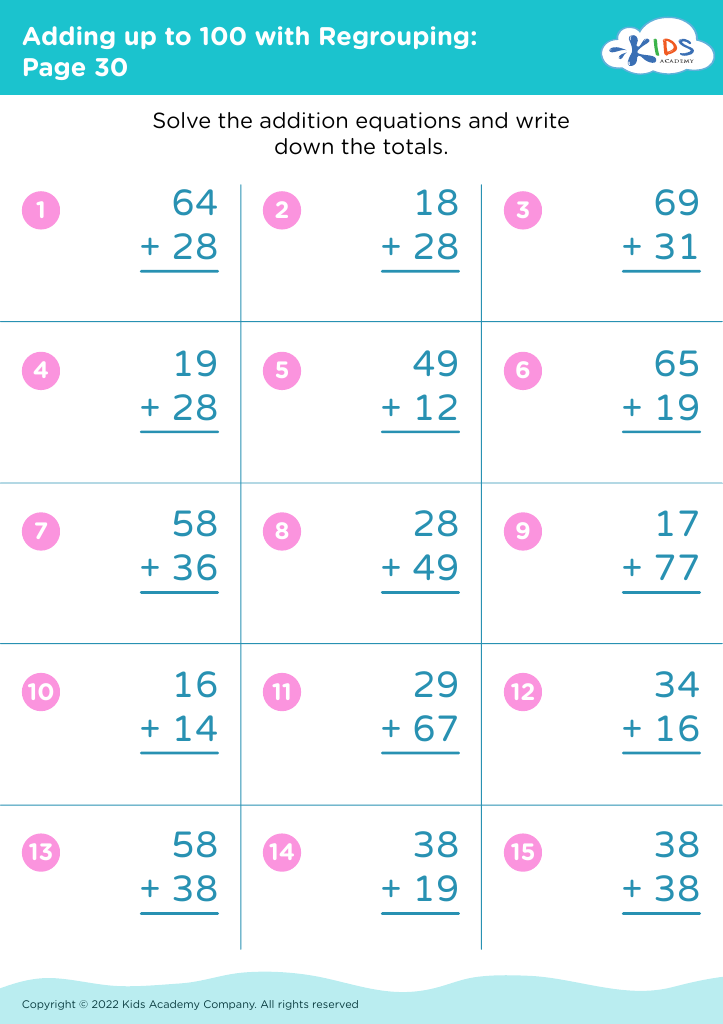
Adding up to 100 with Regrouping: Page 30
Worksheet
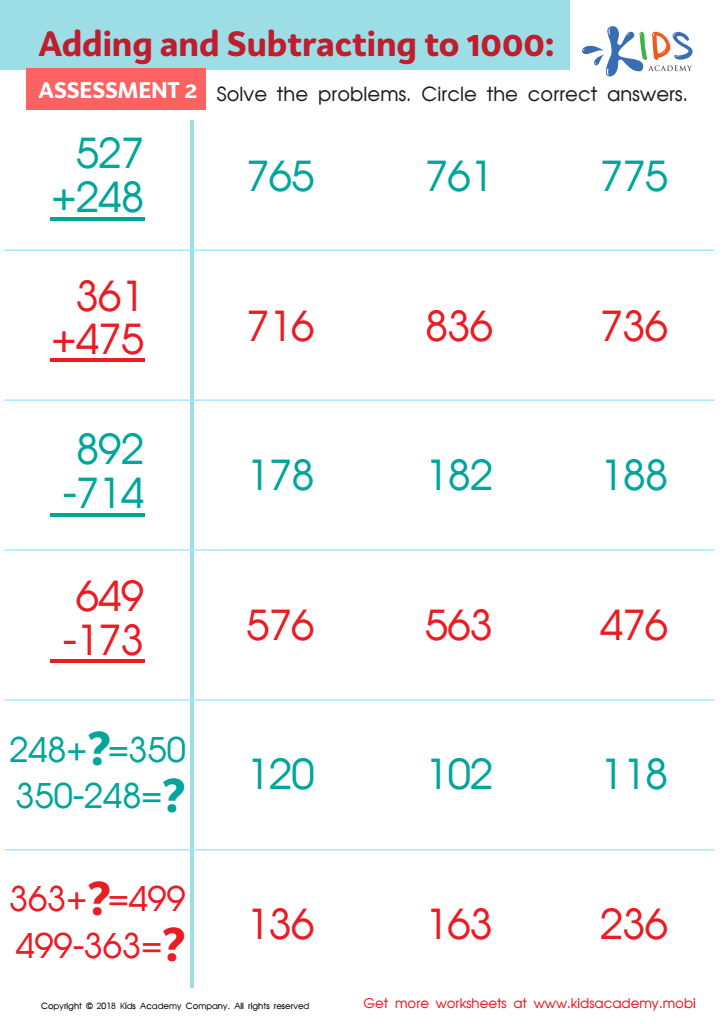
Adding and Subtracting to 1 Worksheet: Assessment 2

Adding and Subtracting to 1 Worksheet: Assessment 2

Test your child's addition and subtraction of 3-digit numbers with this assessment worksheet! They'll practice regrouping and pre-algebra skills to show their expertise. Have them work through the page and circle their answers, then see how many they got right to check their understanding and progress.
Adding and Subtracting to 1 Worksheet: Assessment 2
Worksheet
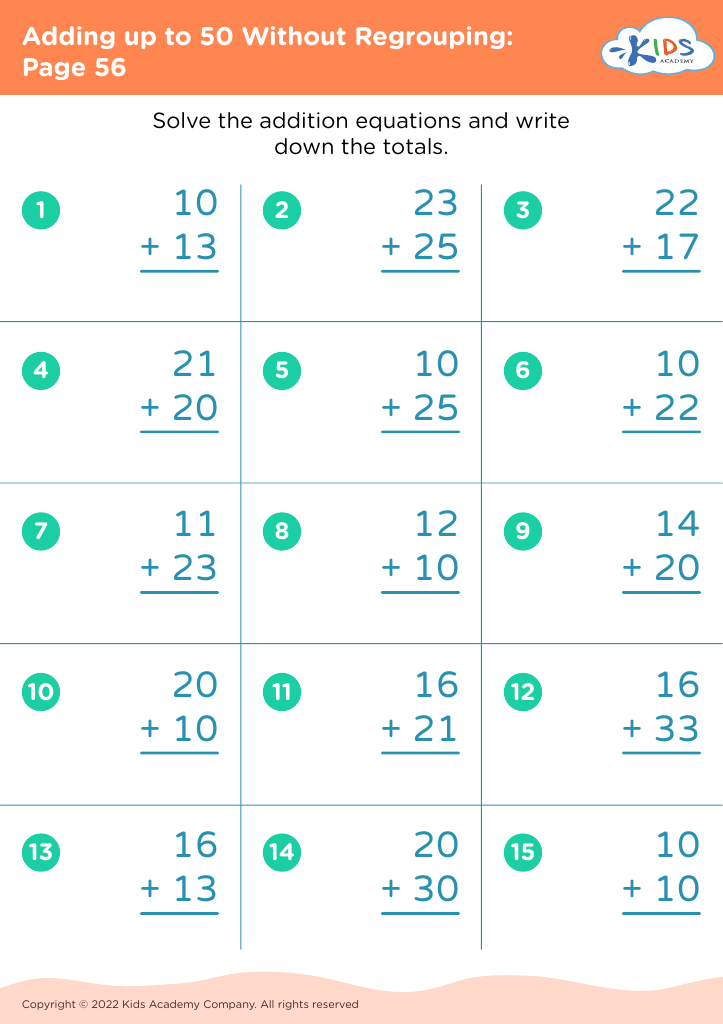
Adding up to 50 Without Regrouping: Page 56
Worksheet
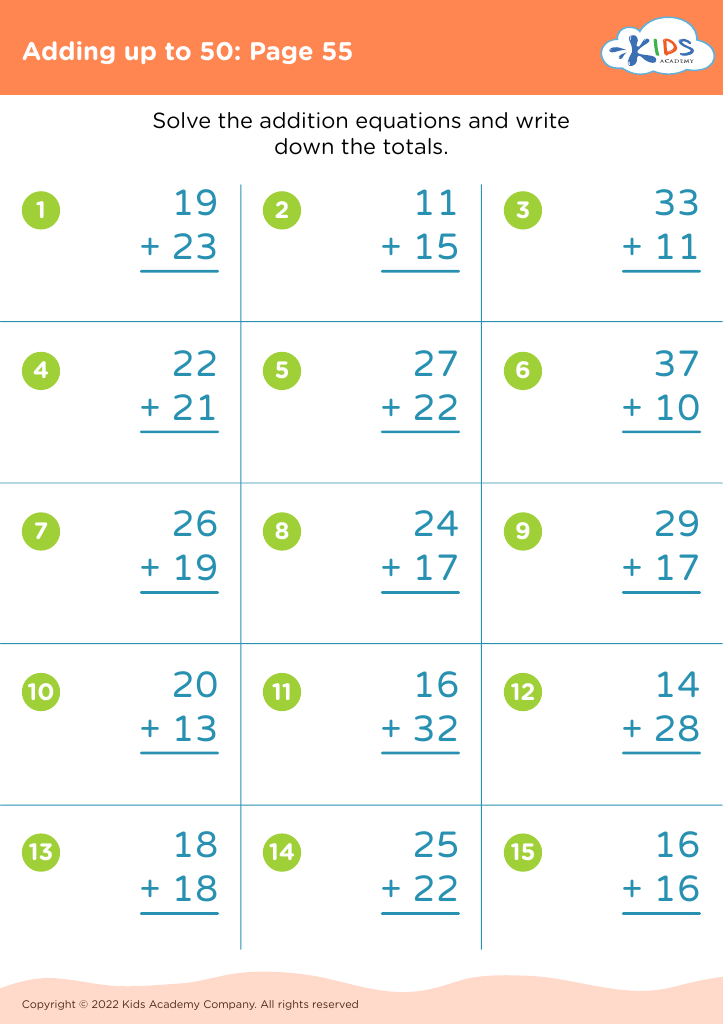
Adding up to 50: Page 55

Adding up to 50: Page 55

Adding up to 50: Page 55
Worksheet
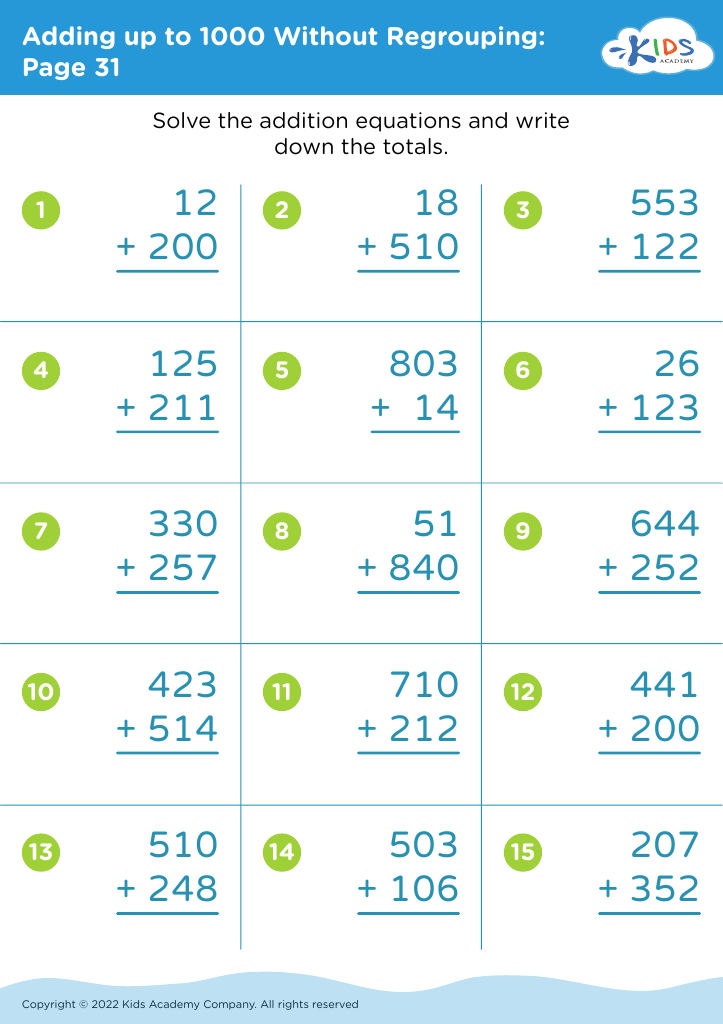
Adding up to 1000 Without Regrouping: Page 31
Worksheet
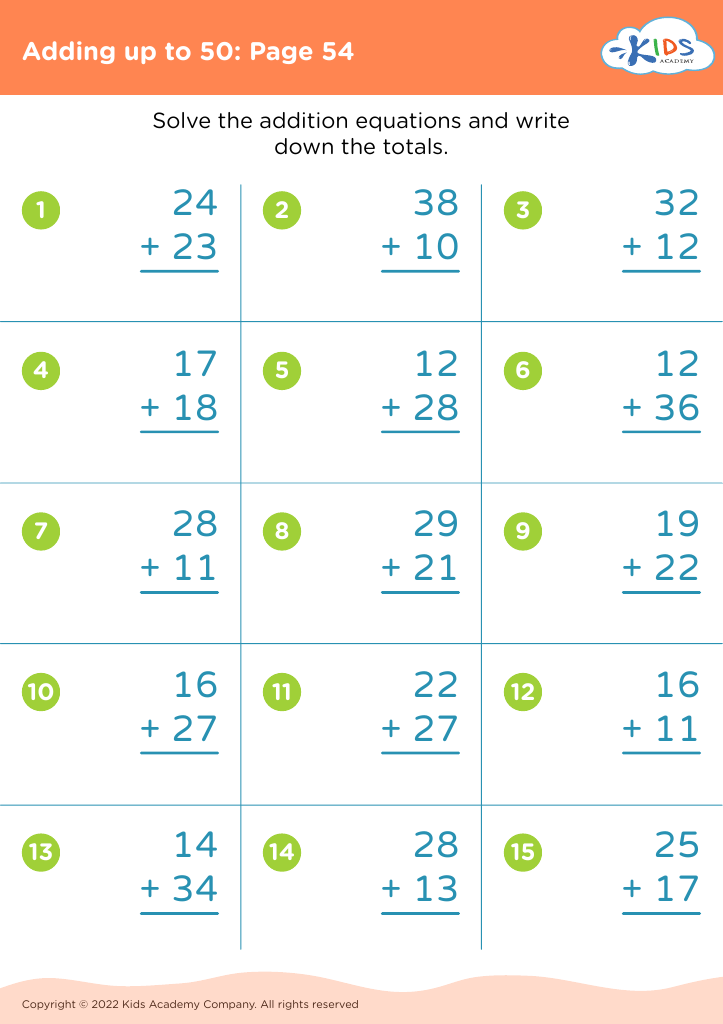
Adding up to 50: Page 54

Adding up to 50: Page 54

Adding up to 50: Page 54
Worksheet
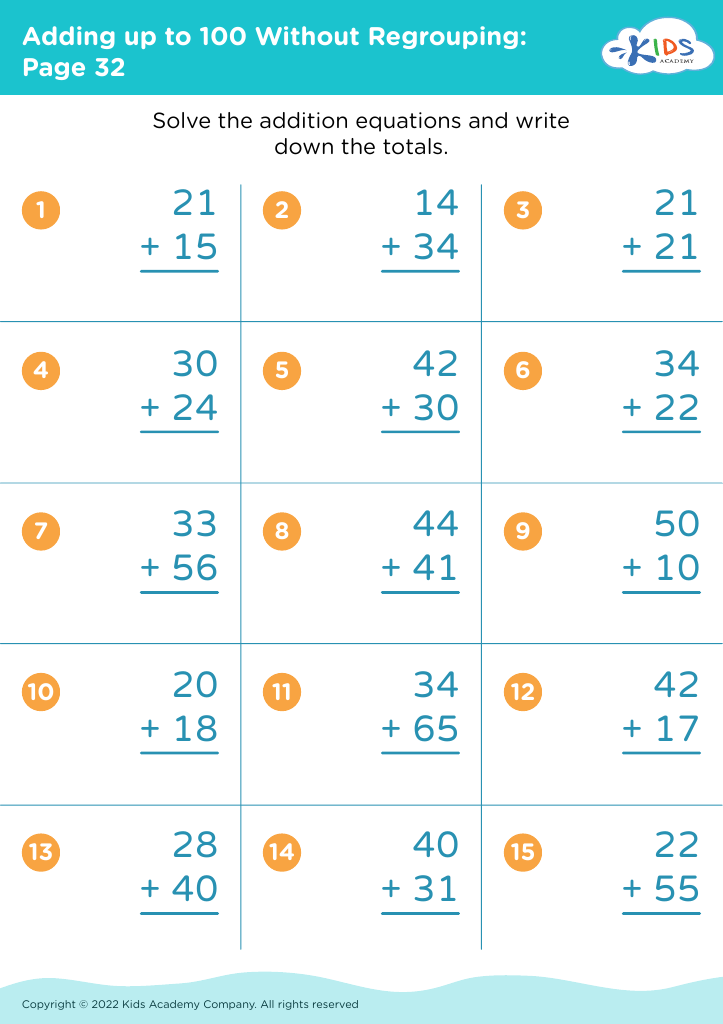
Adding up to 100 Without Regrouping: Page 32
Worksheet
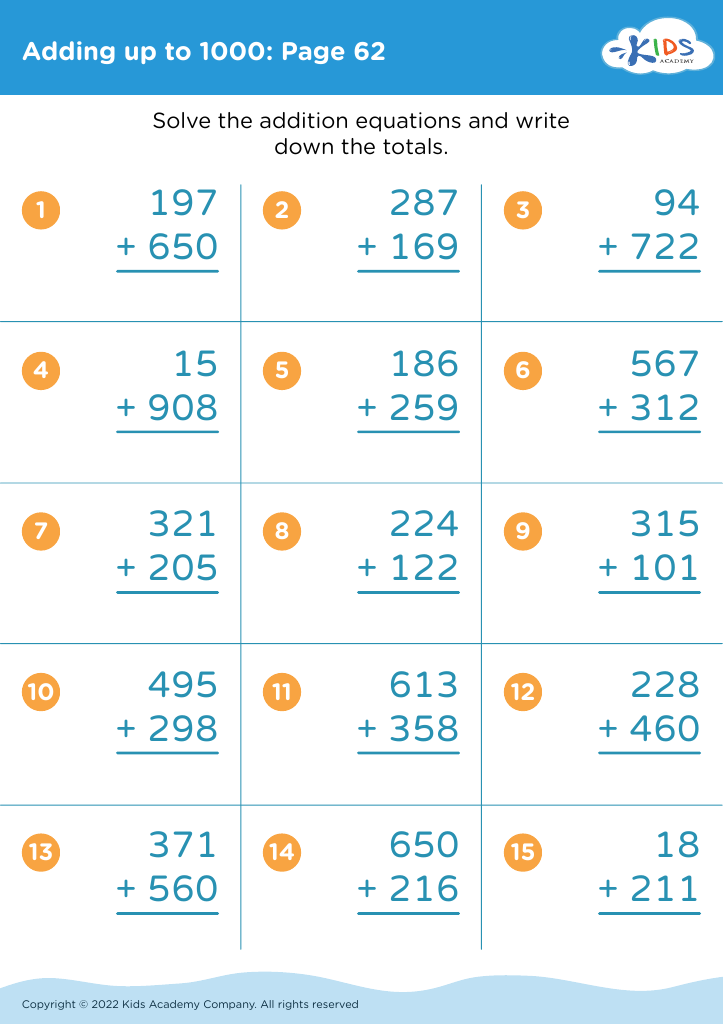
Adding up to 1000: Page 62

Adding up to 1000: Page 62

Adding up to 1000: Page 62
Worksheet
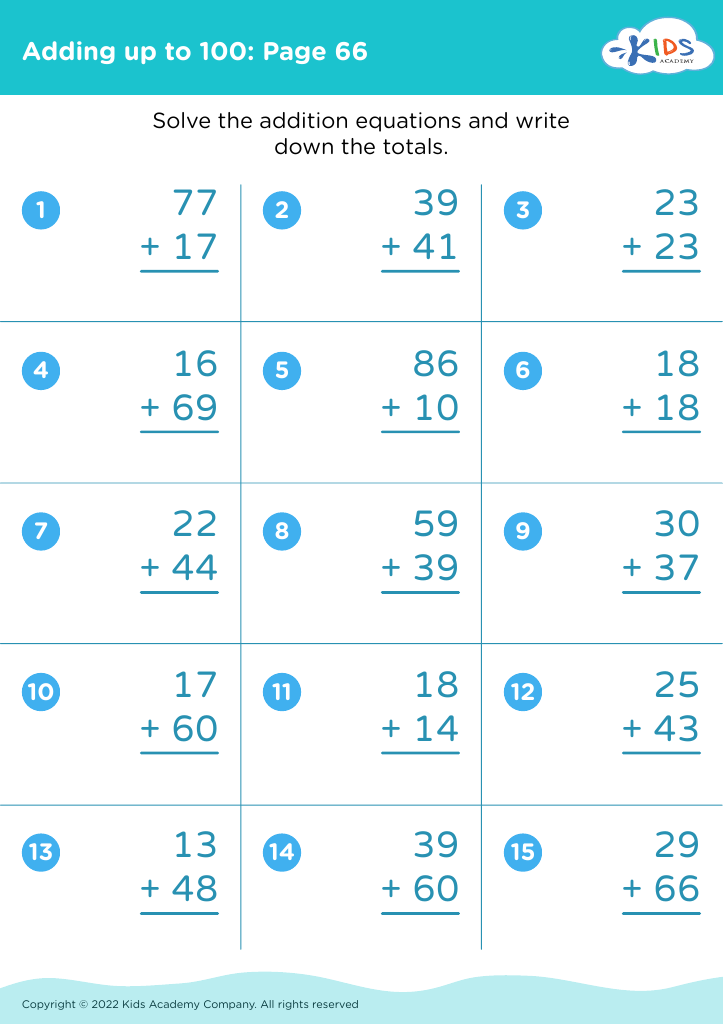
Adding up to 100: Page 66

Adding up to 100: Page 66

Adding up to 100: Page 66
Worksheet
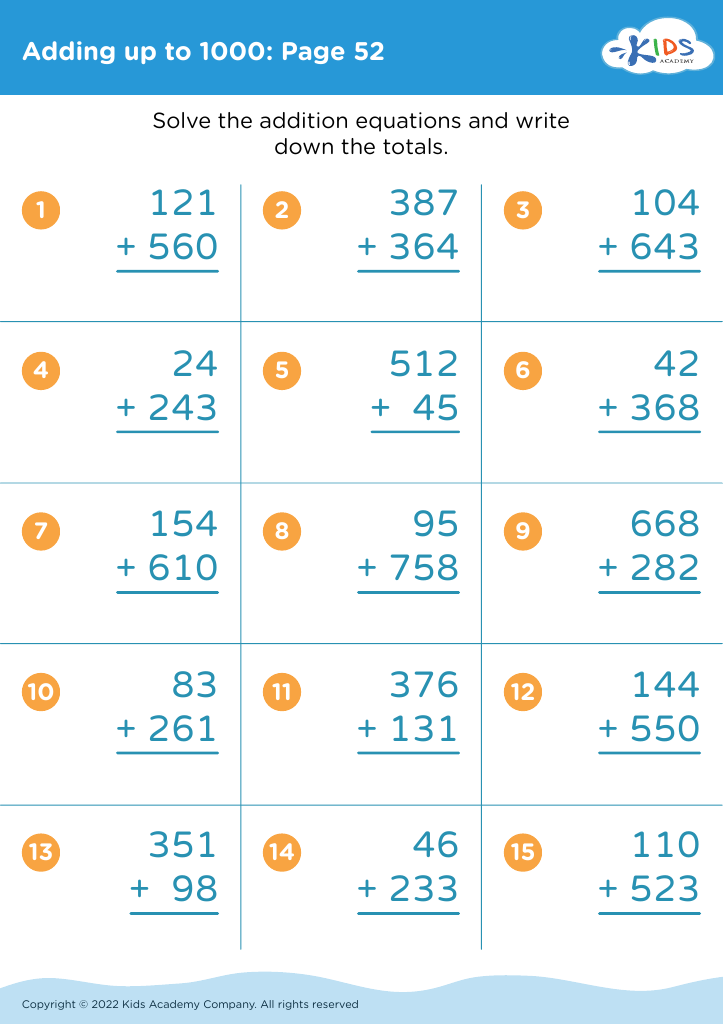
Adding up to 1000: Page 52

Adding up to 1000: Page 52

Adding up to 1000: Page 52
Worksheet
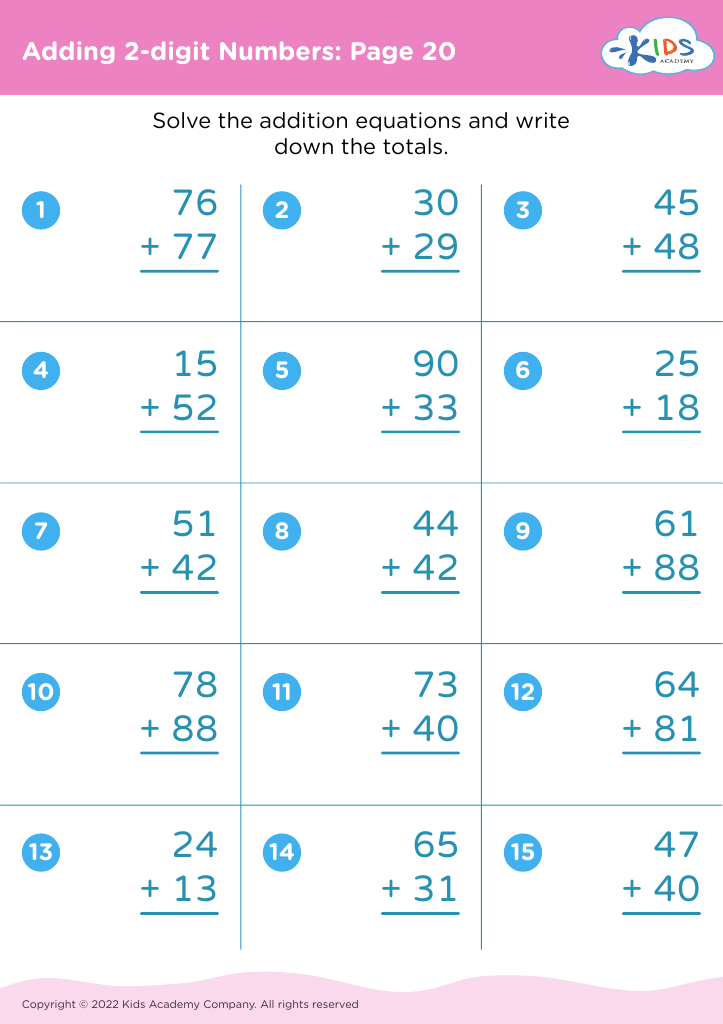
Adding 2-digit Numbers: Page 20

Adding 2-digit Numbers: Page 20

Adding 2-digit Numbers: Page 20
Worksheet
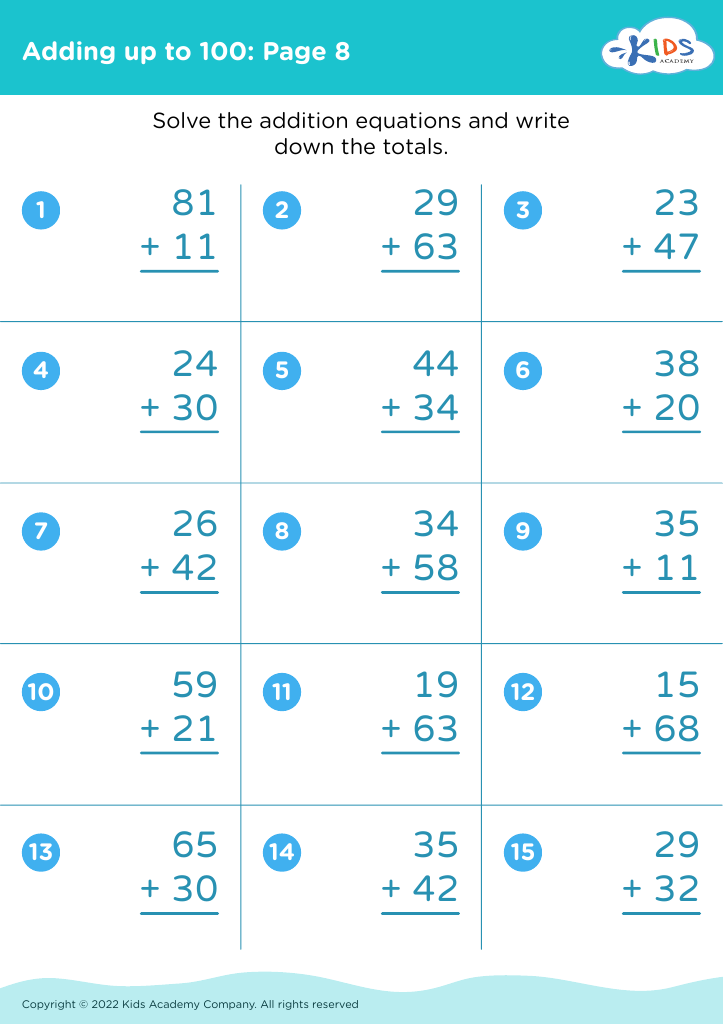
Adding up to 100: Page 8

Adding up to 100: Page 8

Adding up to 100: Page 8
Worksheet
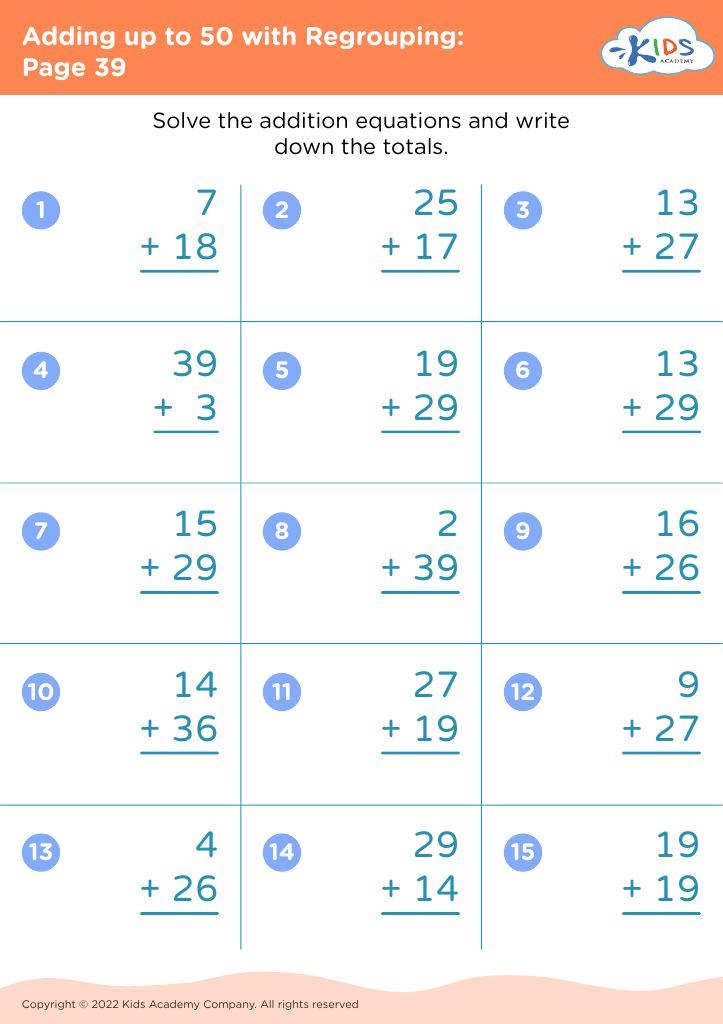
Adding up to 50 with Regrouping: Page 39
Worksheet
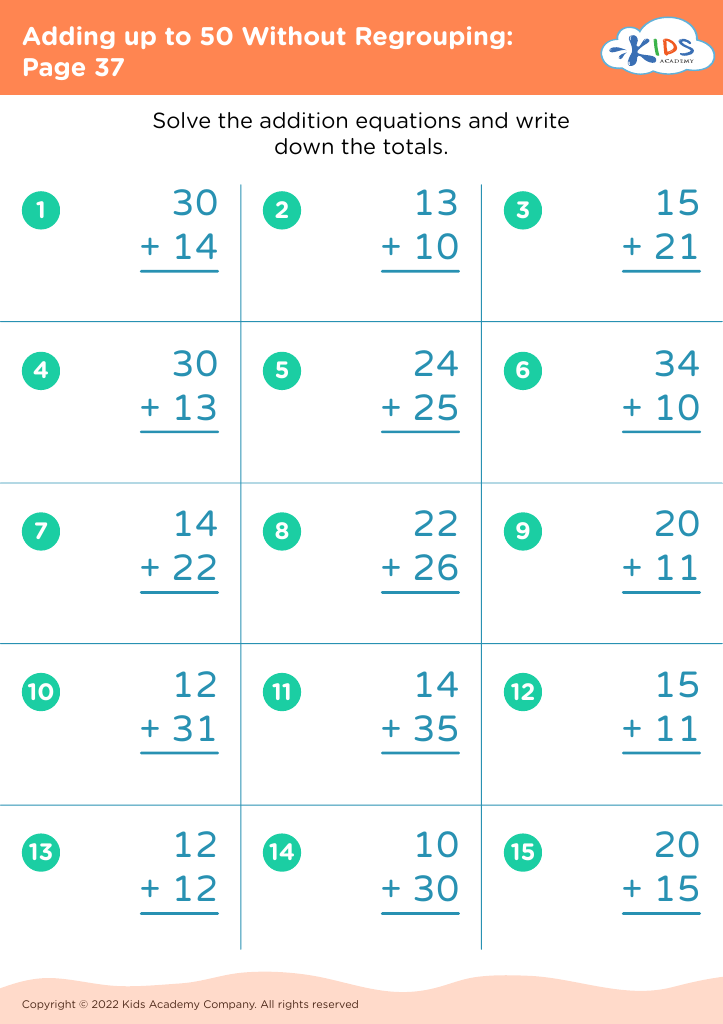
Adding up to 50 Without Regrouping: Page 37
Worksheet
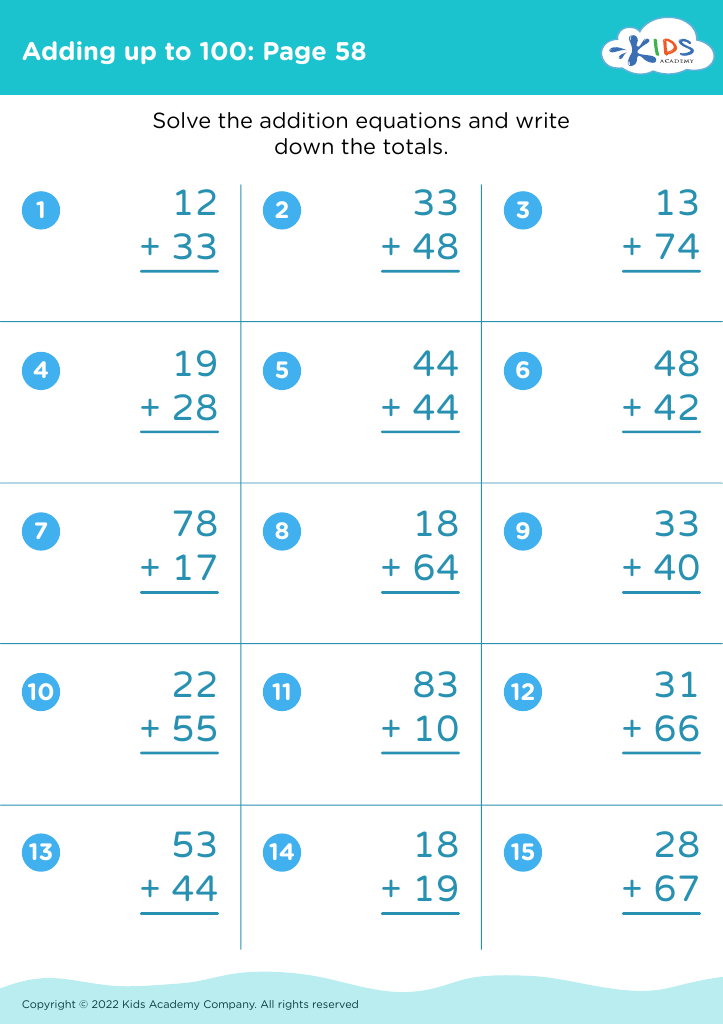
Adding up to 100: Page 58

Adding up to 100: Page 58

Adding up to 100: Page 58
Worksheet
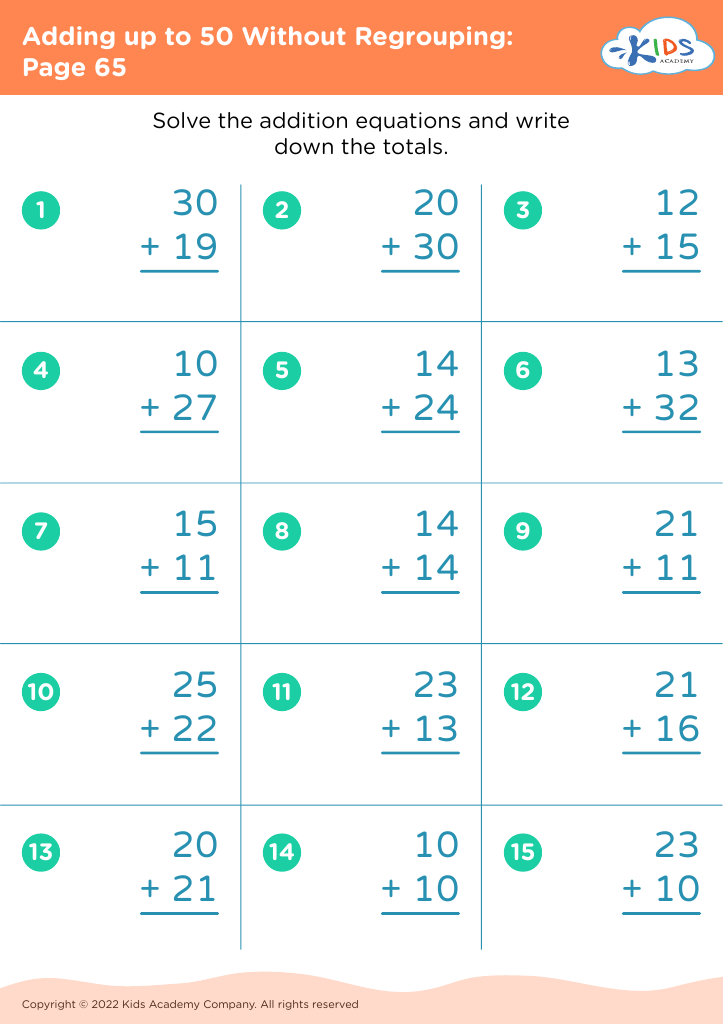
Adding up to 50 Without Regrouping: Page 65
Worksheet
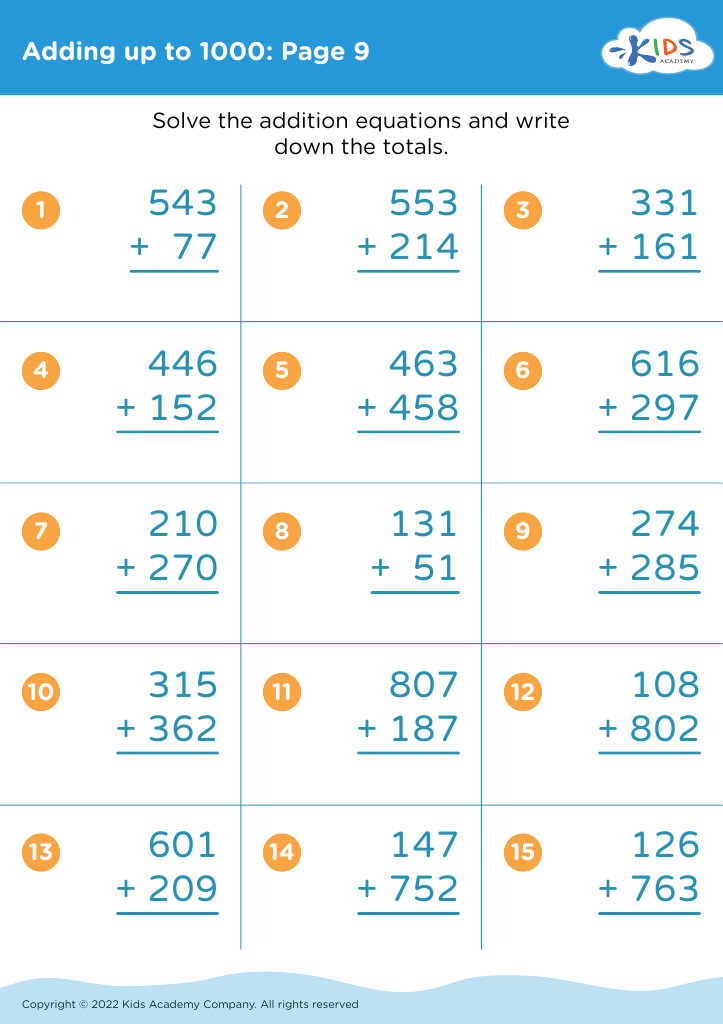
Adding up to 1000: Page 9

Adding up to 1000: Page 9

Adding up to 1000: Page 9
Worksheet
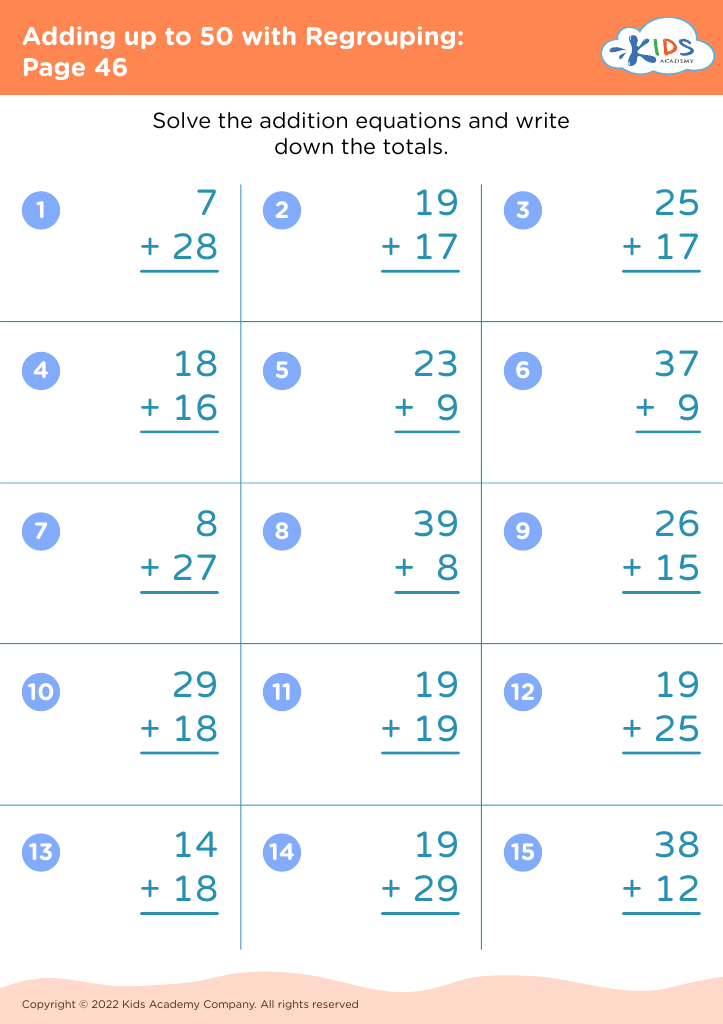
Adding up to 50 with Regrouping: Page 46
Worksheet
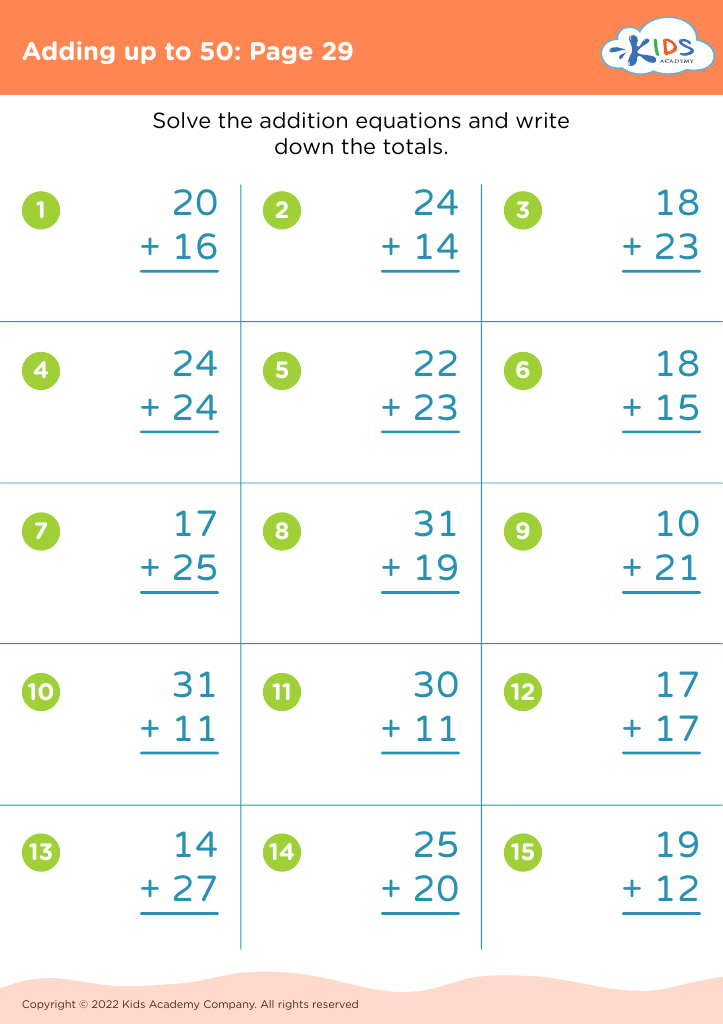
Adding up to 50: Page 29

Adding up to 50: Page 29

Adding up to 50: Page 29
Worksheet


Understanding fractions and their addition is crucial for young learners aged 5-9 for several key reasons. Firstly, mastering fractions lays the foundation for future mathematical concepts. As children progress in their education, they will encounter more complex topics, such as ratios, proportions, and algebra. A solid grasp of fractions encourages confidence, making transitions to these advanced subjects more manageable.

Secondly, fractions are relevant in everyday life. From dividing food, sharing toys, to cooking, children encounter fractions consistently, so understanding them fosters practical financial and measurement skills. This real-world application enhances learning engagement and promotes mathematical reasoning.

Moreover, working with fractions builds critical thinking and problem-solving abilities. As children learn how to combine and compare fractions, they develop logical reasoning and analytical skills that extend beyond mathematics into other subjects and life situations.

Lastly, fostering a conceptual understanding of fractions instills a positive attitude toward mathematics. Educators and parents who prioritize this foundational skill can help children overcome any apprehensions about math, promoting enthusiasm for learning in general. By supporting this journey, parents and teachers enable children to become competent and confident in their mathematical abilities, setting them up for long-term success.